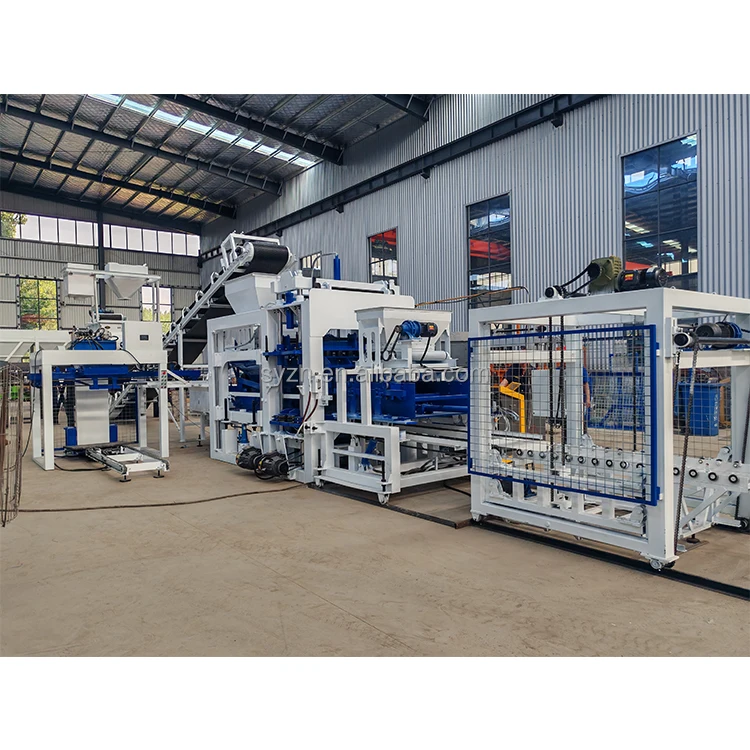
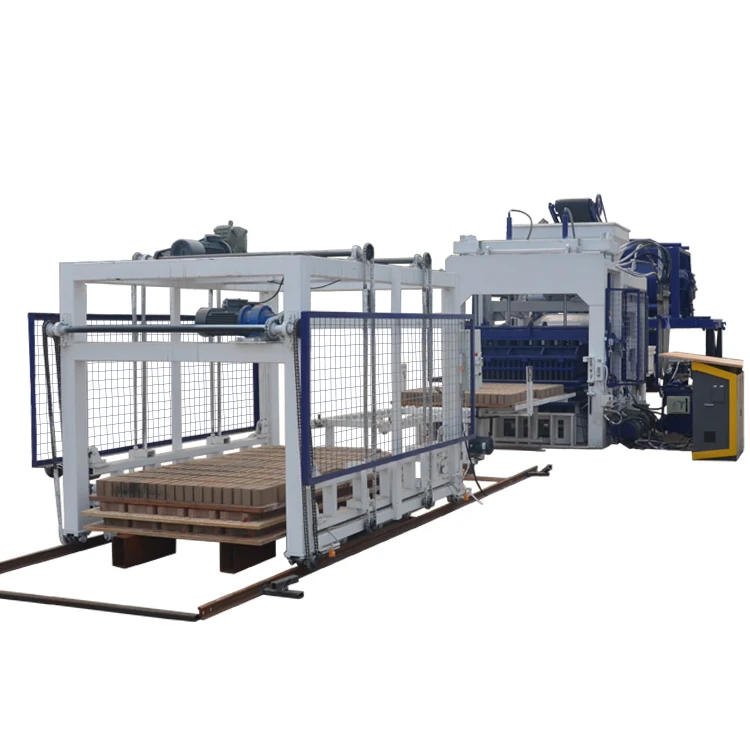
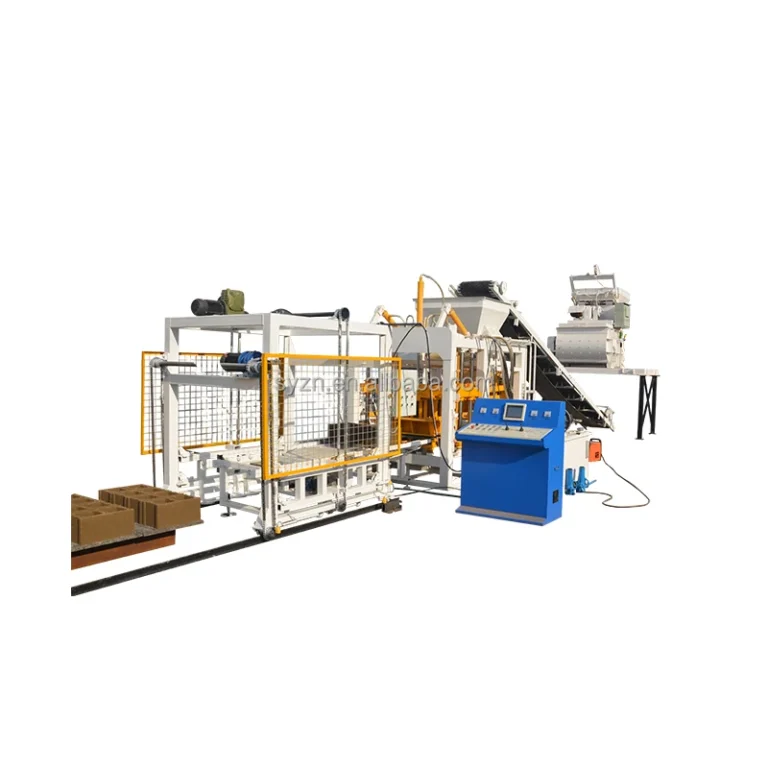
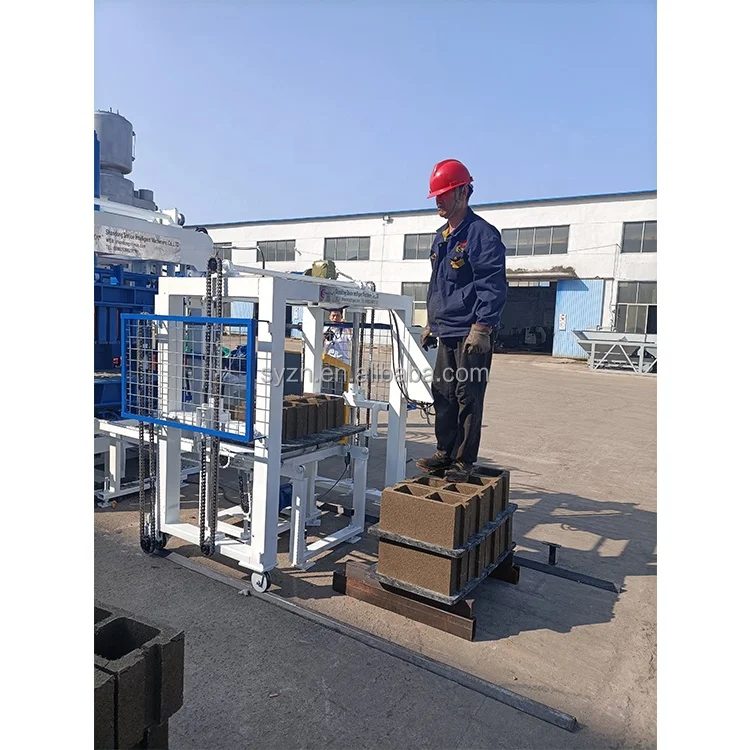
Matched system design — the QT8-15 is specified as one integrated unit with mould, pallet and handling matched to your actual output format rather than assembled from separate suppliers.
Technical Specifications
| Parameter |
Value |
| Model |
QT8-15 |
| Product Type |
Concrete Block Making Machine |
| Overall Dimensions (L×W×H) |
8300×1860×3000 mm |
| Rated Pressure |
21 MPa |
| Main Vibration Form |
Platform Vibration |
| Vibration Frequency |
2800–4500 r/min |
| Vibration Force |
45 KN |
| Pallet Size |
950×900 mm |
| Molding Cycle |
15–20 s |
| Overall Power |
55.5 kW |
| Total Mass |
8 T |
| Demolding Method |
Hydraulic |
| Factory Area |
300 m² |
| Output Capacity |
(basis to be confirmed) |
| Voltage & Frequency |
(confirm target market requirements) |
| Control System |
(confirm PLC brand and language options) |
Application Suitability
| Application |
Material or Output |
| Hollow block production |
Crushed stone, sand, cement, fly ash |
| Solid block production |
Gravel, dust, slag, cement |
| Paver and colored paver production |
Fine aggregate, pigment, cement |
| Interlocking brick and kerbstone |
Crushed stone, sand, cement |
What "1200 Pieces per Hour" Leaves Out About Block Machine Capacity
Real daily output depends entirely on which block format the cycle time is measured against.
Many quotations state a peak cycle figure without naming the block size, wall thickness or mix design behind it. A concrete block making machine manufacturer quoting 15–20 seconds per cycle may be referring to a small solid paver, not the 400×200×200 mm hollow block most buyers actually plan to sell. When the format changes, the cycle changes. I have watched buyers discover this gap only after the line is running, watching their daily tally fall well short of the number that convinced them to sign. The QT8-15 capacity must be quoted per format — hollow, solid, paver, interlocking — so buyers can plan against the product their market actually demands [NEED_CITE: block format influence on cycle time and daily output].

Positioning the QT8-15 Within a Full Machine Range
Buyers surveying options for a first or replacement block plant need to know where each model sits before narrowing down. The QT8-15 occupies the mid-to-high output tier in our concrete block making machine manufacturer lineup, designed for operations that need more capacity than a workshop-scale machine but are not yet ready for a fully automatic high-capacity line. Its 300 m² factory area requirement gives plant planners a clear footprint to work with during site layout.
Comparing Tiers: Automatic, Semi-Automatic, and Mobile
The range spans mobile egg-laying machines at the entry level, semi-automatic presses for smaller plants, and fully automatic lines with pallet feeding, stacking and cubing at the top. The QT8-15 sits between the semi-automatic and fully automatic tiers, offering a balanced investment point. Buyers can evaluate whether the automation level matches their labour availability and output ambition, knowing that the platform supports future upgrades [NEED_CITE: automation tier comparison for concrete block production].
Reading the Specs That Actually Matter
The 950×900 mm pallet size directly determines what curing racks and forklifts will handle the output — mismatch this and you are replacing material handling equipment on arrival. The 45 KN vibration force combined with platform vibration and 21 MPa rated hydraulic pressure together control block density and wall strength, especially important when local aggregate contains high clay or silt content. The 2800–4500 r/min vibration frequency range allows the operator to tune for hollow blocks needing longer compaction or pavers requiring a shorter, sharper cycle. Overall power at 55.5 kW means a dedicated circuit with adequate breaker capacity must be planned before the machine arrives.
The Hidden Cost of Skipping Configuration Details
Choosing a pallet size without checking the curing yard and existing forklift leads to pallets that cannot be stacked or moved efficiently, creating a bottleneck that has nothing to do with the press itself. Specifying voltage and control language after production starts means commissioning delays that cost weeks on site. A mould change system that is slow or poorly documented cancels out the format flexibility the buyer paid for, leaving the plant running a single product despite owning multiple moulds [NEED_CITE: commissioning delays from unconfirmed electrical specifications].
Why Buyers Source This Model From Our Range
The QT8-15 is specified alongside its moulds, pallets and handling equipment as one matched system, so cycle times, pallet flow and curing logistics are validated together. Configuration is set against the buyer’s actual mix design and target block format, not a catalogue default. Mould design covers the formats the buyer’s market sells, including custom drawings where standard moulds do not fit. Automation level is selectable — a buyer can start the QT8-15 at semi-automatic and upgrade pallet feeding and stacking later. Installation and commissioning include operator training so the crew running the line on day one understands the vibration and pressure settings specific to their material.
Documentation & Verification
- Line layout and capacity calculation stating the block format assumed for the QT8-15
- Machine specification sheet with voltage and control language confirmation
- Mould drawing and format list covering hollow, solid, paver and interlocking products
- Pallet specification matched to curing area dimensions and forklift capacity
- Factory test record using the buyer’s target mix before dispatch
Installation, Commissioning & Support
- 300 m² factory area requires level concrete flooring before the 8 T machine is positioned
- 55.5 kW overall power demands a dedicated three-phase circuit with confirmed voltage and frequency
- Hydraulic demolding system calibrated on site against the buyer’s raw material and mix ratio
- Vibration frequency tuned across the 2800–4500 r/min range to match block format and aggregate
- Operator training covers mould change procedure and daily maintenance of the platform vibration assembly
- Wear parts and mould list provided for planning first replacement orders
What to Include in Your Inquiry
To configure the QT8-15 accurately, share the specific block formats your market sells, target daily output per format, and the raw materials available locally including aggregate type and moisture content. Confirm your site’s voltage and frequency, available workshop area, and whether you need pallet handling and stacking included. A material sample allows us to validate mix compatibility before final specification.
Frequently Asked Questions
Q: How does QT8-15 output capacity vary by block format?
A: The molding cycle of 15–20 seconds applies differently across hollow blocks, solid blocks, pavers and interlocking bricks. Each format has a distinct cycle and pallet load, so daily output must be calculated per product type. We provide a capacity table tied to your specific block dimensions and mix rather than a single peak figure.
Q: Where does the QT8-15 sit compared to semi-automatic and fully automatic tiers?
A: It occupies the mid-to-high output tier, above workshop-scale semi-automatic machines and below fully automatic lines with integrated stacking and cubing. This makes it suitable for buyers who need reliable volume without the investment and complexity of a high-capacity automatic plant.
Q: What plant footprint should I plan for?
A: The QT8-15 requires approximately 300 m² of factory area for the press, pallet circulation and immediate output staging. Additional space is needed for raw material storage, curing racks and finished product handling. Confirming your site dimensions early ensures the layout fits without compromise.
Q: Can I start semi-automatic and upgrade automation later?
A: The QT8-15 platform supports selectable automation levels. A buyer can begin with manual pallet handling and add automatic pallet feeding, stacking or cubing as production volume and labour conditions change, without replacing the core press.
Q: What voltage and frequency options are available?
A: Voltage and frequency are configured to match the buyer’s target market electrical standards. This must be confirmed before production begins so that the control system, motor ratings and PLC display language are correct on arrival, avoiding commissioning delays.

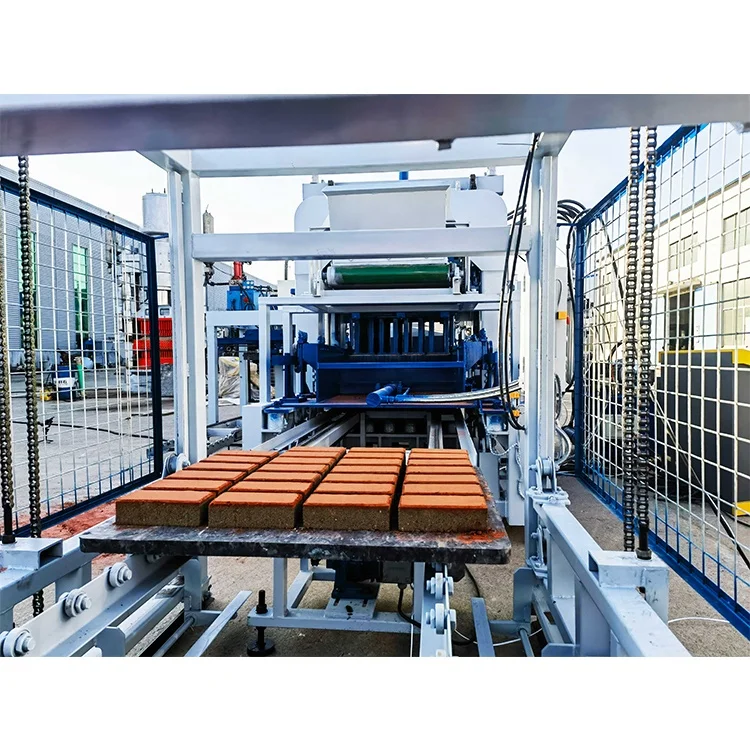
 High quality block machine