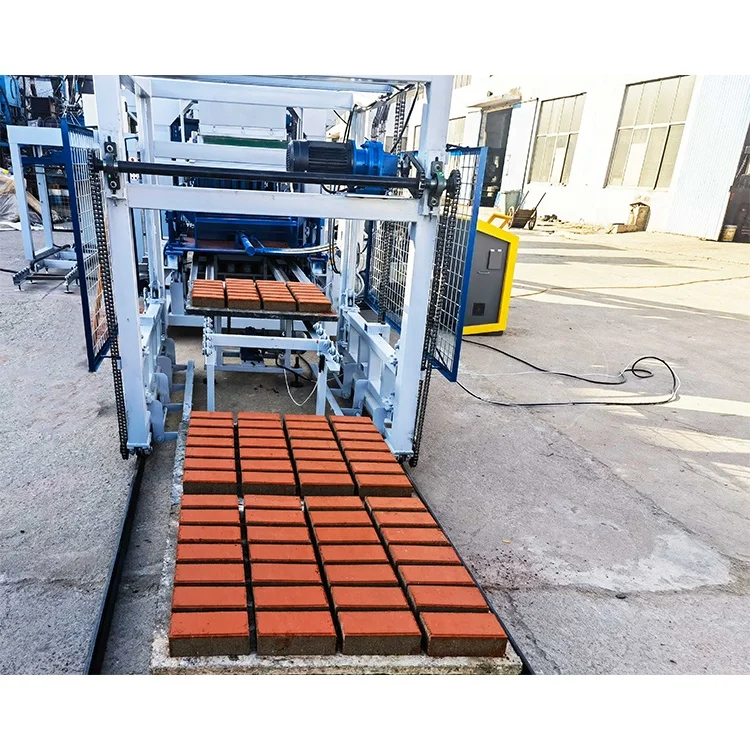
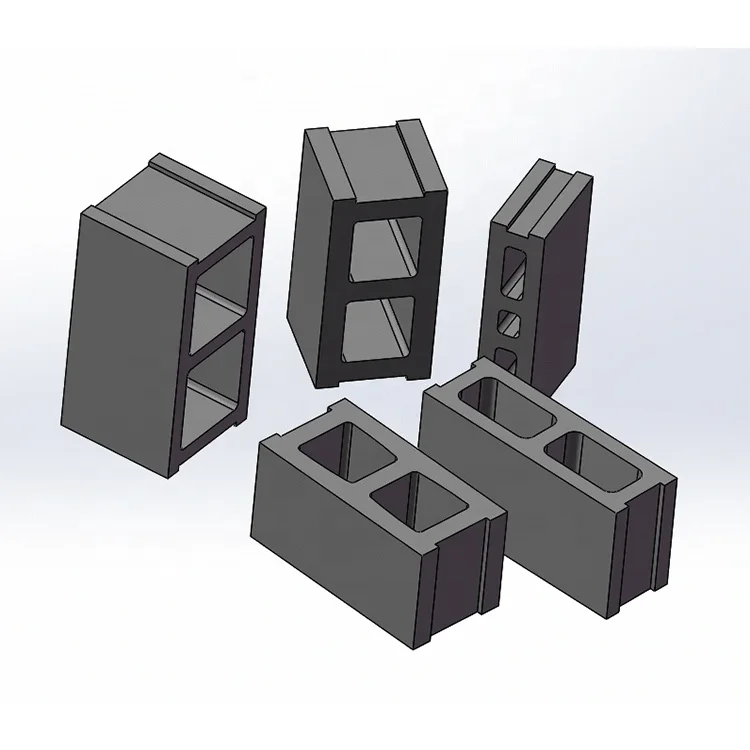
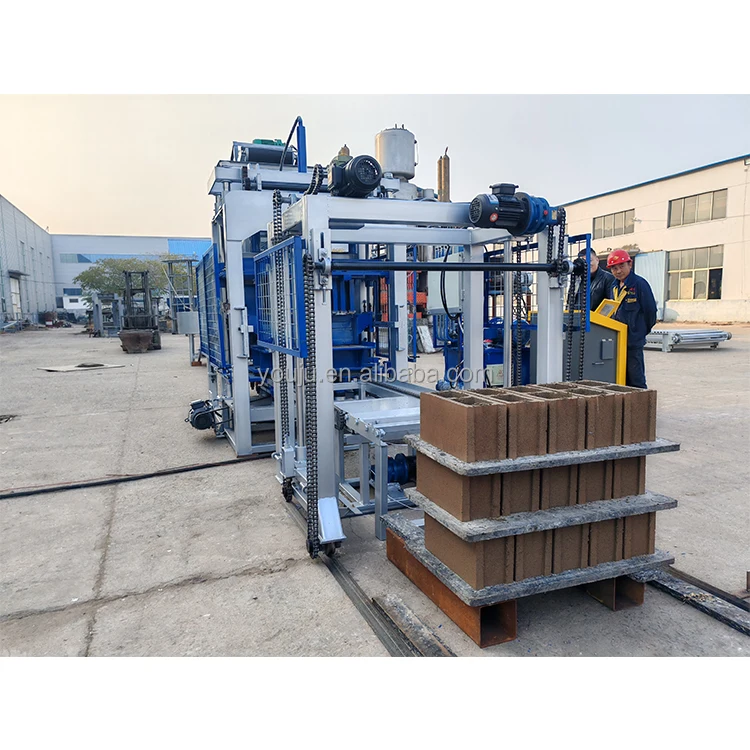
Configuration matched to your mix — QT7-15 vibration force and hydraulic pressure are set against your local aggregate report, not a catalogue default, so block strength holds across every batch.
Technical Specifications
| Parameter |
Value |
| Model |
QT7-15 |
| Product Type |
Stationary Concrete Block Making Machine |
| Pallet Size |
1150 x 700 mm |
| Molding Cycle |
15–20 s |
| Overall Power |
45 kW |
| Vibration Force |
100 kN |
| Vibration Frequency |
0–60 Hz |
| Vibration Form |
Platform Vibration |
| Demolding Method |
Hydraulic |
| Control System |
PLC intelligent control |
| Total Mass |
8 T |
| Mould Change System |
Simple mould replacement for multi-format production |
| Automation Level |
Automatic with PLC control |
| Output Capacity |
1,260–1,680 pcs/h (based on 400×200×200 mm hollow block, 7 pcs/mould, 15–20 s cycle) |
| Output Capacity |
1,440–1,920 pcs/h (based on 400×150×200 mm hollow block, 8 pcs/mould, 15–20 s cycle) |
| Output Capacity |
3,888–4,860 pcs/h (based on 200×100×60 mm rectangular brick, 27 pcs/mould, 20–25 s cycle) |
Application Suitability
| Application |
Material or Output |
| Hollow block production |
400×200×200 mm and 400×150×200 mm formats from crushed stone, sand, and cement |
| Rectangular paving brick |
200×100×60 mm format from fine aggregate and cement mix |
| Interlocking brick |
Compatible format via dedicated mould set |
| Solid block |
Standard concrete mix with platform vibration compaction |
What "1,680 Blocks per Hour" Actually Means for Your Plant
Capacity figures only matter when the block format behind them is named.
Too many quotations list a single hourly number without telling you which mould and cycle time produced it. When the machine arrives and you run the format your market actually buys, daily output can fall well short of what the sales sheet promised. I have seen this disappointment first-hand on QT7-15 installations where the buyer expected the top-of-range number to apply across every format [NEED_CITE: capacity quoting practices in block machinery tenders]. With this stationary block making machine for sale, every output tier in the table above is tied to a specific block size, mould cavity count, and cycle range so you can calculate your real daily volume before signing anything.

Where the QT7-15 Sits on the Full Machine Range
The QT7-15 occupies the mid-to-upper tier of the stationary block machine lineup. Below it, semi-automatic models trade output volume for lower capital outlay and a smaller plant footprint, suiting first-time investors who plan to scale later. Above it, higher-tier automatic lines push cycle times shorter and add fully automatic stacking and cubing. The QT7-15 bridges these worlds: it delivers PLC-controlled automatic operation with fault diagnosis while keeping the footprint and investment within reach of a growing block plant. Buyers surveying options for a first or replacement machine typically land here when daily hollow-block demand exceeds what a semi-automatic press can sustain but does not yet justify a high-capacity line.
Matching Machine Tier to Your Project Timeline
Choosing the right tier is not only about output. A construction contractor producing blocks on-site may find a mobile or egg-laying machine more practical, since those units need no fixed plant foundation. The QT7-15, by contrast, requires a prepared curing area, pallet circulation space, and a stable power supply — conditions that a permanent block production facility already provides. When your project timeline stretches across months or years of steady demand, the stationary block making machine for sale at this tier gives you consistent cycle times and format flexibility that mobile units cannot match [NEED_CITE: comparative suitability of stationary versus mobile block machines for sustained production].
Reading the Specs That Decide Block Quality
Platform vibration at 100 kN force, adjustable from 0 to 60 Hz, is the compaction engine of the QT7-15. Vibration frequency must be matched to your aggregate grain size: coarser crushed stone generally responds to lower frequencies, while finer sand-rich mixes compact better at higher settings. The hydraulic demolding system then strips the block from the mould without cracking, which matters especially for thin-wall hollow blocks where premature ejection causes breakage. Pallet size at 1150×700 mm is another dimension buyers overlook — it must align with the curing rack slots and forklift fork width already in your yard. A mismatch here means either replacing your racks or hand-stacking wet blocks off the machine, both of which erase the automation advantage you paid for.
The Cost of Skipping the Mix-Design Conversation
I remember a buyer who ordered a stationary line rated for a clean-sand mix, then tried running local aggregate with high clay content. Block strength dropped, rejection rates climbed, and the machine spent more time idle than producing. The root cause was not the press — it was that nobody checked the raw material before configuration. When vibration force and hydraulic pressure are not tuned to the actual mix, the machine still cycles but the blocks it produces fail compressive-strength tests. That is why a raw-material report should come before any quotation, not after [NEED_CITE: effect of aggregate clay content on concrete block compressive strength].
Why Buyers Source This Tier Here
Block machinery is the single focus at Shiyue, which means the QT7-15 press, moulds, pallets, and handling equipment are specified as one matched system rather than assembled from separate suppliers. Configuration is set against your local aggregate and target block format, not pulled from a catalogue default. Mould design covers the formats your market actually sells, and custom drawings are available when standard moulds do not fit. The automation level is selectable: you can start with the PLC-controlled automatic cycle and add stacking or cubing modules later as demand grows. Installation support includes operator training so your team knows how to adjust vibration frequency and hydraulic pressure when the mix changes seasonally.
Documentation & Verification
- Line layout and capacity calculation stating the block format behind each output figure
- Machine specification sheet with pallet size, vibration force, and power confirmed
- Mould drawing and format list covering every block your market sells
- Voltage, frequency, and PLC display language confirmation before build
- Factory test record with photographs taken on your specified mix
- Packing photographs and customs documentation support for shipment
Installation, Commissioning & Support
- Prepared foundation required to absorb 100 kN platform vibration without resonance transfer
- Dedicated 45 kW power circuit with voltage and frequency matched to local grid supply
- Machine arrives in dismantled state; reassembly on-site follows the included layout drawing
- First-run commissioning includes cycle-time tuning on your actual raw material mix
- Operator training covers PLC fault diagnosis and mould-change procedure
- Wear-parts list and hydraulic seal kit supplied for the first replacement interval
- Daily maintenance checklist tied to vibration motor bearings and hydraulic oil condition
Before You Request a Quote
To size the QT7-15 correctly for your plant, share the block formats your market sells most, the daily volume you need per format, and a recent lab report on your local aggregate. Confirm your site voltage, frequency, and preferred PLC display language. If you already have curing racks and forklifts on-site, send their dimensions so the 1150×700 mm pallet can be verified against them. These details let the configuration proposal match your real conditions instead of a generic template.
Frequently Asked Questions
Q: How is QT7-15 capacity verified, and which block format does each output figure assume?
A: Every output number in the specification table is tied to a specific block size, mould cavity count, and cycle time range. For example, 1,260–1,680 pieces per hour applies only to 400×200×200 mm hollow blocks with 7 cavities and a 15–20 second cycle. This lets you calculate real daily production for the format you actually sell.
Q: Where does the QT7-15 sit compared to semi-automatic and mobile tiers?
A: It sits in the mid-to-upper stationary tier, offering PLC-controlled automatic cycling with higher output than semi-automatic presses while requiring a fixed plant foundation. Mobile or egg-laying machines suit on-site production without a permanent facility, whereas the QT7-15 suits sustained daily volume in a dedicated block yard.
Q: What pallet size does the QT7-15 use, and how should it match my curing setup?
A: The pallet measures 1150×700 mm. Before ordering, confirm that your curing rack slots and forklift fork width accommodate this dimension. A mismatch forces you to either replace racks or handle blocks manually off the machine, reducing the throughput the automatic cycle is designed to deliver.
Q: How do I confirm voltage, frequency, and PLC display language before the machine ships?
A: These are locked during the quotation stage. You provide your local grid voltage, frequency, and preferred control language; the manufacturer confirms them in writing before production begins so the electrical cabinet and PLC interface arrive ready for immediate commissioning.

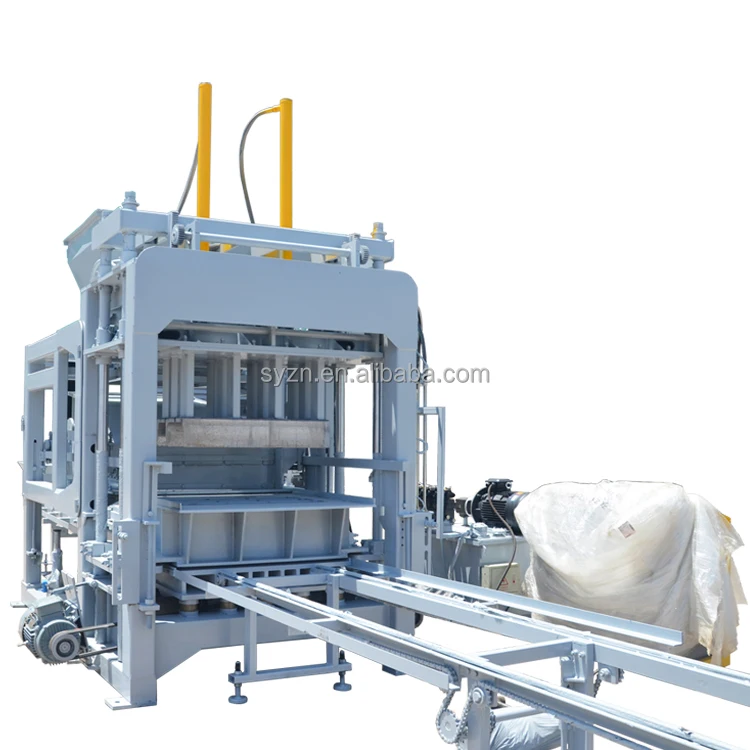
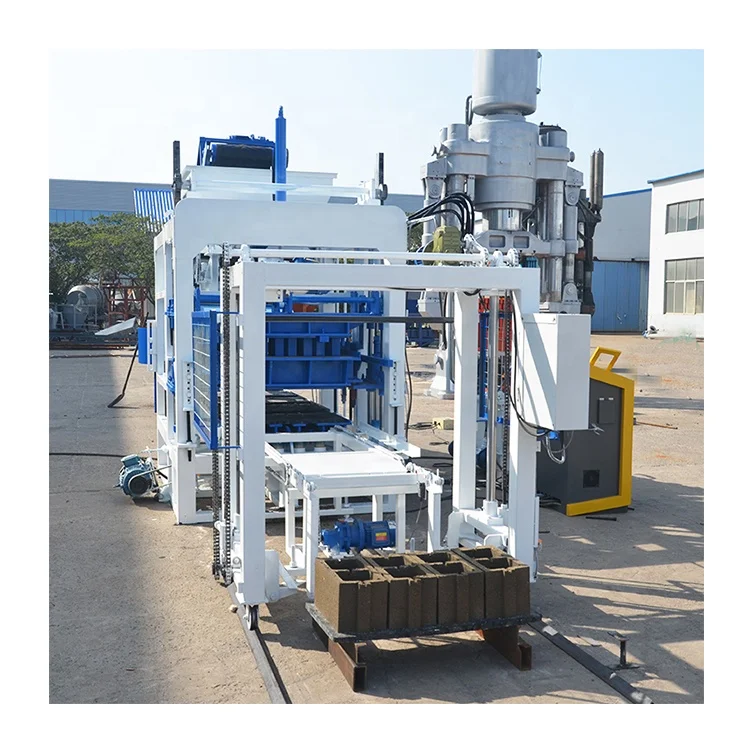 Stationary block machine