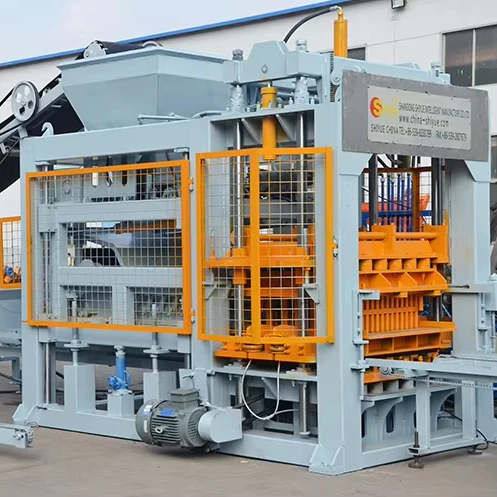
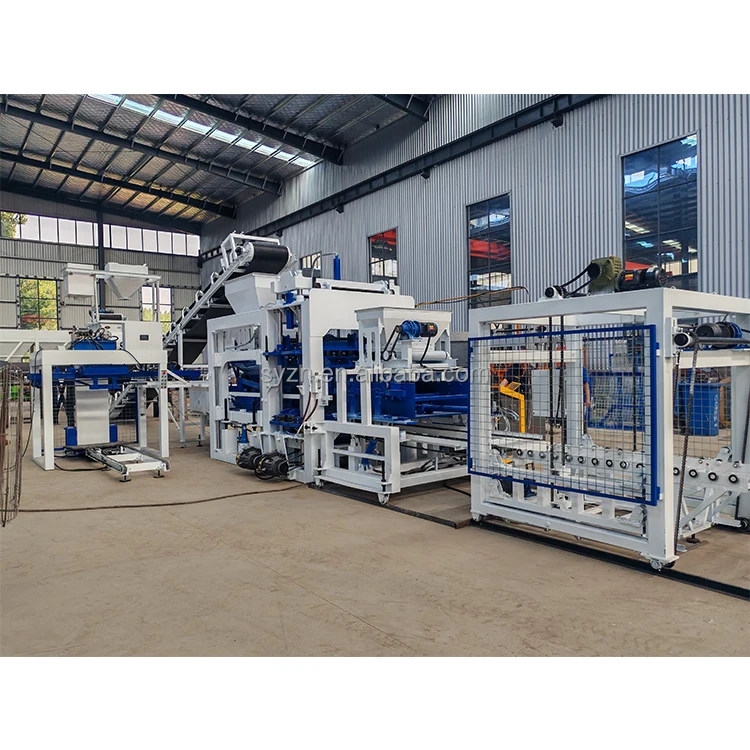
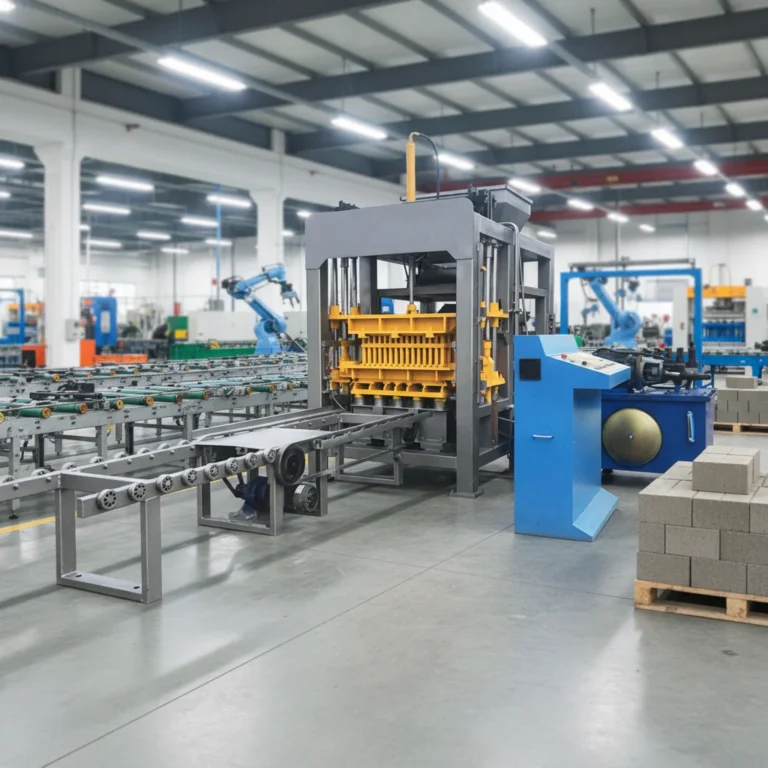
System-Matched Compaction — the QT612 pairs platform vibration at 4600 r/min with 16 MPa hydraulic pressure, so block density stays consistent whether you are pressing hollow blocks or paving stones.
Technical Specifications
| Parameter |
Value |
| Model |
QT612 |
| Product Type |
Hydraulic Block Making Machine |
| Overall Dimensions (L×W×H) |
7350 × 1780 × 2950 mm |
| Rated Pressure |
16 MPa |
| Main Vibration |
Platform |
| Vibration Frequency |
4600 r/min |
| Pallet Size |
880 × 700 mm |
| Molding Cycle |
15–20 s |
| Overall Power |
30.5 kW |
| Automation Level |
Automatic |
| Output (Hollow brick 400×200×200 mm) |
1080 pcs/h, 8640 pcs/day (6 pcs/mold, 12–15 s cycle) |
| Output (Porous brick 240×115×90 mm) |
2800 pcs/h, 22400 pcs/day (14 pcs/mold, 15–18 s cycle) |
| Output (Standard brick 240×115×53 mm) |
6800 pcs/h, 54400 pcs/day (30 pcs/mold, 14–17 s cycle) |
| Raw Materials |
Crushed stone, sand, cement, fly ash, cinder, slag, gangue, gravel, perlite, industrial waste |
| Standards |
CE, SGS, ISO 9001 |
Application Suitability
| Application |
Material or Output |
| Hollow block production for building walls |
Crushed stone, sand, cement, fly ash blends |
| Solid and cellular masonry units |
Gravel, slag, gangue mixes |
| Paving stones and interlocking pavers |
Face-mix or single-layer concrete |
| Kerbstones and edgers |
High-density concrete with local aggregate |
| Grass blocks and slope protection units |
Porous concrete with perlite or cinder |
| Landscaping and garden products |
Colored concrete with pigments |
Why "Pieces per Hour" Means Nothing Without the Block Format
Every capacity figure for the QT612 block machine manufacturer is tied to a specific mould count, block dimension, and cycle range.
Buyers often receive a single hourly number in a quotation, then discover on-site that their actual product format cuts daily output in half. A machine running 400×200×200 mm hollow blocks at six per mould completes a very different daily volume than one pressing thirty standard bricks per mould. When we quote a QT612, the capacity line in the proposal states the exact format, the pieces per mould, and the expected cycle window so the buyer can plan curing space and pallet circulation around real numbers. [NEED_CITE: common causes of capacity shortfall in block plant commissioning reports]

Where the QT612 Sits in the Full Machine Range
The Shiyue range spans mobile egg-laying units for on-site production, semi-automatic presses for small workshops, and fully automatic lines with stacking and cubing. The QT612 block machine manufacturer offering occupies the mid-to-high automatic tier. It is the step up for buyers who have outgrown a QT4-series semi-automatic press but are not yet ready for the footprint and investment of a QT10-series high-capacity line. Platform vibration and 16 MPa hydraulic pressure give it enough compaction force for paving stones and kerbstones, while the 880×700 mm pallet keeps the curing rack layout manageable for a medium-size plant.
Matching the Tier to Your Plant Footprint
Choosing a tier is not only about output volume; it is also about the space and labour you can support. A fully automatic line with cubing and rack handling needs a larger curing yard and a forklift circuit that matches pallet dimensions. The QT612 tier keeps the line compact enough for a first automatic plant yet leaves room to add automatic stacking later. Buyers who plan to start with manual pallet handling and upgrade within two years find this tier practical because the press itself does not need to be replaced — only the downstream handling stations are added. [NEED_CITE: typical block plant layout planning guides for automatic tier machines]
Reading the Specs That Actually Shape Daily Output
The 4600 r/min platform vibration frequency works together with 16 MPa rated pressure to compact the mix from below, which is important when the mould cavity is deep — such as a 200 mm hollow block. Higher frequency alone would leave the top layer under-densified; hydraulic pressure applied through the head shoe finishes the compaction. The 880×700 mm pallet size determines how many blocks fit on each board and how the curing racks must be spaced; ordering pallets and racks that match this dimension from the start avoids a situation where boards pile up on the floor because the rack slots are too narrow. The 30.5 kW overall power draw means the plant needs a dedicated circuit with enough headroom for the vibration motor start-up surge, something we confirm with the buyer’s electrician before production begins.
The Hidden Cost of Specifying the Wrong Tier
When a buyer selects a machine tier based only on peak hourly output, the consequences show up in the first month of production. Pallets ordered for a different size sit unused, the curing rack layout has to be rebuilt, and the forklift cannot turn in the aisle width the smaller machine was supposed to allow. Voltage and frequency that were never confirmed with the factory mean the PLC display arrives in the wrong language or the motor burns out within weeks. Every one of these issues delays commissioning and pushes the project past its deadline. [NEED_CITE: field reports on block machine commissioning delays due to mis-specified auxiliary equipment]
Why Buyers Source This Tier from Shiyue
Block machinery is our single focus, so the QT612 press, moulds, pallets, and handling equipment are specified as one matched system rather than assembled from separate suppliers. We configure the vibration and hydraulic parameters against the buyer’s actual mix design and local aggregate, not a catalogue default. Mould design covers the formats the buyer’s market actually sells, including custom drawings when a standard mould does not fit. Automation level is selectable — a buyer can start with semi-automatic pallet handling and add stacking later without replacing the press. Installation includes operator training on the specific PLC and mould change procedure for this tier.
Documentation & Verification
- Line layout and capacity calculation stating the block format assumed for each output figure
- Machine specification sheet confirming voltage, frequency, and PLC display language
- Mould drawing and format list showing included sizes and custom design options
- Hydraulic and electrical schematic matching the as-built QT612 configuration
- Factory test record and CE declaration before shipment
- Packing photographs and customs documentation support
Installation, Commissioning & Support
- Foundation plan sized to the 7350 × 1780 mm footprint and dynamic load of platform vibration
- Dedicated power circuit rated for the 30.5 kW total draw plus motor start-up surge
- Dismantling and container loading plan showing which assemblies ship flat for site re-assembly
- First-run commissioning with vibration frequency and hydraulic pressure tuned to buyer’s mix
- Operator training on mould change procedure and PLC navigation in confirmed language
- Wear parts and mould list with part numbers for first replacement order
What We Need to Move Your Inquiry Forward
To position the QT612 correctly in your plant plan, please share the block formats your market demands, the daily volume you need for each format, and the local aggregate and cement type you will use. We also need your site voltage and frequency, the curing space you can allocate, and whether you already have pallets or forklifts that the line must accommodate. With those details we can return a configuration proposal that shows realistic output per format and the supporting equipment that fits your site.
Frequently Asked Questions
Q: How is QT612 capacity verified and what block format is each output figure based on?
A: Each capacity line in our proposal states the block dimension, pieces per mould, and cycle time range. For example, 8640 hollow blocks per day assumes a 400×200×200 mm format at six pieces per mould with a 12–15 second cycle. We do not quote a single peak number without tying it to a specific product.
Q: Where does QT612 sit in the full machine range compared to semi-automatic and higher-capacity models?
A: It occupies the mid-to-high automatic tier, above QT4-series semi-automatic presses and below QT10-series high-capacity lines. Buyers scaling from manual operation or starting a medium-volume plant typically land on this tier for its balance of output and plant footprint.
Q: What voltage, frequency, and PLC language options are confirmed before production?
A: We confirm the target market voltage and frequency, then match the motor, control panel, and PLC display language to that standard. This step happens before production starts so the machine can be commissioned immediately on arrival without rewiring or reprogramming.
Q: What plant footprint and supporting equipment does the QT612 tier require?
A: The press itself measures 7350 × 1780 × 2950 mm, but the full line includes mixer, pallet feeder, and curing rack area. We provide a line layout showing each station so the buyer can verify floor space, aisle width for forklifts, and pallet circulation path before confirming the order.
Q: Can automation level be upgraded later from this model, or is a different tier needed?
A: The QT612 press supports upgrades to downstream handling. A buyer can start with manual pallet removal and later add automatic stacking and cubing stations without replacing the press, keeping the original investment intact while reducing labour.

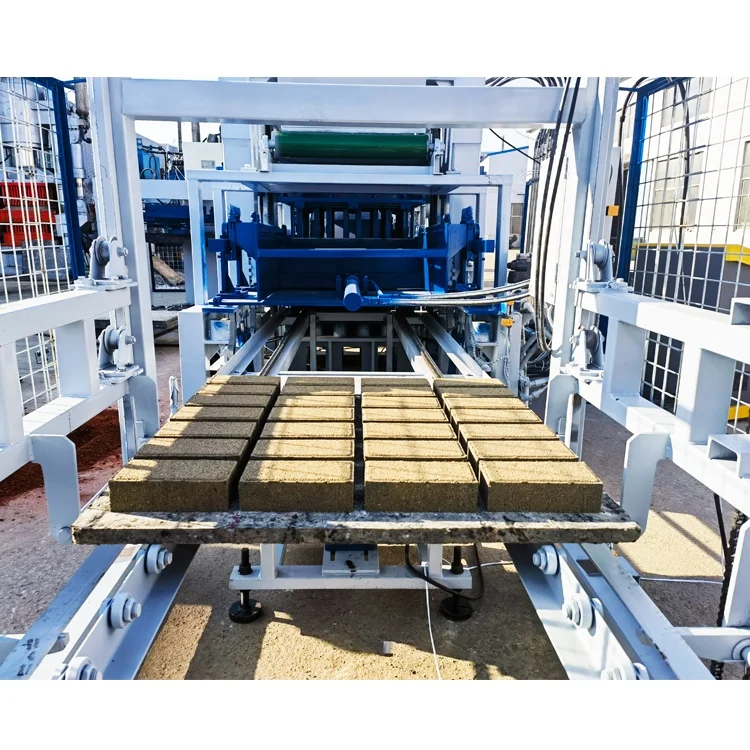
 High quality block machine