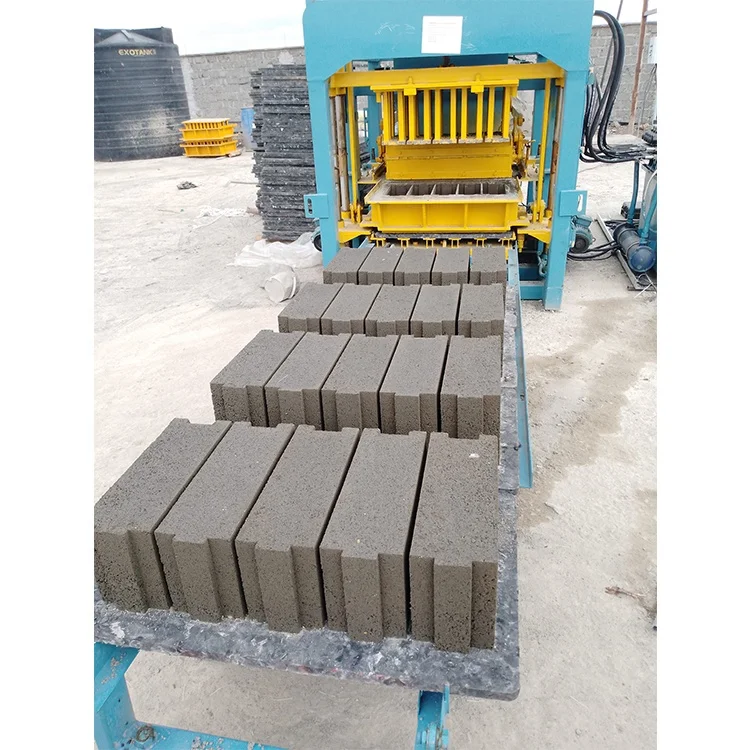
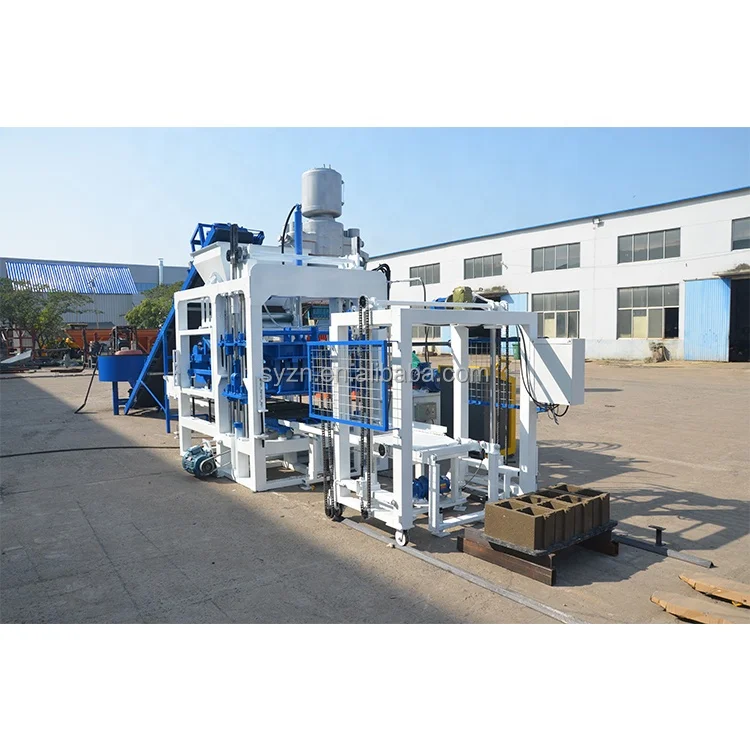
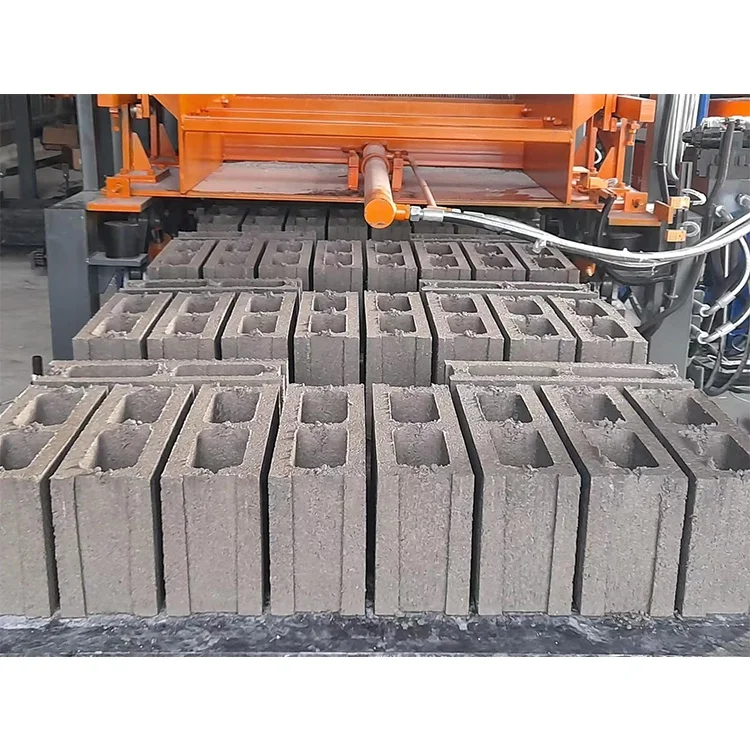
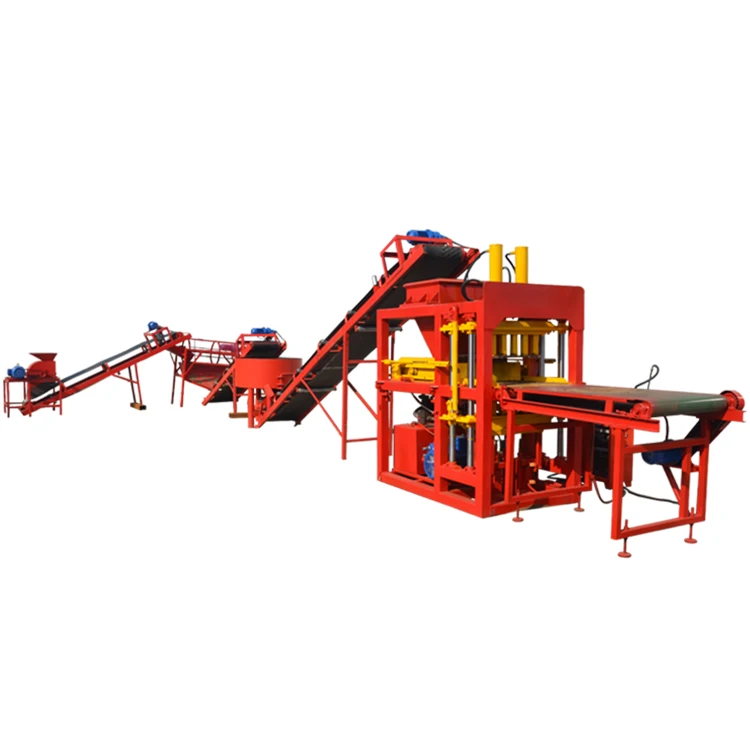
Mid-Tier Automatic Range — QT6-15 occupies the middle tier of our block machine lineup, delivering PLC-controlled output with hydraulic demolding for buyers moving beyond semi-automatic production.
Technical Specifications
| Parameter |
Value |
| Model |
QT6-15 |
| Product Type |
Hollow Block Making Machine |
| Overall Dimensions |
8200 × 1700 × 2950 mm |
| Vibration Form |
Platform Vibration |
| Vibration Frequency |
0–60 Hz |
| Vibration Force |
45 kN |
| Moulding Mode |
Automatic loading with vibration moulding |
| Demolding Method |
Hydraulic |
| Pallet Size |
880 × 850 mm |
| Molding Cycle |
15–20 s (basis to be confirmed with block format and material) |
| Overall Power |
37 kW |
| Total Mass |
7 T |
| Factory Area Required |
1200 m² |
| Control System |
PLC with touch screen interface |
| Output Capacity |
8640–11520 pcs/8 hr based on 400×200×200 mm hollow block, 6 pcs/mould |
| Output Capacity |
11520–15360 pcs/8 hr based on 400×150×200 mm hollow block, 8 pcs/mould |
| Output Capacity |
46080–61440 pcs/8 hr based on 240×115×53 mm solid brick, 32 pcs/mould |
| Output Capacity |
17280–23040 pcs/8 hr based on 200×100×60 mm paving brick, 21 pcs/mould |
| Block Compressive Strength |
More than 15 MPa |
| Standard |
CE |
Application Suitability
| Application |
Material or Output |
| Hollow block production |
Crushed stone, sand, cement, and fly ash blends for structural walls |
| Solid brick manufacturing |
Dense aggregate and cement mixes for load-bearing masonry |
| Paving brick production |
Fine aggregate with cement for driveways and walkways |
| Interlocking brick production |
Graded aggregate blends for retaining walls and landscape projects |
What "10,000 Blocks a Day" Leaves Out When Sizing a Hollow Block Making Machine Manufacturer
Capacity only means something when tied to the exact block format you sell.
I have watched buyers celebrate a quoted daily figure, then arrive on site to find the machine was rated on a small solid brick while their market demands 200 mm hollow blocks. The real output drops noticeably, the shift runs longer, and the curing yard fills at half the expected rate. A Hollow Block Making Machine manufacturer should always state which block size, mould cavity count, and cycle time sit behind the number [NEED_CITE: honest capacity calculation methods for block machinery].

Where the QT6-15 Sits in the Full Machine Range
This model fills the mid-tier automatic segment. Buyers stepping up from a small semi-automatic press find the PLC touch screen and automatic loading reduce operator dependency without demanding the footprint of a high-capacity line. For a first plant, the 1200 m² factory area requirement keeps initial civil work manageable while leaving room for future curing rack expansion.
Positioning on the Investment Ladder
The QT6-15 pairs platform vibration with hydraulic demolding, placing it above egg-laying and mobile machines that rely on manual pallet handling. Below it, semi-automatic models cut capital cost but add labour for pallet cycling. Above it, larger automatic lines incorporate full stacking and cubing stations. Choosing the right tier depends on daily format variety and the curing space you already control [NEED_CITE: block plant layout planning for different automation tiers].
Reading the Vibration and Pressure Figures Together
The 45 kN vibration force operates across a 0–60 Hz range on the platform, meaning frequency can be tuned to match aggregate gradation. Hydraulic demolding then lifts the mould box without dragging green blocks, protecting early strength. When vibration frequency and hydraulic pressure are balanced for the buyer’s local sand or crushed stone, block compressive strength stays above 15 MPa consistently across the shift.
When the Pallet Size Decision Comes Too Late
The 880 × 850 mm pallet dictates curing rack spacing, forklift tine width, and yard layout. I have seen projects where the buyer sourced a forklift locally only to discover the pallets did not match the tine dimension, forcing a second equipment purchase before the first block was cured [NEED_CITE: pallet and material handling compatibility in block plants].
Why Buyers Choose This Range
Machine, mould, pallet, and handling equipment are specified as a matched set rather than assembled from separate vendors. The configuration starts from the buyer’s mix design and local aggregate, not a catalogue default. Mould design covers the formats the buyer’s market actually sells, including custom drawings when standard cavities do not fit. Automation level is selectable, so a plant can begin with manual pallet return and add stacking later. Factory testing records actual cycle times per mould before the machine leaves the workshop.
Documentation & Verification
- Line layout showing QT6-15 footprint within the 1200 m² factory area
- Capacity calculation stating assumed block format and mould cavity count
- Factory test record with measured cycle times per mould
- Mould drawing and format list matched to your market specifications
- Voltage, frequency, and PLC display language confirmation sheet
- CE declaration included with shipment documentation
Installation, Commissioning & Support
- 37 kW total power requires a dedicated circuit with correct breaker sizing
- 8200 × 1700 × 2950 mm dimensions guide container loading and site access planning
- PLC touch screen configured in your operator’s language before dispatch
- Platform vibration calibrated on site to match your local aggregate gradation
- Pallet return system aligned with curing rack height and forklift reach
- Wear parts list covering hydraulic seals and vibration springs for first-year stock
Before You Request a Quote
Tell us the block formats your market sells, the daily volume you need per format, and the local aggregate you plan to use. Include your available workshop area, local voltage and frequency, and whether you already have pallets and curing racks on site so the line can be configured around them.
Frequently Asked Questions
Q: How do I confirm the real daily output for my block format?
A: We provide a capacity calculation that names the exact block size, mould cavity count, and cycle time used in the figure. You can compare it against your target product and adjust the shift length accordingly before the order is placed.
Q: Does the quoted price include pallet handling and stacking?
A: The QT6-15 is offered with different automation levels. Pallet feeding and stacking can be included or excluded depending on your choice, so the quotation clearly separates what is inside the line and what remains manual.
Q: Can the PLC be set to my local voltage and language?
A: Voltage, frequency, and touch screen language are confirmed during the proposal stage. Production only begins after the electrical specification matches your site supply and the display reads in your operator’s preferred language.
Q: How does the QT6-15 compare to smaller or larger models in the range?
A: It sits above semi-automatic and mobile machines in output and automation, while remaining below full high-capacity lines that add automatic cubing. It suits buyers who need PLC-controlled production without the footprint of a large plant.
Q: What factory area do I need to plan for this machine?
A: The QT6-15 requires approximately 1200 m² of covered factory area for the press, raw material feed, pallet circulation, and initial curing rack placement. A site survey helps refine the layout before foundation work begins.

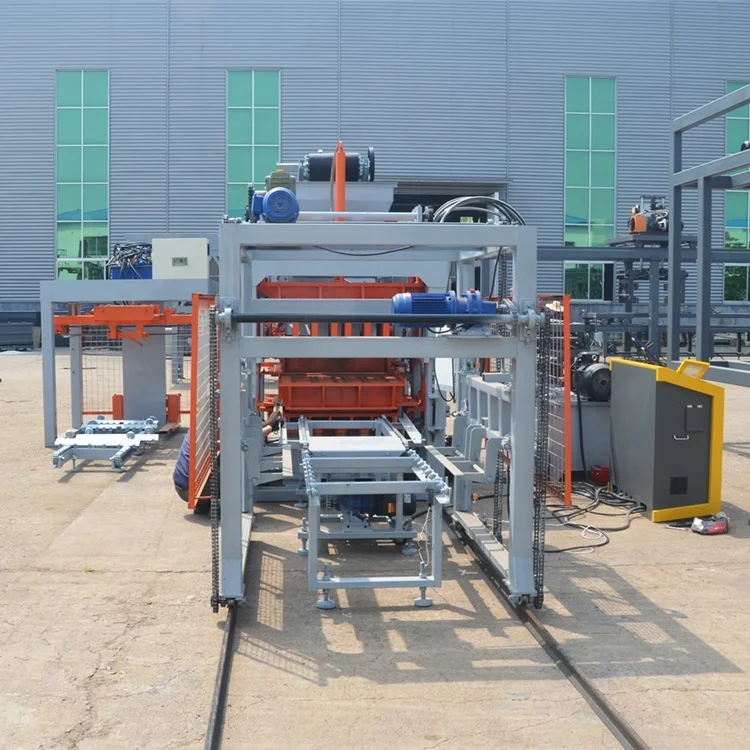
 High quality block machine