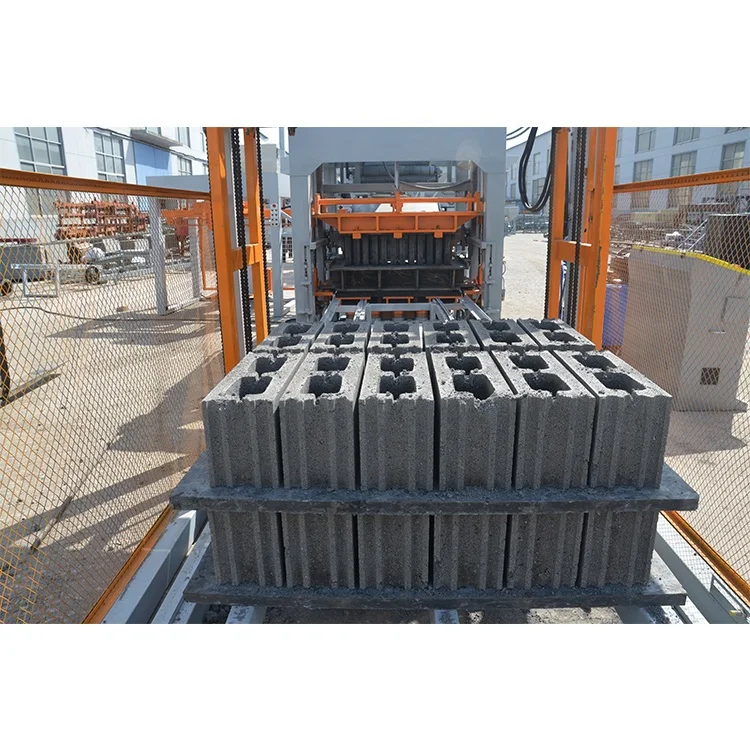
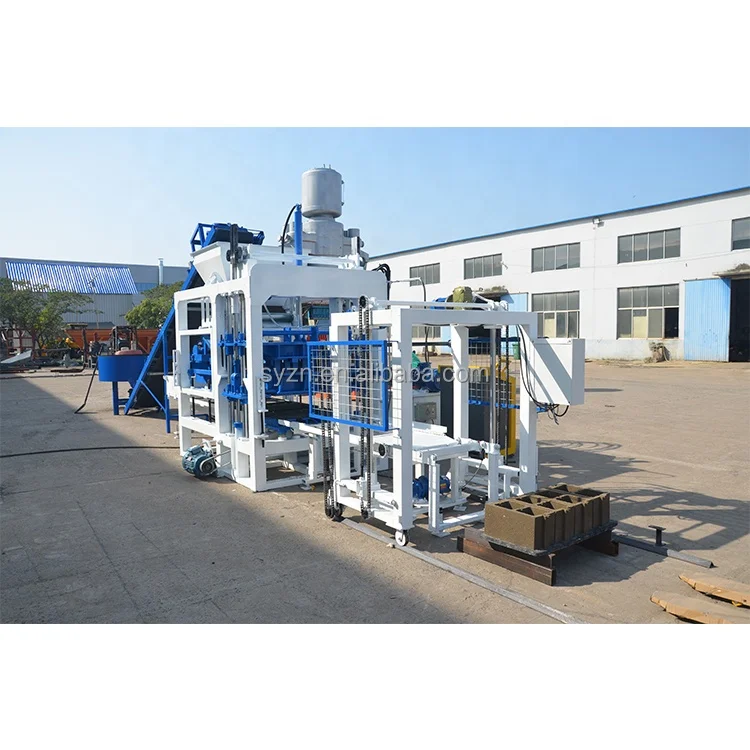
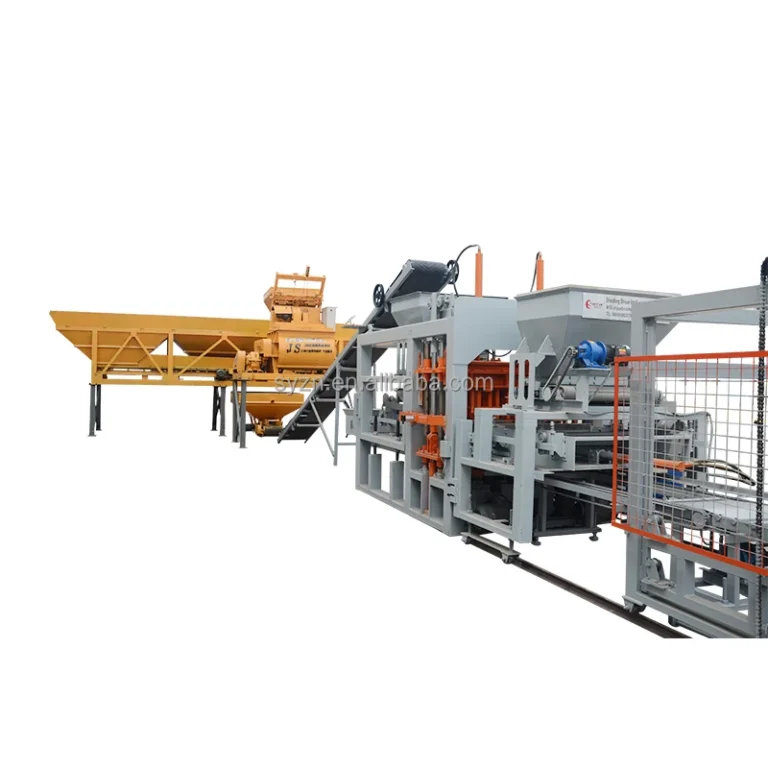
Single-tier clarity — the QT6-15 sits at the midpoint of our automatic block press line, and every output figure here is tied to a block format so buyers can match the tier before committing.
Technical Specifications
| Parameter |
Value |
| Model |
QT6-15 |
| Product Type |
Concrete Block Making Machine |
| Overall Dimensions (L×W×H) |
8200 × 1700 × 2950 mm |
| Pallet Size |
880 × 850 mm |
| Molding Cycle |
15–20 s (hollow & solid); 20–25 s (paving) |
| Vibration Frequency |
0–60 Hz, adjustable |
| Vibration Form |
Platform vibration |
| Vibration Force |
45 KN |
| Hydraulic Demolding |
Independent integrated hydraulic station |
| Overall Power |
37 kW |
| Total Mass |
7 T |
| Factory Area Required |
1,200 m² |
| Control System |
PLC with touch screen, fault diagnosis, safe logic interlock |
| Block Compressive Strength |
> 15 MPa |
| Output — 400×200×200 mm hollow block |
1,080–1,440 pcs/h (6 pcs/mould, 15–20 s cycle) |
| Output — 400×150×200 mm hollow block |
1,440–1,920 pcs/h (8 pcs/mould, 15–20 s cycle) |
| Output — 240×115×53 mm solid brick |
5,760–7,680 pcs/h (32 pcs/mould, 15–20 s cycle) |
| Output — 200×100×60 mm rectangular paver |
2,160–2,880 pcs/h (21 pcs/mould, 20–25 s cycle) |
| Output — 225×112.5×60 mm zigzag paver |
2,160–2,880 pcs/h (15 pcs/mould, 20–25 s cycle) |
| Raw Material Adaptability |
Waste ash, slag, various aggregates; reduced cement dosage possible |
| Voltage & Frequency |
Configurable to buyer’s local standard (basis not stated in source — confirm before order) |
| PLC Display Language |
Selectable (basis not stated in source — confirm before order) |
| Warranty |
1 year for the whole machine (excluding spare parts) |
Application Suitability
| Application |
Material or Output |
| Hollow block production for masonry walls |
Crushed stone, sand, cement, ash blends |
| Solid brick for load-bearing and partition work |
Local aggregate with cement binder |
| Rectangular paving brick for driveways and yards |
High-density mix with fine aggregate |
| Interlocking zigzag paver for pedestrian areas |
Pigmented face mix over base concrete |
| On-site block production for housing projects |
Site-sourced sand and gravel where tested |
What "Pieces per Hour" Leaves Out When No Format Is Named
Capacity without a block size attached is not a capacity at all.
I have stood next to a quiet production line where the owner held a quotation promising thousands of blocks per shift, only to discover the number assumed a small solid brick while his market needed 200 mm hollow blocks. The concrete block making machine manufacturer had quoted a cycle figure and left the format blank, and the gap between the two formats was the difference between a profitable first month and a stalled yard. With the QT6-15, every output row above names the exact block dimensions, the cavity count in the mould, and the cycle window, so a buyer comparing tiers can see where this mid-range automatic press actually lands. [NEED_CITE: common discrepancies between quoted and actual block plant output by format]

Where the QT6-15 Sits in the Full Machine Range
The Shiyue line runs from small semi-automatic presses suited to a first workshop through to high-capacity fully automatic plants with cubing and rack handling. The QT6-15 is the step where a buyer leaves manual pallet feeding behind and enters PLC-controlled automatic cycling, yet it does not demand the footprint or investment of the top-tier models. For an entrepreneur comparing entry options or a distributor mapping which tier fits which customer segment, this model marks the boundary between starter volume and serious daily throughput.
Reading the Range Before Narrowing Down
A buyer who knows the block formats the local market actually purchases can walk down the range and stop at the tier where the per-format output covers daily demand without over-building. The semi-automatic models below this one serve small yards with limited capital; the larger automatic lines above it serve plants running multiple shifts with full stacking and cubing. Placing the QT6-15 correctly on that spectrum prevents the two most common mistakes — buying too small and outgrowing the press within a year, or buying too large and carrying unused capacity while the curing area catches up. [NEED_CITE: block plant sizing errors by investment tier and market demand]
Platform Vibration, Hydraulic Pressure, and the Density That Follows
The 45 KN vibration force working through platform vibration at up to 60 Hz compacts the mix from the pallet upward, while the independent hydraulic station drives demolding without transmitting shock back through the frame. When these two forces are matched to the buyer’s actual aggregate — not a laboratory reference sand — the resulting block holds above 15 MPa consistently across the shift. A concrete block making machine manufacturer that leaves vibration frequency fixed and ignores local sand gradation will see density drift as the raw material changes between deliveries, which is why the PLC on the QT6-15 allows frequency adjustment and why we ask for an aggregate report before confirming the mould.
The Hidden Cost of Skipping the Pallet and Curing Conversation
A press that cycles every twenty seconds means little if cured blocks are still being stacked by hand and pallets are warping in the sun before the concrete reaches stripping strength. The 880 × 850 mm pallet on the QT6-15 must match the curing rack spacing and the forklift tine width already in the yard; if it does not, pallets pile on the floor and the press waits. Buyers who confirm pallet material, curing layout, and handling equipment before the order avoid the silent downtime that no cycle-time figure will ever show on a quotation. [NEED_CITE: pallet handling bottlenecks in medium-capacity block plants]
Why Buyers Place This Model With Us
Block machinery is our single focus, so the QT6-15 is specified as one system — press, mould, pallet, and handling — rather than assembled from separate suppliers after the fact. We set the vibration and hydraulic parameters against the buyer’s mix design and local aggregate, not a catalogue default, which is what keeps compressive strength above 15 MPa across varying sand sources. Moulds are designed for the formats the buyer’s market actually sells, including custom drawings when a local paver shape falls outside the standard range. The automation level is selectable, meaning a plant can begin on the QT6-15 and move to higher tiers within the same control family later. Factory testing runs the exact block format the buyer intends to produce, and the test record ships with the machine.
Documentation & Verification
- Line layout drawing stating the 1,200 m² footprint and station positions for the QT6-15
- Capacity calculation sheet listing output per block format with mould cavity count and cycle
- Machine specification sheet confirming 37 kW power, 45 KN vibration force, and pallet size
- Hydraulic and electrical schematic for the independent integrated station
- Voltage, frequency, and PLC display language confirmation form signed before production
- Factory test record on the buyer’s target block format with pallet photographs before crating
Installation, Commissioning & Support
- Foundation pad sized to the 8200 × 1700 mm footprint with anchor bolt plan provided
- Dedicated 37 kW circuit with voltage and frequency confirmed before the electrical panel is wired
- Machine shipped dismantled to container limits and reassembled on-site with alignment checked
- First production run sets vibration frequency and cycle time to the buyer’s aggregate sample
- Operator training covers PLC touch screen navigation, fault diagnosis, and safe logic interlock response
- Wear parts list identifies hydraulic seals and mould liners with reorder codes
Before You Send the Inquiry
Tell us which block formats your market moves in volume and the daily output you need to cover, so we can place the QT6-15 against the rest of the range and show you exactly where it lands. Confirm your local voltage and frequency along with the PLC language your operators read, because those decisions lock in before the panel is built. If you already have curing racks or a forklift in the yard, share the dimensions so the pallet size and handling layout match what is already on the ground.
Frequently Asked Questions
Q: How does the QT6-15 compare with semi-automatic and higher-capacity models in the range?
A: It is the first tier where full PLC control and automatic loading replace manual cycling, sitting above workshop-scale semi-automatic presses and below high-capacity lines with automatic cubing. Buyers moving up from manual operations typically land here; buyers with multi-shift targets and full rack systems move to the next tier up.
Q: Which block format is assumed in the quoted capacity figures?
A: Every output row in the specification table names the exact block dimensions, mould cavity count, and cycle window. When you switch to a different mould, the cycle and cavity count change, and the daily output shifts accordingly — we provide a recalculation for each format you plan to run.
Q: What factory area does the QT6-15 require, and does this change across the range?
A: The QT6-15 needs approximately 1,200 m² including material staging and curing space. Smaller semi-automatic models require less; larger automatic lines with cubing and rack handling need more. The layout drawing we provide before order shows the exact station positions for your site.
Q: Can I start on the QT6-15 and move to a higher automation tier later?
A: The control family is shared across the automatic range, so a plant that begins with the QT6-15 can add higher-tier automation modules later without replacing the PLC platform. The upgrade path depends on which handling and stacking stations you add.
Q: When must I confirm voltage, frequency, and PLC language?
A: These must be confirmed before the electrical panel is wired, which happens early in production. We send a written confirmation form listing your local supply standard and the operator language for the touch screen, and production does not proceed until it is signed back.

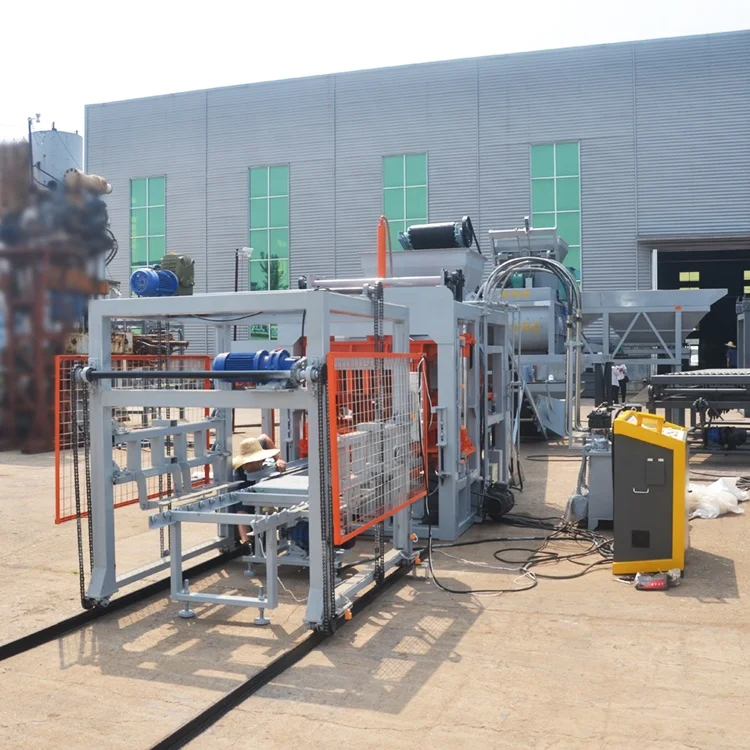
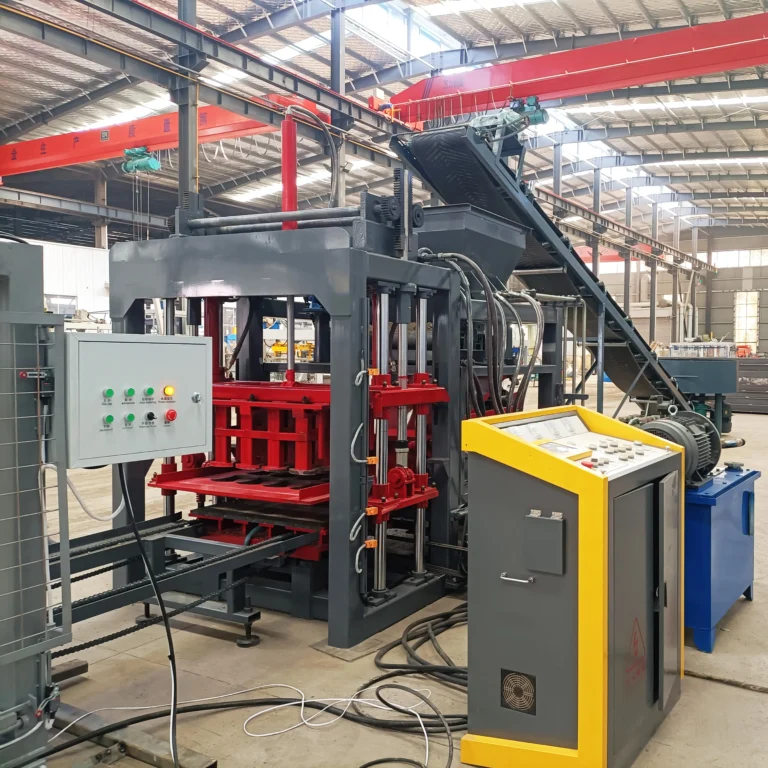 High quality block machine