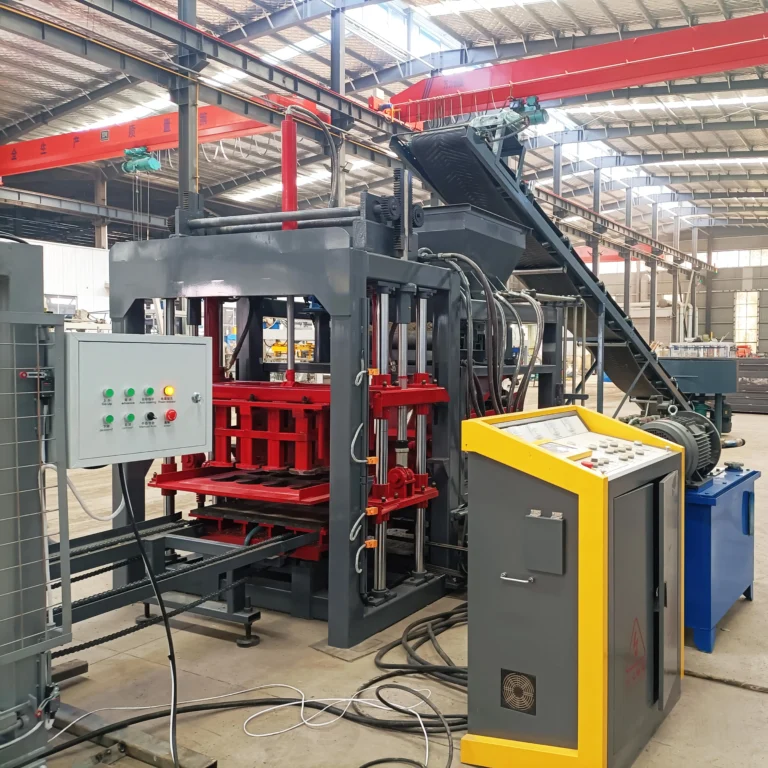
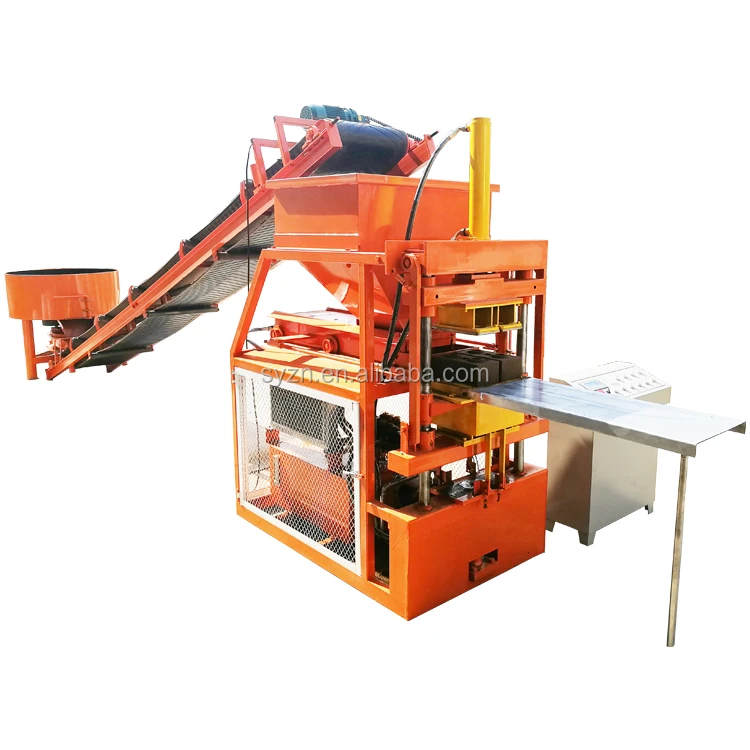
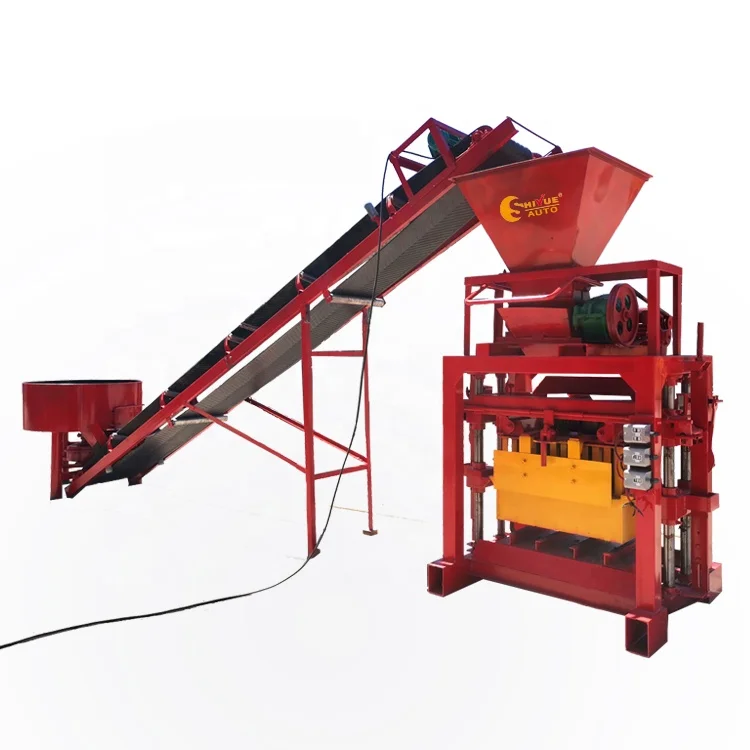
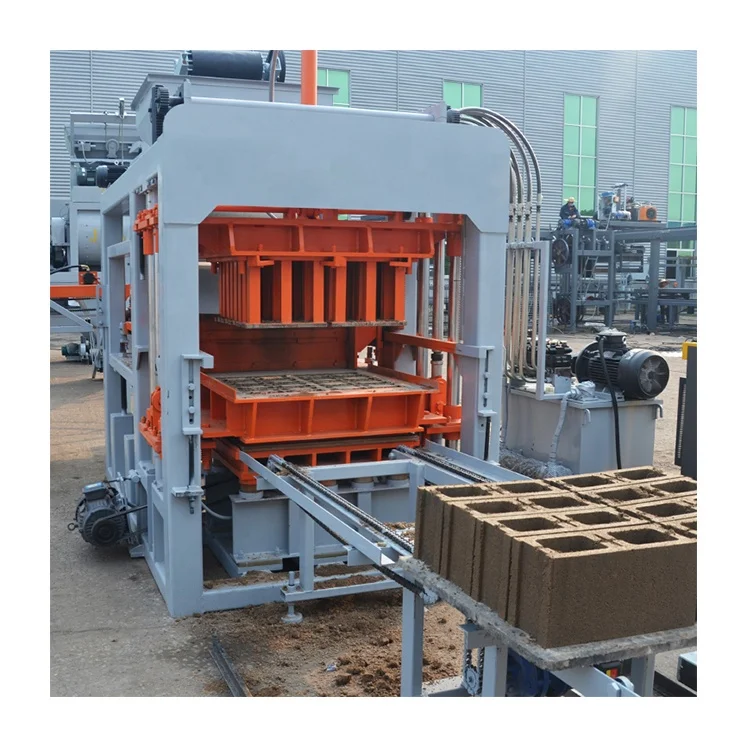
Matched System Design — the QT6-15 block making machine is specified with its mould, pallet and handling stations as one integrated set, not sourced from separate suppliers and bolted together on site.
Technical Specifications
| Parameter |
Value |
| Product Type |
Hydraulic Concrete Block Making Machine |
| Model |
QT6-15 |
| Overall Dimensions (L×W×H) |
7400×1900×2660 mm |
| Molding Cycle |
15–25 s |
| Vibration Frequency |
4600 r/min |
| Exciting Power (Vibration Force) |
40–50 kN |
| Total Power |
31.25 kW |
| Mixer Model |
JQ350 |
| Pallet Size |
850×550×25 mm |
| Total Weight |
7 T |
| Applied Products |
Paver, solid block, hollow block, curbstone |
| Raw Materials |
Crushed stones, sand, cement, dust, fly ash |
| Control System |
PLC control system |
| Hydraulic Station |
Included (high pressure, stable operation) |
| Included Equipment |
Block making machine, hydraulic station, PLC control system, pallet feeder, brick conveyor, block sweeper |
| Free Parts |
Manual hydraulic trolley, spare parts and tools |
| Output — Hollow Block 400×200×200 mm |
1200–1680 pcs/hr, 9600–13440 pcs/8hr (basis: 15–20 s cycle) |
| Output — Hollow Block 400×150×200 mm |
1800–2400 pcs/hr, 14400–19200 pcs/8hr (basis: 15–20 s cycle) |
| Output — Solid Brick 240×115×53 mm |
3240 pcs/hr, 16200–19440 pcs/8hr (basis: 15–20 s cycle) |
| Voltage & Frequency |
To be confirmed with buyer |
| PLC Display Language |
To be confirmed with buyer |
| Automation Level |
Semi-automatic with PLC, pallet feeder included |
Application Suitability
| Application |
Material or Output |
| Hollow block production for masonry walls |
Crushed stone, sand, cement, fly ash blends |
| Solid brick manufacturing for load-bearing structures |
Dense aggregate and cement mixes |
| Paver and curbstone forming for roads and landscaping |
Fine aggregate with cement for surface finish |
| On-site block production by housing contractors |
Locally sourced sand, dust and crushed stone |
| Format expansion for existing concrete product plants |
Alternate moulds fitted to the same press |
What "Pieces per Hour" Actually Means on the QT6-15 Block Making Machine
Every capacity figure here is tied to a named block format and a stated cycle window, because a number without those two anchors is meaningless at the plant gate.
Most quotations list a single throughput number and leave the block format unspoken. When the machine arrives and the buyer switches from the hollow block used in the factory test to a heavier paver the local market actually buys, the cycle stretches and daily output drops. I have watched plants in East Africa run at barely half the promised volume for months before anyone traced the gap back to that first missing line on the spec sheet. The QT6-15 block making machine manufacturer documentation on this page states the block size and cycle basis beside each output figure so the buyer can verify against their own product mix before an order is placed. [NEED_CITE: common causes of capacity shortfall in concrete block plants]
Where the QT6-15 Sits Across the Shiyue Range
The QT6-15 occupies the mid-tier of the Shiyue block machine range. Below it, smaller semi-automatic models serve workshops that run a single format and handle pallets manually. Above it, fully automatic lines add stacker and cubing stations for continuous high-volume output. This model bridges the two zones: it carries a PLC-controlled pallet feeder and brick conveyor yet leaves stacking to be configured based on the buyer’s curing area and labour arrangement. For a first-time plant owner or a contractor replacing an ageing press, the QT6-15 block making machine provides enough automation to cut manual pallet handling without committing to a full stacking line the site may not yet need.
Matching the Press to the Buyer’s Actual Product
A block machine is only as useful as the mould it runs most days. The QT6-15 accepts moulds for hollow block, solid brick, paver and curbstone, and the pallet size of 850×550×25 mm is declared up front so the buyer can measure their existing curing racks and forklift forks against it. When the machine, mould and pallet are specified together rather than purchased separately, the vibration force of 40–50 kN and the hydraulic station can be matched to the density the buyer’s target format requires. [NEED_CITE: relationship between vibration force, hydraulic pressure and block density]
Reading the Specs That Decide Daily Output
The 4600 r/min vibration frequency and 40–50 kN exciting power determine how tightly the mix is compacted inside the mould. Higher compaction shortens the curing time needed before the block can be moved, which in turn frees pallets faster and keeps the cycle within the 15–25 s window. The 31.25 kW total power covers the hydraulic pump, vibration motor and conveyor drives simultaneously; a site with limited transformer capacity must confirm headroom before the machine is wired. Pallet dimensions of 850×550 mm set the mould footprint — a larger pallet would demand a bigger press frame and a heavier-duty curing rack. The PLC control system coordinates the feed, press and eject sequence, and the display language must be confirmed before the cabinet leaves the factory to avoid commissioning delays in the field.
The Cost of Skipping the Configuration Conversation
When a buyer orders on price alone, the machine often arrives configured for a standard river-sand mix that the local quarry cannot supply. The result is either a costly material import or a block that crumbles at the curing rack. Voltage and frequency left unconfirmed until the container arrives can add weeks of idle time while a new transformer or soft starter is sourced locally. Pallet handling gaps — such as stacking left entirely manual on a machine that cycles every 15–25 seconds — create a bottleneck that no amount of press speed can fix. [NEED_CITE: impact of voltage mismatch on hydraulic pump motor life]
Why Source the QT6-15 Block Making Machine Through Shiyue
Block machinery is the sole product focus at Shiyue, so the press, mould, pallet and conveyor are engineered as one system rather than assembled from unrelated suppliers. Each configuration starts from the buyer’s actual mix design and target format instead of a catalogue default. Mould design covers the block types the buyer’s market sells, with custom drawings available when a format falls outside the standard range. Automation level is selectable — a buyer can begin with semi-automatic pallet handling and add stacking later as output grows. Installation support includes on-site commissioning and operator training so the first production run is not left to trial and error.
Documentation & Verification
- Line layout drawing stating output per block format and cycle time
- Machine specification sheet confirming hydraulic pressure and vibration ratings
- Mould drawing and format list covering hollow, solid, paver and curbstone
- Voltage and PLC language confirmation record before production starts
- Factory test run record on the buyer’s specified block size
- Packing photographs and customs documentation support for export
Installation, Commissioning & Support
- Foundation plan sized to the 7400×1900 mm footprint and 7 T operating weight
- Dedicated power circuit confirmed for 31.25 kW total load at the buyer’s voltage
- Machine and hydraulic station assembled on site with pallet feeder alignment checked
- PLC parameters set to the buyer’s block format and confirmed language display
- Operator training covering mould change procedure and daily maintenance points
- Wear parts and mould list supplied with first shipment for early replacement planning
What to Prepare Before Requesting a Quote
Share the block format and dimensions your market buys most, the daily volume you need to hit, and the raw materials you can source locally — including sand type and aggregate grading. Confirm the voltage and frequency at your site, the display language your operators read, and the pallet size that matches your existing curing racks and forklifts. With those details on the table, a capacity calculation per format and a line layout can follow without guesswork.
Frequently Asked Questions
Q: How is the capacity of the QT6-15 verified, and which block format does each output figure assume?
A: Each output figure on this page is tied to a specific block dimension and a 15–20 second cycle basis. Hollow block 400×200×200 mm, hollow block 400×150×200 mm and solid brick 240×115×53 mm are listed separately so the buyer can match the number to their actual product rather than relying on a single generic throughput claim.
Q: Where does the QT6-15 sit in the Shiyue range compared to smaller and larger models?
A: It occupies the mid-tier, offering PLC-controlled pallet feeding and conveyor handling without the full automatic stacking and cubing stations of higher tiers. Buyers who need more than workshop volume but are not yet ready for a continuous high-capacity line typically start here and upgrade stacking later.
Q: What voltage, frequency and PLC language options are available for export markets?
A: Voltage and frequency are confirmed with each buyer before production begins, matching the local grid standard. PLC display language is agreed at the same stage so operators can read the interface on day one. These details are recorded in the confirmation document shipped with the machine.
Q: Which mould formats are included, and how flexible is the mould change process?
A: Standard moulds cover hollow block, solid brick, paver and curbstone within the 850×550 mm pallet footprint. Custom moulds can be designed from buyer drawings. Mould change time depends on the format pair and the operator’s familiarity; it is confirmed during commissioning and operator training on site.
Q: What pallet size is specified, and why does it matter for the rest of the plant?
A: The QT6-15 uses 850×550×25 mm pallets. This dimension determines the curing rack spacing, the forklift fork width and the floor area needed for curing. Declaring it up front lets the buyer verify compatibility with existing handling equipment before the machine is dispatched.

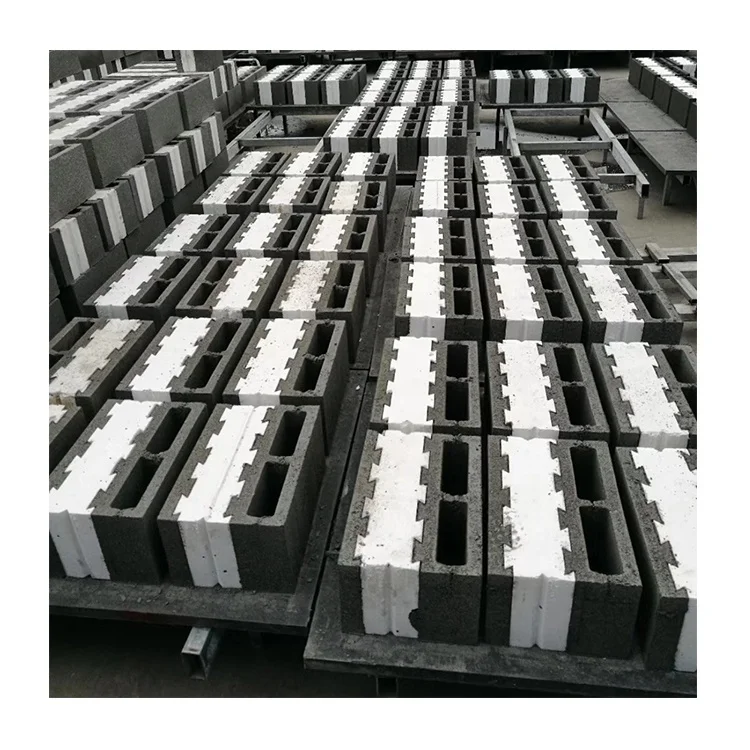
 High quality block machine