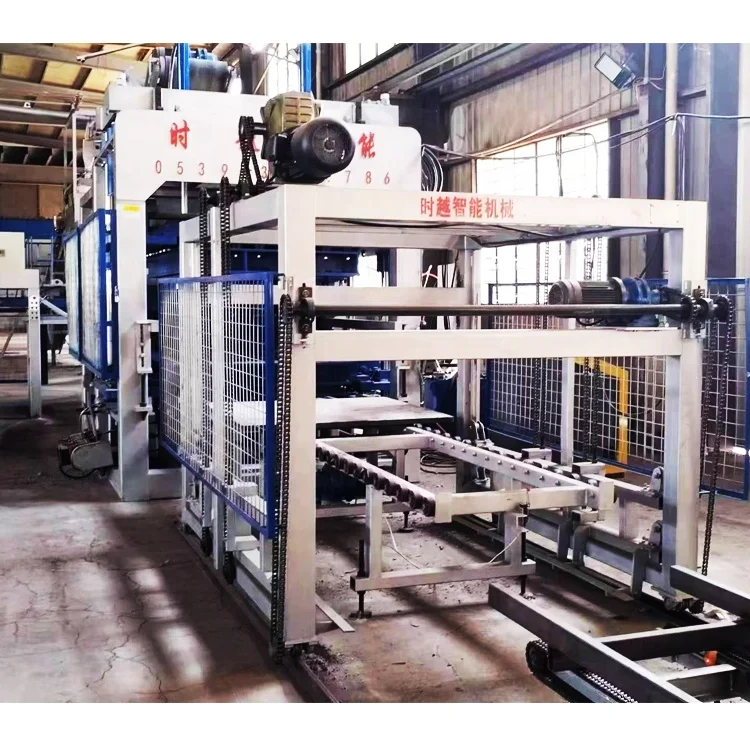
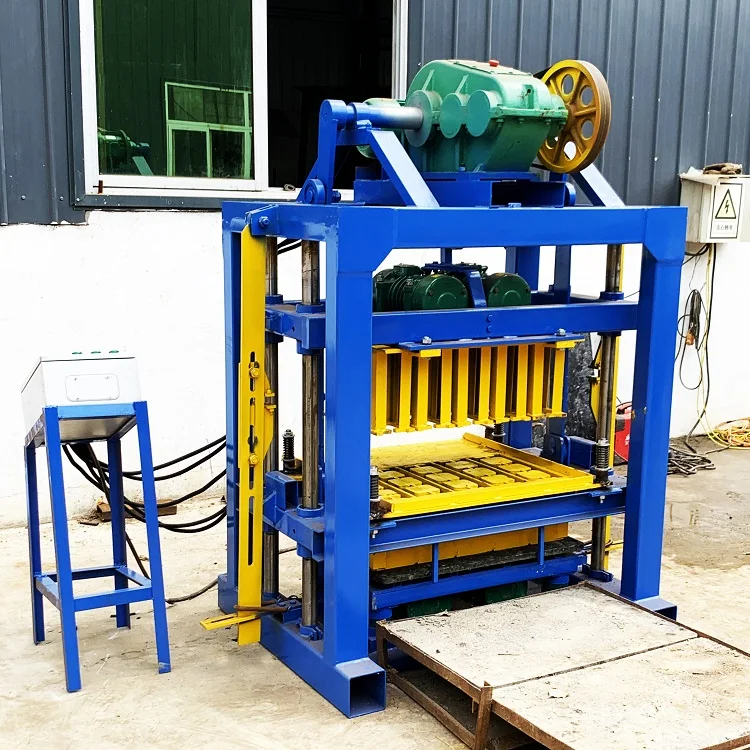
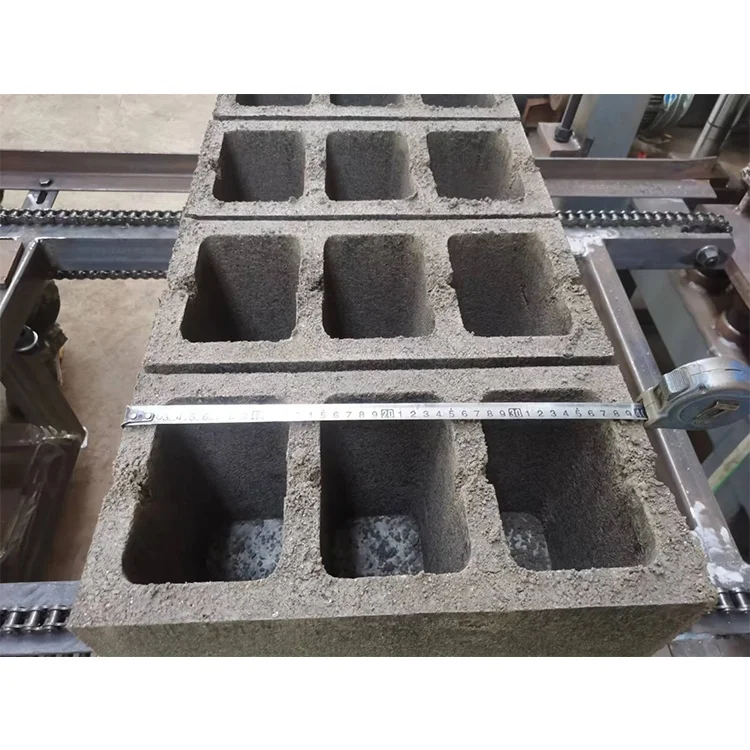
System-Matched Configuration — The QT6-15 is specified as one integrated system where the hydraulic pressure, vibration frequency, and pallet dimensions are balanced against your target block format rather than quoted as isolated figures.
Technical Specifications
| Parameter |
Value |
| Model |
QT6-15 |
| Product Type |
Automatic Hydraulic Concrete Block Making Machine |
| Overall Dimensions (L×W×H) |
7100 × 1500 × 3000 mm |
| Rated Hydraulic Pressure |
21 MPa |
| Main Vibration Form |
Platform vibration |
| Vibration Frequency |
4500–5100 r/min |
| Pallet Size |
880 × 850 mm |
| Moulding Cycle |
15–25 s |
| Overall Power |
31.25 kW |
| Net Weight |
8700 kg |
| Control System |
PLC intelligence control with human-machine dialogue |
| Drive Type |
Hydraulic |
| Automation Level |
Fully automatic |
| Mould Change |
Replaceable moulds for different concrete brick sizes |
| Output Capacity |
Basis to be confirmed per block format and mix design |
| Voltage & Frequency |
Configurable to destination market (confirm before shipment) |
| PLC Display Language |
Configurable to buyer requirement (confirm before shipment) |
| Standards |
CE declaration available |
Application Suitability
| Application |
Material or Output |
| Hollow block production for load-bearing and partition walls |
Crushed stone, sand, cement at 1:4:5 indicative ratio |
| Solid block manufacturing for foundation and structural use |
Dense aggregate with higher cement content for 10–20 MPa range |
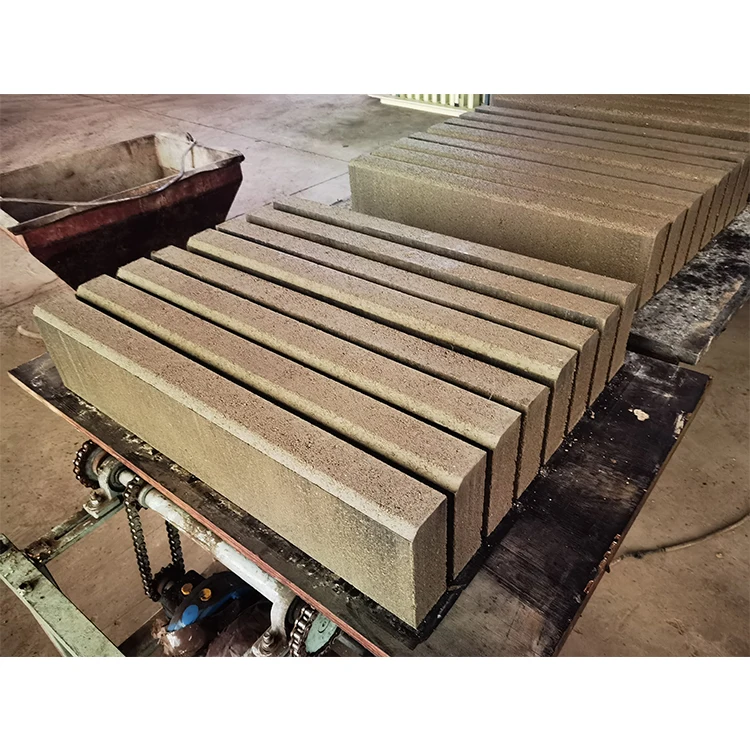
| Paving block and kerbstone for municipal and landscaping projects |
Fine aggregate surface layer with standard base material |
| On-site block production for housing and development contractors |
Local sand and stone adjusted to available gradation |
| Format expansion for existing concrete product plants |
Custom mould design to buyer drawings and market format |
What "Cycles per Hour" Leaves Out About Block Machine Capacity
Real daily output depends on the block format you actually sell, not the fastest cycle the press can achieve.
Many quotations list a single throughput figure that assumes the smallest solid brick the machine can press. When the same automatic concrete block making machine for sale runs a standard hollow block, the moulding cycle lengthens, the pallet moves slower through the line, and stacking patterns change. I once saw a Middle East buyer expect a full shift’s output of hollow blocks based on a solid brick cycle time, and the gap between quotation and reality took weeks of parameter adjustment to narrow [NEED_CITE: block format impact on realistic daily capacity calculations]. The QT6-15 moulding cycle spans 15–25 seconds, and where your format lands in that range determines what your crew actually palletises at the end of the day.

Where the QT6-15 Sits in the Full Machine Range
The QT6-15 occupies the mid-to-high tier of the stationary automatic lineup, positioned above semi-automatic machines that require manual pallet handling and below the highest-capacity lines designed for continuous three-shift operation. For a buyer surveying options, this model offers fully automatic PLC-controlled production without the plant footprint and auxiliary equipment investment that the largest tier demands.
Understanding the Stationary Plant Footprint
This automatic concrete block making machine for sale requires a dedicated foundation, a curing area matched to the 880 × 850 mm pallet size, and raw material feeding infrastructure upstream of the press. The 7100 × 1500 × 3000 mm overall dimensions define the press envelope only; the complete line extends through the mixer, pallet feeder, stacker, and curing rack handling system. Buyers planning a first stationary plant should confirm workshop ceiling height against the 3000 mm machine height plus overhead clearance for maintenance access [NEED_CITE: stationary block plant layout and auxiliary space requirements].
How Pressure and Vibration Work Together in Block Forming
The 21 MPa rated hydraulic pressure and 4500–5100 r/min platform vibration are not independent specifications — they function as a paired system that determines block density and strength. Hydraulic pressure compacts the mix vertically while vibration liquefies the material momentarily so it settles into the mould corners and around reinforcement ribs. If vibration frequency is set too high for a dry mix, the aggregate segregates and the block face shows voids; if pressure is insufficient for a stiff mix, the block edges crumble during demoulding. The PLC intelligence control allows operators to adjust both parameters through the human-machine dialogue interface, but the starting point must be matched to the buyer’s actual aggregate gradation and cement content. The 880 × 850 mm pallet size and 15–25 s moulding cycle window together define the physical boundary within which this pressure-vibration balance is achieved.
The Cost of Skipping Configuration Verification
When voltage and frequency are not confirmed before production, the machine arrives with motors wound for the wrong supply, and commissioning stalls until replacement components ship. When the PLC display language is not specified, operators navigate menus in a language they cannot read, leading to parameter errors that show up as inconsistent block density across a shift. A pallet size chosen without regard to the buyer’s existing forklift and curing racks means the entire handling system must be replaced or the curing area rebuilt. These are not theoretical issues — they appear on the first production day and delay output for weeks [NEED_CITE: common commissioning delays in exported concrete block machinery].
Why Buyers Source the QT6-15 Here
Block machinery is the single focus of this production facility, so the QT6-15 press, its moulds, pallets, and handling equipment are specified as one matched system rather than assembled from separate suppliers. Machine configuration is set against the buyer’s actual mix design and target block format, not a catalogue default, so the vibration and pressure parameters start closer to the correct setting on day one. Mould design covers the formats the buyer’s market actually sells, including custom drawings when standard moulds do not match local dimensions. Automation level is selectable, allowing a buyer to start with the QT6-15 in semi-automatic operation and upgrade the pallet feeding and stacking stations later as volume grows. Installation and commissioning support includes operator training on the specific PLC interface and mould change procedure.
Documentation & Verification
- Line layout with capacity calculation stating the block format assumed for each output figure
- Machine specification sheet confirming hydraulic and electrical schematic with voltage and frequency
- Mould drawing and format list with pallet specification matched to curing area dimensions
- Factory test record on buyer’s target block format before dispatch
- Packing photographs and customs documentation support for shipment clearance
Installation, Commissioning & Support
- Foundation design must support the 8700 kg net weight with allowance for dynamic vibration loads
- Dedicated electrical circuit sized for the 31.25 kW overall power draw with correct voltage and frequency
- Machine arrives dismantled for container loading with reassembly on site by commissioning technicians
- First-run parameter setting on buyer’s local aggregate with vibration frequency and hydraulic pressure adjustment
- Operator training covering PLC human-machine dialogue, mould change procedure, and daily maintenance checkpoints
- Wear parts list and mould maintenance schedule provided at handover
What to Include in Your Inquiry
To receive a configuration that matches your production target rather than a catalogue default, provide the block format and dimensions you intend to sell, your available raw materials with a sample or gradation data, and the daily volume your market absorbs. Specify the voltage, frequency, and PLC display language required at your site, along with the dimensions of your workshop and any existing forklift or curing rack infrastructure the pallet must interface with.
Frequently Asked Questions
Q: How is QT6-15 capacity verified and what block format is it based on?
A: Capacity is calculated per block format, not as a single number. The moulding cycle of 15–25 seconds varies with block height, hollow ratio, and mix design. We provide a line layout document stating which format each output figure assumes, so you can match the calculation to the product your market actually purchases.
Q: Where does this machine sit compared to semi-automatic and mobile tiers?
A: The QT6-15 is a fully automatic stationary press requiring a fixed plant with dedicated curing area. Semi-automatic tiers need manual pallet handling and suit lower investment. Mobile tiers produce on site without a fixed plant. This model fits buyers ready for a permanent production facility with scalable output.
Q: What voltage, frequency, and PLC language options are available?
A: Both supply specifications and the PLC display language are configurable to your market. These must be confirmed before production begins so the motor winding and control interface match your site conditions on arrival, avoiding commissioning delays.
Q: How is pallet size selected relative to my curing area?
A: The standard 880 × 850 mm pallet must align with your curing rack spacing and forklift tine width. We confirm your existing handling equipment before finalising the pallet specification, so wet blocks move from press to curing without a separate equipment purchase.
Q: What installation and operator training support is included?
A: Commissioning includes on-site assembly, first-run parameter adjustment with your local aggregate, and operator training on the PLC interface, mould change procedure, and maintenance schedule. Wear parts and mould support continues after handover.

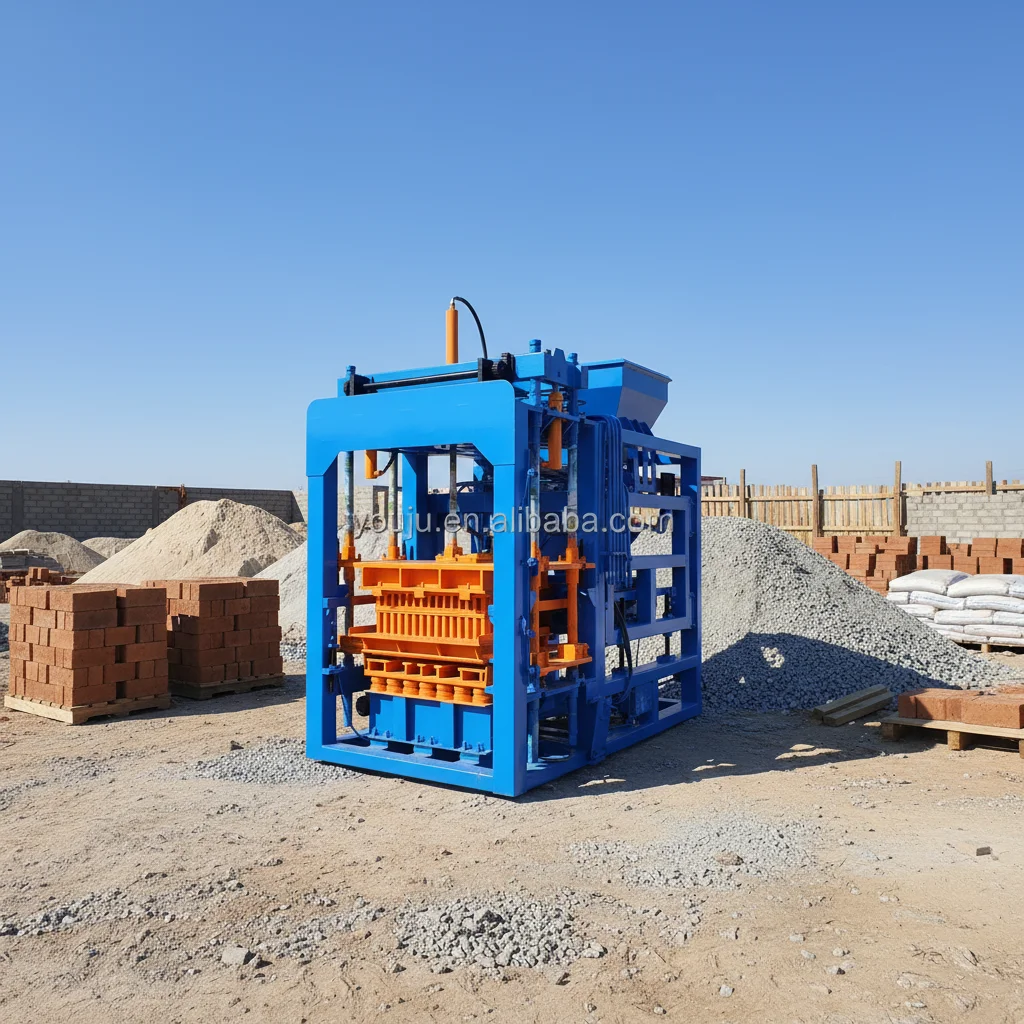
 Stationary block machine