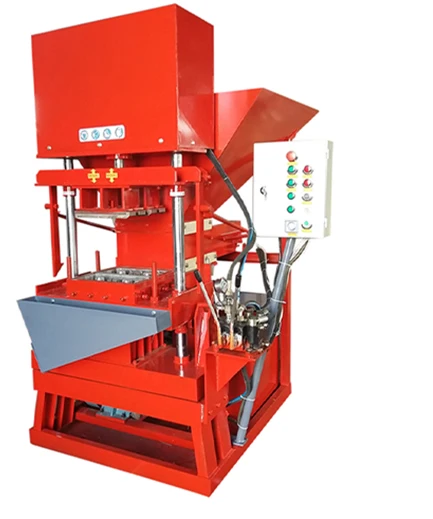
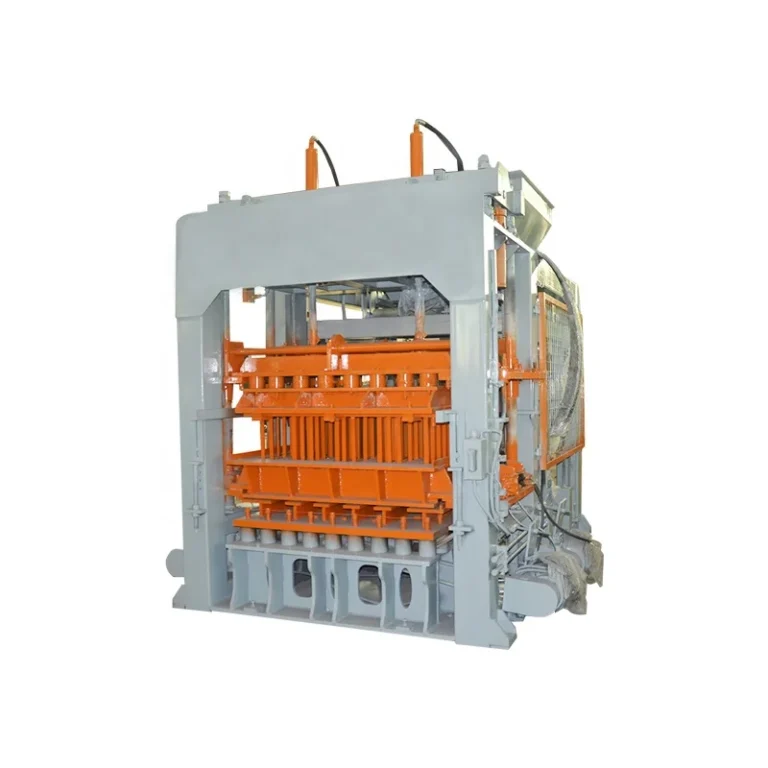
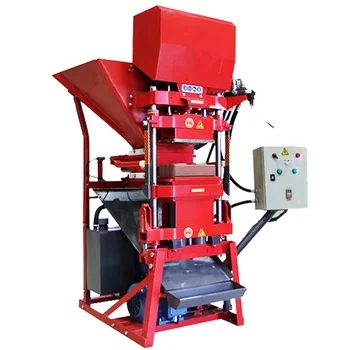
Scalable output tiers — the QT6-15 bridges entry-level workshops and high-capacity automatic lines, letting you place your investment exactly where your market demand sits.
Technical Specifications
| Parameter |
Value |
| Model |
QT6-15 |
| Product Type |
Automatic Concrete Block Making Machine |
| Molding Way |
Vibration and hydraulic pressing |
| Rated Pressure |
21 MPa |
| Molding Cycle |
15s–20s (basis not stated in source) |
| Pallet Size |
900×700 mm |
| Main Machine Weight |
6,000 kg |
| Output — Hollow Block |
1,440 pcs/h; 11,520 pcs/8h (based on 400×200×200 mm, 6 pcs per pallet) |
| Output — Paving Brick |
5,040 pcs/h; 40,320 pcs/8h (based on 200×100×60 mm, 21 pcs per pallet) |
| Output — Solid Brick |
7,680 pcs/h; 61,440 pcs/8h (based on 240×115×53 mm, 32 pcs per pallet) |
| Automation Level |
Automatic (color pigment feeder included for paving bricks; removable for hollow/solid blocks) |
| Line Configuration |
Simple line (JS500 mixer, 8 m belt conveyor, automatic stacker) or full automatic line (cement silo, screw conveyor, cement scale, batching machine, pallet loader, block and pallet separator) |
| Voltage & Frequency |
Customizable to local supply (verify against manufacturer catalog) |
| Warranty |
1 year (excluding wearing parts) |
| Mobility |
Equipped with wheels for relocation |
| Included Accessories |
One hollow block mold, two hydraulic trolleys (with simple line package) |
Application Suitability
| Application |
Material or Output |
| Hollow block production for residential and commercial walls |
Cement, sand, crushed stone, fly ash mixes |
| Interlocking paving brick for walkways and parking areas |
Cement, sand, stone powder with color pigment layer |
| Solid brick for load-bearing and partition masonry |
Cement, fly ash, slag, stone powder blends |
| Kerbstone and curbs for road and landscape edging |
High-strength concrete with coarse aggregate |
| Color sidewalk paving brick for municipal projects |
Face-mix concrete with pigment dosing |
Why Quoted Output Figures Rarely Match Your First Month on Site
Capacity numbers only mean something when tied to a specific block format, mix design, and pallet cycle.
I have watched a mid-tier automatic concrete block making machine manufacturer quote a buyer in the Gulf region a daily figure that looked solid on paper. The first week of production told a different story: the local sand carried high clay content, the vibration force was not matched to that mix, and the actual output settled well below the brochure number. The contractor had committed to a block delivery schedule based on that unqualified figure, and the shortfall cascaded into the masonry crew’s timeline [NEED_CITE: impact of aggregate quality on block machine throughput]. This is why every capacity figure in the table above names the exact block size and pallet layout it assumes.

Positioning the QT6-15 Across the Output Spectrum
The QT6-15 occupies the middle tier of the automatic concrete block making machine manufacturer range. Below it sit semi-automatic models suited to workshops where labor is plentiful and capital is tight. Above it, high-capacity automatic lines run larger pallets and shorter cycles for plants that supply entire housing developments. This model gives a first-time plant owner enough throughput to serve a growing local market without the footprint and utility demands of a full-scale facility.
Scaling from Simple Line to Fully Automatic Operation
A buyer can start with the simple line package — a JS500 mixer feeding an 8-meter belt conveyor, with an automatic stacker at the discharge end — and add stations later. The full automatic configuration introduces a cement silo, screw conveyor, weigh batcher, pallet loader, and block-pallet separator, closing the loop from raw material to cured product handling [NEED_CITE: typical block plant automation upgrade path]. Because the QT6-15 press itself remains the same across both configurations, the upgrade is an extension of the line rather than a machine replacement, which matters when capital must be deployed in phases.
Reading the Specs That Actually Shape Daily Production
The 900×700 mm pallet sets a hard ceiling on how many blocks fit per cycle, which directly governs daily volume regardless of how fast the press closes. The 21 MPa rated hydraulic pressure works together with vibration force to compact the mix; if local aggregate is angular or poorly graded, higher pressure compensates, but only up to the point the mold can contain. The 15s–20s molding cycle range reflects different block heights and wall thicknesses — a thin paving brick releases faster than a tall hollow block. The 6,000 kg main machine weight provides the mass needed to absorb vibration without transmitting it into the foundation, reducing the civil work required for installation.
The Hidden Cost of Skipping Configuration Checks
I once visited a site where the buyer ordered a block machine without confirming pallet size against the curing racks already welded in his yard. The pallets arriving with the machine were too wide for the rack slots, forcing a costly re-fabrication of the entire curing area [NEED_CITE: pallet and curing rack compatibility in block plants]. Another buyer neglected to specify PLC display language; the machine arrived with menus in a language none of his operators could read, and commissioning stalled for days while a translator was found. These are not machine defects — they are configuration gaps that a thorough pre-order checklist would have closed.
Why Buyers Place Repeat Orders Here
Block machinery is the single focus of this operation, so the press, mold, pallet, and handling equipment arrive as one matched system rather than a collection of parts from unrelated vendors. Configuration is set against the buyer’s actual mix design and target block format, not a catalog default that may not suit local aggregate. Molds are designed and supplied for the formats the buyer’s market actually sells, including custom drawings when standard formats do not match. The automation level is selectable — a buyer can commission a simple line today and upgrade to full automatic batching and stacking when volume justifies it. Installation support includes operator training on the specific machine delivered, not generic videos.
Documentation & Verification
- Line layout with capacity calculation stating the block format assumed for each output figure
- Machine specification sheet confirming hydraulic pressure, vibration force, and pallet size
- Mold drawing and format list covering every block type the QT6-15 supports on the 900×700 mm pallet
- Voltage, frequency, and PLC display language confirmation signed before production begins
- Factory test record on the buyer’s target block format before dispatch
- CE declaration where applicable to the destination market
Installation, Commissioning & Support
- Foundation plan matched to the 6,000 kg machine weight and vibration load of the QT6-15
- Electrical supply verified for the confirmed voltage and frequency before the machine is energized
- Pallet size 900×700 mm checked against existing curing racks and forklift tine spacing on arrival
- First production run supervised, with molding cycle adjusted to the buyer’s specific mix and block format
- Operator training covers mold change procedure, hydraulic pressure setting, and daily maintenance points
- Wear parts and mold inventory list provided with recommended reorder quantities
What to Share Before Requesting a Quote
Provide the block format you sell most — dimensions, wall thickness, and target daily volume — so the capacity calculation reflects your actual product. Confirm the raw materials available locally, including aggregate type and any industrial by-products like fly ash or slag. State your site’s voltage, frequency, and preferred control language, along with the curing area dimensions and forklift capacity you already have in place.
Frequently Asked Questions
Q: How do I verify the real daily output of the QT6-15 for my block format?
A: Request a capacity calculation that names your exact block dimensions and the pallet layout used. The figures in this sheet are tied to specific formats — hollow block at 400×200×200 mm, paving brick at 200×100×60 mm, solid brick at 240×115×53 mm. Your format may yield a different number, and only a format-specific calculation gives you a reliable planning figure.
Q: Where does the QT6-15 sit compared to semi-automatic and high-capacity models?
A: It is the mid-tier option. Semi-automatic models below it suit workshops with lower capital and available labor. High-capacity lines above it serve large-scale plants with continuous production demands. The QT6-15 fits buyers who need automatic operation and moderate throughput without the footprint and utility requirements of a full-scale facility.
Q: Can I start with a simple line and upgrade to fully automatic later?
A: Yes. The simple line includes a JS500 mixer, 8-meter conveyor, and automatic stacker. When volume grows, you can add a cement silo, batching machine, pallet loader, and block-pallet separator. The QT6-15 press remains the same, so the upgrade extends the line rather than replacing the core machine.
Q: What voltage and control language options are available?
A: Voltage and frequency are customizable to match local supply standards. The PLC display language is confirmed before production begins so operators can read menus and alarms on day one. State your site’s electrical specifications and preferred language when you submit your inquiry.
Q: What plant footprint does the QT6-15 require at different automation levels?
A: The simple line configuration requires less floor space since material handling is partly manual. The full automatic line adds a cement silo, batching station, and pallet return system, increasing both the length and width of the layout. A site-specific line drawing will show the exact footprint for your chosen configuration.

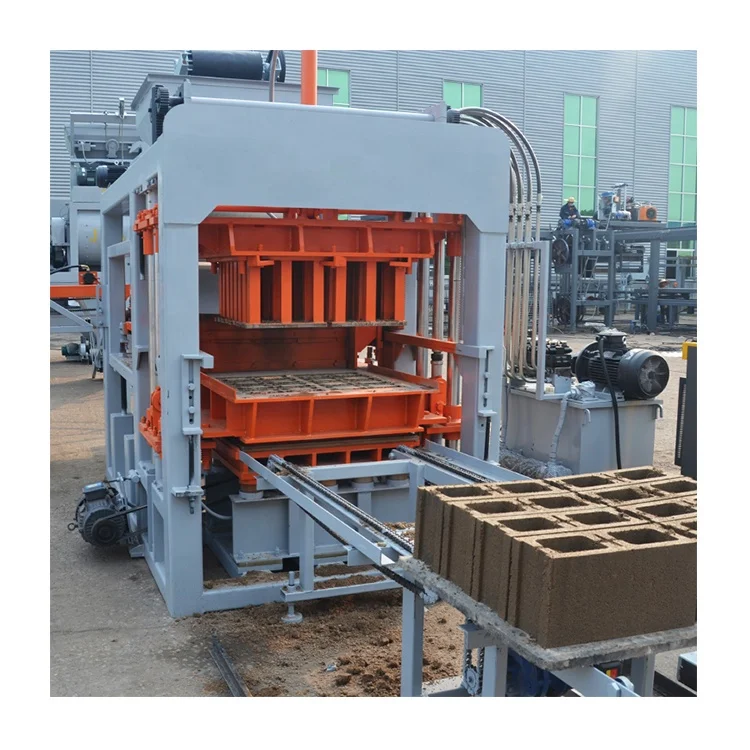
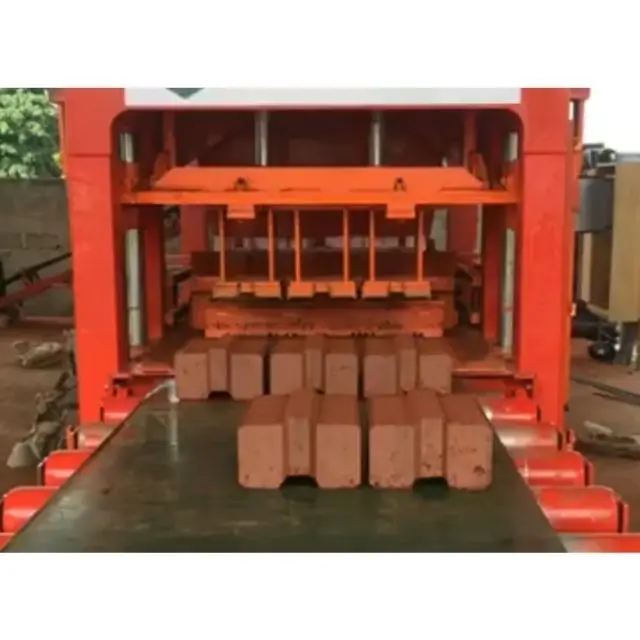 Automatic block machine