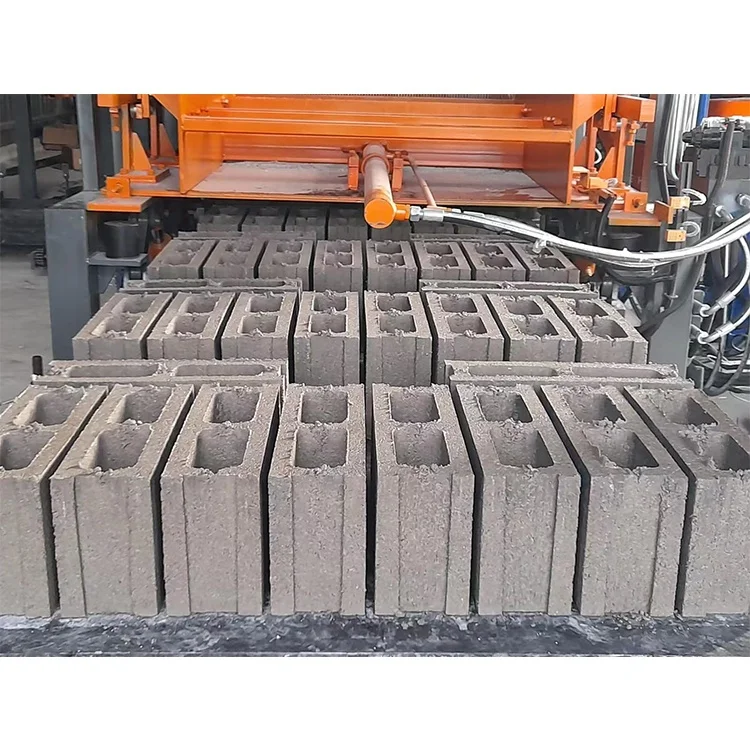
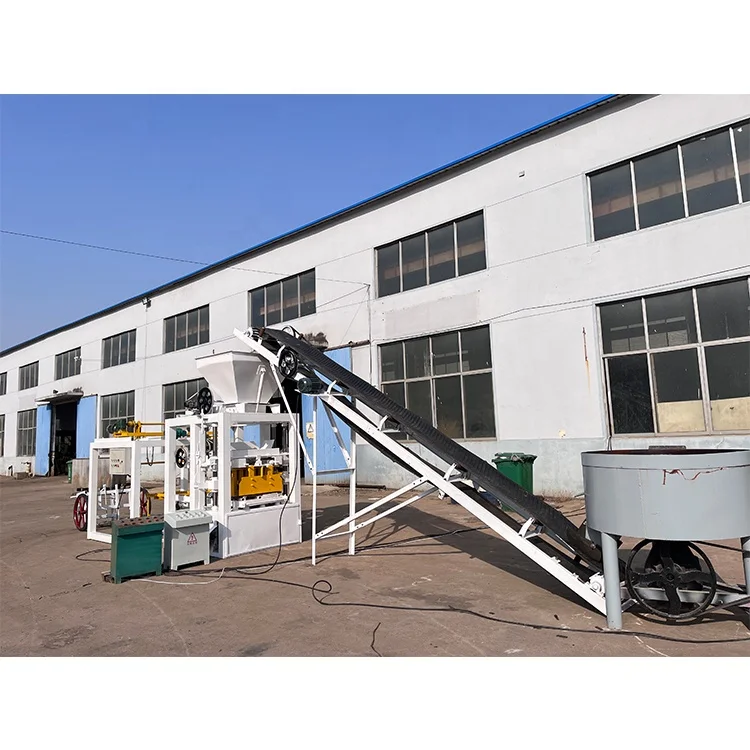
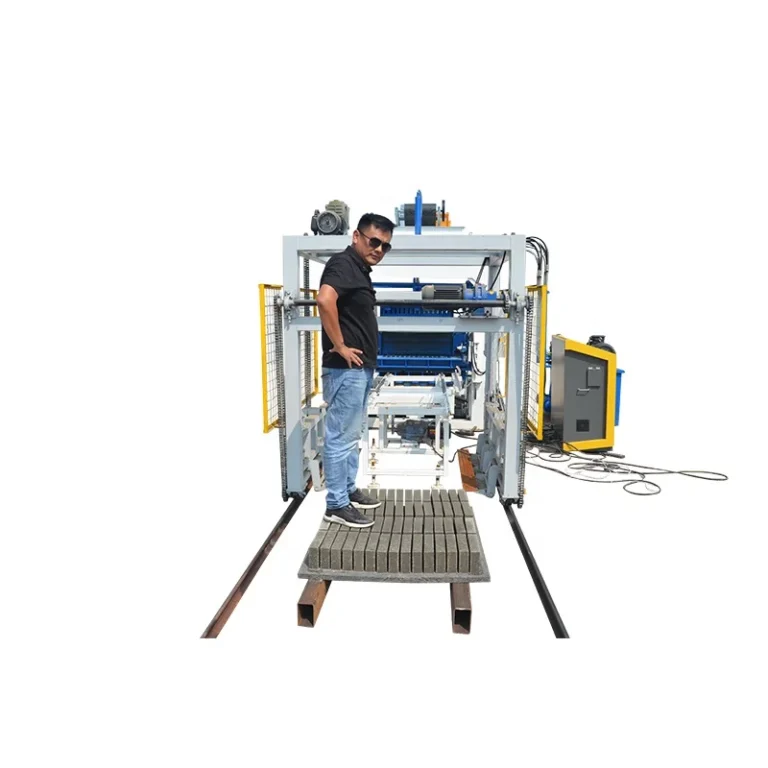
Mid-tier capacity scaling — the Qt4-25a occupies the automatic tier of a block machine range where every output figure is stated against a specific block format, so buyers can compare investment levels without guessing real daily volumes.
Technical Specifications
| Parameter |
Value |
| Model |
Qt4-25a |
| Product Type |
Automatic Concrete Block Making Machine |
| Overall Dimensions (L×W×H) |
7100 × 1600 × 2610 mm |
| Net Weight |
5800 kg |
| Rated Power |
27.5 kW |
| Voltage & Frequency |
380V (other voltages configurable to buyer supply) |
| Vibration Force |
60 kN |
| Pallet Size |
1020 × 850 × 40 mm |
| Mould Formats |
Hollow block 400×200×200 mm (4 pcs/mould); Hollow block 400×150×200 mm (6 pcs/mould); Solid brick 225×112.5×53 mm (16 pcs/mould) |
| Output Capacity |
960 pcs/h based on 400×200×200 mm hollow block; 1440 pcs/h based on 400×150×200 mm hollow block; 3840 pcs/h based on 225×112.5×53 mm solid brick |
| Daily Output |
7680 pcs/day based on 400×200×200 mm hollow block (8 h shift); 11520 pcs/day based on 400×150×200 mm hollow block (8 h shift); 30720 pcs/day based on 225×112.5×53 mm solid brick (8 h shift) |
| Certification |
ISO 9001:2008, CE |
| Warranty |
1 year |
| Color |
Configurable per buyer request |
Application Suitability
| Application |
Material or Output |
| Hollow block production for masonry walls |
Crushed stone, sand, cement and water mix; 400×200×200 mm and 400×150×200 mm formats |
| Solid brick production for building projects |
Fine aggregate and cement blend; 225×112.5×53 mm standard brick format |
| On-site contractor block production |
Local aggregate sourced near project site; suitable for housing and infrastructure builds |
| First plant setup for entrepreneurs |
Small-to-medium scale output across hollow and solid formats with room to scale |
Why Quoted Capacity Misses the Mark on Site
Every output number here names the block format, mould cavity count and shift hours it assumes.
Capacity sheets often show a single impressive hourly figure without saying which block size it refers to. I have stood on sites in West Africa where the daily tally reached barely half the brochure number because the quoted rate assumed a solid brick format while the buyer was running 200 mm hollow blocks the entire shift. The Qt4-25a is listed here with output tied to each of the three mould formats it accepts, so an automatic block making machine manufacturer quoting this model must state which format the buyer intends to produce [NEED_CITE: block format and cycle time relationship in concrete block production].

Where the Qt4-25a Sits Across the Full Machine Range
The Qt4-25a occupies the automatic tier between semi-automatic workshop machines and high-capacity fully automatic lines. Buyers evaluating their first block plant can compare this mid-tier unit against smaller semi-automatic models that require manual pallet handling, or against larger automatic lines that add batching, automatic stacking and cubing. The decision comes down to daily volume targets, available curing space and the labour the buyer is prepared to allocate. This automatic block making machine manufacturer structures the range so a buyer can identify the right tier before committing capital to a footprint that may be larger than necessary.
Matching Investment Level to Plant Footprint
A semi-automatic machine demands less capital but needs more floor space for manual pallet movement and hand stacking. The Qt4-25a introduces automatic pallet feeding, which reduces the operator count at the press itself while still requiring a defined curing area sized to the 1020 × 850 mm pallet [NEED_CITE: curing area calculation methods for concrete block plants]. High-capacity automatic lines add rack handling and cubing stations that further compress labour but expand the total line length. Understanding these tiers lets a buyer choose a configuration that fits both the budget and the physical site.
Reading the Specifications That Matter on the Ground
The 60 kN vibration force works alongside hydraulic pressure to compact the concrete mix into dense, consistent blocks across all three mould formats. If the local aggregate contains a high clay fraction, vibration time may need to increase to achieve the same density, which directly affects cycle time and therefore real hourly output. The 1020 × 850 × 40 mm pallet size determines how many blocks cure per square metre of yard and which forklift can handle the loaded pallets. Voltage defaults to 380V but must be confirmed against the buyer’s local supply before the automatic block making machine manufacturer begins production, because a mismatch discovered after arrival delays commissioning by weeks. The 27.5 kW rated power means the buyer needs a dedicated circuit with adequate breaker capacity; under-sizing the supply leads to motor overheating during peak vibration cycles.
The Cost of Specifying the Wrong Tier
Choosing a machine below the required output tier forces the plant to run extended shifts, accelerating wear on hydraulic seals and vibration motors. Selecting a tier far above actual demand ties up capital in unused capacity and consumes curing space that a smaller line would not need. I have seen contractors buy a high-capacity line for a single housing project, then leave most stations idle because daily block demand never justified the throughput [NEED_CITE: capital allocation risks in small-scale concrete product manufacturing]. The Qt4-25a addresses this by sitting at a mid-range output level that serves small-to-medium plants without over-building the line.
Why Buyers Source This Range Here
Block machinery is the sole focus, so the Qt4-25a press, its moulds, pallets and handling equipment are specified as one matched system rather than assembled from unrelated suppliers. Configuration starts from the buyer’s actual mix design and local aggregate, not a catalogue default. Moulds are supplied for the formats the buyer’s market sells, with custom drawings available when standard sizes do not match local building codes. Automation level is selectable across the range, so a buyer can enter at semi-automatic and move to the Qt4-25a tier as volume grows. Installation support includes operator training on the specific formats and cycle times the plant will run.
Documentation & Verification
- Line layout showing capacity per block format with shift hours stated
- Machine specification sheet matching vibration force and pallet size to your mix
- Mould drawing and format list covering all three included block sizes
- Voltage, frequency and control language confirmation before production begins
- Factory test record on your target block format prior to dispatch
- Operation and maintenance manual with wear parts and mould replacement list
Installation, Commissioning & Support
- Foundation pad sized to the 7100 × 1600 mm footprint with anchor bolt plan
- Dedicated 380V circuit rated for the 27.5 kW load with correct breaker sizing
- Machine arrives with dismantling scope confirmed for container loading
- On-site commissioning includes cycle time adjustment for your local aggregate
- Operator training covers mould change procedure and daily maintenance checks
- Wear parts list provided so first replacement order can be planned in advance
What to Include in Your Inquiry
Send the block formats you intend to produce, your target daily volume and the shift hours you plan to run. Specify your local voltage and frequency, the language required for the control display and the aggregate types available near your site. If you already have curing racks or forklifts, share the pallet dimensions they accept so the automatic block making machine manufacturer can confirm compatibility before quoting.
Frequently Asked Questions
Q: How do the automatic, semi-automatic and mobile tiers differ in output and plant footprint?
A: Semi-automatic machines require manual pallet handling and hand stacking, suiting lower volumes with smaller capital outlay. The Qt4-25a automatic tier adds pallet feeding to reduce operator involvement. Mobile egg-laying machines produce blocks on a concrete floor without fixed pallets, suited to on-site contractor use. Each tier occupies a different footprint depending on curing space and auxiliary stations.
Q: Which output tier fits my target block format and daily volume?
A: Start with the format you sell most and the daily quantity your market absorbs. The Qt4-25a delivers 7680 hollow blocks per eight-hour shift at 400×200×200 mm, or 30720 solid bricks in the same period. If your demand sits below these figures, a semi-automatic model may be sufficient. Higher volumes point toward a full automatic line with stacking and cubing.
Q: What voltage and frequency options are available for my market?
A: The Qt4-25a ships at 380V by default and can be configured to other voltages and frequencies to match your local supply. Confirming these details before production avoids commissioning delays. The control display language is also set at this stage so operators can read parameters in their working language from the first day.
Q: Can I start semi-automatic and move to the Qt4-25a tier later?
A: The range is structured so buyers can enter at a semi-automatic level and step up to the Qt4-25a automatic tier as demand grows. Mould formats and pallet sizes carry across tiers where possible, protecting earlier tooling investment. Discuss the upgrade path when placing the initial order so the foundation and curing layout allow for future expansion.
Q: What auxiliary space do I need beyond the machine footprint?
A: The press itself occupies roughly 7100 × 1600 mm, but the curing area must hold a full shift’s pallets. With 1020 × 850 mm pallets, calculate the rack or yard space needed for your daily output plus curing time. Allow additional room for raw material storage, mixer placement and forklift travel lanes around the curing zone.

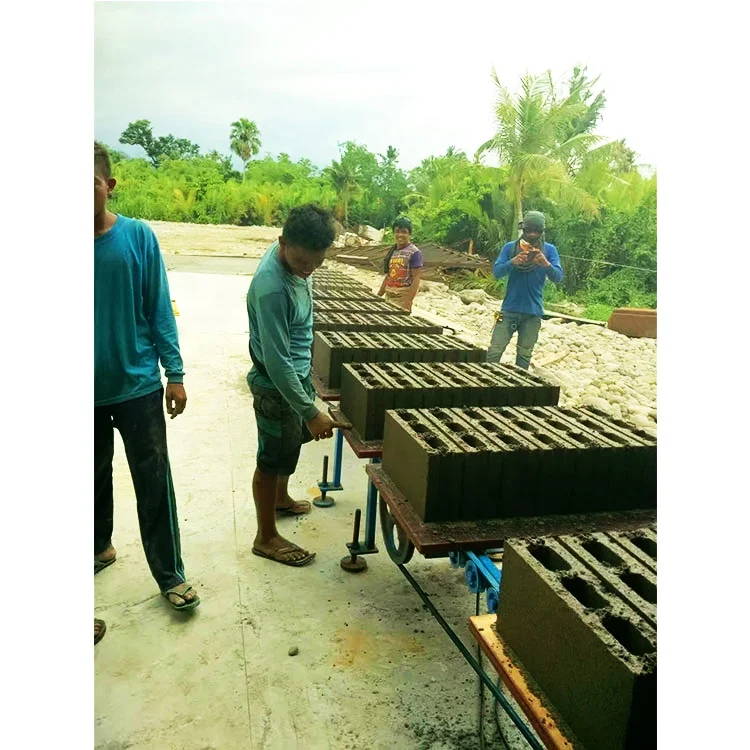
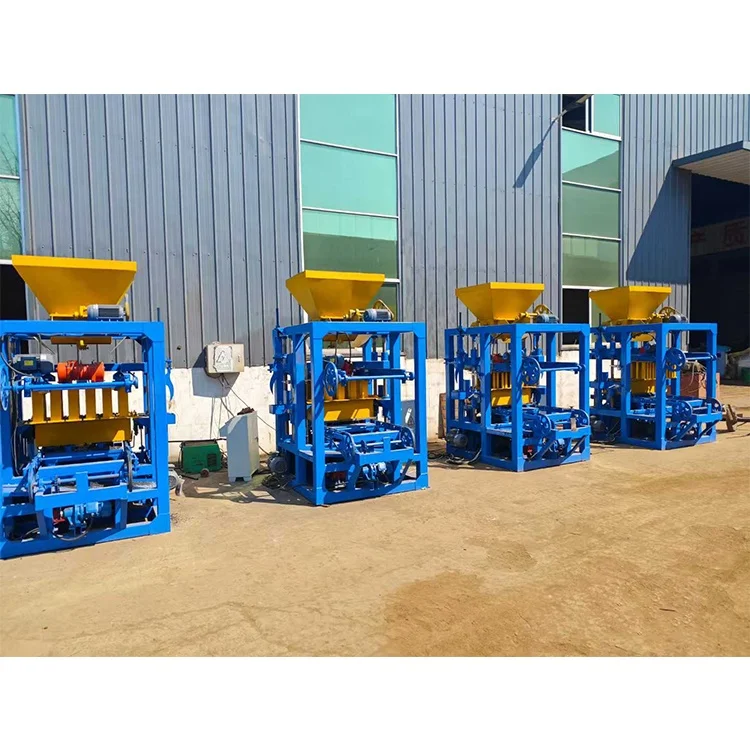 High quality block machine