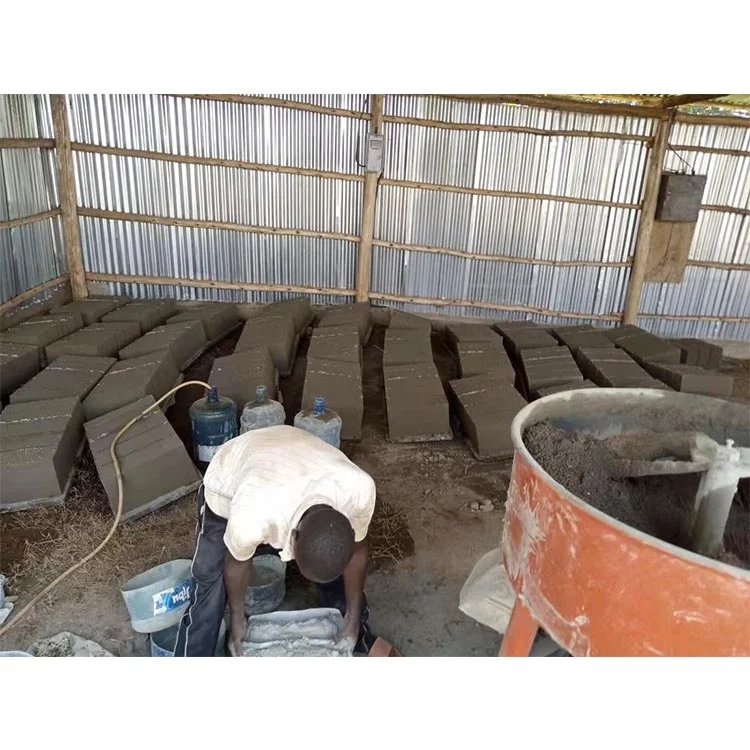
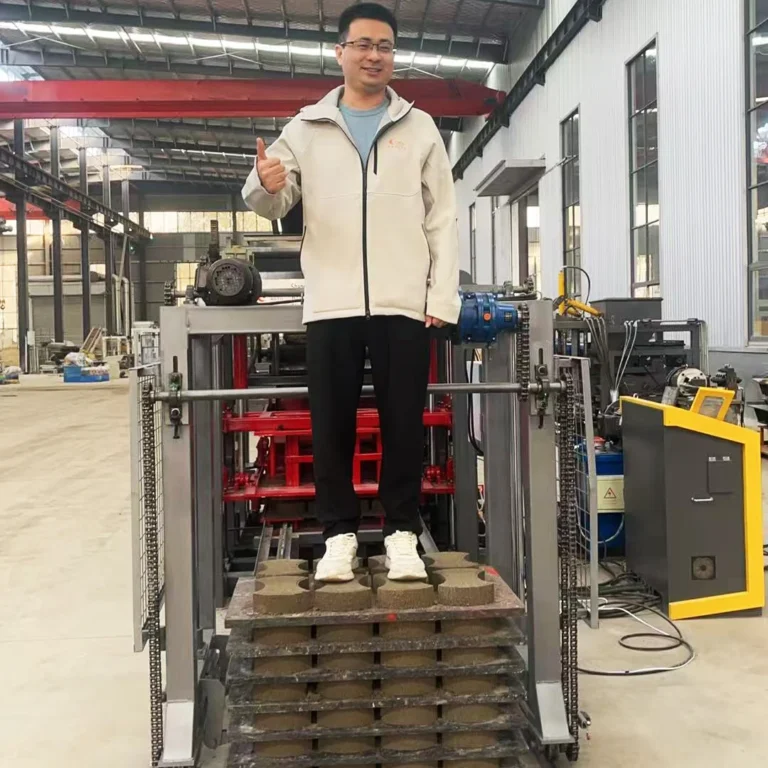
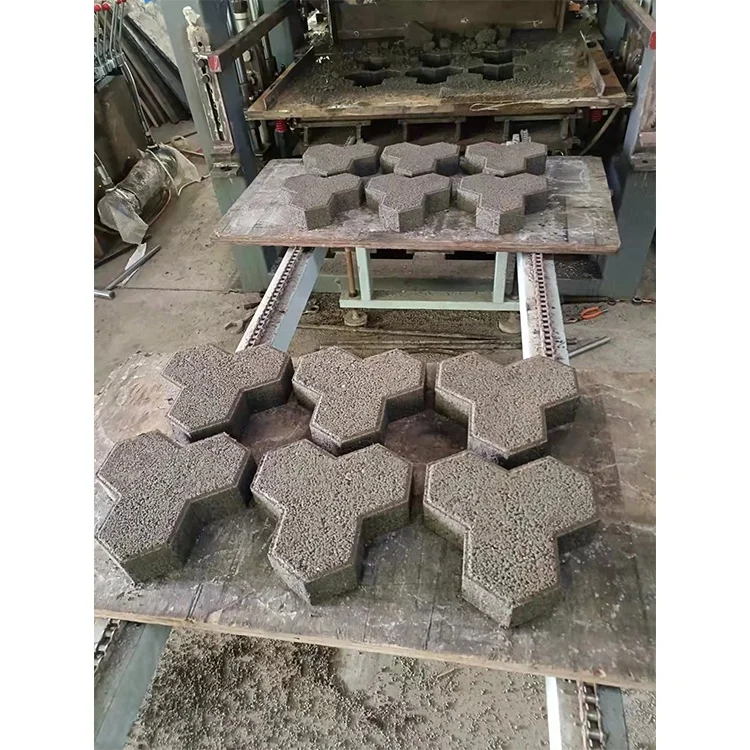
Configurable Output Tiers — the Qt4-25a sits within a complete block machine range where each tier is specified against your actual block format and site conditions, not a generic catalogue figure.
Technical Specifications
| Parameter |
Value |
| Model |
Qt4-25a |
| Product Type |
Automatic Concrete Block Making Machine |
| Overall Dimensions (L×W×H) |
7100×1600×2610 mm |
| Net Weight |
5800 kg |
| Rated Power |
27.5 kW |
| Voltage |
380 V or configurable to buyer’s local supply |
| Vibration Force |
60 kN |
| Pallet Size |
1020×850×40 mm |
| Output: 400×200×200 mm Hollow Block |
4 pcs/mould, 960 pcs/hour, 7680 pcs/day |
| Output: 400×150×200 mm Hollow Block |
6 pcs/mould, 1440 pcs/hour, 11520 pcs/day |
| Output: 225×112.5×53 mm Solid Brick |
16 pcs/mould, 3840 pcs/hour, 30720 pcs/day |
| Control System |
To be confirmed (PLC / relay / manual panel) |
| Automation Level |
Automatic (degree of pallet handling and stacking to be confirmed) |
| Color Options |
According to buyer request |
| Warranty |
1 year |
| Certification |
ISO9001:2008, CE |
Application Suitability
| Application |
Material or Output |
| Hollow block production for small-to-medium block plants |
Crushed stone, sand, cement, and fly ash aggregates |
| Solid standard brick manufacturing |
Cement-bound sand and stone dust mixes |
| On-site block production for construction contractors |
Locally sourced aggregate matched to project specification |
| First plant setup for entrepreneurs entering block production |
Standard hollow and solid formats for regional building markets |
| Format expansion for existing concrete product manufacturers |
Additional mould formats added to current production range |
What "960 Blocks per Hour" Actually Means for Your Plant
Every capacity figure here is tied to a specific block format — no cycle-based estimates without context.
Buyers often receive quotations stating output in cycles per hour, leaving the actual block count ambiguous until the machine arrives and production begins. With the Qt4-25a Automatic Block Making Machine for Sale, the hourly and daily figures are calculated per format: 960 pieces per hour for 400×200×200 mm hollow blocks, 1440 pieces per hour for 400×150×200 mm hollow blocks, and 3840 pieces per hour for 225×112.5×53 mm solid bricks. These numbers shift if your mix design or local aggregate differs from the test baseline [NEED_CITE: block density and cycle time relationship to aggregate gradation]. Knowing the exact format behind each capacity figure lets you match the machine tier to your real daily target before committing to a purchase order.

Where the Qt4-25a Sits Across the Full Machine Range
The Qt4-25a occupies the entry-to-mid automatic tier within a broader lineup that spans mobile egg-laying machines, semi-automatic presses for smaller workshops, and high-capacity fully automatic lines with integrated stacking and cubing. For a buyer evaluating where to position a first or replacement plant, this model delivers automatic pressing with configurable downstream handling. An Automatic Block Making Machine for Sale at this tier suits operations targeting moderate daily volumes without the capital outlay of a full automatic stacking system.
Matching Machine Tier to Your Investment and Footprint
Choosing between tiers is rarely just about output volume — it involves plant footprint, labour availability, and the curing infrastructure already on site. A semi-automatic tier may fit a contractor producing blocks on a project site with limited space, while a fully automatic line demands a larger curing yard and forklift logistics to match the press output. The Qt4-25a allows buyers to start at this automatic tier and expand supporting equipment as production scales [NEED_CITE: block plant layout planning for progressive automation]. This flexibility matters for importers stocking machines for regional markets where buyer requirements vary widely between semi-automatic and fully automatic setups.
How Vibration, Pressure, and Pallet Size Shape Your Output Quality
The 60 kN vibration force works in combination with hydraulic pressure to compact the mix into the mould cavity — insufficient force relative to your aggregate size produces blocks with inconsistent density and lower compressive strength. The 1020×850×40 mm pallet size must align with your existing curing racks and forklift tine spacing; a mismatch means either replacing your curing infrastructure or running a non-standard pallet that complicates handling. The 27.5 kW rated power reflects the combined draw of the vibration motor, hydraulic pump, and conveyor drives, which should be verified against your site transformer capacity. Voltage is configurable to your local supply — a 380 V default is standard, but 440 V or other ratings must be confirmed before production begins to prevent commissioning delays that can stall an entire project timeline [NEED_CITE: voltage and frequency standards by export market].
The Cost of Skipping Configuration Details Before Shipment
When voltage and frequency are not confirmed before the machine leaves the factory, the consequence is not a simple adapter swap — it can mean weeks of idle time while a local transformer is sourced and installed. I have seen automatic block machines sit on a project site for three weeks because the local supply was 440 V / 60 Hz and the machine was built for 380 V / 50 Hz, derailing the entire construction schedule [NEED_CITE: electrical compatibility issues in international machinery deployment]. Similarly, choosing a pallet size without checking it against the buyer’s curing area and forklift specification leads to manual re-handling that defeats the purpose of an automatic line. These are not engineering failures — they are communication failures that happen when configuration details are treated as minor paperwork rather than critical production parameters.
Why This Range Approach Works for Your Procurement
Block machinery is the single focus here, which means the Qt4-25a is specified alongside its moulds, pallets, and handling equipment as a matched system rather than assembled from unrelated suppliers. Each machine configuration is set against the buyer’s actual mix design and local aggregate, not pulled from a catalogue default. Mould design covers the formats your market actually sells, including custom drawings for non-standard block shapes. The automation level is selectable — a buyer can begin with semi-automatic pallet handling and add automatic stacking later as production volume justifies the investment. Installation includes commissioning support and operator training so the line runs correctly from the first production shift.
Documentation & Verification
- Line layout with capacity calculation stating the block format assumed for each output figure
- Machine specification sheet with voltage, frequency, and control language confirmed before production
- Mould drawing and format list covering every block type in your market
- Factory test record demonstrating cycle time and block density on your specified mix
- CE declaration and ISO9001:2008 documentation where applicable to your import requirements
- Packing photographs and customs documentation support for your shipping route
Installation, Commissioning & Support
- Foundation preparation for the 7100×1600 mm footprint with level tolerance for vibration stability
- Dedicated power circuit sized for the 27.5 kW rated draw at your confirmed voltage and frequency
- Assembly and alignment of vibration table, mould clamping, and pallet feeding stations on site
- First-run parameter setting including vibration duration and hydraulic pressure matched to your mix
- Operator training covering mould change procedure, daily maintenance checkpoints, and safety interlocks
- Wear parts and mould replacement list with sourcing guidance for ongoing production continuity
What We Need From You to Build an Accurate Proposal
To configure the Qt4-25a correctly for your operation, share your target block format and daily output requirement, along with the local aggregate type and mix design you plan to use. Confirm your site voltage, frequency, and preferred PLC display language so the control system is built to match. If you have existing curing racks or forklifts, provide their specifications so the pallet size and handling equipment integrate without modification.
Frequently Asked Questions
Q: How is capacity calculated and which block format does each figure assume?
A: Each output figure is stated per specific block format. The Qt4-25a produces 960 pieces per hour for 400×200×200 mm hollow blocks, 1440 per hour for 400×150×200 mm hollow blocks, and 3840 per hour for 225×112.5×53 mm solid bricks. These figures assume a standard mix and cycle — your actual output may vary depending on local aggregate and mix design.
Q: Where does the Qt4-25a sit compared to semi-automatic and high-capacity automatic lines?
A: The Qt4-25a occupies the entry-to-mid automatic tier. Below it, semi-automatic machines suit smaller workshops with lower investment. Above it, high-capacity automatic lines integrate full stacking and cubing for larger plants. This tier balances automatic pressing with configurable downstream handling for moderate daily volumes.
Q: What voltage, frequency, and control language options are available?
A: The standard voltage is 380 V, but the machine is configurable to your local supply including 440 V or other ratings. Frequency and PLC display language must be confirmed before production. This confirmation step prevents commissioning delays when the machine arrives at your site.
Q: What plant footprint and supporting equipment does this tier require?
A: The Qt4-25a press occupies 7100×1600×2610 mm. Supporting equipment — raw material feeding, mixer, pallet handling, and curing rack space — extends the total line footprint. The pallet size of 1020×850×40 mm should be checked against your existing curing area and forklift specification before finalizing the configuration.

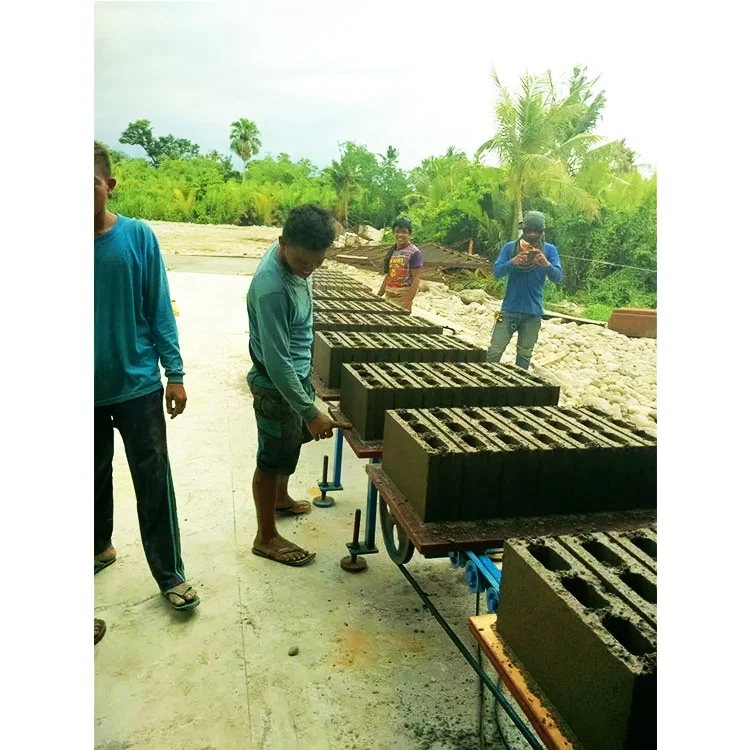
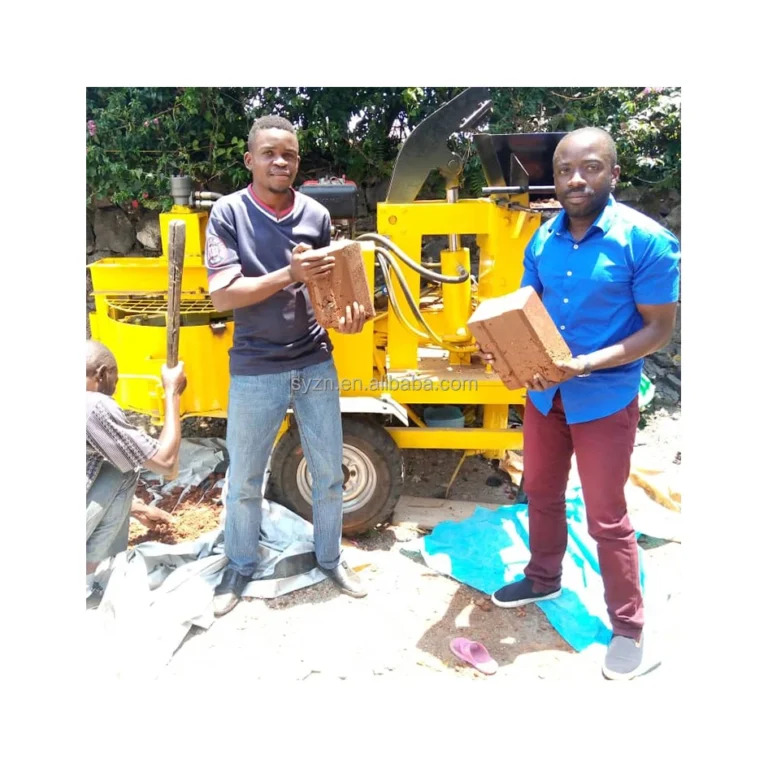 High quality block machine