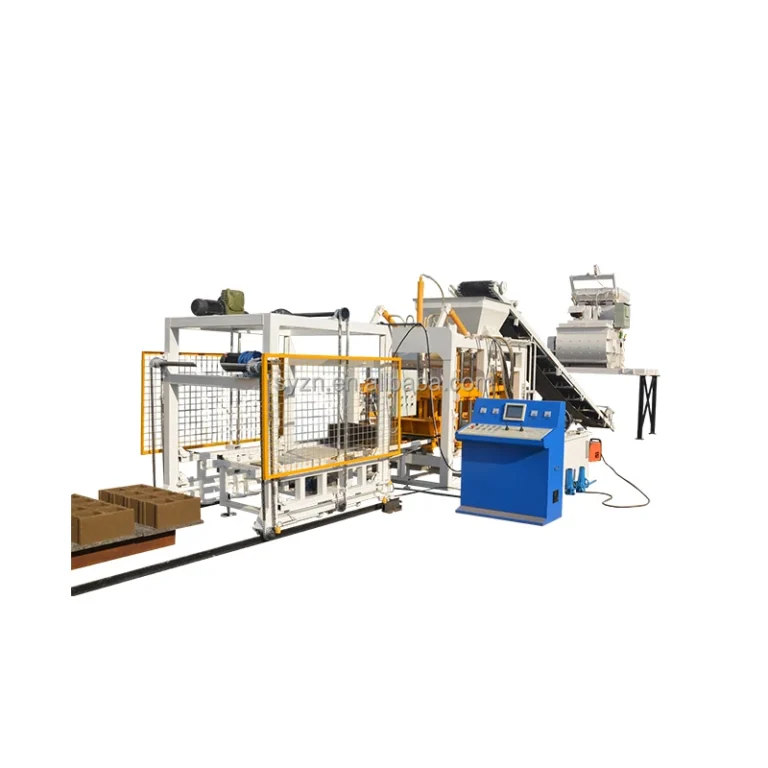
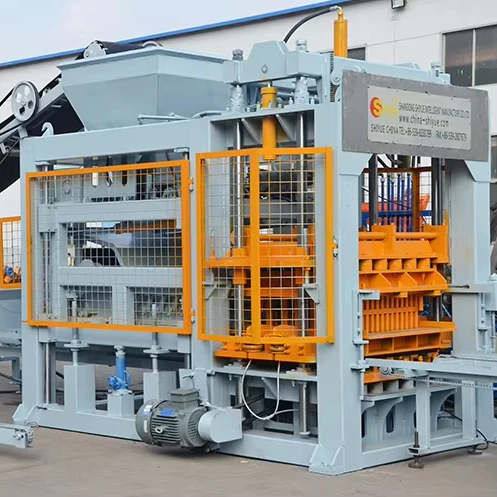
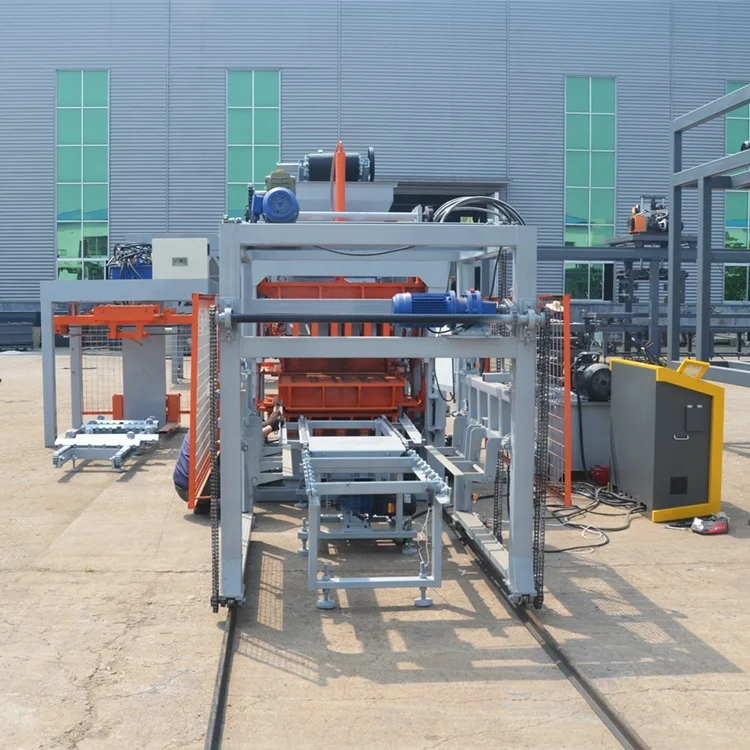
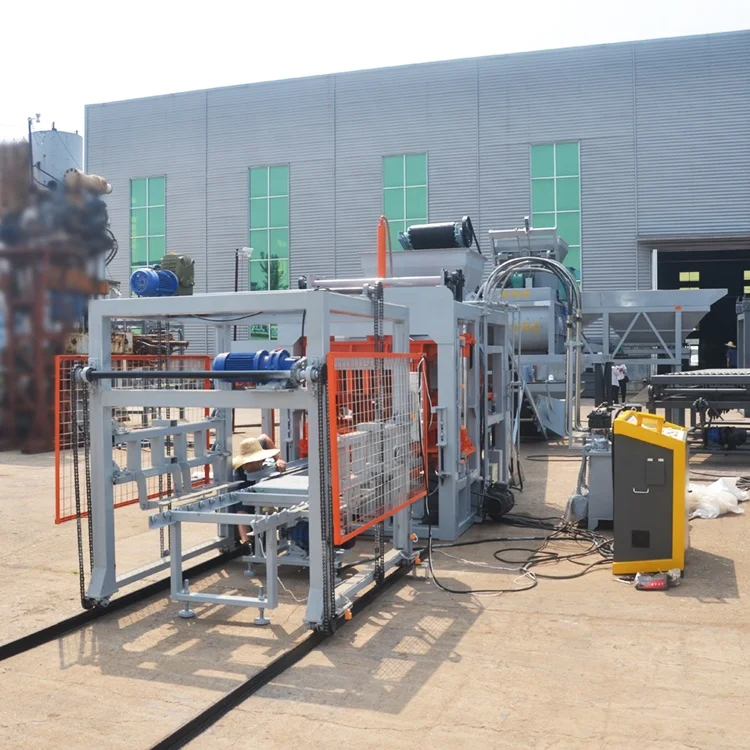
Matched System Configuration — Machine, mould, pallet and handling equipment are specified as one integrated setup rather than sourced from separate vendors, reducing interface mismatches during commissioning.
Technical Specifications
| Parameter |
Value |
| Model |
QT4-20 |
| Product Type |
Hydraulic Vibrating Block Making Machine |
| Overall Dimensions (L×W×H) |
7100×1600×2610 mm |
| Rated Pressure |
16-21 MPa |
| Main Vibration Form |
Platform Vibration |
| Vibration Frequency |
4600 r/min |
| Vibration Force |
45 kN |
| Pallet Size |
1020×570 mm |
| Molding Cycle |
20-30 s (basis not stated in source — confirm block format / material / thickness) |
| Overall Power |
27.5 kW |
| Demolding Method |
Hydraulic |
| Total Mass |
6 T |
| Factory Area Required |
500 m² |
| Automation Level |
Semi-automatic |
| Warranty |
1 year (whole machine, excluding spare parts) |
| Shipment Configuration |
Factory-assembled, 1×40HQ container (basic equipment) |
Application Suitability
| Application |
Material or Output |
| Hollow and solid block production plants |
Crushed stone, sand, cement, fly ash blends |
| Paving and interlocking block manufacturing |
Gravel, slag, cement, colored pigments |
| On-site block production for housing projects |
Local aggregate, sand, cement mixed on location |
| Curbstone and kerb production |
Dense aggregate mixes with higher cement ratios |
| Entrepreneurs establishing a first block plant |
Moderate daily volume across multiple block formats |
What "20-30 Seconds Cycle Time" Actually Means for Your Output
Cycle time is only meaningful when tied to a specific block format, wall thickness, and mix design.
When a QT4-20 block machine manufacturer quotes a cycle of 20-30 seconds, that range covers everything from a thin paver to a thick-walled hollow block. A solid 400×200×200 mm block with a dense aggregate mix will sit at the longer end of that window, while a thinner interlocking paver with a drier mix may approach the shorter end. The problem arises when buyers calculate daily output from the fastest cycle number and plan their curing area, pallet inventory, and delivery schedule around a figure the machine cannot sustain across all formats. I have watched plants open with pallet shortages because the capacity plan assumed a cycle time that only applied to one mould out of the four the buyer intended to run. [NEED_CITE: block format and cycle time relationship in vibrating press operation]

Where the QT4-20 Sits in the Range
The QT4-20 block machine manufacturer positions this model in the mid-tier semi-automatic segment. It sits above small workshop machines that handle single-format production at lower volumes and below fully automatic lines with integrated stacking and cubing. For a buyer surveying options, this tier represents a deliberate compromise: you accept manual pallet handling and semi-supervised curing in exchange for a lower initial investment and a simpler maintenance profile. The machine can serve as a starting point for a plant that plans to add automation stations later, or it can remain the permanent press for an operation where labour costs make full automation unnecessary.
Matching the Press to Your Actual Block Formats
A common mistake in this tier is treating the press as a standalone purchase and then discovering that the pallet size, mould mounting pattern, and vibration profile do not align with the formats your market actually buys. Shiyue approaches the QT4-20 as part of a matched system. The moulds are selected based on the block dimensions that sell in your region, the pallets are sized to match your curing rack spacing and forklift capacity, and the hydraulic pressure range of 16-21 MPa is calibrated against your local aggregate hardness. [NEED_CITE: hydraulic pressure adjustment for varying aggregate density in block pressing] This system-level thinking prevents the situation where a buyer receives a machine capable of producing six formats but only has moulds for two, with the other four requiring a pallet size that does not fit the curing racks already on site.
Reading the Specifications Against Your Site Conditions
The vibration force of 45 kN delivered through platform vibration works in tandem with hydraulic pressure to achieve block density. Higher vibration force compacts the mix more aggressively, but only if the hydraulic pressure holds the mould box firmly during the cycle; if pressure is set too low for a stiff mix, the block edges will crumble on demolding. The 1020×570 mm pallet size dictates how many blocks are produced per cycle and must be cross-referenced with your curing area dimensions. A plant with narrow curing lanes may need to adjust rack spacing or select a different pallet format before the first production run. The 27.5 kW overall power draw requires a dedicated circuit with adequate breaker capacity, and the voltage and frequency must be confirmed before the motor and control panel are wired at the factory.
The Hidden Cost of Unconfirmed Electrical Specifications
Voltage and frequency mismatches are among the most frequent causes of delayed commissioning. A QT4-20 configured for 380V/50Hz arriving at a site with 440V/60Hz supply will run the vibration motor at a higher speed than designed, altering the compaction profile and potentially damaging the hydraulic pump. The PLC display language is another detail that often surfaces only after installation: an operator reading fault codes in a language they cannot parse will call the manufacturer for every alarm reset, turning a simple sensor fault into a multi-day downtime event. [NEED_CITE: voltage and frequency standards by export market] Confirming these specifications before production, not after, eliminates both problems.
Why Source This Machine Here
Block machinery is the single focus, meaning the QT4-20 is not assembled from a catalogue of generic components but specified alongside its moulds, pallets, and handling equipment as one system. The configuration is set against your actual mix design and local aggregate, not a default factory setting. Mould design covers the formats your market demands, with custom drawings available when standard options do not match. The semi-automatic level is selectable, so a buyer can start with manual pallet handling and add automatic stacking or cubing as production volume grows. Factory test records document performance on your target format before the machine leaves the workshop. [NEED_CITE: factory acceptance testing procedures for block making machinery]
Documentation & Verification
- Line layout showing QT4-20 placement with capacity stated per block format
- Machine specification sheet confirming voltage, frequency, and PLC display language
- Mould drawing and format list included with quotation for buyer verification
- Pallet specification cross-referenced with your curing rack dimensions
- Hydraulic and electrical schematic for local maintenance team reference
- Factory test record on your target block format before dispatch
Installation, Commissioning & Support
- 500 m² factory area requirement with level concrete floor for QT4-20 footprint
- Dedicated 27.5 kW power circuit with breaker sizing confirmed to local electrical code
- Factory-assembled shipping in 1×40HQ with dismantling guidance for site reassembly
- Hydraulic pressure and vibration frequency calibrated to your aggregate during commissioning
- Operator training on mould change procedure and daily maintenance schedule
- Wear parts and mould replacement list provided with initial spare parts recommendation
What We Need to Configure Your Machine
To move from a general inquiry to a firm configuration, share your target block formats with dimensions, the daily output you need for each format, and a sample or description of your local aggregate and sand. Include your site voltage and frequency, the language your operators read, and the dimensions of any existing curing area and forklift. If you have upstream batching or downstream handling equipment already installed, list those as well so the line layout accounts for interface points.
Frequently Asked Questions
Q: What block format is the QT4-20 cycle time based on, and how does output change across formats?
A: The 20-30 second cycle range covers multiple formats but is not tied to a single block size in the base specification. A thin paver will approach the lower end while a thick hollow block sits at the upper end. We provide a capacity calculation document that states output per format so you can plan daily production accurately before ordering.
Q: Where does the QT4-20 sit in the range compared to smaller semi-automatic and full automatic models?
A: This model occupies the mid-tier semi-automatic position. It produces more volume per shift than small workshop machines while requiring less capital than fully automatic lines with integrated stacking. Buyers who need moderate output with the option to add automation later typically start here.
Q: What plant footprint and factory area does this tier require, and what supporting equipment is included?
A: The QT4-20 itself fits within a portion of the recommended 500 m² factory area, which also accommodates material storage, curing space, and pallet circulation. Supporting equipment such as mixers, conveyors, and pallet feeders can be included in the quotation or sourced locally depending on your preference.
Q: Can I start with the QT4-20 semi-automatic and upgrade automation later?
A: Yes. The semi-automatic configuration allows you to begin production with manual pallet handling and add automatic stacking or cubing stations as volume justifies the investment. The machine platform and control architecture are designed to accept these additions without a full press replacement.
Q: What voltage, frequency and control language options are confirmed before shipment?
A: Voltage, frequency, and PLC display language are confirmed during the quotation stage and locked before production begins. This ensures the motor, control panel, and operator interface match your site supply and your team’s reading language when the machine arrives.

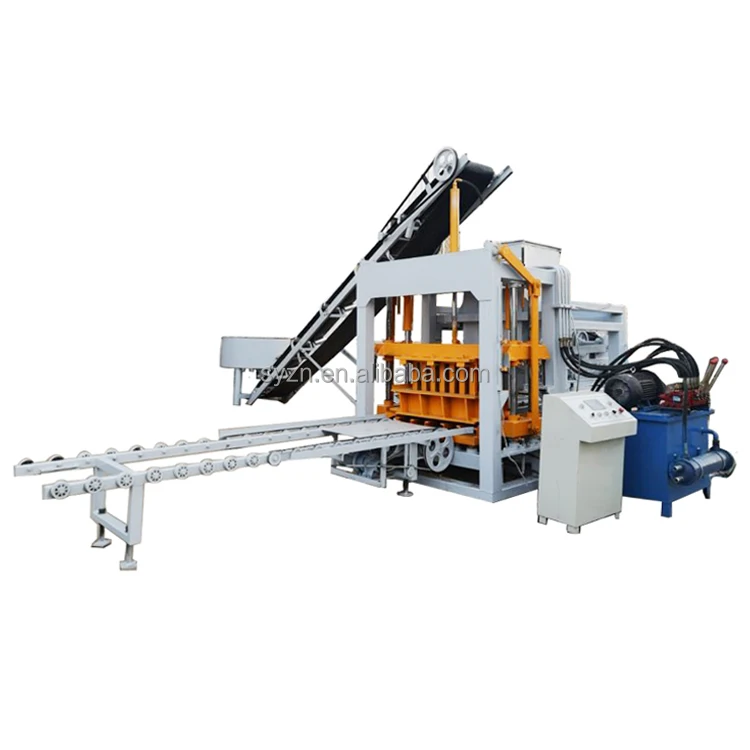
 High quality block machine