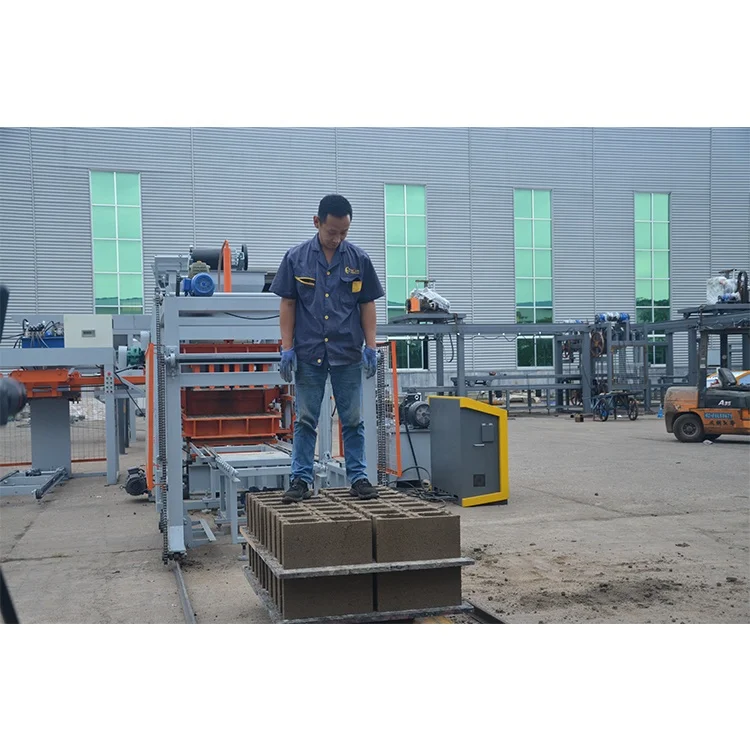
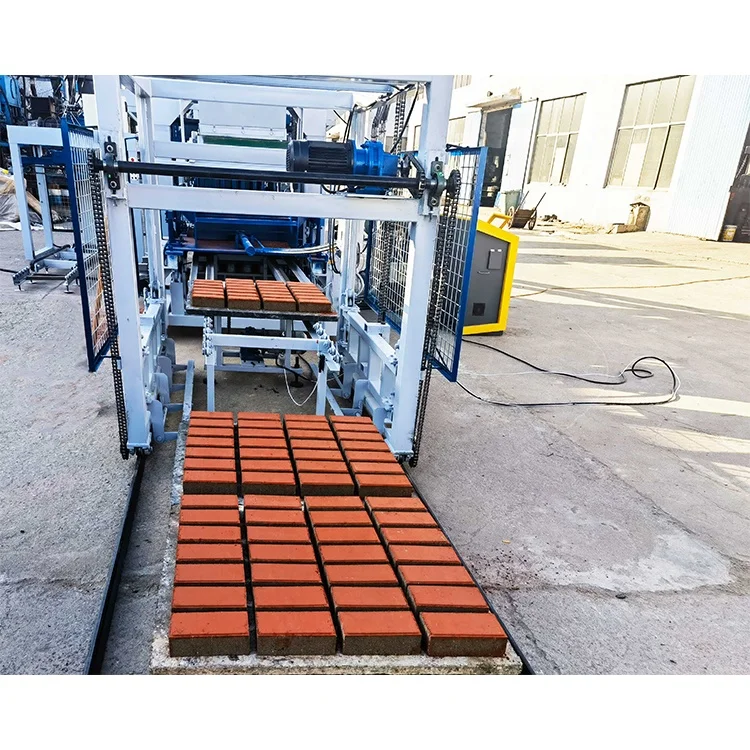
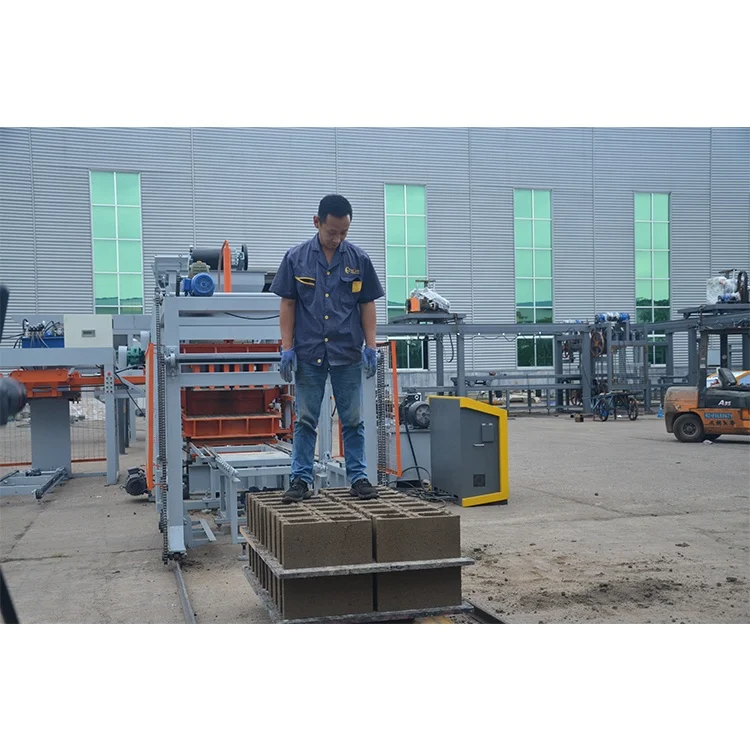
Matched System Configuration — Pallet, mould and press specified together around an 850×550 mm footprint so the line arrives as one coordinated unit rather than a collection of mismatched stations.
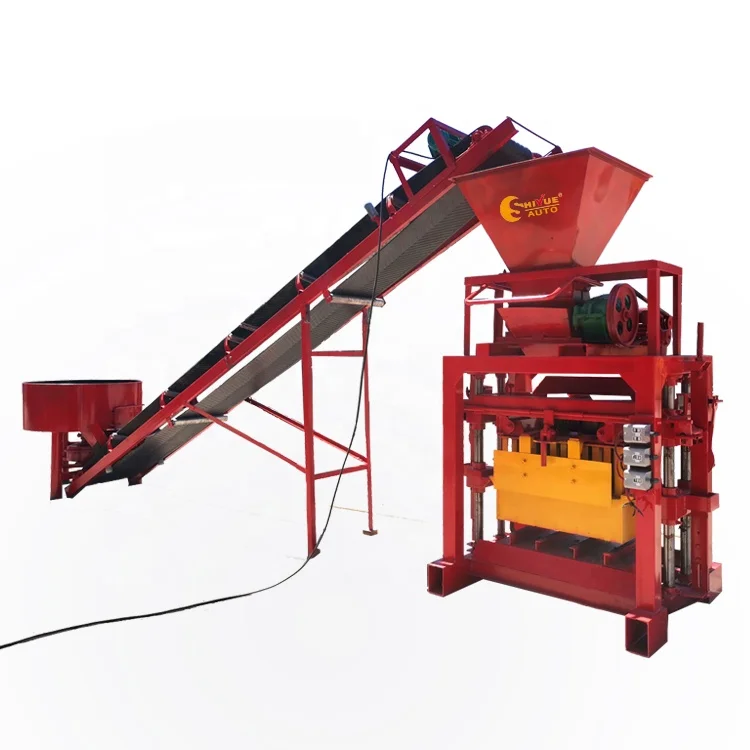
Technical Specifications
| Parameter |
Value |
| Model |
QT4-18 |
| Product Type |
Hydraulic Concrete Block Making Machine |
| Overall Dimensions (L×W×H) |
3900×1600×2300 mm |
| Total Weight |
3T |
| Rated Power |
24 kW |
| Vibration Force |
40–50 kN |
| Molding Cycle |
15–25 s |
| Mixer Model |
JQ350 |
| Pallet Size |
850×550×25 mm |
| Control System |
PLC control system |
| Hydraulic Station |
Included |
| Included Equipment |
Block making machine, hydraulic station, PLC control system, pallet feeder, brick conveyor, block sweeper |
| Free Accessories |
Manual hydraulic trolley, spare parts and tools |
| Output Capacity (Hollow Block 400×200×200 mm) |
1200–1680 pcs/hr (basis: 15–20 s cycle) |
| Output Capacity (Hollow Block 400×150×200 mm) |
1800–2400 pcs/hr (basis: 15–20 s cycle) |
| Output Capacity (Solid Brick 240×115×53 mm) |
3240 pcs/hr (basis: 15–20 s cycle) |
| Daily Output (8 hr, Hollow 400×200×200 mm) |
9600–13440 pcs |
| Daily Output (8 hr, Hollow 400×150×200 mm) |
14400–19200 pcs |
| Daily Output (8 hr, Solid 240×115×53 mm) |
16200–19440 pcs |
| Applicable Products |
Paver, solid block, hollow block, curbstone |
| Raw Materials |
Crushed stone, sand, cement, dust, fly ash |
| Mould Change |
Supported |
| Assembly State |
Fully assembled, nude packing in 20GP container |
Application Suitability
| Application |
Material or Output |
| Hollow block production for building walls |
Crushed stone, sand, cement, fly ash blends |
| Solid brick manufacturing for load-bearing structures |
Sand and cement mix with fine aggregate |
| Paver production for walkways and driveways |
Crushed stone and cement with pigment additives |
| Curbstone forming for road and pavement edges |
Coarse aggregate and cement at high compaction |
| On-site block production for housing projects |
Locally sourced sand, stone dust and cement |
Why "Pieces per Hour" Means Nothing Without a Format Attached
Every output figure on this page is tied to a specific block dimension and cycle range so your real daily production matches what you planned for.
I once watched a customer receive a block machine rated for a certain hourly output, only to discover the number assumed a solid brick format while his market demanded 200 mm hollow blocks. His actual throughput dropped to roughly half the quoted figure because the cycle time and mould cavity count were entirely different. That mismatch is the single most common reason buyers feel misled after commissioning, and it happens because the format assumption was never stated in the first place [NEED_CITE: common causes of capacity disputes in block machinery procurement].

Where the QT4-18 Sits in the Output Tier Spectrum
The QT4-18 occupies a mid-range position in the Shiyue block machine lineup, bridging the gap between small workshop units and high-capacity fully automatic lines. For a buyer evaluating options, this model offers a practical entry point into hydraulic pressing with PLC control, while leaving room to expand automation later. Understanding where this concrete block making machine manufacturer places each tier helps you decide whether your volume target calls for this class or the next step up.
Mapping the Full Line Before You Commit
Before narrowing your selection, it is worth surveying the complete range from semi-automatic mobile units through to fully automatic stacking and cubing lines. The QT4-18 pairs with a JQ350 mixer, pallet feeder, brick conveyor and block sweeper as standard included equipment, giving you a functional line without sourcing each station separately. Buyers who need higher daily volume or reduced labour can step up to configurations with automatic stacking and curing rack handling, while those with tighter budgets or mobile site requirements may look at smaller tiers [NEED_CITE: block plant automation tiers and investment levels].
Reading the Numbers Behind the Press
The 40–50 kN vibration force works in tandem with hydraulic pressure to compact the mix into the mould cavity. If your local aggregate is coarse crushed stone, the higher end of that vibration range helps achieve consistent density throughout the block. The 850×550×25 mm pallet size dictates how many blocks form per cycle and must align with the curing racks and forklift dimensions you already operate. A 15–25 second molding cycle range reflects the difference between a fast-setting solid brick mix and a slower-compacting hollow block with thin webs.
What Happens When the Pallet and Curing Area Do Not Match
Choosing a pallet size without checking your curing area dimensions means blocks may sit on the ground or require double-handling before they reach the racks. When the pallet material and thickness do not suit the vibration force, premature cracking and warping shorten pallet life and introduce uneven block bases. These problems surface weeks after startup, long after the supplier has left the site, and they trace directly back to a configuration step that was rushed or skipped during the quotation phase [NEED_CITE: pallet specification mismatches in block production].
Why Buyers Source This Range Here
Block machinery remains the single focus at Shiyue, so the press, mould, pallet and handling equipment are specified as one matched system rather than assembled from separate suppliers. Configuration decisions start from your actual mix design and local aggregate, not a catalogue default. Mould design covers the formats your market actually sells, with custom drawings available when standard options do not fit. Automation level is selectable, meaning you can begin with the included semi-automatic stations and add automatic stacking or cubing later. Installation support covers on-site commissioning and operator training so your team runs the line confidently from the first shift.
Documentation & Verification
- Line layout drawing with capacity calculation stated per block format
- Machine specification sheet confirming voltage, frequency and PLC display language
- Mould drawing and format list showing included and custom-designed options
- Pallet specification matched to curing area and forklift capacity
- Factory test record run on your target block format before dispatch
- Hydraulic and electrical schematic for local maintenance teams
Installation, Commissioning & Support
- 3900×1600 mm footprint requires a level concrete pad with anchor bolt provisions
- 24 kW rated power demands a dedicated circuit with proper breaker sizing
- Machine ships fully assembled in a 20GP container for straightforward offloading
- On-site commissioning includes cycle timing adjustment for your specific mix
- Operator training covers PLC navigation, mould change procedure and daily checks
- Spare parts and tools shipped with the unit for early-stage maintenance
What to Share Before Requesting a Quote
To configure the QT4-18 correctly, specify the block formats your market sells and the daily output you need per format. Confirm your local raw material type and whether you can supply sample aggregate for mix testing. State your site voltage and frequency, the language required on the PLC display, and whether your existing curing area and forklift can accommodate the 850×550 mm pallet.
Frequently Asked Questions
Q: How do I verify the real daily output of the QT4-18 for the specific block format my market sells?
A: Request a capacity calculation that states the exact block dimension and cycle time assumed for each output figure. For the QT4-18, hollow blocks at 400×200×200 mm yield 9600–13440 pieces over an 8-hour shift based on a 15–20 second cycle. If your format differs, the supplier should recalculate and document the revised number before you commit.
Q: Where does the QT4-18 sit compared to semi-automatic and fully automatic tiers?
A: The QT4-18 sits in the mid-range with PLC control and included line components like the pallet feeder and brick conveyor. Fully automatic tiers add stacking and cubing stations that reduce manual labour further. Buyers often start here and upgrade automation as production volume justifies the additional investment.
Q: Can I start with the QT4-18 semi-automatic and upgrade later?
A: Yes. The automation level is selectable, and the press architecture supports adding automatic stacking or curing rack handling at a later stage. Discuss the upgrade path during the initial quotation so the foundation and control system are prepared for future expansion.
Q: What voltage, frequency and PLC language options are available?
A: These are configured to match your site electrical supply and operator preference, but they must be confirmed before production begins. Specify your voltage, frequency and the display language you need during the quotation stage so the control panel arrives ready for commissioning.

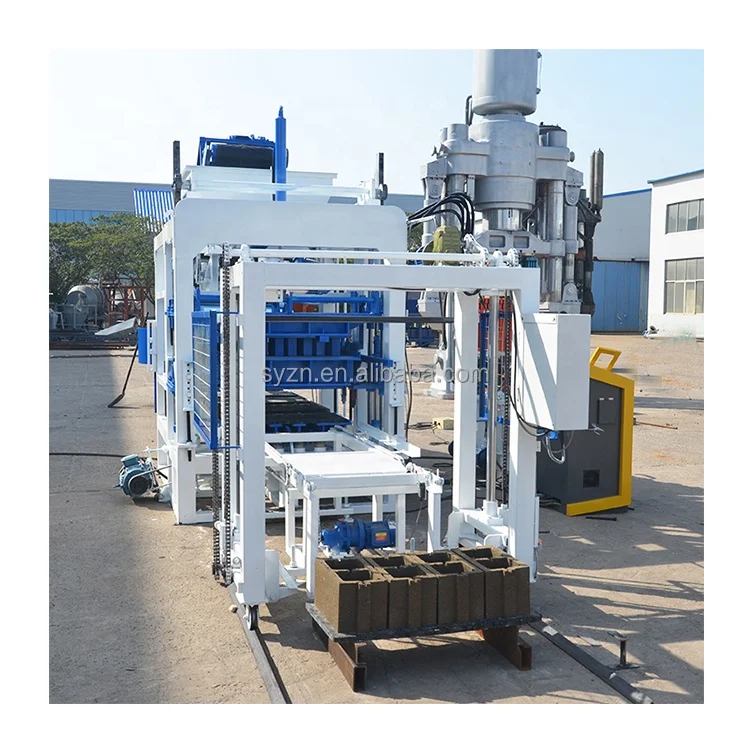
 High quality block machine