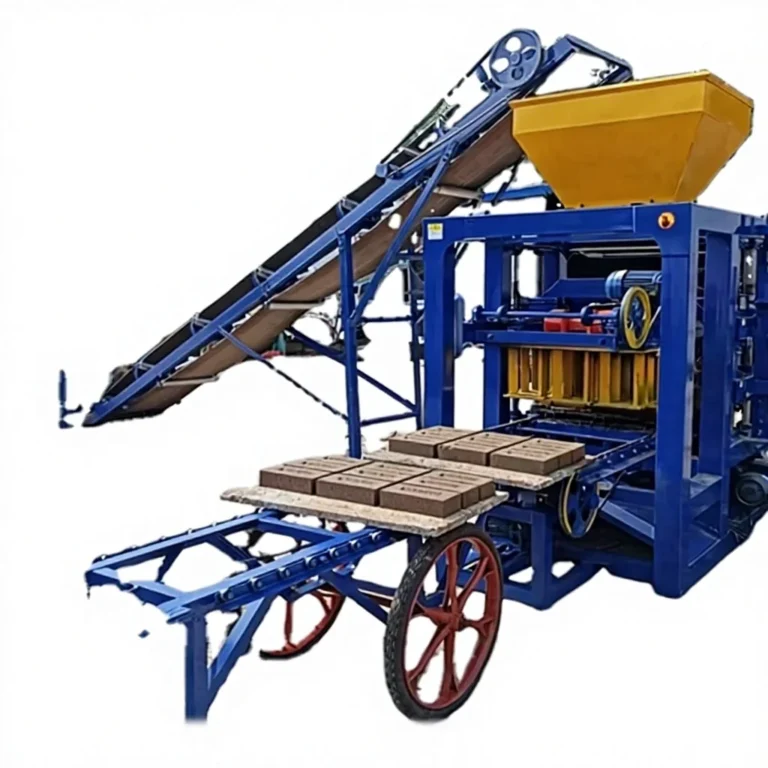
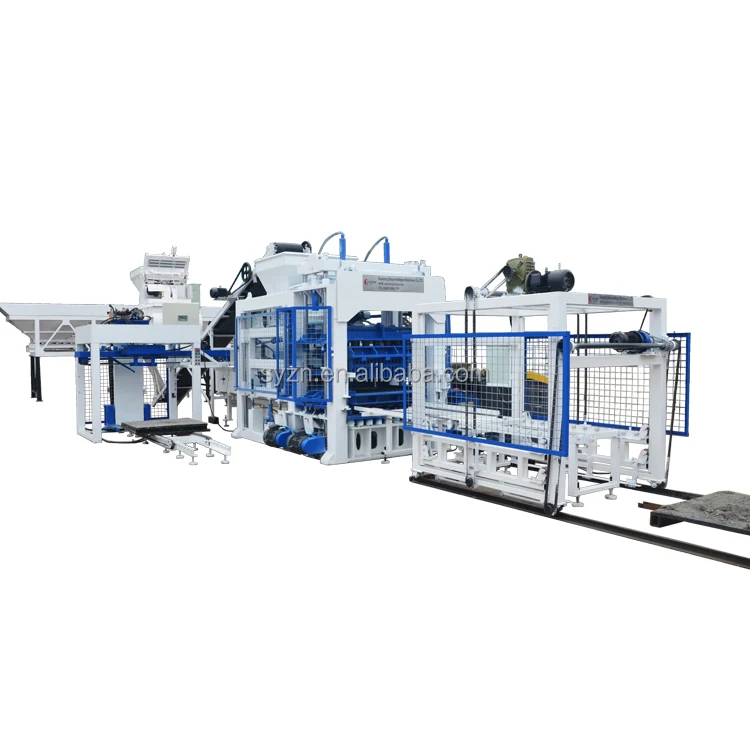
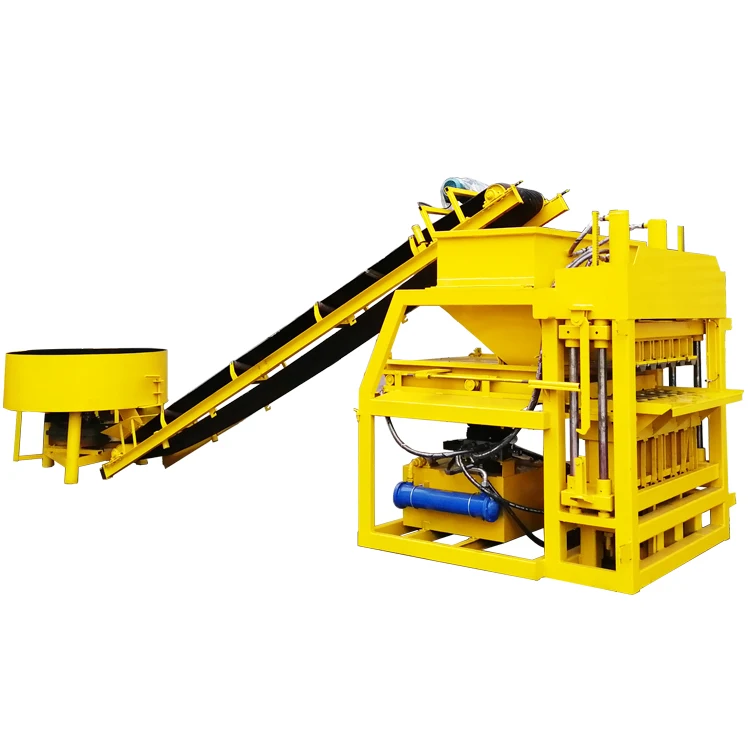
System Matched to Output — the QT4-16 is specified as a complete press, pallet, and handling package rather than a standalone unit, so buyers see the full plant picture before committing.
Technical Specifications
| Parameter |
Value |
| Product Type |
Stationary Block Making Machine |
| Model |
QT4-16 |
| Overall Dimension |
7400 × 1950 × 2800 mm |
| Rated Pressure |
21 MPa |
| Main Vibration Form |
Platform Vibration |
| Vibration Frequency |
2800–4500 r/min |
| Vibration Force |
40 kN |
| Pallet Size |
900 × 550 mm |
| Molding Cycle |
15–20 s |
| Demolding Method |
Hydraulic |
| Total Mass |
5 T |
| Factory Area |
600 m² |
| Control System |
PLC intelligent control, man-machine interface, malfunction diagnosis, remote control function |
| Automation Level |
Full Automatic |
| Applied Products |
Concrete blocks, hollow/solid blocks, pavers, interlocking blocks, curbstone, colored pavers |
| Raw Materials |
Crushed stone, sand, cement, dust, fly ash, gravel, slag |
| Capacity |
(basis not stated in source — confirm block format / material / thickness) |
| Voltage & Frequency |
(basis not stated in source — confirm destination market requirements) |
| Rated Power |
(basis not stated in source — confirm block format / material / thickness) |
| Mould Change Time |
(basis not stated in source — confirm block format / material / thickness) |
Application Suitability
| Application |
Material or Output |
| Hollow block production for building walls |
Crushed stone, sand, cement, fly ash |
| Solid block manufacturing for load-bearing structures |
Gravel, sand, cement blends |
| Paving block and colored paver runs |
Fine aggregates, cement, pigment additives |
| Interlocking brick and curbstone forming |
Sand, stone dust, slag, cement |
| On-site production for housing project contractors |
Locally sourced aggregates matched to regional supply |
What "15-Second Cycle" Actually Means for Your Daily Output
Cycle time only matters when tied to a specific block format and curing arrangement.
Manufacturers often quote the QT4-16 block making machine manufacturer cycle at 15–20 seconds, but that figure shifts depending on whether you are pressing a standard hollow block, a dense solid block, or a thin interlocking paver. I once watched a buyer in West Africa plan an entire curing yard around a capacity number that assumed a lightweight format he never intended to sell. The mismatch cost him weeks of reconfiguration [NEED_CITE: block format assumptions in capacity quotations].
When you evaluate where this machine sits in the Shiyue range, the cycle figure should always arrive alongside the exact block dimensions, mix design, and pallet return speed that produced it. Without that context, daily output estimates remain guesses.

Positioning the QT4-16 Across Output Tiers
The QT4-16 occupies the mid-tier of the stationary block machine range. Below it, semi-automatic workshop machines serve entrepreneurs who are still building volume and can handle pallet movement manually. Above it, high-capacity automatic lines add continuous stacking, cubing, and curing rack systems that justify their footprint only when daily demand stays consistently high. This QT4-16 block making machine manufacturer model bridges the two — it runs full automatic with PLC control, yet its 600 m² factory area requirement keeps the plant footprint manageable for a growing operation.
Where This Tier Fits a Buyer’s Growth Path
A contractor producing blocks on-site for a housing development often starts with mobile or egg-laying equipment. When demand justifies a fixed plant, stepping directly to a top-tier line can mean underutilized capacity and unnecessary complexity. The QT4-16 offers a middle ground: platform vibration at 2800–4500 r/min combined with 21 MPa hydraulic pressure gives consistent density across formats, while the automation level leaves room to add stacking and cubing modules later [NEED_CITE: automation upgrade paths in block production]. Buyers who expect format variety without the volume to fill a high-capacity line tend to find their answer in this tier.
Reading the Specs That Actually Shape Your Output
Platform vibration at 40 kN paired with 21 MPa hydraulic pressure determines how tightly the mix compacts inside the mould cavity. Higher vibration force alone will not produce a stronger block if the hydraulic pressure is too low to consolidate the material — and vice versa. The 900 × 550 mm pallet size dictates how many blocks form per cycle and must match the curing rack dimensions and forklift capacity already in your yard. The PLC control with malfunction diagnosis reduces downtime by pinpointing faults on the man-machine interface, which matters more than raw cycle speed when a sensor fails mid-shift. Moulding cycle of 15–20 seconds applies to standard formats; denser blocks or thicker pavers extend that window, so capacity planning should always reference the specific product drawing.
The Cost of Skipping Configuration Details
Ordering a QT4-16 without confirming pallet material against your curing environment leads to warped pallets that jam the return system within weeks. Ignoring voltage and frequency at the quotation stage means the motor and PLC arrive mismatched to your local grid, delaying commissioning until replacement components ship [NEED_CITE: voltage mismatch delays in exported machinery]. I have seen buyers discover after arrival that the moulds included in the shipment produce a block format their market does not buy, forcing an unplanned mould order and idle production time. These gaps are not equipment failures — they are specification failures that surface only when the machine reaches the site.
Why Source the QT4-16 from This Range
Block machinery is the sole focus here, which means the press, mould, pallet, and handling equipment arrive as one matched system rather than components assembled from separate suppliers. Configuration starts from your actual mix design and local aggregate, not a catalogue default — the QT4-16 block making machine manufacturer proposal you receive reflects the vibration force and hydraulic pressure tuned to your material sample. Mould design covers the formats your market actually sells, with custom drawings accepted when standard options fall short. The automation level is selectable, so a buyer can begin with semi-automatic pallet handling and add stacking later. Installation support includes operator training on the PLC interface, so the crew running the line on day one already knows the diagnosis screens and mould change sequence.
Documentation & Verification
- Line layout with capacity calculation tied to your confirmed block format
- Machine specification sheet listing pallet size, vibration force, and hydraulic pressure
- Mould drawing and format list for every block type in your order
- Voltage, frequency, and PLC display language confirmation before production starts
- Factory test record on your specified mix and block dimensions before dispatch
Installation, Commissioning & Support
- 600 m² factory area with level concrete foundation to support 5 T machine mass
- Dedicated power circuit sized to confirmed rated power and local voltage
- Machine arrives in dismantled state; reassembly and alignment handled on-site
- First-run parameter tuning against your local aggregate and mix design
- Operator training covering PLC diagnosis screens and mould change procedure
- Wear parts list and mould inventory documented at handover for reorder planning
What to Include in Your Inquiry
Send the specific block formats your market demands, including dimensions and target strength. Share your local aggregate type and cement availability so the vibration and pressure settings can be matched before the QT4-16 enters production. Confirm your site voltage, frequency, and preferred PLC display language to avoid commissioning delays.
Frequently Asked Questions
Q: How do I verify the QT4-16’s real daily output for my block format?
A: Request a capacity calculation that names the exact block dimensions, mix ratio, and moulding cycle assumed. A 15–20 second cycle applies to standard formats; hollow blocks, solid blocks, and pavers each shift that figure. Ask the QT4-16 block making machine manufacturer to tie every output number to a specific product drawing.
Q: When should I choose this tier over a smaller semi-automatic machine?
A: If your daily volume justifies full automatic PLC control but your site cannot yet support a high-capacity line’s footprint, the QT4-16 fits. Its 600 m² requirement and selectable automation level let you start here and add stacking or cubing modules as demand grows.
Q: What factory area and site preparation does the QT4-16 need?
A: Plan for 600 m² of covered space with a level concrete floor rated for the 5 T machine mass. You also need curing yard area sized to your pallet dimensions and daily volume, plus forklift access matching the 900 × 550 mm pallet footprint.
Q: Can I add new block formats later without replacing the press?
A: Yes. The QT4-16 accepts different moulds for hollow, solid, paver, interlocking, and curbstone formats. Confirm mould change time and the hydraulic clamp arrangement during the quotation stage so format switching fits within your shift schedule.
Q: What electrical and control details must I confirm before production?
A: Provide your local voltage, frequency, and the language you need on the PLC display. The QT4-16 block making machine manufacturer builds the electrical cabinet and programs the man-machine interface to these specifications, but only if confirmed before the machine enters assembly.

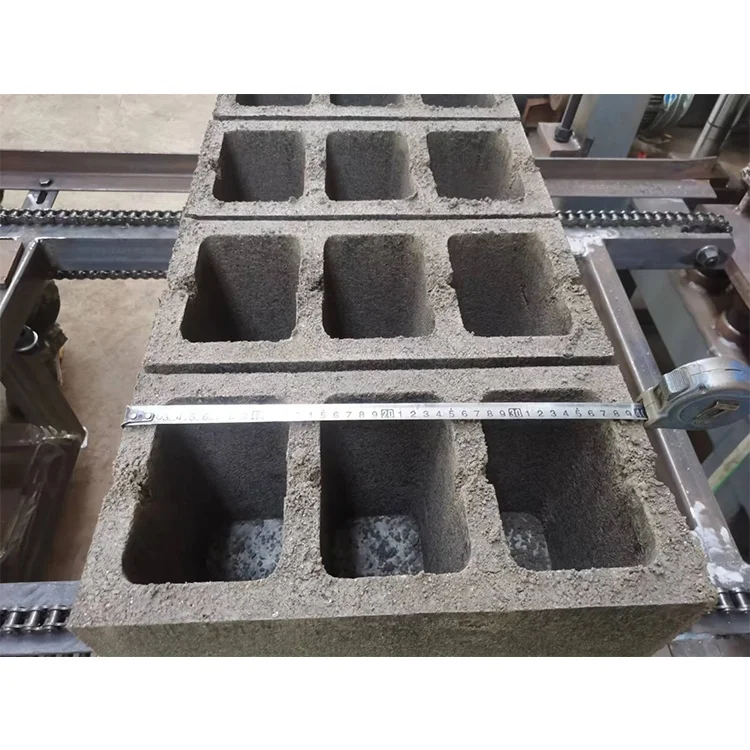
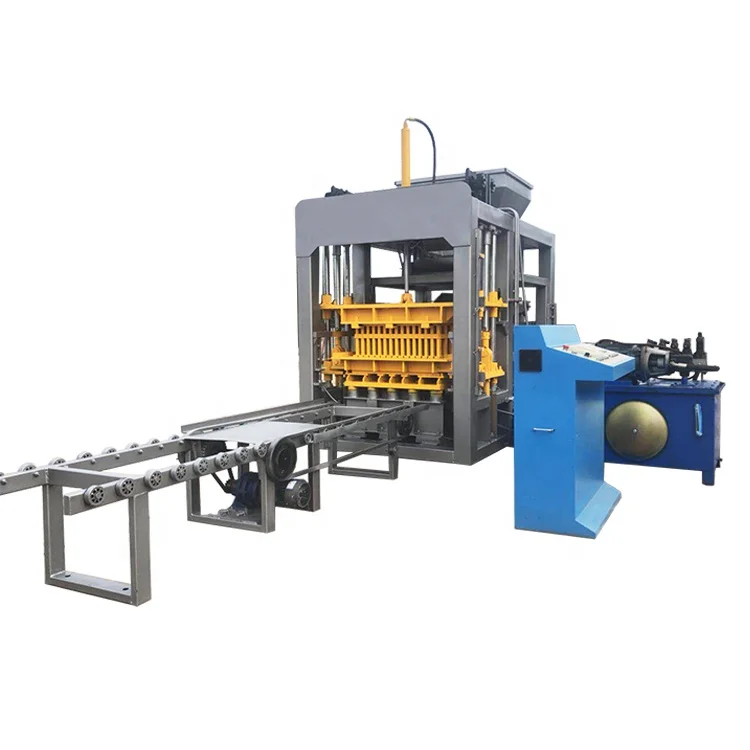 Stationary block machine