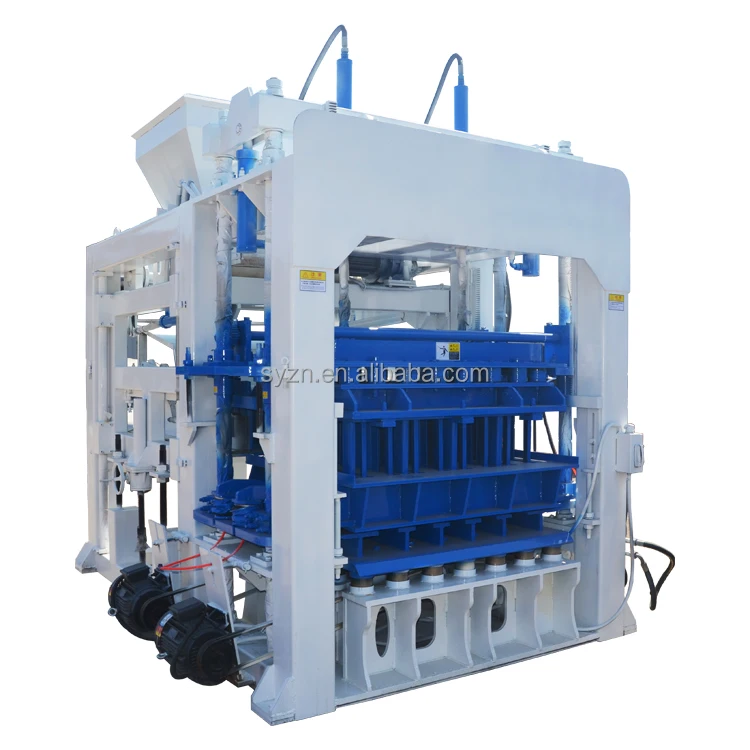
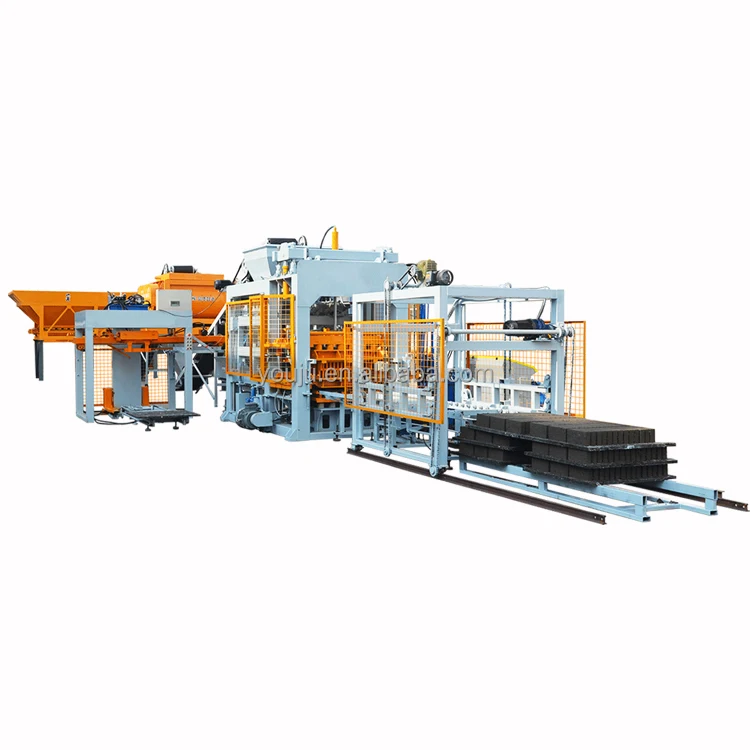
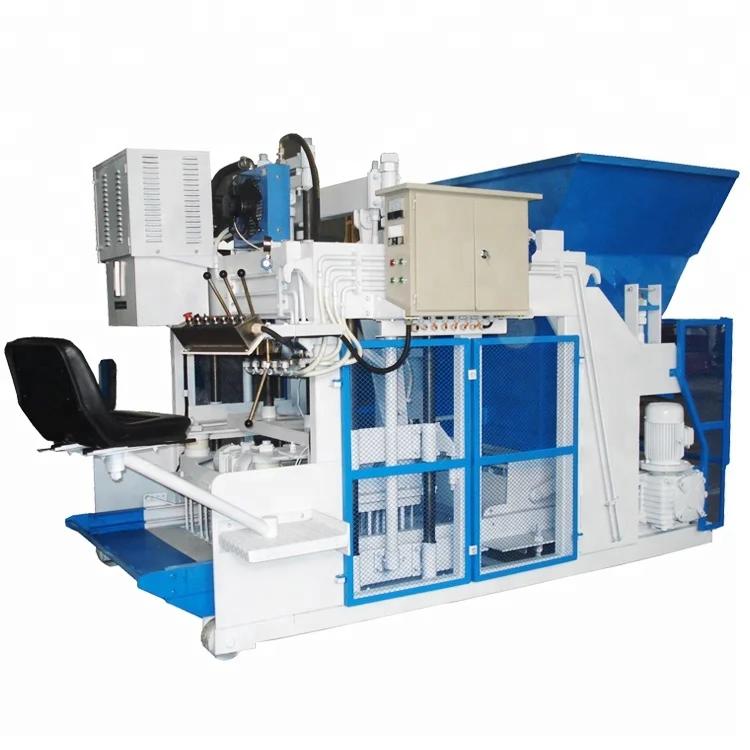
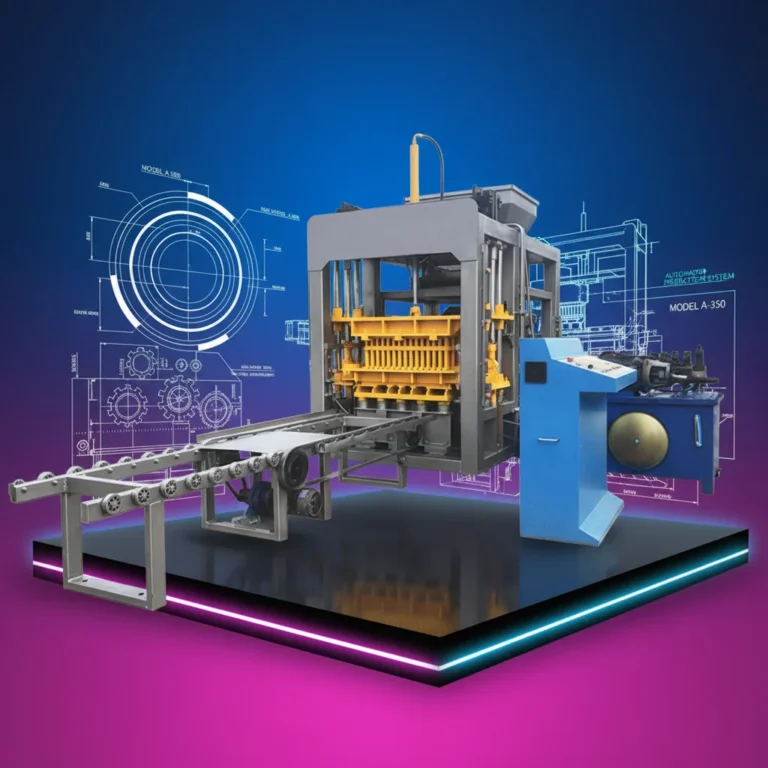
QT4-15A Mid-Tier Positioning — Specified against the buyer’s target block format and local aggregate, not a generic catalogue default, so the machine, mould, pallet and handling form one matched system from day one.
Technical Specifications
| Parameter |
Value |
| Product Type |
Fully Automatic Concrete Block Making Machine |
| Model |
QT4-15A |
| Overall Dimensions (L×W×H) |
4100 × 1600 × 2600 mm |
| Total Mass |
4 T |
| Rated Pressure |
16–21 MPa |
| Main Vibration Form |
Platform Vibration |
| Vibration Frequency |
4200 r/min |
| Vibration Force |
55 kN |
| Pallet Size |
880 × 550 mm |
| Molding Cycle |
25–30 s (basis not stated in source — confirm block format / material / thickness) |
| Overall Power |
18.45 kW |
| Demolding Method |
Hydraulic |
| Automation Level |
Fully Automatic |
| Applied Products |
Concrete blocks, hollow blocks, solid blocks, pavers, interlocking blocks, curbstone, colored pavers |
| Raw Materials |
Crushed stone, sand, cement, dust, fly ash, gravel, slag |
Application Suitability
| Application |
Material or Output |
| Hollow block production for residential and commercial walls |
Crushed stone, sand, cement, and fly ash blends |
| Solid block manufacturing for load-bearing structures |
Gravel, sand, and cement mixes |
| Paving and interlocking block production for walkways and yards |
Cement, dust, and fine aggregate combinations |
| Curbstone forming for road and infrastructure projects |
High-density crushed stone and cement formulations |
Why the Cycle Time Figure Is Not the Full Story for a Fully Automatic Concrete Block Making Machine Manufacturer
Real daily output depends entirely on which block format the cycle time was measured against.
When buyers compare machines across the range, a single headline cycle figure hides the fact that a 400 mm hollow block, a 60 mm paver, and a solid block each demand different vibration durations, pressure holds, and feed sequences. I have walked onto sites where the quoted capacity was based on a thin paver, but the buyer’s actual market moved mostly hollow blocks — and the daily tally fell noticeably short of what was expected. Before placing an order, the block format that underpins every capacity number must be confirmed in writing [NEED_CITE: block format assumptions in capacity quotations].

Where the QT4-15A Sits in the Full Block Machine Range
The QT4-15A occupies the mid-tier automatic segment, bridging small workshop volumes and high-capacity continuous lines. Its 880 × 550 mm pallet size defines the curing rack footprint and forklift compatibility for this tier, letting a buyer map the plant layout before committing to larger or smaller models. For a first-time plant owner or a contractor replacing an older press, this fully automatic concrete block making machine manufacturer tier offers a balance of output and investment without over-building floor space.
Automation Level and the Upgrade Path
Starting at this tier means the press handles pallet feeding, vibration, hydraulic demolding, and block ejection without manual intervention at the press itself. Buyers who later need higher throughput can move up the range to lines that add automatic stacking, cubing, and curing rack handling. The key decision at the inquiry stage is whether the buyer wants to begin semi-automatic and upgrade later, or invest in full automation from the start — and that choice drives the supporting equipment quotation [NEED_CITE: automation upgrade paths in block plants].
Matching Vibration Force, Hydraulic Pressure, and Pallet Size to the Mix
Platform vibration at 4200 r/min combined with 55 kN of vibration force and 16–21 MPa of hydraulic pressure positions the QT4-15A to densify a wide range of local aggregates. The 880 × 550 mm pallet size determines how many blocks are formed per cycle and how those pallets stack in the curing area. If the local aggregate is laterite or a high-fines sand, vibration frequency and pressure must be tuned to that specific mix; otherwise blocks crack at demolding or fail strength tests. The overall power draw of 18.45 kW must be checked against site supply capacity, including starting surge, before the electrical panel is wired.
The Hidden Cost of Choosing the Wrong Tier
Selecting a machine tier without confirming pallet size against the existing curing racks and forklifts leads to double-handling on site. If the pallet dimensions do not match the rack slots, the buyer either replaces every rack or handles blocks manually — wiping out the labour saving the automatic press was supposed to deliver. Voltage and frequency mismatches discovered after arrival can delay commissioning by weeks while transformers or drive components are sourced locally [NEED_CITE: voltage and frequency standards by export market].
Why Buyers Source This Range From Shiyue
Block machinery is the single focus, so the QT4-15A is specified as part of a matched system — press, mould, pallet, and handling — rather than assembled from separate suppliers. Configuration starts from the buyer’s actual mix design and target block format, not a catalogue default. Mould design covers the formats the buyer’s market sells, including custom drawings to buyer specifications. Automation level is selectable, allowing a start at semi-automatic with a defined upgrade path. Installation and commissioning support includes operator training on the specific machine delivered.
Documentation & Verification
- Line layout drawing with capacity calculation stating the exact block format assumed
- Machine specification sheet listing pallet size, vibration force, and hydraulic pressure
- Mould drawing and format list covering every block type in the quotation
- Factory test record confirming cycle time per format, not a single headline figure
- CE declaration confirmation for the specific model and destination market
Installation, Commissioning & Support
- Site foundation plan sized to the QT4-15A’s 4 T mass and 4100 × 1600 mm footprint
- Electrical panel wiring matched to confirmed voltage, frequency, and the 18.45 kW power requirement
- Machine reassembly and levelling after container transport to the buyer’s plant
- First-run parameter tuning — vibration duration, pressure hold, and feed timing — against the buyer’s mix
- Operator training on the PLC control interface in the confirmed display language
- Wear parts and mould list supplied with the machine for first replacement planning
What to Include in Your Inquiry
Tell us the specific block formats your market moves, the daily output you need, and the local aggregate you will use. Share your site dimensions, curing area layout, and existing forklift or rack specifications so we can match pallet size. Confirm your voltage, frequency, and preferred PLC display language before the quotation is finalized.
Frequently Asked Questions
Q: How do I verify the real daily output of the QT4-15A?
A: Request a capacity calculation that states the exact block format, mix design, and pallet size used. A single cycle time figure without that context does not translate to a reliable daily tally. Compare the calculation against the formats your market actually sells, not just the fastest cycle the machine can achieve.
Q: Where does the QT4-15A sit compared to semi-automatic and higher-tier models?
A: It sits in the mid-tier automatic range, offering full press automation with a smaller plant footprint than high-capacity lines. Buyers needing higher throughput or automatic stacking can step up within the range, while those on tighter budgets can start semi-automatic and upgrade later.
Q: What plant footprint does this tier require?
A: The QT4-15A itself occupies a 4100 × 1600 mm footprint, but the total plant area must include raw material storage, mixing, pallet return, curing racks, and finished block staging. A minimum factory area of around 300 m² is typical for this tier, though exact layout depends on the supporting equipment chosen.
Q: Should I start semi-automatic and upgrade, or buy fully automatic now?
A: This depends on labour cost, available capital, and how quickly you expect demand to grow. Starting semi-automatic lowers initial investment but requires more manual pallet handling. A fully automatic line reduces labour from day one but demands a larger upfront commitment and more supporting equipment.
Q: What electrical details must I confirm before the machine ships?
A: Voltage, frequency, and PLC display language must be confirmed in writing before production. Mismatches discovered after arrival can delay commissioning while transformers or control components are sourced locally.

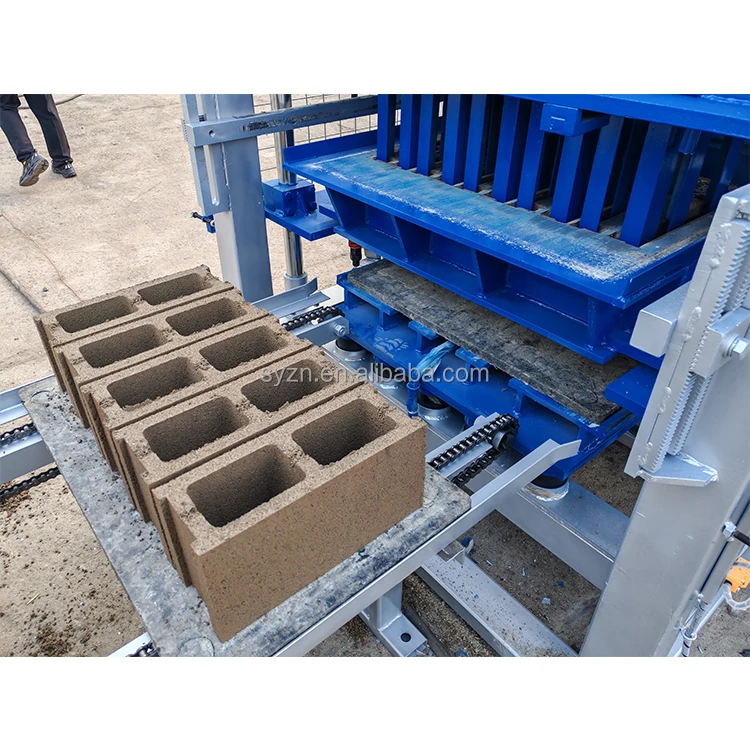
 Automatic block machine