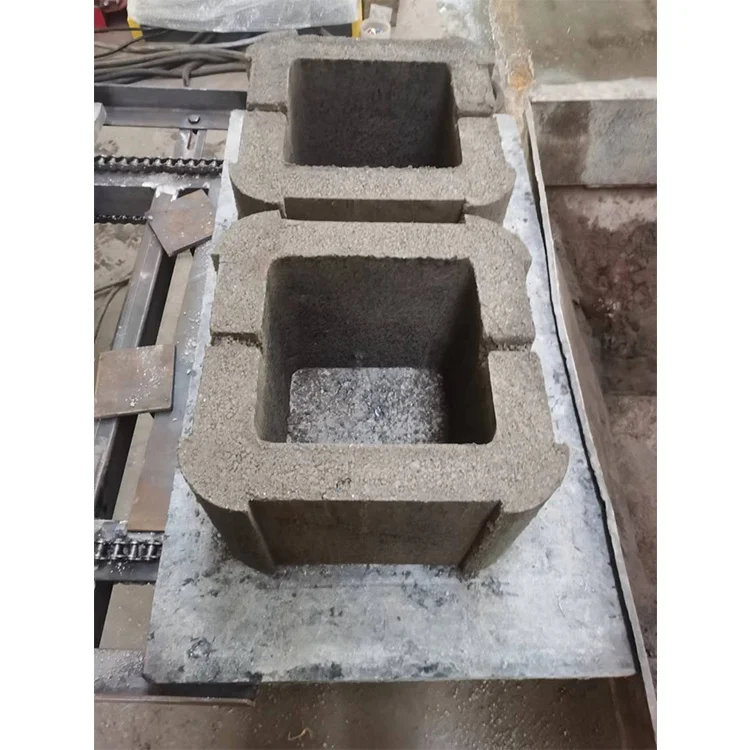
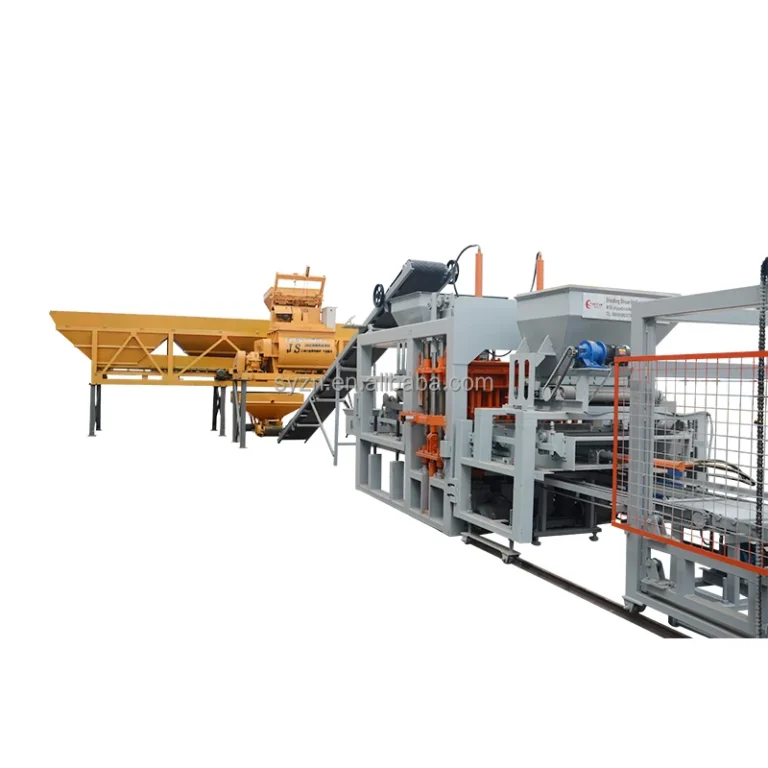
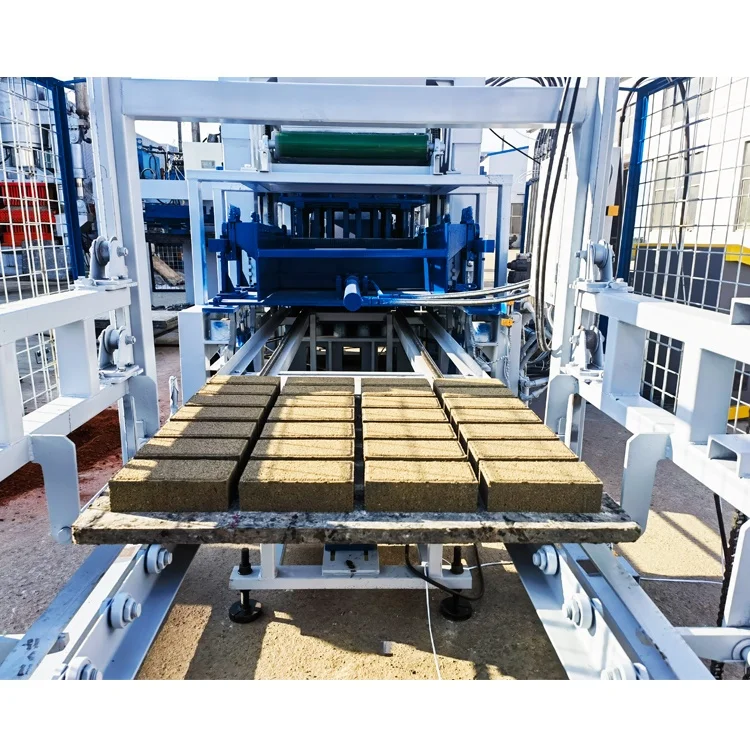
Mid-Tier Positioning Confirmed — the QT4-15 bridges workshop-scale manual presses and fully automatic high-capacity lines, specified as one matched system of press, mould, pallet and handling so buyers can place themselves on the range before committing to an investment tier.
Technical Specifications
| Parameter |
Value |
| Model |
QT4-15A |
| Product Type |
Semi-Automatic Concrete Block Making Machine |
| Overall Dimensions |
7100 × 1600 × 2610 mm |
| Molding Cycle |
15–25 s per cycle |
| Vibration Frequency |
4600 r/min |
| Exciting Power (Vibration Force) |
40–50 kN |
| Total Power |
18.45 kW |
| Mixer Model |
JQ350 |
| Pallet Size |
850 × 550 × 25 mm |
| Total Weight |
3 T |
| Hydraulic Station |
Equipped, high-pressure cycling |
| Vibration Type |
Bed mould vertical vibration + upper mould compression vibration |
| Control System |
PLC (language and voltage configurable per buyer site) |
| Applied Products |
Hollow block, solid brick, paver, curbstone |
| Output — Hollow Block 400×200×200 mm |
4 pcs/mould, 408 pcs/hr, 3264 pcs/8 hr |
| Output — Hollow Block 400×150×200 mm |
5 pcs/mould, 510 pcs/hr, 4080 pcs/8 hr |
| Output — Solid Brick 240×115×53 mm |
18 pcs/mould, 2100 pcs/hr, 17000 pcs/8 hr |
| Raw Materials |
Crushed stone, sand, cement, dust, fly ash |
Application Suitability
| Application |
Material or Output |
| Hollow block production for wall construction |
Crushed stone, sand and cement at 400×200×200 mm or 400×150×200 mm format |
| Solid brick production for load-bearing and partition walls |
Local aggregate, cement and fly ash blended to 240×115×53 mm |
| Interlocking paver production for driveways and walkways |
High-density mix with fine aggregate for surface finish |
| Curbstone production for road and pavement edging |
Coarse aggregate blend pressed at maximum hydraulic force |
| On-site production for housing and infrastructure contractors |
Mobile batching with JQ350 mixer feeding the press directly |
What "408 Pieces per Hour" Leaves Out About a Semi-Automatic Concrete Block Making Machine
Cycle counts mean nothing without the block format behind them.
Most quotations list a single headline figure — cycles per hour or pieces per day — without saying which block size, which mix, or which curing schedule produced that number. A buyer expecting 4000 hollow blocks daily based on a generic brochure figure can end up with half that when the actual format is larger or the local aggregate is coarser than the test mix [NEED_CITE: common misrepresentation of block machine output in export catalogues]. From the after-sales side, I have seen machines returned to service calls within the first month not because the press failed, but because the quoted capacity assumed a format the buyer never intended to produce. The tables above list output for three specific formats so you can match the figure to the block your market actually buys, rather than planning a plant around a number that evaporates on the first production day.

Where the QT4-15 Sits on the Full Block Machine Range
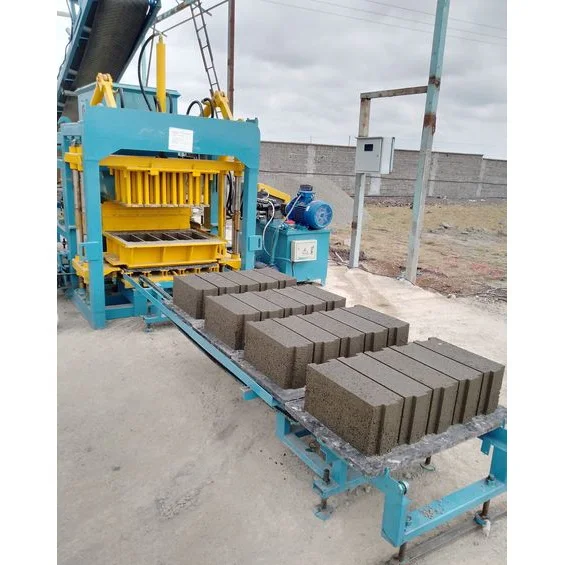
The complete Shiyue range runs from small manual egg-laying machines through semi-automatic presses like the QT4-15 and up to fully automatic high-capacity lines with robotic stacking and cubing. The semi-automatic concrete block making machine for sale here occupies the mid-tier: hydraulic press with PLC control and powered pallet feeding, but pallet return and stacking handled by operators rather than automated conveyors. For a buyer setting up a first block plant or stepping up from a manual workshop press, this tier keeps the initial capital outlay contained while delivering hydraulic pressure and vibration force that manual machines cannot reach.
Comparing Footprint and Investment Across Output Tiers
A fully automatic line requires a curing rack system, automatic stacker, and cubing station — floor space that can triple the press area alone. The QT4-15, at just over seven metres in length and three tonnes total weight, fits a smaller production bay and leaves room for the curing area to expand as volume grows. Buyers working within a project deadline often find the semi-automatic tier lets them start producing revenue-generating block within weeks rather than months, then add automation stations later when daily demand justifies the upgrade [NEED_CITE: typical plant expansion timelines in emerging construction markets].
Dual Vibration, Hydraulic Pressure and What They Mean for Block Strength
The QT4-15 combines bed mould vertical vibration at 4600 r/min with upper mould compression vibration, delivering 40–50 kN of exciting force into the mix. Hydraulic pressure holds the mould closed during the vibration cycle, compacting the aggregate into a dense matrix. Together, these forces determine the compressive strength of the finished block — vibration alone settles the material, but hydraulic clamping ensures uniform density from top to bottom. When I flew to a site where blocks were crumbling after demoulding, the vibration motor was running fine; the hydraulic relief valve had been set too low for the local coarse aggregate, and pressure was bleeding off before the cycle completed. Matching vibration force and hydraulic pressure to the buyer’s actual mix design is why we ask for a sample of the local crushed stone and sand before finalising machine settings.
Mould Change Flexibility and the Format Question
One press producing hollow blocks, solid bricks, pavers and curbstones sounds versatile — until a mould change takes most of a shift. The QT4-15 uses a bolt-on mould frame that can be swapped when operators are trained on the procedure, covering the formats listed in the capacity table above. The pallet size of 850 × 550 × 25 mm is fixed across all formats on this machine, so every mould is designed around that footprint. Buyers adding paver or curbstone production to an existing hollow block line should confirm the pallet dimension matches their current curing racks and forklift tines before ordering additional moulds [NEED_CITE: pallet standardisation across block machine moulds and handling equipment].
The Cost of Skipping the Voltage and Language Confirmation
Arrival of a machine wired for a voltage the site cannot supply, or with a PLC display in a language the operators cannot read, stalls commissioning by weeks. The QT4-15 PLC is configurable for local voltage, frequency and display language, but only if these are confirmed before production starts. A buyer in West Africa once received a machine set to 50 Hz when the local grid runs 60 Hz — the vibration motor ran hot within days, and a replacement motor had to be shipped internationally while production sat idle. Confirming voltage, frequency and PLC language during the quotation stage costs nothing and prevents the most common delay in getting a block plant running after arrival.
Why Source This Tier Through a Single-System Supplier
Block machinery is the sole focus here, which means the QT4-15 press, JQ350 mixer, moulds and 850 × 550 mm pallets are specified together as a matched set rather than assembled from separate vendors whose cycle times may not align. Capacity calculations are stated per block format — the tables above show three formats with mould count, pieces per hour and pieces per eight-hour shift — so the buyer can verify the number against their market demand. Custom mould design is available to buyer drawings when the required format falls outside the standard range. The automation level is selectable: a buyer can start with the semi-automatic configuration and add automatic pallet feeding or stacking stations as volume grows. Installation support includes operator training on mould change, PLC navigation and hydraulic adjustment, reducing the ramp-up time between machine arrival and first saleable block.
Documentation & Verification
- Line layout drawing showing QT4-15 footprint, mixer position and pallet flow path
- Capacity calculation sheet stating the block format assumed for each output figure
- Mould drawing and format list covering hollow, solid, paver and curbstone dies
- Pallet specification matching 850 × 550 × 25 mm dimension and material grade
- Voltage, frequency and PLC display language confirmation signed off before production
- Factory test record with packing photographs provided prior to container loading
Installation, Commissioning & Support
- Foundation pad must support 3 T static weight plus dynamic vibration load across the 7100 × 1600 mm footprint
- Electrical supply must match confirmed voltage and frequency, with a dedicated circuit for the 18.45 kW total power draw
- Machine ships dismantled for container loading; on-site reassembly covers frame bolting, hydraulic line connection and pallet track alignment
- First-run commissioning includes vibration frequency verification at 4600 r/min and hydraulic pressure calibration to the buyer’s mix design
- Operator training covers PLC navigation, mould change procedure and daily hydraulic fluid level checks
- Wear parts list provided with mould, hydraulic seal and vibration motor brush replacement intervals
What to Include in Your Inquiry
To size the QT4-15 accurately within the range, share the block formats your market demands, the target daily output per format, and the raw materials available locally including aggregate type and maximum particle size. Provide the site voltage and frequency, the PLC display language your operators need, and the dimensions of your existing curing area and forklift so pallet handling can be matched from day one.
Frequently Asked Questions
Q: How do I verify the quoted capacity and which block format does it assume?
A: Every capacity figure in the specification table above is tied to a specific block dimension and mould count. Request a capacity calculation sheet that lists the format, pieces per mould, cycle time and the resulting hourly and eight-hour output. Cross-check this against your actual market format rather than a generic brochure number before placing the order.
Q: Where does the QT4-15 sit on the range compared to fully automatic and mobile tiers?
A: It occupies the mid-tier between manual egg-laying machines and fully automatic lines with robotic stacking. The semi-automatic configuration includes hydraulic press and PLC control but relies on manual pallet return and stacking. Buyers comparing tiers should weigh the automation stations they need against available floor space and capital allocation.
Q: What plant footprint and auxiliary equipment do I need for this tier?
A: The press itself measures 7100 × 1600 × 2610 mm and requires a level foundation plus room for the JQ350 mixer and pallet storage. You also need a curing area sized to the 850 × 550 mm pallets and a forklift or pallet jack for moving wet blocks from press to curing racks.
Q: Can I start semi-automatic and upgrade to a higher automation level later?
A: Yes. The QT4-15 accepts additional automation stations — such as automatic pallet feeding, stacking and cubing — that can be integrated as daily volume increases. Plan the floor layout with expansion space during the initial installation so future upgrades do not require relocating the press.
Q: How is pallet size and material matched to my curing area and existing forklift?
A: The standard pallet for this machine is 850 × 550 × 25 mm. Before ordering, confirm that this dimension fits your existing curing rack slots and that your forklift tines can carry the loaded pallet weight. If your current racks use a different size, discuss pallet and mould compatibility during the quotation stage.

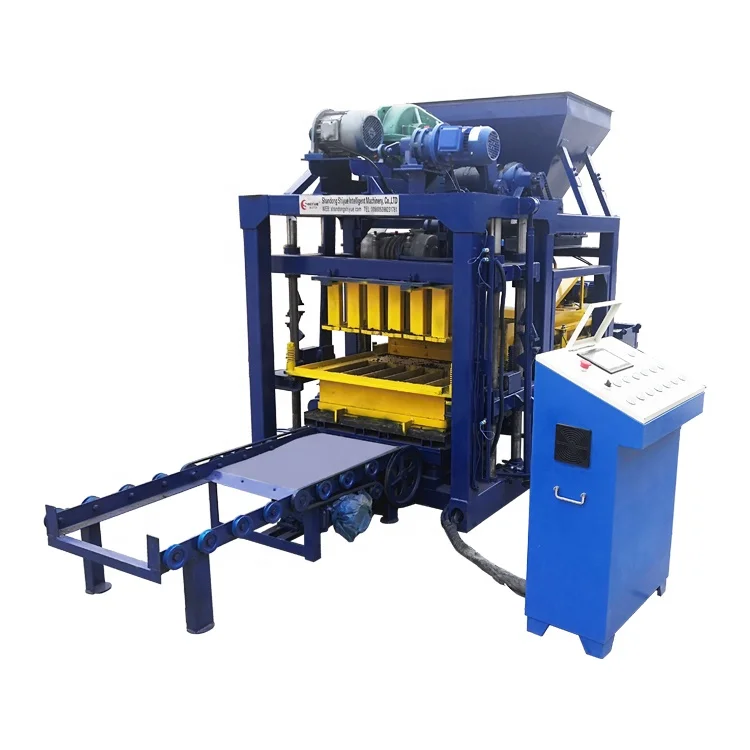 High quality block machine