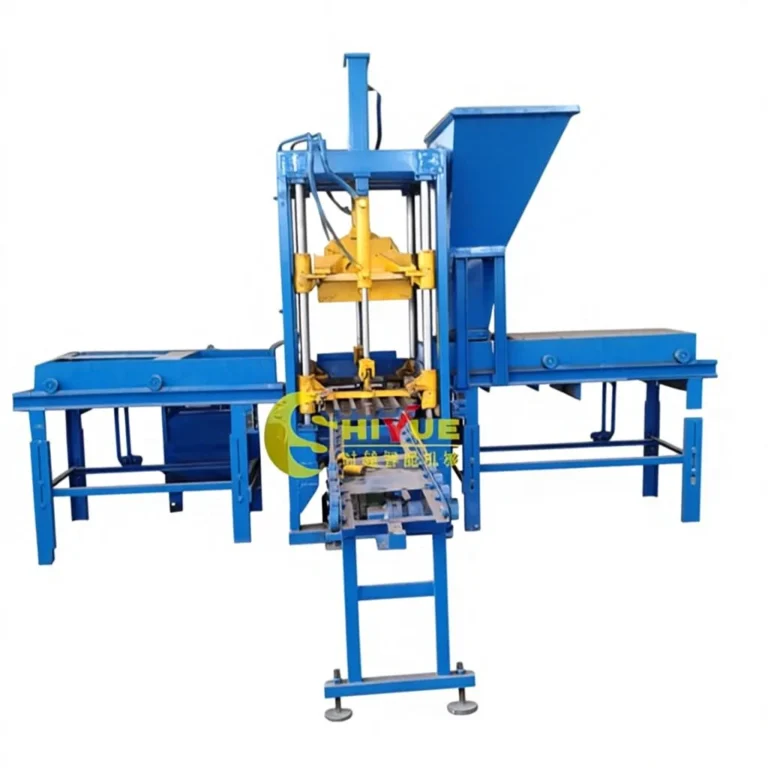
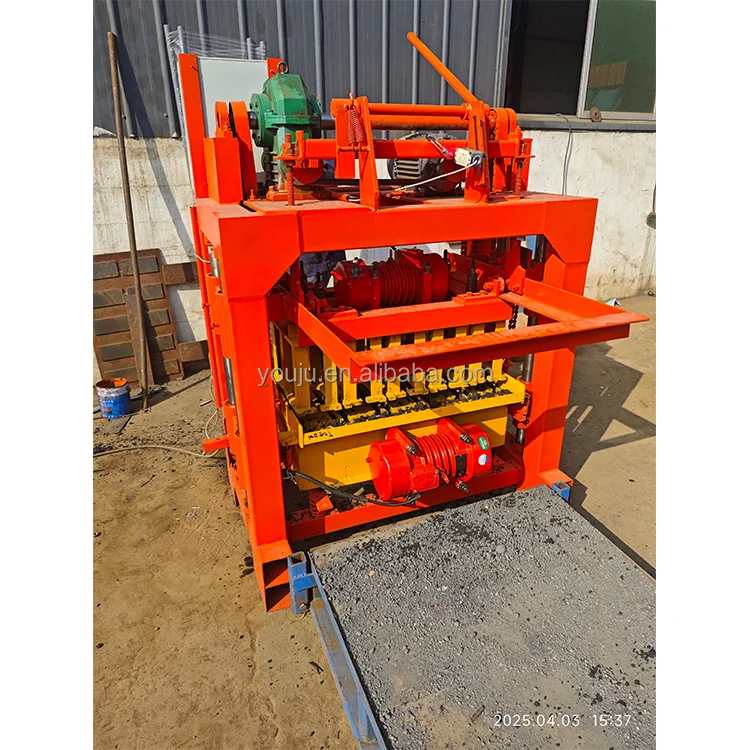
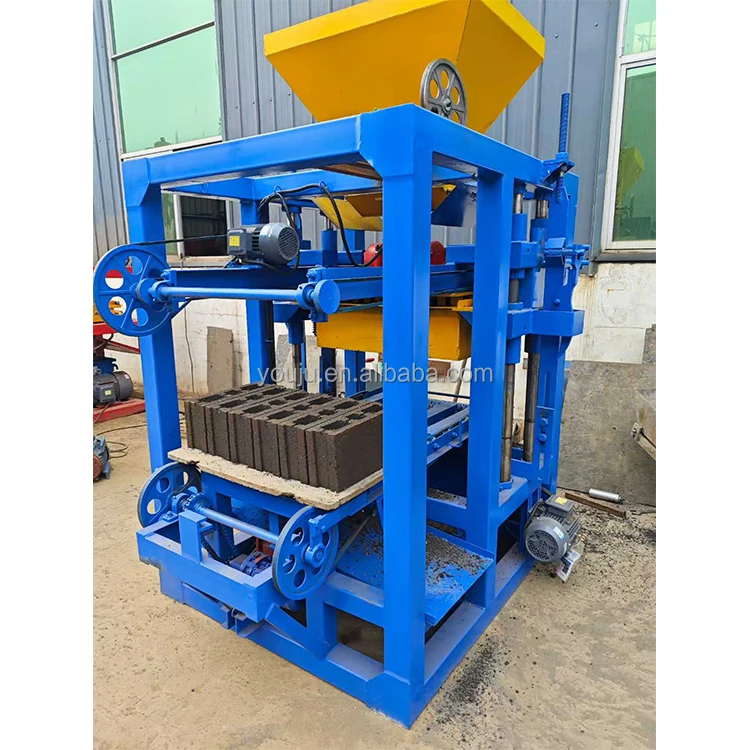
Complete Line Match — Every specification from the QT4-15A press through to pallet handling is configured as one integrated system, not assembled from separate supplier catalogs.
Technical Specifications
| Parameter |
Value |
| Model |
QT4-15A |
| Product Type |
Fully Automatic Concrete Block Making Machine |
| Overall Dimensions (L×W×H) |
4100×1600×2600 mm |
| Rated Pressure |
16–21 MPa |
| Vibration Force |
55 kN |
| Vibration Frequency |
4200 r/min |
| Main Vibration Form |
Platform Vibration |
| Pallet Size |
880×550 mm |
| Molding Cycle |
25–30 s (basis not stated in source) |
| Overall Power |
18.45 kW |
| Total Mass |
4 T |
| Demolding Method |
Hydraulic |
| Factory Area Required |
300 m² |
| Applied Products |
Concrete blocks, hollow/solid blocks, pavers, interlocking blocks, curbstone, colored pavers |
| Raw Materials |
Crushed stone, sand, cement, dust, fly ash, gravel, slag |
| Automation Level |
Fully Automatic |
| Warranty |
1 year (excluding spare parts) |
| Loading |
1×40HQ container |
Application Suitability
| Application |
Material or Output |
| Hollow block production for load-bearing walls |
Crushed stone, sand, cement, and fly ash mixes |
| Solid concrete block manufacturing |
Gravel, slag, and cement blends for high-density units |
| Paving block and interlocking brick runs |
Fine aggregates with colored face mix options |
| Kerbstone and curb production |
Coarse aggregate mixes requiring high hydraulic pressure |
| On-site contractor block production |
Local sand and crushed stone sourced near the project |
What "25–30 Seconds per Cycle" Actually Means for Your Output
A cycle time is meaningless until you know which block format and wall thickness it was measured on.
I have seen buyers sign contracts based on a single cycle figure, then arrive on site to find their primary product — say, a 200 mm hollow block — takes noticeably longer than the quoted range because the original test ran on a thinner paver. When the daily tally falls short of the business plan, the blame shifts between operator error and material quality, while the real mismatch was never addressed on paper [NEED_CITE: block format assumptions in capacity quotations]. Before you compare any fully automatic concrete block making machine against another, insist the supplier states the exact block dimensions, mix design, and target strength behind every output figure.

Where the QT4-15A Sits in a Broader Stationary Range
Buyers evaluating their first stationary plant often start by looking at entry-level semi-automatic presses and then jump straight to high-capacity lines without seeing the middle ground. The QT4-15A occupies that mid-tier position, offering hydraulic demolding and platform vibration at a scale that suits a 300 m² factory area without demanding the infrastructure of a fully cubing and racking system. For an entrepreneur comparing investment levels, this model represents the step where automation begins to remove manual pallet handling while still keeping capital outlay measured.
Matching the Press to the Rest of the Line
A block press does not operate in isolation; raw material feeding, mixing, pallet circulation, and stacking must all keep pace or the press sits idle between cycles. When we configure a fully automatic concrete block making machine at this tier, we verify that the mixer discharge rate, the pallet feeder magazine capacity, and the curing rack dimensions align with the press cycle so no station becomes a bottleneck [NEED_CITE: stationary block line synchronization principles]. This line-level thinking prevents the common situation where the press is technically capable but the surrounding equipment limits actual daily volume.
Reading the Pressure and Vibration Figures Together
The rated pressure of 16–21 MPa and the 55 kN vibration force at 4200 r/min must be evaluated as a pair, not in isolation. Hydraulic pressure compresses the mix while platform vibration settles fines into voids; if one is high and the other low, blocks emerge with uneven density — strong on the outside, friable inside. The 880×550 mm pallet size also dictates the maximum mold footprint, which in turn determines how many blocks per cycle are physically possible for formats like 400×200×200 mm hollow units versus smaller interlocking pavers. Understanding this relationship helps you read a specification sheet the way an engineer does, rather than taking a single headline number at face value.
The Hidden Cost of Skipping Line-Level Configuration
When a buyer focuses only on the press and treats pallets, mixers, and stacking as afterthoughts, the consequences surface within the first month of production. Pallets that do not match the curing rack spacing force manual re-stacking; a mixer sized for a smaller press leaves the QT4-15A waiting between batches; voltage confirmed too late delays commissioning by weeks while transformers are sourced locally [NEED_CITE: electrical commissioning delays in block plant startups]. These are not equipment failures — they are specification gaps that no amount of on-site troubleshooting can fix quickly.
Why Source This Tier Through a Single-Line Supplier
Block machinery is our single focus, so the QT4-15A is never quoted as a standalone press with a list of recommended third-party ancillaries. Configuration is set against your actual mix design and local aggregate, not a default catalog page. Mould design covers the formats your market sells, including custom drawings when standard options do not match. Automation level is selectable, meaning you can begin with semi-automatic pallet handling and upgrade stacking later without replacing the press. Installation support includes operator training on the exact control interface your team will use daily.
Documentation & Verification
- Line layout showing capacity calculation per block format assumed for the QT4-15A
- Machine specification sheet confirming hydraulic and vibration ratings for your mix
- Pallet specification aligned with your existing curing racks and forklift dimensions
- Voltage, frequency, and PLC display language confirmed before production starts
- Factory test record on your target block format before container loading
Installation, Commissioning & Support
- 300 m² factory area requirement with level concrete floor for the 4 T machine mass
- Dedicated power circuit sized for the 18.45 kW overall draw at your local voltage
- Machine dismantled for 40HQ loading and reassembled on site with alignment checks
- First-run parameter tuning matching your local aggregate and cement type
- Operator training covering mold change procedure and daily maintenance points
- Wear parts list with reorder intervals for hydraulic seals and vibration components
Before You Request a Quotation
Send us your target block formats with dimensions, the daily volume your market requires, and the local aggregates available — including sieve analysis if you have it. Confirm your site voltage, frequency, and the language your operators need on the control display. Let us know whether your curing area already has racks and what forklift you plan to use, so the 880×550 mm pallet can be validated against your existing handling equipment before we finalize the fully automatic concrete block making machine configuration.
Frequently Asked Questions
Q: How is the QT4-15A cycle time measured, and which block format does the 25–30 s figure assume?
A: The published cycle range is a general figure. The actual time depends on block height, wall thickness, and mix composition. We calculate a format-specific cycle for each mold you order and include it in the capacity document so you know the realistic daily output for your primary product before the machine ships.
Q: Where does the QT4-15A sit compared to semi-automatic and high-capacity models in the range?
A: It bridges entry-level semi-automatic plants and large fully automatic lines. You gain hydraulic demolding and platform vibration without the infrastructure a high-capacity line demands. This makes it suitable for a 300 m² factory where the next tier up would require more floor space and a larger curing yard.
Q: What voltage and frequency options are available, and is the PLC language configurable?
A: Voltage and frequency are confirmed per destination market before production begins, and the PLC display language is set to match your operators. We document these choices in writing so there are no commissioning surprises when the container arrives on site.
Q: Can I start with a semi-automatic configuration and upgrade later?
A: Yes. The QT4-15A platform allows you to begin with manual or semi-automatic pallet handling and add automatic stacking or cubing modules later. The press itself remains unchanged; only the peripheral stations are added, protecting your initial investment.
Q: What factory area and pallet handling setup does this tier require?
A: The press and immediate line fit within approximately 300 m². Pallets measure 880×550 mm, so your curing racks and forklift must accommodate that size. We verify compatibility during the proposal stage to avoid handling mismatches after installation.

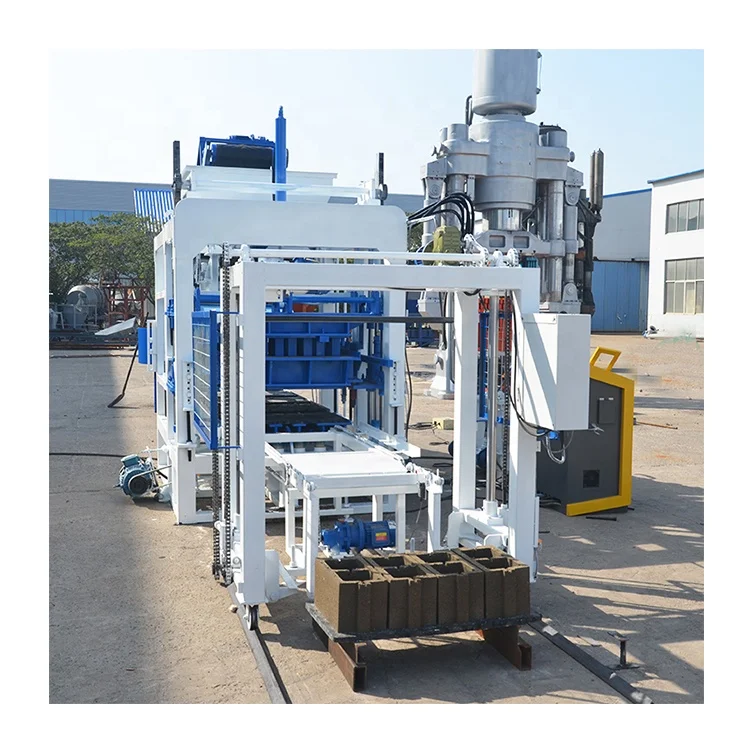
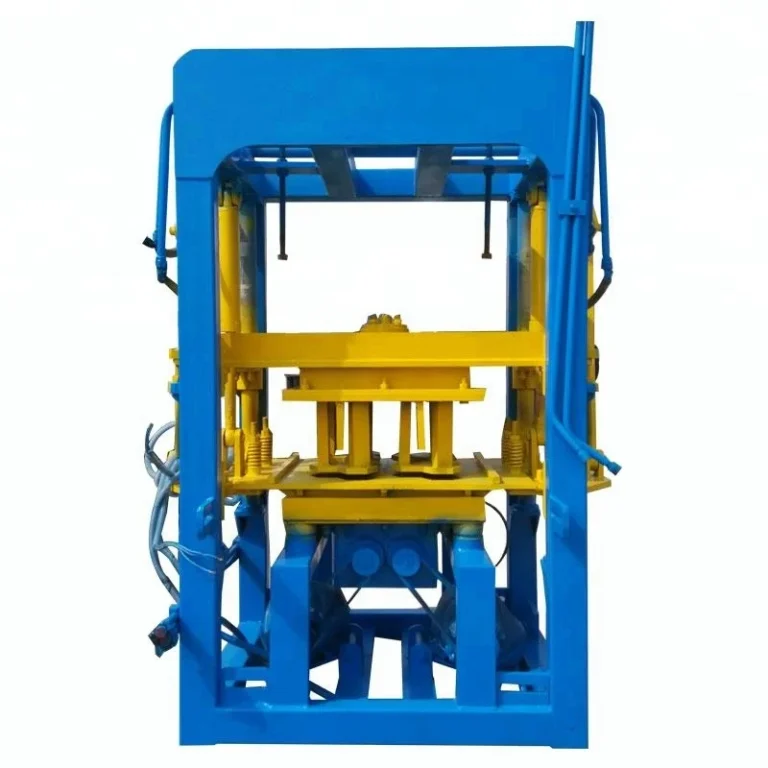 Stationary block machine