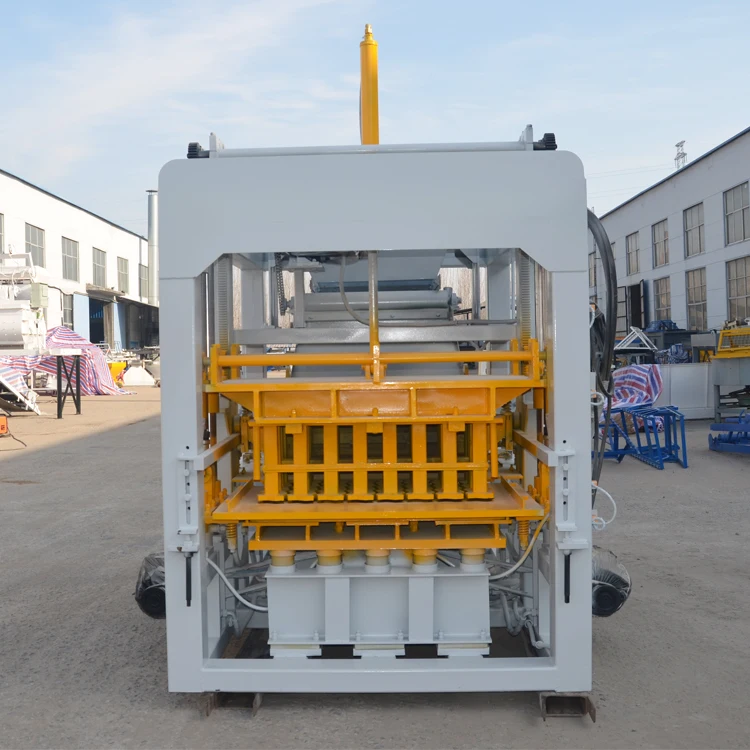
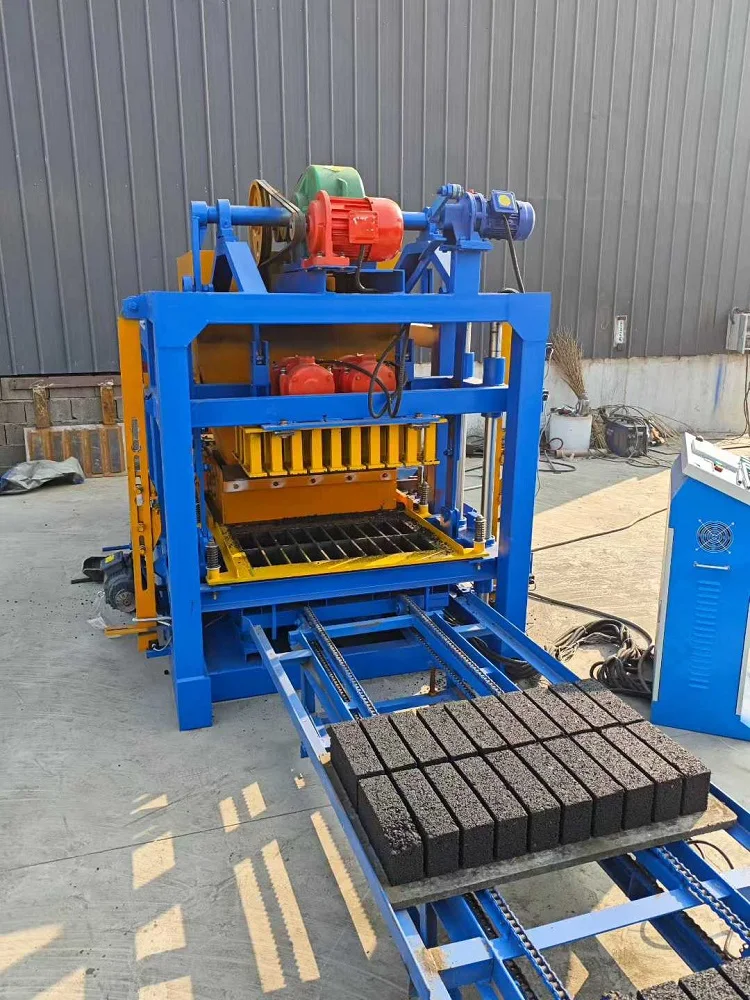
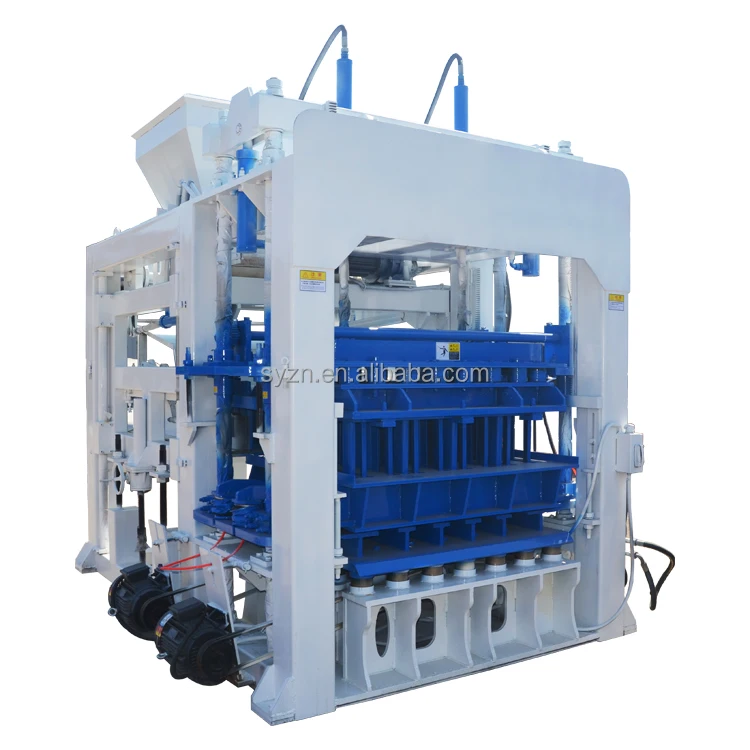
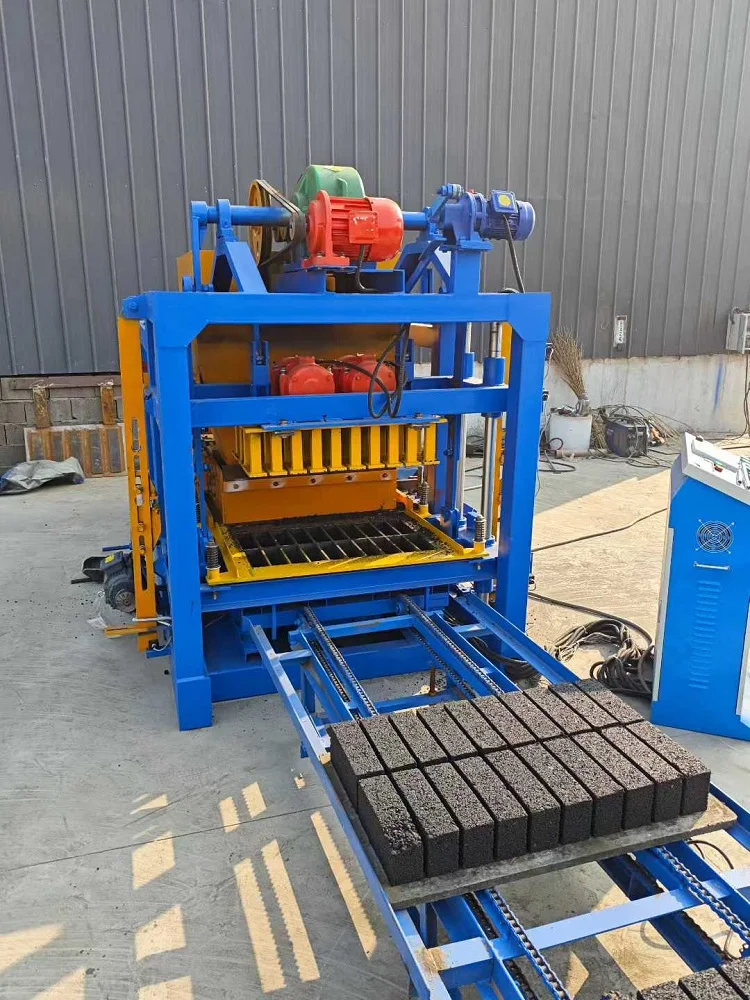
Matched System Engineering — the QT10-15 is specified as one integrated block making line where press, mould, pallet and handling are sized together, so cycle times match across stations and the press never waits on upstream or downstream equipment.
Technical Specifications
| Parameter |
Value |
| Model |
QT10-15 |
| Product Type |
Automatic Hydraulic Block Making Machine |
| Control System |
PLC control cabinet |
| Hydraulic System |
Independent integrated hydraulic station |
| Vibration Mode |
Vertical station mode resonance with automatic FM-AM |
| Mould Change |
Quick replacement for multi-format production |
| Automation Level |
Automatic (pallet feed, block making, storage hopper, conveyor, hydraulic unit, PLC cabinet) |
| Cycle Time (400×200×200mm hollow block) |
15–20s |
| Output Capacity (400×200×200mm hollow block) |
1800–2400 pcs/h (14400–19200 pcs/8hr, basis: 10 pcs/mould) |
| Cycle Time (400×150×200mm hollow block) |
15–20s |
| Output Capacity (400×150×200mm hollow block) |
2160–2880 pcs/h (17280–23040 pcs/8hr, basis: 12 pcs/mould) |
| Cycle Time (240×115×53mm solid brick) |
15–20s |
| Output Capacity (240×115×53mm solid brick) |
8928–11160 pcs/h (71424–89280 pcs/8hr, basis: 62 pcs/mould) |
| Cycle Time (200×100×60mm paving block) |
20–25s |
| Output Capacity (200×100×60mm paving block) |
5184–6480 pcs/h (41472–51840 pcs/8hr, basis: 27 pcs/mould) |
| Cycle Time (225×112.5×60mm interlocking brick) |
20–25s |
| Output Capacity (225×112.5×60mm interlocking brick) |
4032–5040 pcs/h (32256–40320 pcs/8hr, basis: 24 pcs/mould) |
| Warranty |
1 year (whole machine, excluding spare parts) |
Application Suitability
| Application |
Material or Output |
| Hollow block production for building walls |
Crushed stone, river sand, cement, fly ash aggregates |
| Solid brick manufacturing |
Standard concrete mix with local fine aggregate |
| Paving block and kerbstone production |
High-density concrete mix with coarse aggregate grading |
| Interlocking brick for landscaping |
Pigmented concrete mix with controlled moisture |
| Hourdis block for slab construction |
Lightweight aggregate or standard concrete blend |
What "Pieces per Hour" Actually Means on the QT10-15
Every output figure here is tied to a specific block format, mould cavity count, and cycle time range.
When an automatic block making machine manufacturer quotes a single headline capacity, that number usually assumes one ideal format — often the smallest, fastest-cycling product. On a real production floor switching between hollow blocks, paving blocks and interlocking bricks, the daily throughput looks very different from the brochure. I once configured a line where the buyer expected a flat hourly rate across all formats; the reality was that paving blocks needed a longer cycle for proper compaction, cutting the hourly count compared to hollow blocks. [NEED_CITE: how cycle time varies by block format and aggregate density] The QT10-15 capacity table above lists each format separately so plant planning starts from honest numbers.

Where the QT10-15 Fits in the Full Machine Range
The Shiyue automatic range spans from small workshop models to high-capacity lines, and the QT10-15 sits in the upper tier. Buyers moving up from semi-automatic machines typically choose this model when daily output requirements exceed what mid-range presses deliver across multiple block formats. The automatic block making machine manufacturer range includes smaller units for entrepreneurs starting a first plant and larger presses for operations running three shifts. The QT10-15 targets established block plants that need to broaden their product catalogue — adding paving blocks or interlocking bricks alongside standard hollow blocks — without investing in a second press.
Matching the Press to the Line Around It
A press this size does not operate alone. The pallet feed machine, storage hopper, conveyor and hydraulic unit must all match the press cycle so that a finished pallet clears the mould area before the next one arrives. On lines where the conveyor or stacking station runs slower than the press, the QT10-15 ends up idling between cycles, and the rated output per format becomes unreachable. When we configure a complete line, the pallet handling speed and curing rack capacity are calculated against the same format-specific cycle times listed in the specification table. [NEED_CITE: block production line synchronization principles] This matched approach means the automatic block making machine manufacturer delivers a system where every station keeps pace.
Reading the Specs That Matter for Daily Production
The independent integrated hydraulic station is separated from the main vibration zone and dust path, which protects valve seals and hose fittings from the accelerated wear that vibration transmits through a shared frame. Vertical station mode resonance with automatic FM-AM tuning adjusts vibration frequency and amplitude based on the mix loaded into the mould — a dense paving block mix needs a different vibration profile than a lightweight hollow block blend. Quick mould replacement lets operators switch formats within a shift rather than losing a full day to changeover. The PLC control cabinet governs the entire sequence from pallet feed through to block ejection, keeping cycle times consistent across batches when the same mould and mix are used.
The Cost of Ignoring Mix Design Before Ordering
Every block machine performs against the raw material it actually receives. I spent a week on-site in the Middle East adjusting parameters because the local volcanic ash aggregate responded completely differently from the river sand used during factory testing — vibration force that compacts sand properly left the ash mix under-pressed, and block strength dropped below acceptable levels. [NEED_CITE: effect of aggregate type on concrete block compressive strength] When a buyer skips sharing local material samples before purchase, the machine arrives configured for a catalogue default, and the first production runs reveal weak blocks, excessive cement consumption, or surface cracking that forces mix reformulation mid-project.
Why Buyers Source This Tier from Shiyue
Block machinery is the single production focus, so the QT10-15 press, moulds, pallets and handling equipment are engineered as one system rather than sourced from separate suppliers and bolted together. Configuration is set against the buyer’s actual mix design and target block format, not a generic catalogue sheet. Mould design covers the formats the buyer’s local market demands, with custom drawings available when standard moulds do not match regional dimensions. Automation level is selectable — a buyer can start with semi-automatic pallet handling and add automatic stacking later as volume grows. Installation support includes on-site commissioning and operator training so the first production runs meet the expected quality.
Documentation & Verification
- Line layout drawing with capacity calculated per block format for the QT10-15
- Machine specification sheet confirming voltage, frequency and PLC language before production
- Mould drawing and format list matched to the buyer’s local market dimensions
- Factory test record on the buyer’s specified block formats before dispatch
- Hydraulic and electrical schematic for the QT10-15 line configuration
- Operation and maintenance manual covering daily checks and wear part replacement
Installation, Commissioning & Support
- Foundation plan sized to the QT10-15 footprint and vibration load requirements
- Dedicated power circuit matching the confirmed voltage and frequency before shipment
- Machine arrives in assembly-ready sections with hydraulic unit and PLC cabinet pre-wired
- On-site commissioning includes cycle time verification across each ordered mould format
- Operator training covers PLC navigation, mould change procedure and daily maintenance
- Wear parts and mould list provided with recommended replacement intervals
Preparing Your Inquiry
Share the specific block formats your market sells along with target daily output per format, so the line can be configured around real products rather than a generic capacity figure. Provide your local aggregate type, cement source and any existing curing area dimensions so pallet size and handling equipment match what is already on site. Confirming your local voltage, frequency and preferred PLC display language at inquiry stage avoids commissioning delays after the QT10-15 arrives.
Frequently Asked Questions
Q: How is the QT10-15 output capacity verified per block format?
A: Each capacity figure is tied to a specific block dimension, mould cavity count and cycle time range. For example, hollow blocks at 400×200×200mm are rated at 1800–2400 pieces per hour based on 10 cavities per mould and a 15–20 second cycle. Buyers receive a capacity calculation document stating the format behind every number.
Q: Where does the QT10-15 sit in the Shiyue automatic machine range?
A: The QT10-15 occupies the high-capacity tier, suited for established plants scaling up output or broadening their product catalogue across hollow blocks, solid bricks and paving blocks. Smaller models serve first-time plant setups, while buyers needing continuous three-shift production may look at larger presses in the range.
Q: What electrical and control details are confirmed before shipment?
A: Voltage, frequency and PLC display language are confirmed during the proposal stage and locked into production specifications. This prevents situations where the machine arrives with a control interface the local operators cannot read or a voltage rating that does not match the site supply.
Q: What does a complete QT10-15 line include beyond the press?
A: The standard line configuration covers pallet feed machine, storage hopper, conveyor, independent hydraulic unit and PLC control cabinet. Pallet handling, stacking and curing rack systems are specified separately to match the buyer’s curing area size and existing forklift capacity.
Q: How is the machine adjusted for local aggregate conditions?
A: The buyer shares local raw material samples and mix proportions before configuration. Vibration frequency, amplitude and hydraulic pressure are then set to match that specific aggregate — rather than a catalogue default — so block strength and surface quality meet requirements from the first production run.

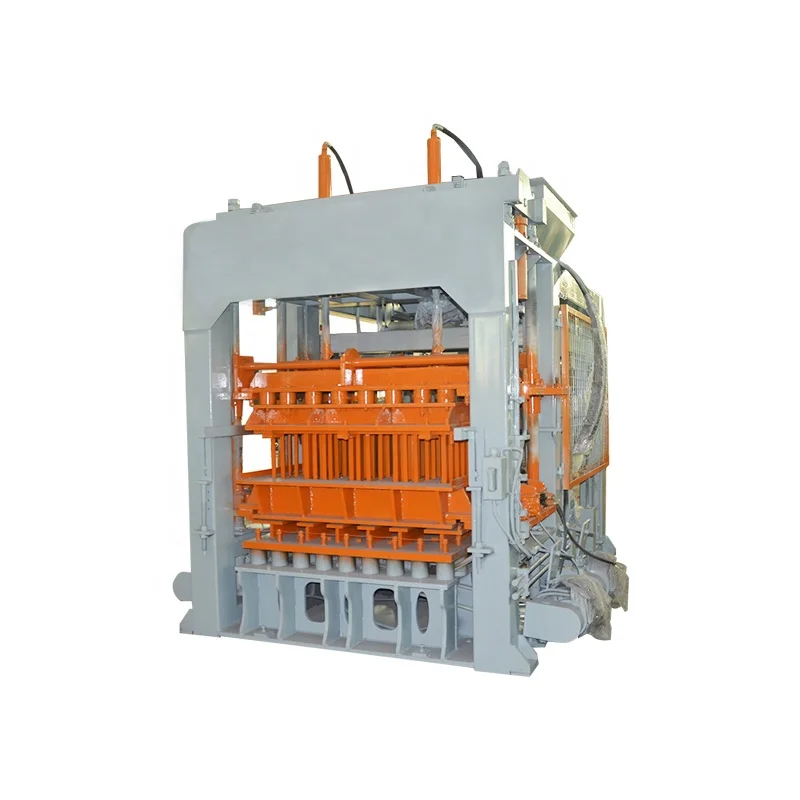
 Automatic block machine