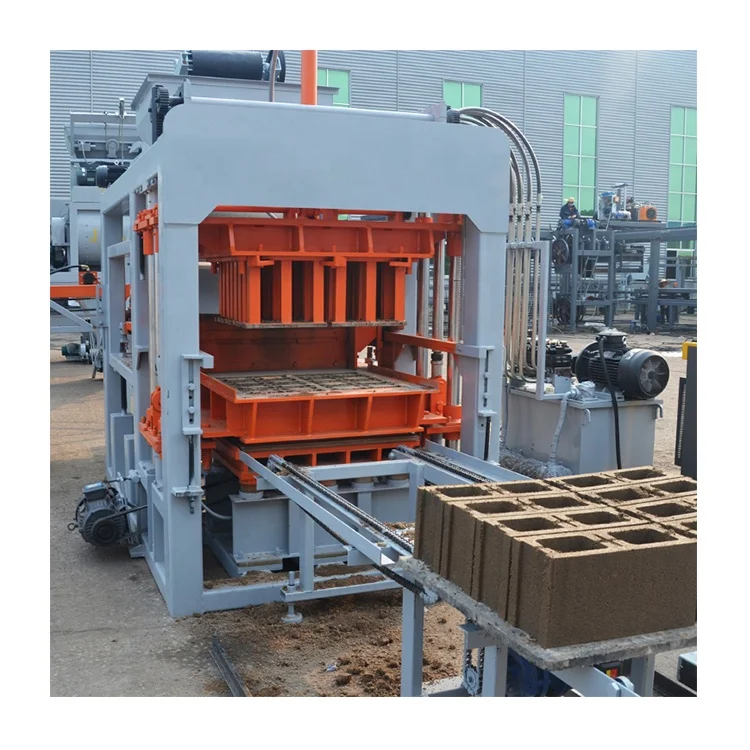
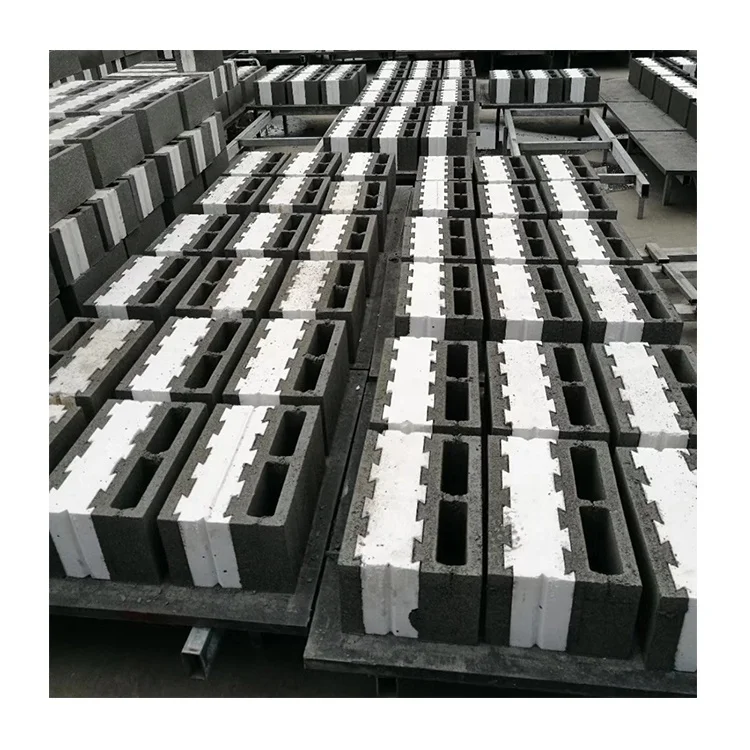
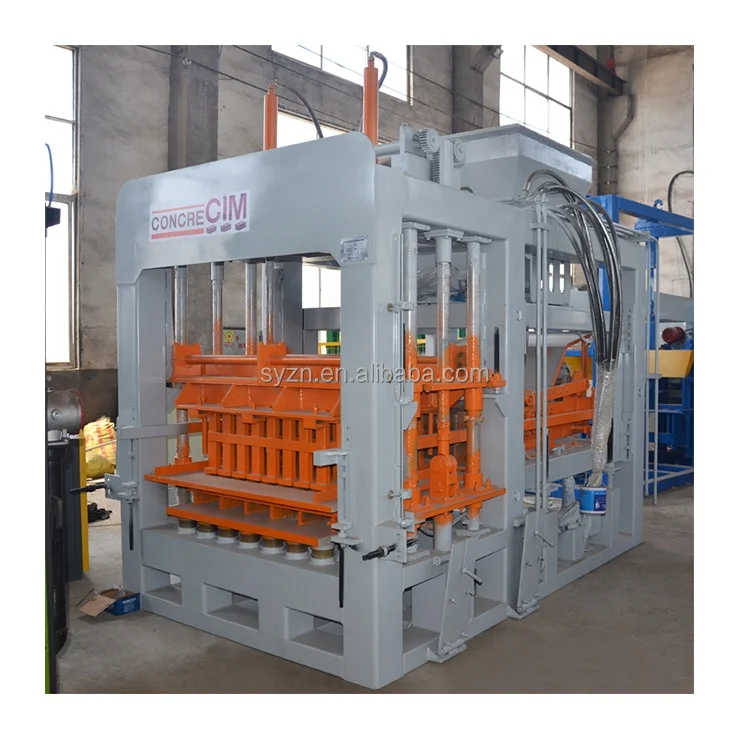
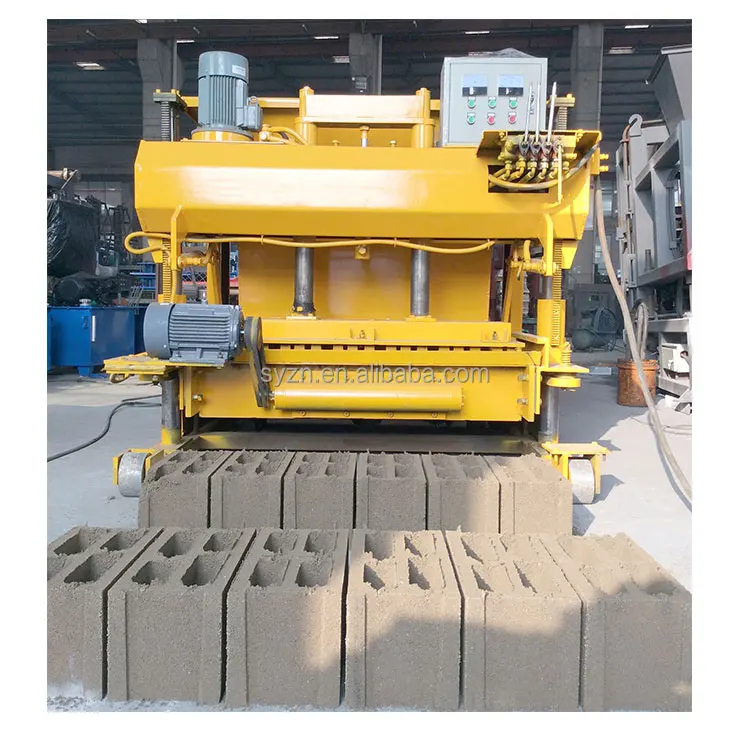
Hydraulic Turning Precision — the QMY6-25 mobile block making machine uses a 16 MPa hydraulic system to rotate and lock the mold frame, eliminating the manual pivot wear common on entry-level egg-layers.
Technical Specifications
| Parameter |
Value |
| Model |
QMY6-25 |
| Product Type |
Mobile Egg-Laying Block Making Machine |
| Molding Capacity |
6 pcs/mold |
| Hydraulic Pressure |
16 MPa |
| Vibration Form |
Mold Vibration |
| Molding Cycle |
20s–25s (basis not stated in source — confirm block format / material / thickness) |
| Turning Method |
Hydraulic |
| Total Power |
9.6 kW |
| Total Mass |
2.5 Tons |
| Voltage & Frequency |
Customizable to destination grid |
| Block Formats |
Hollow blocks, solid blocks, and other concrete formats via mold change |
Application Suitability
| Application |
Material or Output |
| On-site housing project block production |
Crushed stone, sand, and cement mixes laid directly on compacted ground |
| Remote infrastructure block supply |
Solid and hollow concrete blocks produced at the build location without a fixed plant |
| Entry-level block plant startup |
Multiple concrete formats from a single machine with mold swaps |
| Distributor mobile production runs |
Concrete pavers and wall blocks served to customers across dispersed sites |
What "20-Second Cycle" Actually Means on a Job Site
Cycle time only matters when tied to the exact block format and mix you will run.
Catalog sheets quote a 20s–25s molding cycle for the QMY6-25, but that window assumes a specific block geometry, wall thickness, and aggregate gradation. I have watched contractors order a Mobile Block Making Machine manufacturer’s unit based on the shortest cycle number, then discover their local river sand pushes the cycle past thirty seconds because the fines slow drainage during vibration. The result is a daily tally well below what the brochure implied. [NEED_CITE: how aggregate moisture and fines content affect concrete block cycle time]
Before signing a purchase order, ask the supplier to state the cycle time against your actual target block — say a 400×200×200 mm hollow block at your local cement-to-aggregate ratio — and then multiply that confirmed figure by your planned shift hours. That exercise alone separates realistic output planning from catalogue optimism.

Where the QMY6-25 Sits in the Mobile Range
The Shiyue mobile lineup spans hand-fed egg-layers at the low end and higher-output automatic mobile units at the top. The QMY6-25 occupies the mid-tier, offering six blocks per mold and hydraulic turning for operators who need more consistency than a manual pivot but do not yet justify a full stationary plant. For a Mobile Block Making Machine manufacturer, this tier is where most first-time plant owners land — enough capacity to serve a housing project without the capital outlay of a fixed-line setup.
Matching the Machine to Your Project Footprint
Because the QMY6-25 lays blocks directly on the ground and drives forward, the curing area doubles as the production floor. You need a flat, compacted surface roughly the size of a tennis court for a single shift’s output. The machine’s 2.5-ton mass and 9.6 kW power draw mean it can be offloaded from a flatbed truck and put to work the same afternoon, provided a generator or grid connection at the correct voltage is ready on site. [NEED_CITE: site preparation requirements for mobile egg-laying block machines]
Reading the Pressure and Vibration Numbers
The 16 MPa hydraulic pressure works together with mold vibration to compact the concrete mix into the cavity. Pressure alone would leave air pockets; vibration alone would not force the mix into thin-walled hollow cores. On the QMY6-25 the two forces act simultaneously during the compaction phase, which is why block density remains even across the six mold cavities. When you evaluate any mobile unit, ask how the hydraulic circuit and vibration motor are sequenced — a machine that vibrates before full pressure is reached tends to produce blocks with weaker top faces.
The mold vibration form, as opposed to table vibration, concentrates energy directly into the cavity walls. This matters for hollow blocks where the shell thickness is narrow and needs uniform compaction to avoid blowouts during demolding. A six-cavity mold vibrating from the frame rather than a separate table also keeps the overall machine footprint compact, which is a practical advantage when maneuvering around a confined build site.
The Hidden Cost of Skipping Voltage Confirmation
I once supported a buyer in West Africa who received a mobile block machine wired for 380 V/50 Hz while the local grid ran at 415 V/60 Hz. The motor overheated within the first week, the hydraulic pump lost pressure, and the vibration motor burned out before the first replacement could ship. The machine sat idle for six weeks. [NEED_CITE: voltage and frequency mismatch damage to industrial motors in export markets] The QMY6-25’s motor is customizable, but that customization only helps if the buyer confirms the destination voltage and frequency before the unit enters production. A simple nameplate check on existing site equipment prevents the entire failure chain.
Why Source the QMY6-25 Through This Channel
Block machinery is our single product focus, so the machine, mold, and handling tools are specified as one system rather than assembled from unrelated suppliers. The QMY6-25 ships with molds matched to the block formats your market actually sells, and custom mold drawings are available when standard formats do not fit your project specification. Configuration is set against your local aggregate and mix design, not pulled from a default catalogue sheet. Automation is selectable — you can begin with manual pallet handling on other lines and step up later. Installation support includes operator training so your crew understands the hydraulic turning sequence and vibration timing from day one.
Documentation & Verification
- Capacity calculation sheet stating the block format assumed for the QMY6-25 cycle time
- Mold drawing and format list showing every block type the supplied molds produce
- Voltage and frequency confirmation record matched to your destination country grid
- Factory test record documenting cycle time and block output under realistic conditions
- Operation and maintenance manual covering hydraulic turning and vibration motor service
Installation, Commissioning & Support
- Flat compacted ground required; no fixed foundation needed for the 2.5-ton QMY6-25
- Confirm local voltage and frequency before production to match the 9.6 kW motor set
- Machine arrives assembled; hydraulic turning system tested before container loading
- First-run commissioning includes cycle timing against your specific mold and mix
- Operator training covers mold change procedure and hydraulic circuit safety checks
- Wear parts list supplied with recommended replacement intervals for vibration components
What to Include in Your Inquiry
To size the QMY6-25 correctly, share your target block format with dimensions, your local aggregate type and cement ratio, and the daily output you need per shift. Confirm the voltage and frequency at your project site, and note whether you already have a mixer and wheel loader or need those specified alongside the machine.
Frequently Asked Questions
Q: How is daily output calculated for the QMY6-25, and which block format is assumed?
A: Daily output depends on the block format, wall thickness, and mix design you run. The quoted 20s–25s cycle is a range, not a fixed number, and it shifts when aggregate moisture or block geometry changes. Ask for a capacity calculation that states the exact block dimensions and mix ratio used, then multiply by your planned shift hours to get a realistic daily figure.
Q: What voltage and frequency options are available for the QMY6-25?
A: The motor and control components are configured before production to match your destination grid. Common configurations include 220 V/60 Hz, 380 V/50 Hz, and 415 V/50 Hz, among others. Send a photo of an existing equipment nameplate from your site so we confirm the exact supply before the machine enters assembly.
Q: Which block formats can one QMY6-25 produce, and how long does a mold change take?
A: The machine produces hollow blocks, solid blocks, and other concrete formats by swapping molds. Mold change involves unbolting the current mold frame, lifting it out, and seating the replacement — a task your crew can handle with basic hand tools after initial training. The exact changeover time depends on mold size and crew familiarity.
Q: Does the QMY6-25 require a prepared foundation or curing area?
A: No fixed foundation is needed. The machine lays blocks directly on compacted ground and drives forward. You need a flat, cleared area large enough to hold the shift’s output for curing. A compacted gravel or concrete slab surface gives the best block base quality and prevents settling marks.
Q: What supporting equipment is needed to run the QMY6-25?
A: At minimum you need a concrete mixer to prepare the batch, a wheel loader or manual carts to feed the machine hopper, and a water supply for mix consistency. A block clamper or hand truck helps move cured stacks to storage. The QMY6-25 itself handles molding and laying, so no conveyor or pallet return system is required.

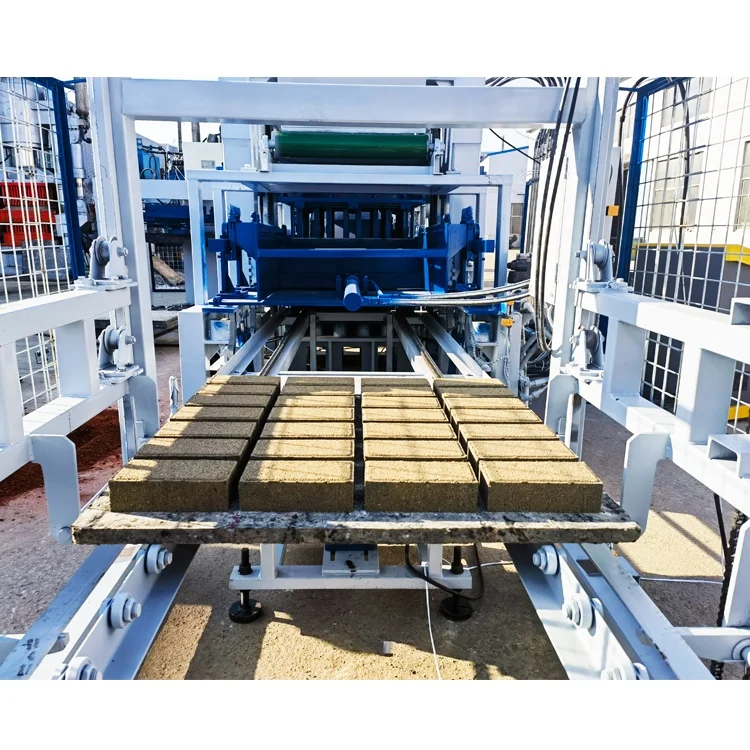 High quality block machine