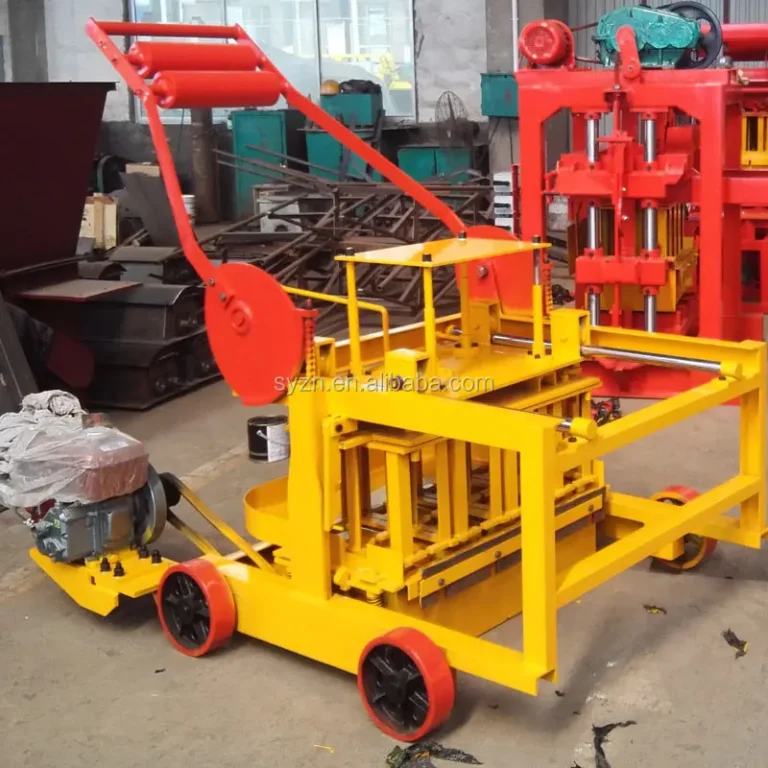
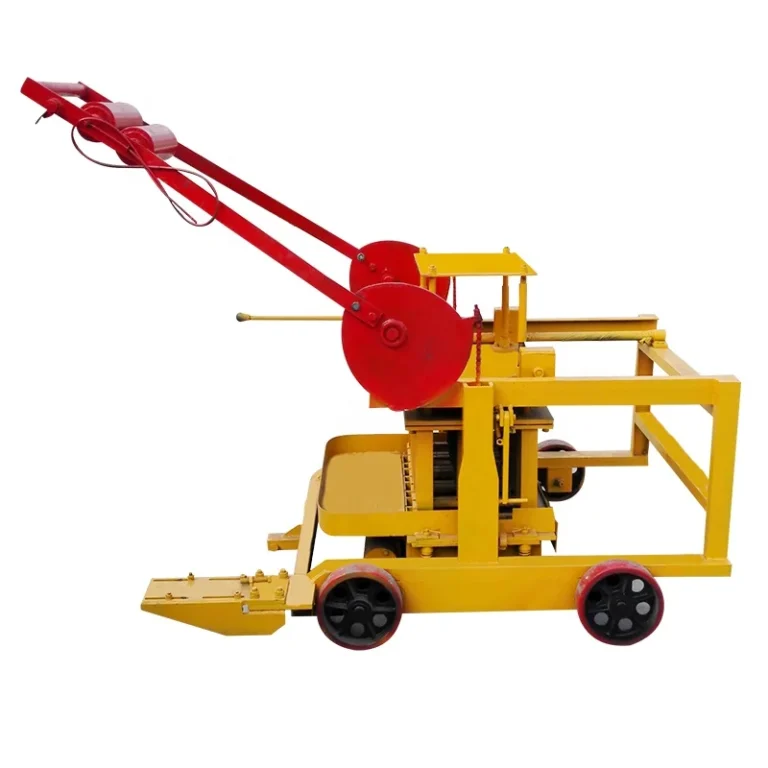
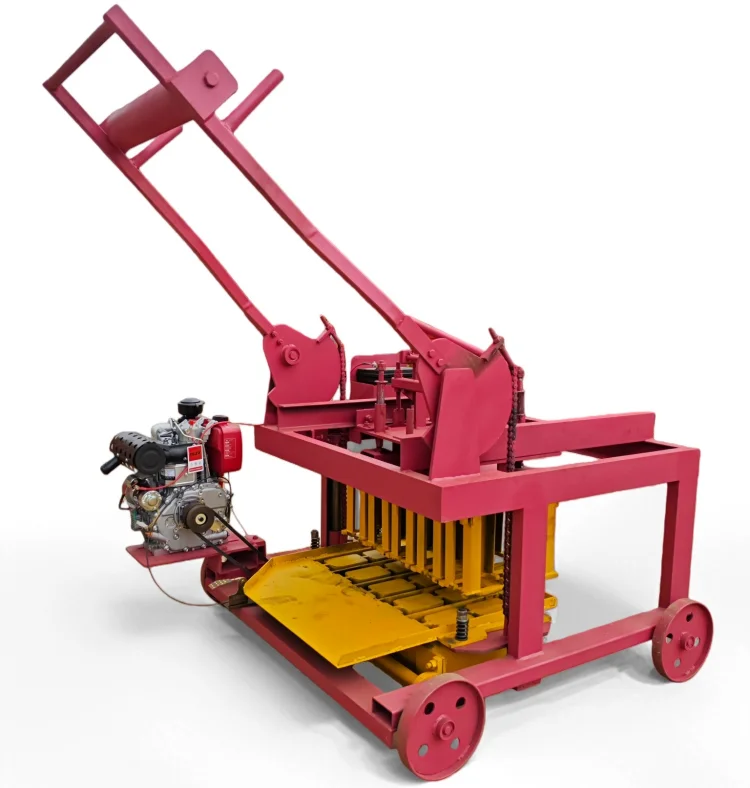
Configuration matched to local aggregate — we confirm your raw material source before setting vibration force and cycle time for the QMY4-30.
Technical Specifications
| Parameter |
Value |
| Model |
QMY4-30 |
| Product Type |
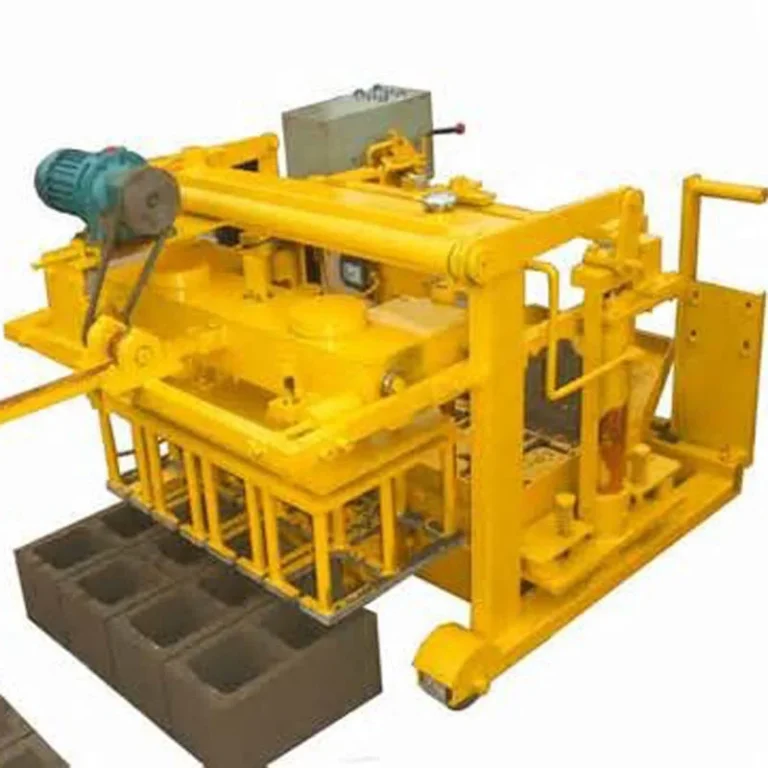
Mobile Egg Laying Concrete Block Making Machine |
| Hydraulic Method |
Mould vibration |
| Demold Method |
Hydraulic |
| Molding Cycle |
25-30s |
| Total Power |
5.95KW |
| Automation Level |
Manual / Mobile (egg laying, no fixed plant required) |
| Pallet Size |
Not required (pallet-less egg laying design) |
| Mould Format (400×200×200mm) |
4 pcs/mould, 480 pcs/hour, 3840 pcs/8hr (basis: 25-30s cycle) |
| Mould Format (400×150×200mm) |
5 pcs/mould, 600 pcs/hour, 4800 pcs/8hr (basis: 25-30s cycle) |
| Mould Format (400×100×200mm) |
7 pcs/mould, 840 pcs/hour, 6720 pcs/8hr (basis: 25-30s cycle) |
| Operating Environment |
Mountainous, hilly, industrial mining, desert, coastal areas |
| Standards |
ISO9001:2000, CE |
Application Suitability
| Application |
Material or Output |
| On-site hollow block production |
Crushed stone, river sand, cement |
| Remote housing project blocks |
Local aggregate, cement |
| Solid block laying for foundations |
Sand, gravel, cement |
| First operation block making |
Available regional raw materials |
What Daily Output Figures Hide Without a Format Assumption
Capacity is meaningless unless the block format and cycle time are stated together.
A mobile block machine manufacturer quoting "6000 pieces per day" often assumes the smallest solid format, not the 200mm hollow block you actually plan to sell. I have seen buyers in remote areas arrive at their project site expecting a specific daily volume, only to find their actual output is significantly lower because the quote was based on a format they never intended to produce. [NEED_CITE: block machine capacity calculation standards]

Where the QMY4-30 Sits in the Range
The QMY4-30 occupies the entry tier of our mobile block machine lineup. It is designed for buyers who need production at a project site without building a fixed plant. The machine moves along the ground, laying blocks directly without pallets, which eliminates the need for pallet investment, curing racks, and a dedicated curing area. This mobile block machine manufacturer positions this unit for contractors and entrepreneurs who want to start producing immediately with minimal infrastructure.
The Pallet-Less Advantage for Remote Sites
Egg laying machines remove the single biggest logistical constraint of stationary lines: pallet circulation. On a fixed plant, you need hundreds of pallets, a curing rack system, and forklifts to move them. The QMY4-30 lays blocks on a prepared ground surface and moves forward, leaving the blocks to cure in place. For mountainous terrain, desert locations, or coastal project sites where transporting pallets and building a curing area is impractical, this design removes a major layer of complexity. [NEED_CITE: egg laying block machine site preparation requirements]
Mould Vibration and Hydraulic Demolding Explained
The QMY4-30 uses mould vibration combined with hydraulic demolding. Mould vibration means the vibration force is applied directly to the mould cavity rather than through the frame, which delivers more consistent compaction to the concrete mix. Hydraulic demolding provides controlled, even pressure when the mould lifts off the freshly formed block, reducing edge damage and surface cracking. The 25-30 second molding cycle applies across all three standard formats, though actual cycle time depends on your mix consistency and operator rhythm. Total power draw at 5.95KW means this machine can run on a standard diesel generator, which matters when grid power is unavailable at a remote site.
The Cost of Skipping Mix Design Verification
Buying a mobile egg laying machine without confirming your local aggregate properties leads to blocks that crack during demolding or fail strength tests after curing. River sand with high clay content absorbs water differently than crushed stone dust, and a mix that works in the factory test may produce weak, crumbly blocks on your actual site. We have sent technicians to remote locations to recalibrate vibration force and adjust water ratios because the initial configuration was set for a different material than what the buyer could actually source locally. [NEED_CITE: concrete block mix design and aggregate compatibility]
Why Source This Machine Through Shiyue
Block machinery is our single focus, so the QMY4-30 is specified as a matched system with its moulds and handling approach rather than assembled from separate component suppliers. We configure the machine against your actual local aggregate and target block format, not a catalogue default. Mould design covers the formats your market sells, and custom drawings are available if your project requires a non-standard size. You can start with the QMY4-30 and move to a semi-automatic or fully automatic line later, because we understand the upgrade path from mobile operation.
Documentation & Verification
- Machine specification sheet with your confirmed voltage, frequency, and control language before production begins
- Mould drawing and format list for each block size you intend to produce on site
- Capacity calculation stating which block format each daily output figure assumes
- Wear parts and mould list included with shipment documentation
- Factory test record on your target block format before dispatch
Installation, Commissioning & Support
- Flat, compacted ground surface required; no concrete foundation needed for the 5.95KW mobile unit
- Voltage and frequency confirmed before build to match your local generator or grid supply
- Machine arrives fully assembled; operator walks through controls on first day
- On-site commissioning includes mix adjustment for your local sand, gravel, and cement source
- Operator training covers mould change procedure, vibration settings, and daily maintenance checkpoints
- Wear parts list provided so you can stock spares before the first replacement cycle
What to Share Before Requesting a Quote
Tell us which block format your project or market actually demands, and we will quote capacity against that specific size. Share your local raw material type, whether river sand, crushed stone, or a blend, so we can confirm mix compatibility before building your machine. Confirm your site voltage and frequency, and whether you need the control interface in a specific language.
Frequently Asked Questions
Q: How is daily output calculated and which block format does each figure assume?
A: Daily output figures are based on an 8-hour working shift with a 25-30 second molding cycle. The 3840-piece figure assumes the 400×200×200mm hollow block format at 4 pieces per mould. The 6720-piece figure assumes the 400×100×200mm solid block at 7 pieces per mould. We state the format explicitly so you can match the number to your actual product.
Q: What voltage and frequency options are available for my target market?
A: Voltage and frequency are configured to your requirement before production begins. We need to know your local supply standard or the specifications of the diesel generator you plan to use on site. This is confirmed during the quotation stage so there are no commissioning delays when the QMY4-30 arrives.
Q: How do I choose between mobile, semi-automatic, and fully automatic tiers?
A: Mobile machines like the QMY4-30 suit project sites with no fixed plant. Semi-automatic lines add pallet handling and a fixed press for higher volume. Fully automatic lines include batching, stacking, and cubing for maximum output. The right tier depends on your daily volume target, available site area, and whether you plan to move production between locations.
Q: What is the site preparation requirement for an egg laying machine?
A: You need a flat, compacted ground surface free of debris. No concrete foundation, curing racks, or pallet storage area is required. The machine lays blocks directly on the ground and moves forward. A simple mix preparation area with a small mixer is sufficient to feed the QMY4-30.
Q: How are moulds and hydraulic wear parts supplied for first replacement?
A: A wear parts and mould list is included with your delivery documentation. We recommend ordering your first replacement set at the time of machine purchase so spares are on site when needed. Moulds are manufactured to the same drawings as your originals, ensuring consistent block dimensions across replacements.

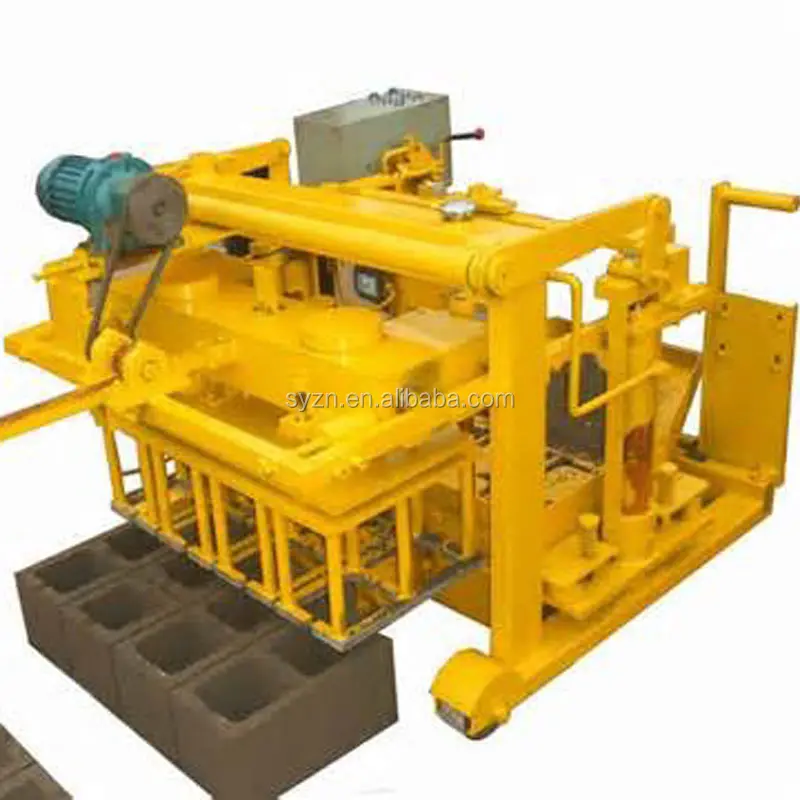
 Mobile block machine