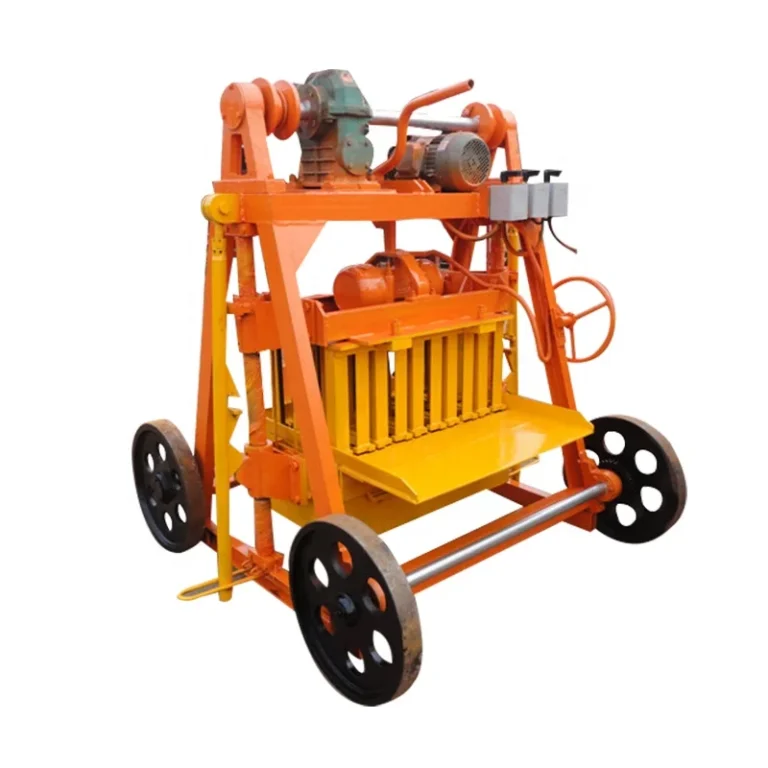
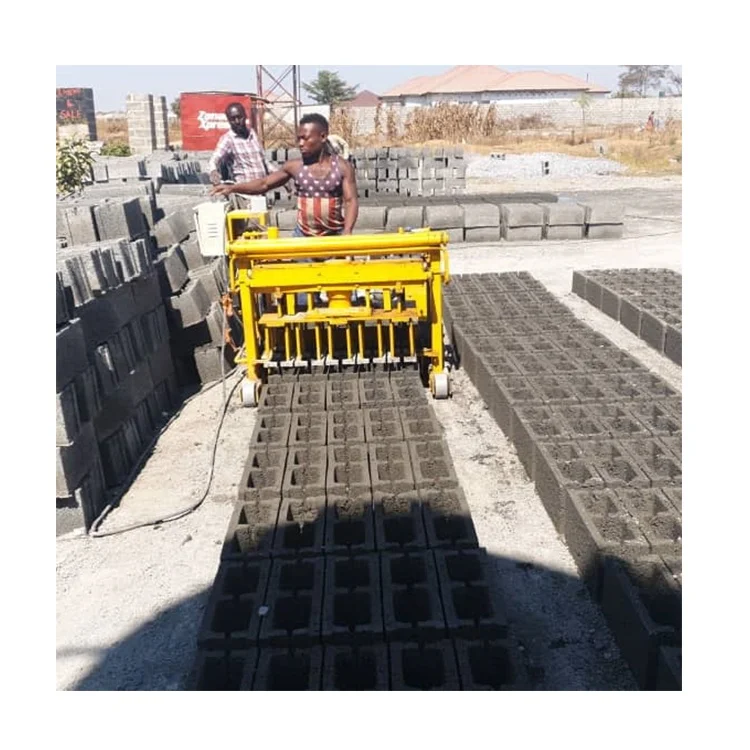
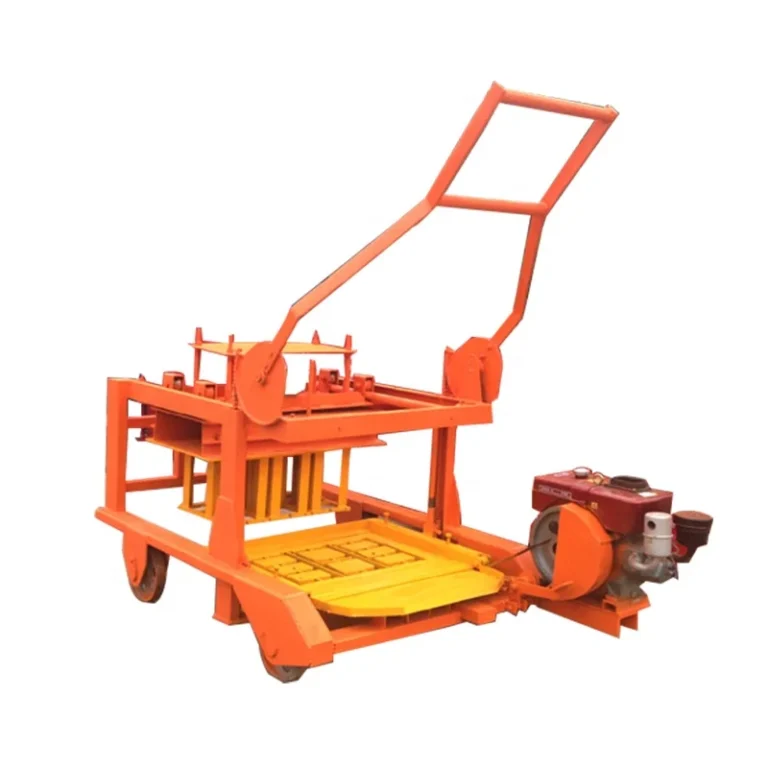
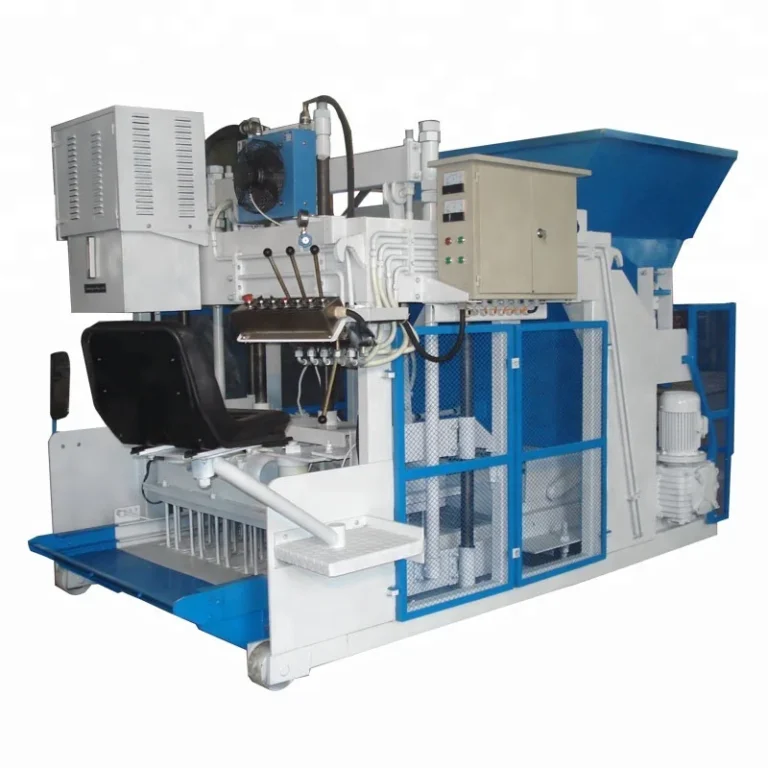
Single-Focus Block Line — the QMY4-30 mobile block making machine is specified as one matched system with its mixer and hydraulic demolding, not assembled from separate suppliers.
Technical Specifications
| Parameter |
Value |
| Model |
QMY4-30 |
| Product Type |
Mobile Cement Block Making Machine |
| Dimension of Host Machine |
1300×1500×1000 mm |
| Molding Area |
400×800 mm |
| Rated Pressure |
6-8 MPa |
| Vibration Frequency |
4500 r/min |
| Vibration Force |
28.6 kN |
| Molding Cycle |
15-25 s (basis not stated in source — depends on block format, material and thickness) |
| Overall Power |
5.95 kW |
| Host Machine Power |
5.95 kW |
| Mixer Model |
JQ350 |
| General Water Consumption |
4 T/day |
| Total Mass |
950-1000 kg |
| Pallet Size |
No pallets required |
| Demolding Method |
Hydraulic |
| Factory Area Required |
500 m² |
| Standards |
ISO9001, CE, SGS |
Application Suitability
| Application |
Material or Output |
| On-site hollow block production |
Crushed stone, sand, cement, fly ash, gravel |
| Solid block manufacturing for housing projects |
Local aggregate, cement, dust, slag |
| Interlocking block production for landscaping |
Sand, cement, gravel, stone dust |
| Paver production for road and garden projects |
Cement mixed with available local aggregate |
What "15-25 Seconds per Cycle" Actually Means for Your Site
A cycle time only matters when tied to the exact block format you intend to sell.
Catalogs often list a single molding cycle without stating which block size or mix that number assumes. For a mobile block making machine for sale like the QMY4-30, the 15-25 second range shifts noticeably depending on whether you are pressing a thin interlocking paver or a thick hollow block. If your local sand carries high clay content, the vibration must work harder to compact the mix, extending each cycle beyond the optimistic end of the range. I have seen machines dispatched to West Africa where the local river sand required nearly double the expected cycle time, cutting daily output to half of what the buyer had planned around. The only reliable fix is a sample mix test before the machine ships [NEED_CITE: aggregate testing standards for concrete block production].
Where the QMY4-30 Sits on the Output Ladder
This machine occupies the entry tier for entrepreneurs and small contractors who need block production without a fixed plant. Compared to semi-automatic stationary lines that require curing racks and pallet circulation, the QMY4-30 lays blocks directly on the ground, eliminating pallet investment entirely. That simplicity keeps the initial capital low, but it also means daily output is bound by the curing floor area you can prepare. A mobile block making machine for sale at this tier suits projects where demand is steady but not massive — think a housing development producing its own wall blocks or a contractor supplying a single road-paving contract.
How the Full Range Opens Up When You Outgrow Mobile
If your market starts demanding multiple block formats at volumes the QMY4-30 cannot sustain, the next step is a semi-automatic stationary press with pallet feeding and a basic stacker. Further up, fully automatic lines add batching accuracy, automatic cubing, and PLC-controlled cycle management that removes inconsistency between operators. The value of understanding the full range is that you can start with the mobile tier and plan your upgrade path before you are forced into an emergency purchase. Each tier increases not just output but also the supporting equipment footprint, from a flat 500 m² curing area for the QMY4-30 to a structured plant layout with dedicated mixing, pressing, stacking, and curing zones [NEED_CITE: typical block plant layout planning considerations].
Vibration Force and Hydraulic Pressure: The Pair That Decides Block Density
The QMY4-30 delivers 28.6 kN of vibration force at 4500 r/min through moulding vibration, paired with 6-8 MPa of hydraulic rated pressure. These two values work together: vibration settles the aggregate particles into a tight arrangement, and hydraulic pressure locks them in place before demolding. If the vibration force is high but the hydraulic pressure is low, blocks may crack during the curing stage because the compaction was uneven. If the pressure is high but vibration is insufficient for your aggregate size, the mix will not flow fully into the mould corners, producing blocks with weak edges. The 5.95 kW total power envelope is modest, which means the machine is designed for smaller aggregate grades — feeding oversized gravel will overload the vibration system and produce inconsistent density across the molding area.

The Cost of Skipping the Mix Test Before Shipment
When a mobile block making machine for sale is configured for a standard cement-sand mix but the buyer’s local aggregate contains unexpected fines or clay, the vibration frequency that works perfectly in the factory will produce crumbly blocks on site. The buyer then faces a choice: import the correct sand at high transport cost, or accept lower block strength that fails local building inspections. Either outcome erodes the project budget far beyond the machine price. This mismatch happens because the machine was ordered from a catalog page rather than specified against a physical sample of the buyer’s actual raw materials. A few kilograms of aggregate shipped to the factory before production prevents weeks of troubleshooting after arrival [NEED_CITE: common causes of block strength failure in field production].
Why Buyers Specify the QMY4-30 Through This Channel
Block machinery is the single focus here, so the QMY4-30 is not sold as an isolated press but as a matched set with its JQ350 mixer and hydraulic demolding system calibrated to the same cycle assumptions. The configuration is adjusted against the buyer’s actual mix design and target block format rather than shipped at a catalog default. Mould design covers the formats the buyer’s market actually sells, including custom drawings when the standard range does not match local demand. Automation level is selectable across the broader range, so a buyer starting with the QMY4-30 today can move to a semi-automatic or fully automatic line later without changing suppliers. Installation support includes operator training at the site, not just a manual left in a crate.
Documentation & Verification
- Line layout showing the 500 m² factory area with curing zones marked for your block format
- Capacity calculation sheet stating the assumed block size for the 15-25 second cycle range
- Machine specification sheet confirming 6-8 MPa pressure and 28.6 kN vibration matched to your mix
- Mould drawing and format list for every block type the QMY4-30 will produce
- Voltage and control language confirmation document signed before production starts
- Factory test record on your actual raw material sample before dispatch
Installation, Commissioning & Support
- Ground preparation for the 500 m² curing area with a level surface for direct ground-laying operation
- Power supply matching 5.95 kW total draw with a dedicated circuit for the host machine and JQ350 mixer
- Machine positioned within its 1300×1500×1000 mm footprint and anchored for stable vibration transfer
- First-run cycle tuning against your local aggregate to confirm the molding cycle within the 15-25 second range
- Operator training on hydraulic demolding sequence and mould change procedure for each block format
- Wear parts list covering vibration components and hydraulic seals with recommended replacement intervals
What We Need Before Quoting Your QMY4-30
To size this mobile block making machine for sale accurately, share the block formats you intend to produce, your target daily output per format, and a sample of your local sand and aggregate. Confirm your site voltage and frequency, the language your operators will use on the control interface, and whether your curing area is already prepared or still needs planning. If you have existing mixers or handling equipment, let us know so the JQ350 and the press are coordinated with what you already have on the ground.
Frequently Asked Questions
Q: What block formats can the QMY4-30 produce, and how does output vary by format?
A: The QMY4-30 can produce hollow blocks, solid blocks, pavers, and interlocking blocks. Output varies with each format because the 15-25 second molding cycle was measured under conditions not stated in the source document. Thicker hollow blocks require longer vibration and pressure hold times, reducing pieces per hour compared to thinner pavers. A capacity calculation tied to your specific block dimensions is provided before order confirmation.
Q: Where does the QMY4-30 sit in the full machine range compared to other tiers?
A: The QMY4-30 is the entry mobile tier, designed for on-site production without a fixed plant. Semi-automatic stationary machines sit above it, adding pallet feeding and higher output. Fully automatic lines sit at the top, with PLC control, automatic stacking, and cubing. Understanding this range helps you decide whether the mobile tier covers your current demand or whether you should plan for an upgrade within the same supplier ecosystem.
Q: What investment level and plant footprint should I expect for the QMY4-30?
A: The QMY4-30 requires approximately 500 m² of flat, level ground for production and curing. No pallets are needed since blocks are laid directly on the ground, which keeps auxiliary equipment costs low. The host machine itself is compact at 1300×1500×1000 mm and draws 5.95 kW total. Compared to stationary lines, the mobile tier demands significantly less infrastructure investment while delivering proportionally lower daily output.
Q: Can I start with the QMY4-30 and upgrade to a higher automation tier later?
A: Yes. The full machine range includes semi-automatic and fully automatic tiers that you can move to as your production volume grows. Starting with the QMY4-30 lets you establish your market, learn your local mix behavior, and build a customer base before committing to a larger plant. Mould formats and mix knowledge gained at the mobile tier carry forward to the next machine.
Q: What raw material mix designs is this machine configured for?
A: The QMY4-30 is configured for mixes using crushed stone, sand, cement, fly ash, gravel, slag, and similar materials. However, the vibration force and hydraulic pressure must be matched to your specific aggregate grading and clay content. A sample of your local materials is tested before production so the machine arrives tuned to your actual conditions rather than a generic factory default setting.

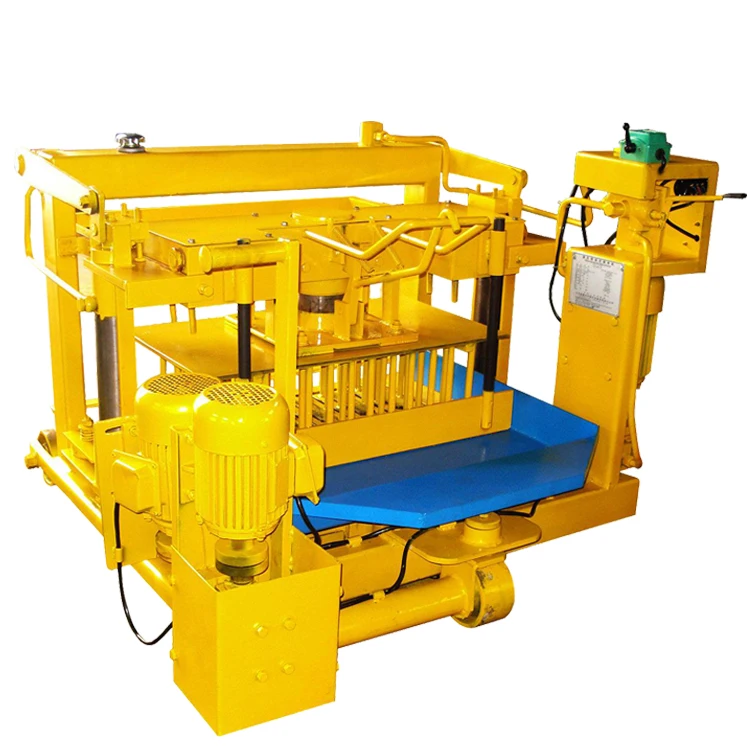
 Mobile block machine