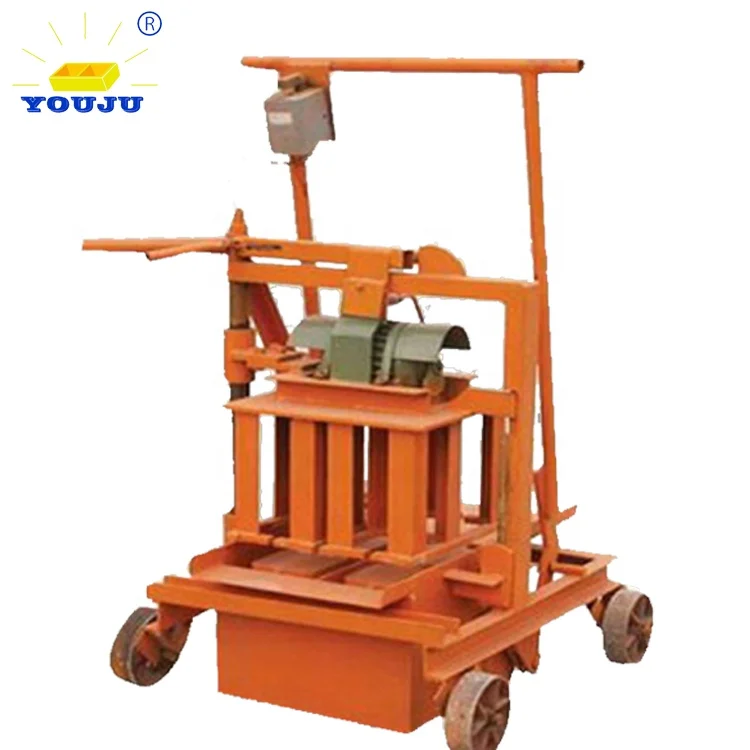
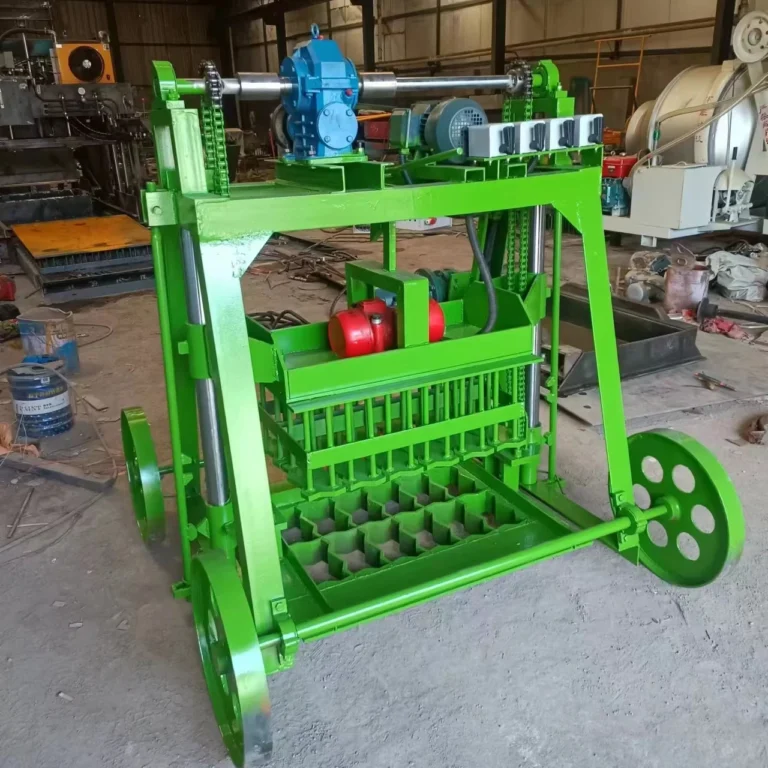
Matched System Sizing — every QMY4-30 mobile block machine we ship is configured against the buyer’s actual mix design, local aggregate, and target block format rather than a catalogue default, ensuring the press, mould, and power supply arrive as one verified unit.
Technical Specifications
| Parameter |
Value |
| Model |
QMY4-30 |
| Product Type |
Mobile Pallet-free Concrete Block Making Machine |
| Type |
Mobile, egg-laying, pallet-free |
| Hydraulic Method |
Mould vibration |
| Demold Method |
Hydraulic |
| Molding Cycle |
25–30 seconds |
| Total Power |
5.95 kW |
| Output (400×200×200 mm hollow block) |
4 pcs/mould, 480 pcs/h, 3,840 pcs/8 hr |
| Output (400×150×200 mm hollow block) |
5 pcs/mould, 600 pcs/h, 4,800 pcs/8 hr |
| Output (400×100×200 mm hollow block) |
7 pcs/mould, 840 pcs/h, 6,720 pcs/8 hr |
| Pallet Requirement |
None (pallet-free / egg-laying design) |
| Automation Level |
Manual operation with hydraulic assist |
| Suitable Terrain |
Mountainous, hilly, industrial mining, desert, coastal |
Application Suitability
| Application |
Material or Output |
| On-site hollow block production for building contractors |
Crushed stone, river sand, cement mixes laid directly on prepared ground |
| Remote housing and development projects |
Portable cement brick and hollow block manufacturing across multiple locations |
| Small-scale block plants with minimal infrastructure |
Standard concrete mixes without pallet or curing rack investment |
| Mining and industrial zone construction |
Dense aggregate blends producing structural hollow blocks on uneven terrain |
What "480 Blocks per Hour" Actually Means on Site
The cycle time and output figures only hold when the block format, mix design, and ground conditions match the assumptions behind them.
Catalogue sheets for any mobile block machine manufacturer tend to highlight the highest hourly number, which usually corresponds to the smallest block in the range. When a contractor plans a pour schedule around that peak figure and then switches to a larger hollow format, daily output can drop noticeably. I have watched site managers in arid regions discover that their local sand retained more moisture than expected, pushing the 25–30 second cycle toward the longer end and cutting the shift total short. Ground preparation matters just as much: an egg-laying machine needs a level, compacted surface, or the freshly laid blocks settle unevenly before the cement sets. Clarifying which block format drives your daily target, and confirming your aggregate sieve analysis, removes most of the surprise before the machine arrives [NEED_CITE: aggregate moisture and grading impact on block cycle time].

Where the QMY4-30 Sits in the Full Machine Range
Our range spans mobile egg-laying units, semi-automatic stationary lines, and fully automatic plants with stacking and cubing. The QMY4-30 occupies the entry tier, designed for buyers who need concrete block production without committing to a fixed factory footprint or a pallet return system. Its 5.95 kW total power draw lets it run from a site generator, which is a practical advantage when grid connections are still being installed. Choosing this tier means accepting manual pallet handling — or in this case, no pallets at all — in exchange for lower capital outlay and the ability to relocate the machine as the project moves.
Comparing Mobile, Semi-Automatic, and Automatic Tiers
A semi-automatic line adds a mixer, belt conveyor, and pallet feeder, raising output consistency at the cost of a larger footprint and a three-phase power supply. A fully automatic plant layers on a stacker, curing rack handler, and cubing system, cutting labour further but demanding a level concrete slab and a dedicated transformer. The QMY4-30 skips every one of those stations. That simplicity is the point: contractors producing blocks for their own masonry crews often prefer to cure blocks in open rows on the ground, moving the machine forward as each row sets. If your project calls for relocating production every few weeks, the mobile tier avoids the dismantling and re-commissioning cycle that a stationary plant would require [NEED_CITE: site relocation frequency for mobile block production].
Reading the Specs That Matter on Site
The 25–30 second moulding cycle is the heartbeat of daily output, and it is governed by how quickly vibration compacts the mix to the required density. Mould vibration, as opposed to table vibration, concentrates force directly on the cavity walls, producing denser block faces in a shorter window. Total power of 5.95 kW keeps the machine within the capacity of a small diesel generator — a practical detail when you are laying blocks on a hillside far from the nearest substation. The hydraulic demolding system lifts the mould box cleanly after vibration, reducing edge chipping on hollow formats. Because the machine lays blocks directly on the ground, pallet cost and storage disappear entirely, but the trade-off is a need for a well-graded, compacted surface; soft or waterlogged ground will cause freshly extruded blocks to slump before the cement gains initial strength.
The Hidden Cost of Skipping Ground Preparation
Egg-laying machines are forgiving in many ways, but they cannot compensate for a soft base. When the ground is not compacted, the vibration that densifies the block also settles the soil beneath it, leaving the finished product tilted or cracked along the bottom course. I have seen entire rows of hollow blocks rejected because the site crew skipped the gravel sub-base to save a day of earthworks. The machine still cycles normally, but the scrap rate climbs quietly until someone notices the pattern. Investing a few hours in grading and compacting the production strip prevents that loss and keeps the 25–30 second cycle delivering usable output [NEED_CITE: ground preparation standards for egg-laying block machines].
Why Source the QMY4-30 Through This Range
Block machinery is our single focus, so the press, mould, and power configuration are specified as one matched system rather than assembled from separate suppliers. We set the QMY4-30 against your actual mix design and local aggregate, not a catalogue default, because a cycle time only holds when the material behaves as expected. Mould design covers the hollow formats your market sells, and custom mould drawings are available when standard sizes do not match local building codes. The mobile tier is a deliberate starting point: if your volume grows, you can move to a semi-automatic or automatic line within the same range, keeping control logic and mould mounting patterns familiar. Every unit ships with a factory test record run on the block format you specified, so capacity is verified before the crate is sealed.
Documentation & Verification
- Line layout and capacity calculation stating which hollow block format each output figure assumes
- Machine specification sheet confirming voltage, frequency, and control language before dispatch
- Mould drawing and format list showing available block sizes and custom options
- Factory test record run on your specified block format prior to shipment
- CE declaration included where applicable to the destination market
Installation, Commissioning & Support
- Site ground compaction and leveling guidance matched to the pallet-free egg-laying design
- Power supply verification for the 5.95 kW total draw, including generator sizing advice
- Assembly of the mould vibration and hydraulic demolding system on arrival
- First-run cycle time check using your local aggregate and cement blend
- Operator training covering mould change procedure and daily maintenance points
- Wear parts list identifying high-friction components and recommended replacement intervals
Moving Forward with an Inquiry
To size the QMY4-30 accurately, share the hollow block dimensions you plan to produce, your target daily output per format, and a sample or sieve analysis of your local sand and aggregate. Include the site voltage and frequency, the control panel language your operators read, and whether the ground has been compacted or still needs preparation. With those details, we can confirm the cycle time you should expect and match the mould to your market.
Frequently Asked Questions
Q: How is capacity calculated and which block format does each output figure assume?
A: Each output figure is tied to a specific block size. The 3,840 pieces per eight-hour shift assumes 400×200×200 mm hollow blocks at four per mould, while 6,720 pieces assumes 400×100×200 mm blocks at seven per mould. Cycle time of 25–30 seconds applies across formats, but your actual daily total also depends on mix behaviour and ground conditions.
Q: Where does the QMY4-30 sit compared to semi-automatic and automatic lines?
A: It occupies the mobile, pallet-free entry tier. Semi-automatic lines add a mixer, pallet feeder, and conveyor for higher consistency, while automatic plants include stacking and cubing. The QMY4-30 suits contractors who need portable production without fixed infrastructure, and you can step up to a higher tier within the same range later.
Q: What voltage, frequency, and control language options are confirmed before dispatch?
A: Voltage and frequency are matched to your site supply — whether grid or generator — and confirmed on the specification sheet before production. Control panel language is agreed at the same stage so operators can read displays and alarms in their working language from the first shift.
Q: What ground conditions are required for pallet-free egg-laying operation?
A: The machine needs a level, compacted surface such as a gravel sub-base or hardened concrete strip. Soft, waterlogged, or uneven ground causes freshly laid blocks to settle or tilt before the cement gains strength, increasing scrap. Proper ground preparation is the single largest factor in achieving consistent output.
Q: Can I start with the QMY4-30 and upgrade later?
A: Yes. The range is structured so that mould mounting patterns, control logic, and documentation carry across tiers. When your volume justifies a semi-automatic or automatic line, the transition keeps familiar interfaces and reduces re-training time for your crew.

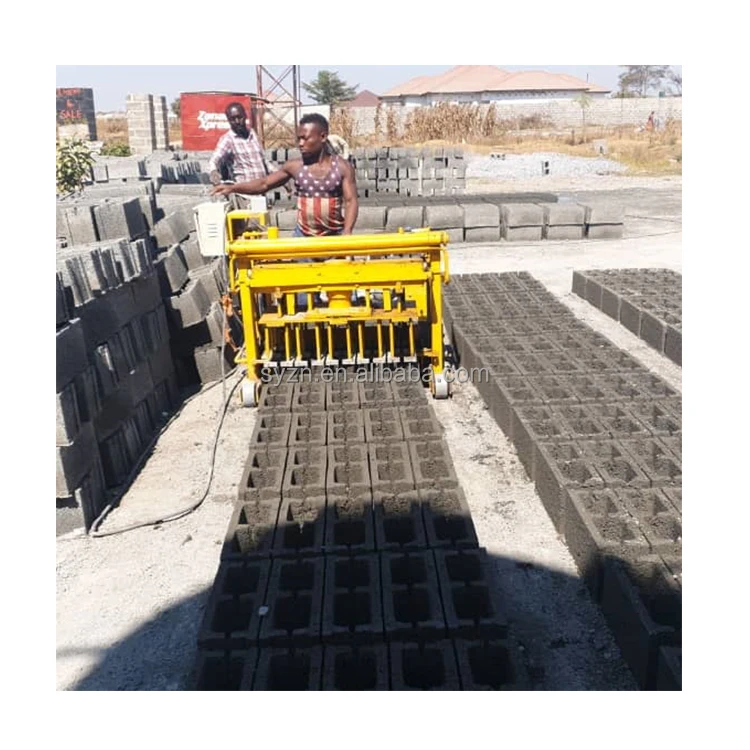
 Mobile block machine