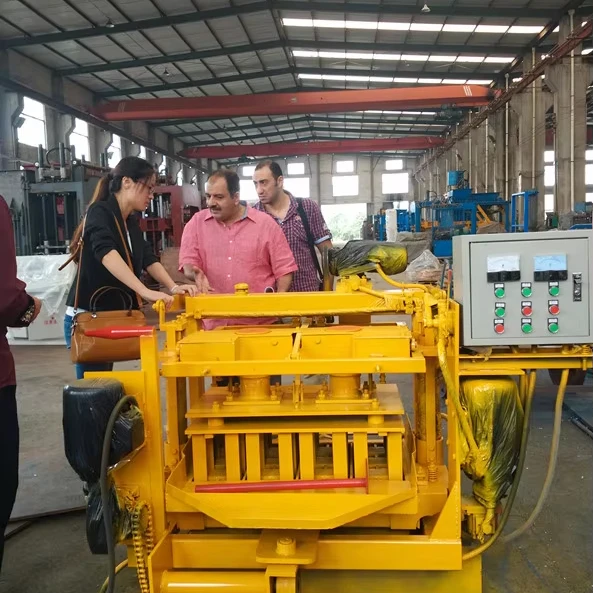
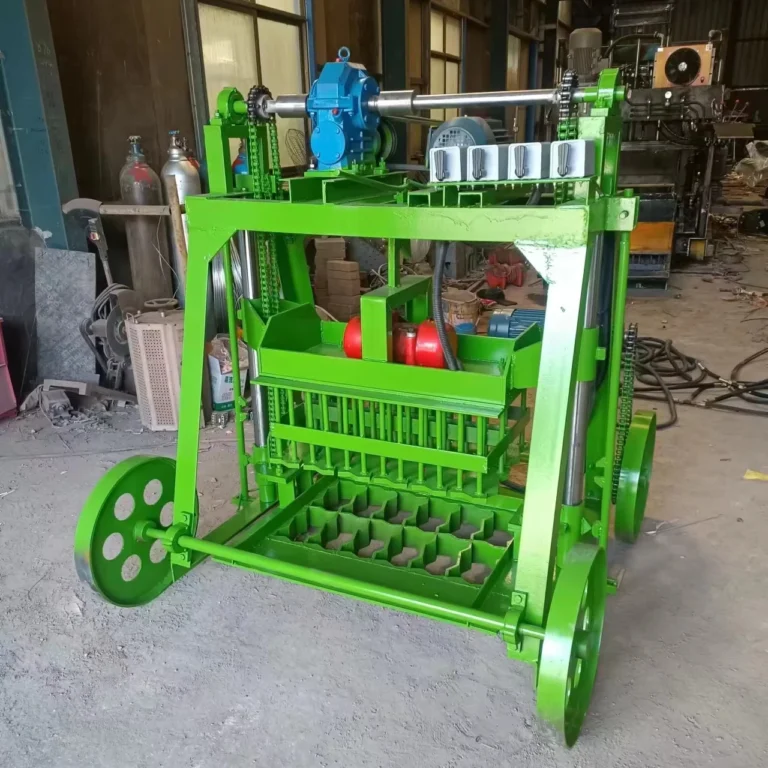
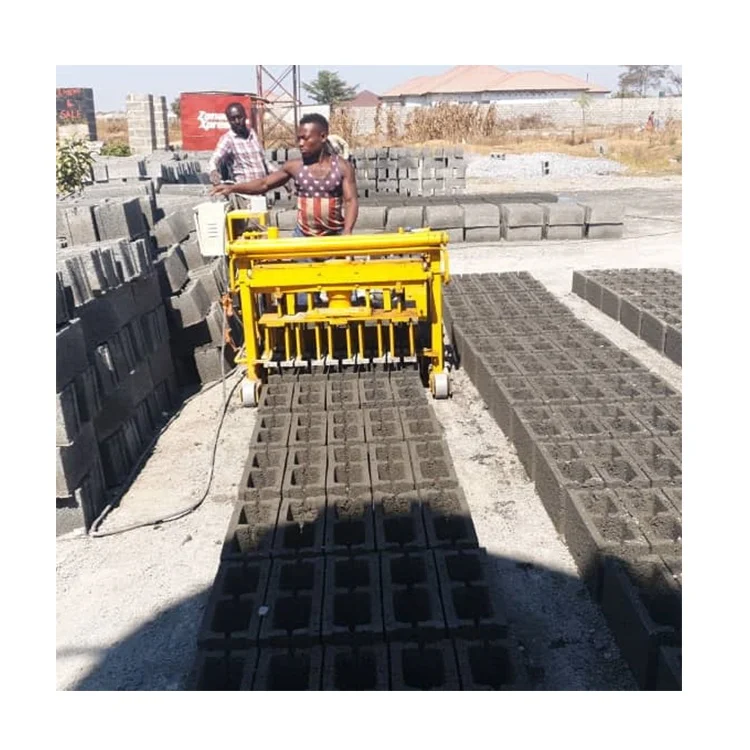
Compact on-site production — the QMY4-30 mobile block machine full range manufacturer lineup starts here, giving first-time buyers a low-footprint entry point without committing to a fixed plant.
Technical Specifications
| Parameter |
Value |
| Model |
QMY4-30 |
| Product Type |
Mobile Egg-Laying Block Making Machine |
| Overall Dimensions (L×W×H) |
1300 x 1500 x 1000 mm |
| Net Weight |
950 kgs – 1000 kgs |
| Total Power |
5.95 kW |
| Vibration Force |
28.6 KN |
| Excitation Frequency |
4500 r/min |
| Molding Cycle |
30 s |
| Output Capacity |
3000 pcs/day (8 hours) (basis not stated in source — confirm block format / material / thickness) |
| Hydraulic Method |
Mold Vibration |
| Control System |
Manual operation with hydraulic transmission |
| Assembly State |
Mobile unit with wheels for on-site movement |
| Raw Materials |
Concrete, sand, cement, fly ash, lime, gypsum, etc. |
| Pallet Size |
Not applicable (egg-laying type, lays blocks directly on ground) |
| Automation Level |
Manual with hydraulic assist |
Application Suitability
| Application |
Material or Output |
| On-site hollow block production for remote housing projects |
River sand, stone dust, and cement mixed locally |
| Solid block manufacturing in suburban or rural construction sites |
Crushed stone, fly ash, and lime |
| Small-scale paver and kerbstone runs for individual owners |
Construction waste, slag, and coal gangue |
| Block production in mountainous, hilly, or desert terrain |
Mine tailings and porcelain granule where available |
What "3000 Pieces per Day" Actually Means for Your Site
Daily output depends entirely on the block format you choose to run, not just the cycle time.
Buyers often see a headline capacity number and plan their project timeline around it, only to find that switching from a small solid block to a large hollow block cuts that number significantly. A 30-second molding cycle is fixed, but the volume of concrete placed into the mold per cycle changes with every format [NEED_CITE: block format impact on daily output calculations]. When a mobile block machine full range manufacturer quotes capacity without stating the assumed block size, the daily expectation falls short of reality. That mismatch is the single most common complaint we hear from buyers who purchased elsewhere.

Where the QMY4-30 Sits in the Mobile Block Machine Range
The QMY4-30 occupies the entry tier of the mobile block machine full range manufacturer catalog, positioned for entrepreneurs and small contractors who need to produce blocks without investing in a fixed batching plant. Its egg-laying design means blocks are deposited directly onto the ground, eliminating the need for pallets, pallet handling systems, and curing racks. This keeps the initial capital outlay low and the site footprint minimal, which matters when you are working on a temporary project site or testing block demand in a new market before scaling up.
When to Stay Mobile and When to Step Up
A mobile unit makes sense when your production volume is modest, your site changes frequently, or your curing area is simply a cleared section of ground. Once daily demand consistently exceeds what a single egg-laying cycle can deliver, or when block strength requirements demand more precise vibration and hydraulic pressure matching, buyers typically move to a semi-automatic stationary line with pallets and controlled curing [NEED_CITE: transition thresholds from mobile to semi-automatic block production]. The QMY4-30 serves as a practical starting point, allowing operators to learn the raw material behavior and local market preferences before committing to a larger configuration.
How Vibration and Hydraulic Pressure Shape Block Density
The 28.6 KN vibration force operating at 4500 r/min works together with the mold vibration method to compact the concrete mix inside the cavity. In an egg-laying machine, the entire unit moves along the ground while the mold lifts after each cycle, so the compaction must be sufficient to let the block hold its shape immediately without pallet support. If the vibration force is too low for the aggregate particle size in your local sand or crushed stone, the block edges crumble during demolding. Conversely, excessive vibration in a fine-grained mix can cause segregation, pushing cement paste to the surface and leaving voids inside. The 5.95 kW total power draw keeps energy demand within the capacity of a small diesel generator, which is often the only power source available on remote sites.
The Hidden Cost of Skipping the Raw Material Conversation
I once had a client ship a small egg-laying unit to West Africa without confirming the local soil composition. The laterite-clay blend was far stickier than the river sand the machine was configured for, and the mold vibration settings could not compact it properly. Blocks cracked during sun curing and the client lost most of a production season. When the raw material is not matched to the vibration frequency and mold design, no amount of operator adjustment fixes the problem [NEED_CITE: raw material compatibility in mobile block production]. That is why every configuration discussion starts with a sample of the sand, aggregate, or industrial by-product you actually plan to use.
Why Source This Mobile Unit Through a Dedicated Block Machinery Supplier
Block machinery is a single focus here, which means the QMY4-30 is specified as a matched system — machine, mold, and ground-curing workflow — rather than assembled from unrelated components. Configuration is set against the buyer’s actual mix design and target block format, not pulled from a generic catalog default. Mould design covers the formats the local market actually sells, and custom drawings are available when standard shapes do not match local building codes. Automation level is selectable across the broader range, so a buyer starting with the QMY4-30 can step up to a semi-automatic line later without switching suppliers. Installation guidance and operator training are included so the first production run is not a learning exercise on live concrete.
Documentation & Verification
- Line layout showing ground area needed per 30-second molding cycle for your chosen block format
- Machine specification sheet with total power and vibration force confirmed against your generator capacity
- Mould drawing and format list detailing which block sizes the QMY4-30 mold cavity accommodates
- Operation and maintenance manual covering hydraulic transmission service intervals and wear part replacement
- Factory test record run on a mix design matching your local raw material before dispatch
Installation, Commissioning & Support
- Site preparation requires a level, compacted ground surface matching the 1300 x 1500 mm machine footprint for smooth wheel movement
- Power connection must match the 5.95 kW total draw; confirm voltage and frequency before shipment to avoid on-site delays
- Machine ships as a single mobile unit; wheels and hydraulic system are inspected and greased before container loading
- First production run supervised remotely or on-site to dial in vibration timing for your specific concrete mix
- Operator training covers mold change procedure, hydraulic transmission maintenance, and daily cleaning of the mold cavity
- Wear parts list provided with recommended first-order quantities for mold liners and vibration components
Before You Request a Quote
To configure the QMY4-30 for your site, we need to know the block format you plan to produce, the local raw materials available including sand type and aggregate size, and your target daily output so we can confirm whether this entry-level mobile unit or a higher-tier machine is the right fit. Share your site voltage and frequency, and whether you plan to run on grid power or a diesel generator, so electrical specifications are locked before production begins.
Frequently Asked Questions
Q: What block format is the 3000 pcs/day capacity based on, and how does output change with other formats?
A: The quoted figure assumes a specific block size that must be confirmed at inquiry stage. Larger hollow blocks consume more concrete per cycle, so the same 30-second molding cycle produces fewer units per day. We provide a capacity calculation table showing realistic daily output for each block format you plan to run before the order is placed.
Q: What voltage and frequency options are available, and can the machine run on a diesel generator?
A: Voltage and frequency are configured to match your destination market’s electrical standards. The 5.95 kW total power requirement is within the range of a portable diesel generator, making the QMY4-30 suitable for off-grid sites. Confirm your generator’s rated output and voltage before shipment to ensure compatibility.
Q: Which moulds are available for the QMY4-30, and can custom block shapes be ordered?
A: Standard moulds cover common hollow and solid block sizes sold in your target market. Custom mould designs can be produced from buyer-supplied drawings when local building codes require non-standard shapes. Mould change is manual, and we provide the tools and procedures needed to keep changeover time practical on-site.
Q: Where does the QMY4-30 sit in the full mobile and semi-automatic machine range?
A: It is the entry point of the mobile block machine full range manufacturer lineup, designed for first-time buyers and small contractors. When daily demand grows or block strength specifications tighten, buyers typically step up to a semi-automatic stationary line with pallet-based curing for higher consistency and output.

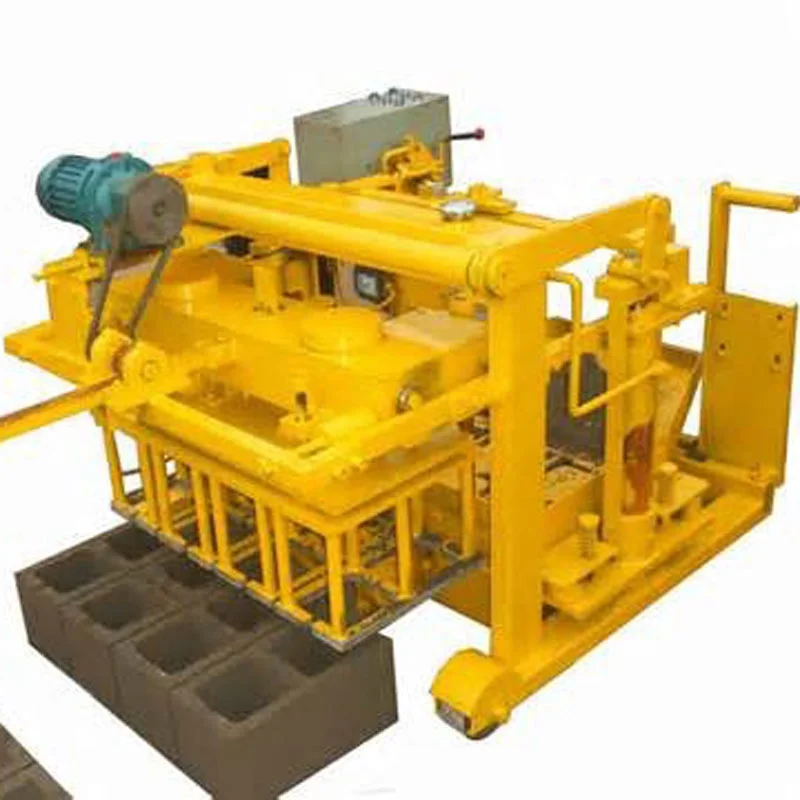
![QMY4-30 Mobile Block Machine for Hollow Block | Full Range 80243 → 8+0+2+4+3=17, 17 mod 6 = 5 结构5: [站点修饰词] [品类词] – [规格或产能限定] shiyueblockmachine.com → 全品类目录类角色 → Manufacturer / Factory Supply / Full Range 17 mod 3 = 2 → Full Range → Full Range QMY4-30 Mobile Block Machine – 5 kW Cement Brick Maker = 63 chars ✓ QMY4-30 Mobile Block Machine for Hollow Block | Full Range](https://shiyueblockmachine.com/wp-content/uploads/2026/04/Hca7e15e2bc404a5391aee52b9c7213b9L.webp) Mobile block machine
Mobile block machine