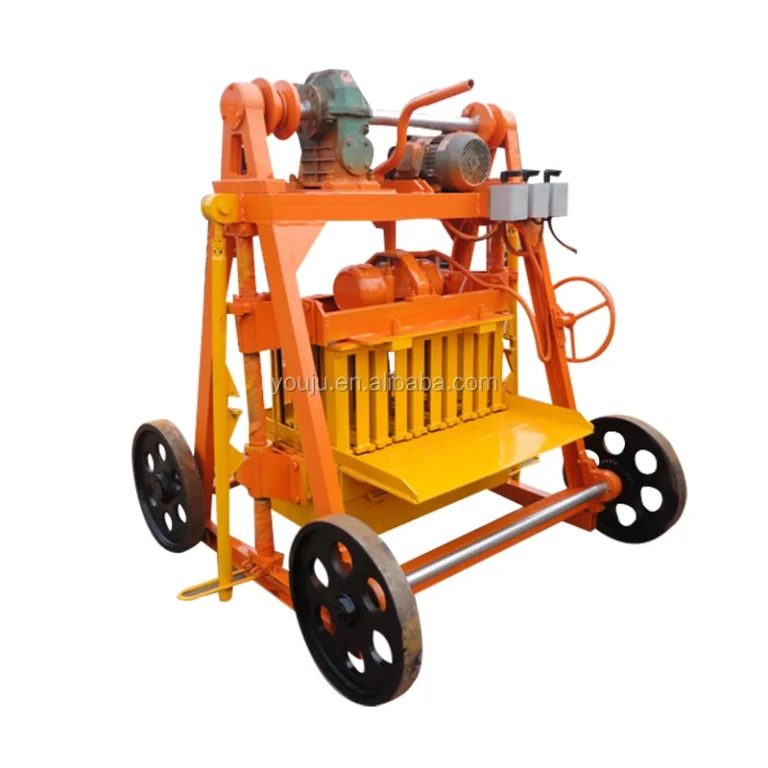
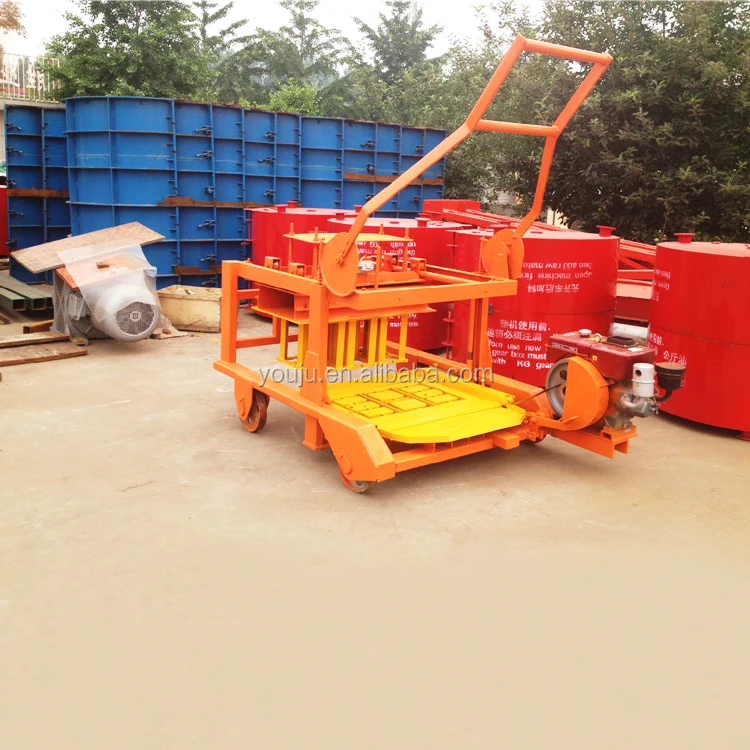
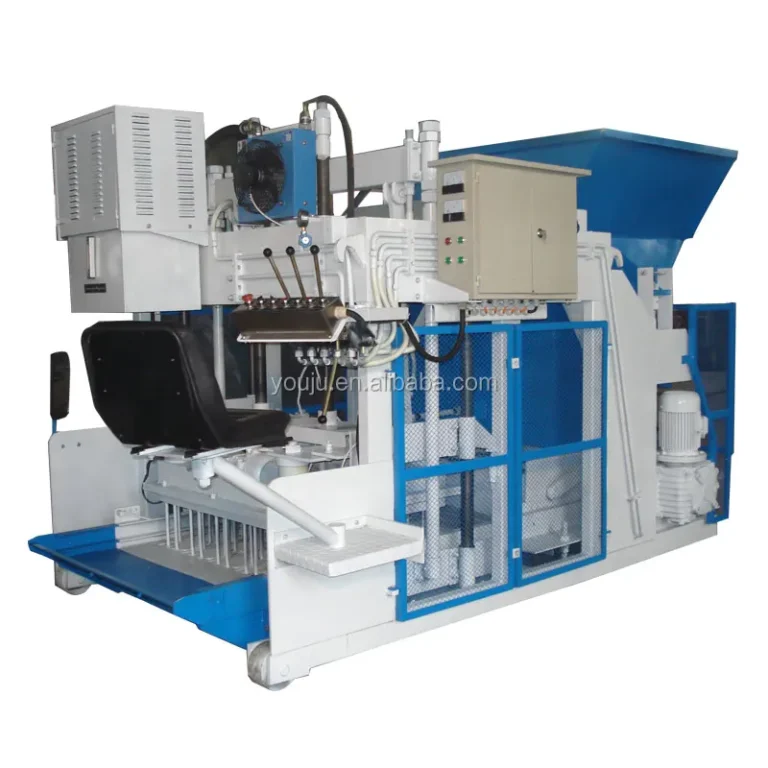
Single-Focus Machinery Engineering — Block machines, moulds, pallets and handling specified as one matched system rather than assembled from separate suppliers, ensuring the QMY12-15 mobile egg-laying unit arrives configured for your actual aggregate and target block format.
Technical Specifications
| Parameter |
Value |
| Model |
QMY12-15 |
| Product Type |
Mobile Hydraulic Hollow Block Making Machine |
| Pressure Type |
Hydraulic |
| Rated Power |
16 kW |
| Motor Brand |
Siemens |
| Overall Dimensions (L×W×H) |
3250 × 2100 × 2300 mm |
| Net Weight |
4500–4600 kg |
| Pallet Requirement |
None (egg-laying / mobile operation) |
| Vibration System |
Twice-vibration of molding core |
| Workers Required |
2–3 |
| Assembly State |
Fully assembled mobile unit |
| Control System |
To be confirmed (PLC or manual) |
| Voltage & Frequency |
To be confirmed for target market |
| Output Capacity |
12,000–13,000 pcs/day (basis not stated in source — confirm block format and material) |
| Standards & Certification |
ISO 9001:2008, SGS, CE |
Application Suitability
| Application |
Material or Output |
| On-site hollow block production |
Cement, crushed stone, river sand, and water mix laid directly on prepared ground |
| Solid block manufacturing for housing projects |
Local aggregate and cement blends formed without pallet infrastructure |
| Temporary yard brick production |
Standard concrete mixes for entrepreneurs establishing a first block plant |
| Infrastructure contractor self-supply |
Hollow and solid formats produced adjacent to the active build zone |
What "10,000 Blocks a Day" Actually Means on a Mobile Site
Cycle counts mean nothing unless tied to a named block format, a specific mix design, and a realistic shift length.
A mobile block machine manufacturer quoting raw cycles per hour often leaves out the block size that figure assumes. On a construction site where the ground is uneven and the aggregate varies from one delivery to the next, a machine tuned for standard river sand will struggle when local material carries high clay content [NEED_CITE: effect of clay content on concrete block compressive strength]. I have watched contractors lose an entire week adjusting pressure and vibration after arrival because the initial configuration never accounted for what was actually available locally. Every capacity figure must be verified against the format you intend to sell and the aggregate you can actually source.

Where the QMY12-15 Fits in the Shiyue Range
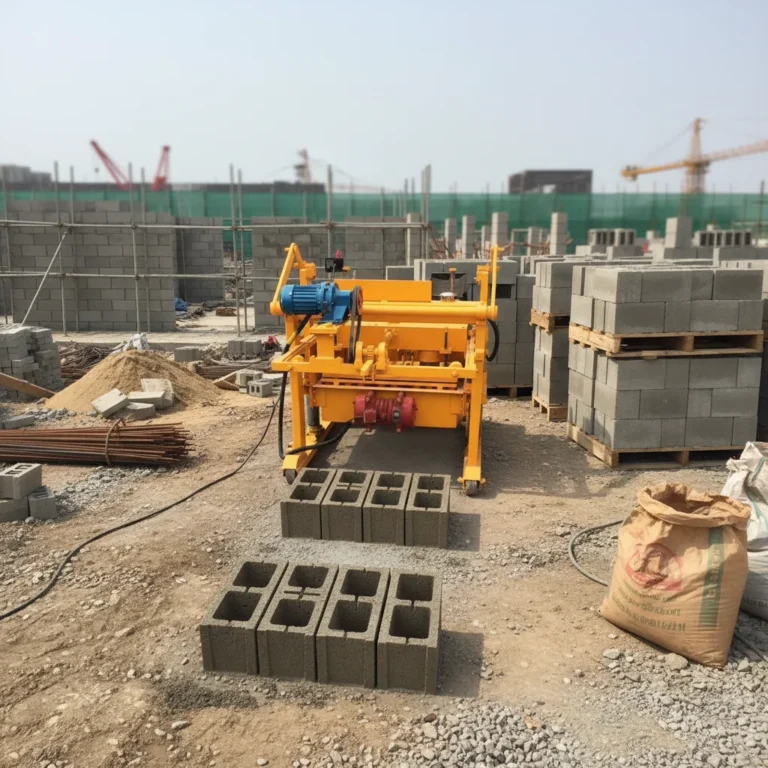
The QMY12-15 occupies the mobile tier of our equipment lineup, positioned for buyers who need block production without investing in a fixed plant, pallet inventory, or dedicated curing racks. As a mobile block machine manufacturer, we size this unit for contractors working on housing developments or infrastructure projects where blocks are consumed on the same site where they are produced. The egg-laying design means the machine moves forward after each cycle, depositing blocks directly on the ground, which eliminates pallet purchasing, storage, and the labour of handling them through a curing area.
Pallet-Free Operation and What It Demands from Your Site
Running without pallets shifts the quality burden onto ground preparation. The surface must be level, compacted, and strong enough to support fresh blocks without settling. A mobile block machine manufacturer that skips this conversation is setting the buyer up for uneven block heights and breakage during the first days of curing [NEED_CITE: ground preparation standards for mobile egg-laying block machines]. The QMY12-15 weighs over four and a half tonnes, so the working area must also bear that rolling load without ruts forming under the wheels, particularly after rain or repeated passes over the same lane.
How Hydraulic Pressure and Vibration Shape Block Density
The QMY12-15 uses a twice-vibration molding core rather than a single-vibration setup, which distributes compaction force more evenly through the mould cavity. Hydraulic pressure and vibration must work together: pressure squeezes the mix into the mould corners while vibration settles fine particles into voids, producing a denser block with more consistent strength across the batch. The 16 kW rated power drives both systems simultaneously. If vibration is too weak for the aggregate size, blocks emerge with honeycomb voids; if hydraulic pressure is set without regard to the cement-to-aggregate ratio, the mix either sticks to the mould or crumbles on release. Matching these settings to local material is the step that separates a working machine from a week of costly trial and error.
The Hidden Cost of Skipping Configuration Checks
When voltage, frequency, and PLC display language are left unconfirmed before production, the machine may arrive with a control panel the local electrician cannot wire and an interface the operator cannot read [NEED_CITE: voltage and frequency standards by export market]. Commissioning stalls, the contractor pays idle crew wages, and the project schedule slips. I have seen machines sit in a yard for weeks because the frequency did not match the local grid, and sourcing a compatible transformer on short notice is rarely simple.
Why Source This Mobile Tier Through Shiyue
Block machinery is our single focus, so the QMY12-15 is specified alongside its moulds and any supporting handling as one matched system, not assembled from unrelated suppliers. Configuration is set against your actual mix design, local aggregate, and target block format rather than a catalogue default. Mould design covers the formats your local market sells, with custom drawings available when standard options do not match. The automation level is selectable, so a buyer can begin with semi-automatic mobile operation and move to a higher tier later. Installation and commissioning support includes operator training on site.
Documentation & Verification
- Line layout stating the block format assumed for every capacity figure on the QMY12-15
- Machine specification sheet with hydraulic pressure and vibration force ratings
- Mould drawing and format list covering the block types your market requires
- Voltage, frequency, and control language confirmation in writing before production
- Factory test record on your specified mix design before dispatch
- CE declaration and operation manual included with shipment
Installation, Commissioning & Support
- Compacted, level ground area of approximately 3.25 × 2.1 m minimum prepared before the QMY12-15 arrives
- Power supply confirmed to the agreed voltage and frequency with a dedicated circuit for the 16 kW rated load
- Machine ships fully assembled; positioning on site requires a flat access path for the 4,500–4,600 kg unit
- First-cycle parameter tuning for hydraulic pressure and vibration matched to your local aggregate on arrival
- Operator training covering mould change procedure, mix consistency checks, and daily maintenance routines
- Wear parts and mould replacement list provided to plan inventory before the first changeover is needed
What We Need to Configure Your QMY12-15 Correctly
Share the block formats your local market sells, the daily volume you need to sustain, and the aggregate sources available near your site. We also need your local voltage and frequency, the language your operators read, and whether you already have curing space and handling equipment or are building from scratch. This information lets us return a capacity calculation you can plan a project around.
Frequently Asked Questions
Q: How is daily output verified for each block format on the QMY12-15?
A: Output is calculated per named block format over an eight-hour shift, using the cycle time specific to that mould. We provide a written capacity sheet showing the assumed format, mix, and cycle so you can plan daily tonnage honestly rather than relying on a single headline number.
Q: Which voltage and frequency options are available, and is the PLC language configurable?
A: Voltage and frequency are confirmed to match your local grid before production begins. The PLC display language is also agreed in writing at the order stage, ensuring the operator interface is readable from the first day of commissioning on your site.
Q: What block formats can the QMY12-15 produce and how long does a mould change take?
A: The machine produces hollow blocks, solid blocks, and bricks using interchangeable moulds. Mould change time depends on the specific format set supplied. We confirm the changeover procedure and required tools during commissioning so your crew can handle it independently.
Q: What ground conditions are required for pallet-free mobile operation?
A: The working surface must be level, compacted, and able to support the machine weight and fresh block loads without settling. We provide ground preparation guidance before shipment so your site is ready when the QMY12-15 arrives and production can start without delay.
Q: How does the QMY12-15 mobile tier compare to semi-automatic and automatic tiers?
A: The mobile tier eliminates pallet and fixed curing infrastructure, lowering initial investment and site footprint. Semi-automatic and automatic tiers add pallet handling, stacking, and higher throughput for buyers ready to scale beyond on-site contractor volumes into commercial block supply.

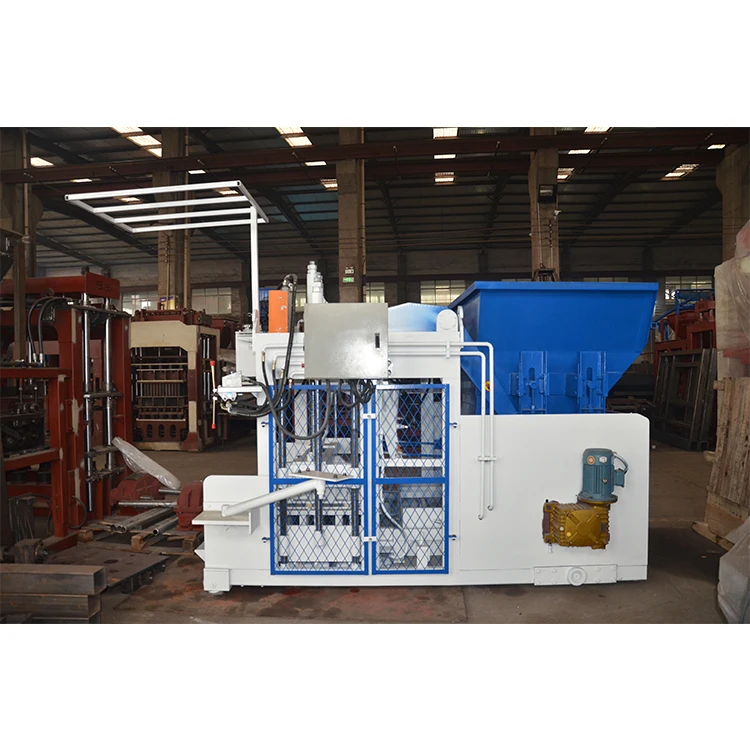
 Mobile block machine