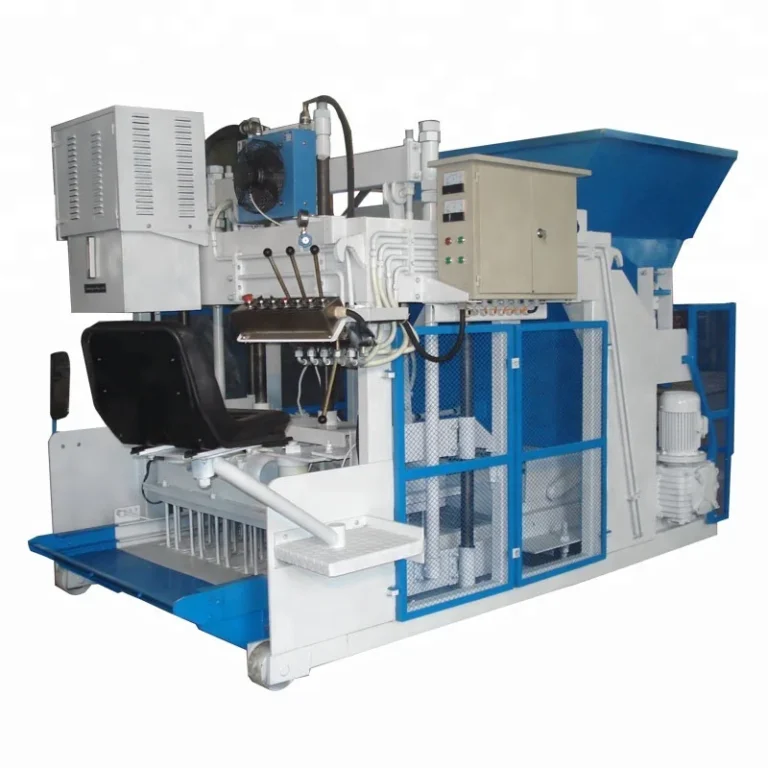
Matched System Sizing — Every QMY12-15 mobile block making machine we ship is configured against the buyer’s actual mix design and target block format, not a catalogue default.
Technical Specifications
| Parameter |
Value |
| Model |
QMY12-15 |
| Product Type |
Automatic Hydraulic Mobile Block Making Machine |
| Automation Level |
Automatic |
| Pressure Type |
Hydraulic Pressure |
| Mould Format |
Multi-size production: 4 / 6 / 8 / 9 inch cement blocks |
| Machine Type |
Mobile / Egg-laying (no pallet required) |
| Control System |
(basis to be confirmed) |
| Hydraulic Pressure |
(basis to be confirmed) |
| Vibration Force |
(basis to be confirmed) |
| Cycle Time per Format |
(basis to be confirmed) |
| Output Capacity |
(basis to be confirmed) |
| Rated Power |
(basis to be confirmed) |
| Voltage & Frequency |
Configurable to target market |
| Mould Change System |
(basis to be confirmed) |
Application Suitability
| Application |
Material or Output |
| On-site construction block production |
Cement, sand, crushed stone, and local aggregate blends |
| Housing project block supply |
Hollow and solid cement blocks in 4–9 inch formats |
| Small-scale block yard start-up |
Mobile egg-laying output without fixed plant infrastructure |
| Remote build site manufacturing |
Cement blocks produced directly on the ground surface |
What "Cycles per Hour" Hides About Your Real Output
A cycle rate means nothing until you know which block format it was measured on.
I have watched buyers sign off on mobile block machines quoting impressive hourly numbers, only to find the figure assumed a small 4-inch solid block. When they switched to the 9-inch hollow block their market actually demanded, daily volume dropped to a fraction of the projection. The QMY12-15 is an automatic hydraulic mobile block making machine designed for multi-format production, so every capacity figure we provide states the exact block size, mix, and cycle assumption behind it. Without that transparency, no mobile block making machine manufacturer can give you a number worth building a project schedule around [NEED_CITE: block output verification standards per format].

Where the QMY12-15 Fits in the Mobile Range
The QMY12-15 occupies the upper tier of egg-laying mobile machines, offering automatic operation across four block formats without the footprint of a stationary plant. For buyers surveying the full mobile block making machine manufacturer range, this model bridges the gap between basic manual egg-layers and fixed semi-automatic lines. It is the choice when your site cannot justify a fixed plant investment but your daily volume exceeds what a smaller mobile unit can sustain.
Multi-Format Production Without Pallet Infrastructure
Egg-laying design means the machine deposits blocks directly onto a prepared ground surface, removing the entire pallet purchase, handling, and return loop from your operation. The QMY12-15 mould system covers 4, 6, 8, and 9 inch cement block formats in a single machine, giving a first-time block yard the flexibility to respond to shifting site demand [NEED_CITE: mobile block machine format flexibility for emerging markets]. You produce hollow blocks for wall construction and solid blocks for foundations from the same unit, switching only the mould.
Hydraulic Pressure and Vibration: Why Both Matter
Block density in an egg-laying machine depends on the interplay between hydraulic clamping force and vibration amplitude. The hydraulic system in the QMY12-15 holds the mould box firmly during the vibration cycle, preventing mix displacement and ensuring uniform compaction across the full block face. If vibration force is high but hydraulic pressure is low, the block edges crumble before demoulding. If pressure dominates but vibration is weak, the core remains loose. Both values must be matched to your specific cement-to-aggregate ratio and local sand gradation — which is why we ask for your material samples before finalising the machine setup.
The Cost of Skipping a Material Compatibility Check
A contractor once ordered a mobile unit rated for river-sand mixes, then arrived on site to find only volcanic ash aggregate available locally. The finer ash required different vibration frequency and longer cycle times, neither of which the machine could deliver. Output fell by half and block breakage during curing ran high. With the QMY12-15, confirming your aggregate type, cement grade, and moisture range up front lets us adjust the hydraulic and vibration parameters before the machine leaves the factory [NEED_CITE: aggregate compatibility in mobile block production]. Skipping that step turns a capable machine into an expensive mismatch.
Why Source This Mobile Block Making Machine Here
Block machinery is our single product focus, so the QMY12-15 arrives as a complete matched system — machine, mould set, and ground-surface preparation guidance specified together. Configuration is set against your actual local aggregate and the block formats your market sells, not a generic catalogue sheet. We provide mould drawings and a format list so you can verify 4/6/8/9 inch compatibility and request custom profiles before production begins. Automation level is selectable, meaning you can start with this mobile unit and move to a stationary line later without replacing your entire operational knowledge base. Installation support includes on-site commissioning and operator training calibrated to your crew’s experience level.
Documentation & Verification
- Line layout and capacity calculation stating the block format assumed for each output figure
- Machine specification sheet with hydraulic pressure, vibration force, and cycle time per format
- Mould drawing and format list confirming 4/6/8/9 inch compatibility
- Voltage and control language confirmation recorded before shipment
- Factory test record on your specified mix and block format before dispatch
Installation, Commissioning & Support
- Ground surface preparation guidance matched to the QMY12-15 egg-laying travel path and turning radius
- Voltage and frequency confirmation locked in before production to match your site supply
- Machine arrives in shipping configuration; on-site assembly covers travel wheels and mould mounting
- First-run commissioning includes cycle tuning against your local aggregate and cement grade
- Operator training covers mould change procedure between 4-inch and 9-inch formats
- Wear parts list and hydraulic seal schedule provided for your first maintenance interval
Before You Request a Quote
To size the QMY12-15 accurately, share the block formats your project or market requires, your daily volume target, and the local aggregate type you will use. We also need your site voltage and frequency so the electrical package is confirmed before build. If you have an existing curing area or ground space constraint, include dimensions so we can assess the machine travel layout.
Frequently Asked Questions
Q: How is output capacity verified and what block format is it based on?
A: Every capacity figure we quote for the QMY12-15 states the specific block format, mix ratio, and cycle time behind it. A 4-inch solid block cycles faster than a 9-inch hollow block, so the hourly number changes with each format. We provide a per-format capacity table before you commit.
Q: What voltage and frequency options are available for the target market?
A: The QMY12-15 electrical system is configured to your site supply before production. We confirm voltage, frequency, and plug standard during the quotation stage so the machine arrives ready to connect without transformers or rewiring delays.
Q: How does this mobile model compare in footprint and investment to a semi-automatic stationary line?
A: The QMY12-15 requires no fixed plant, pallet system, or curing racks — it lays blocks on a prepared ground surface. A semi-automatic stationary line offers higher sustained volume but demands a dedicated building, pallet inventory, and greater upfront capital. The mobile model suits project-tied or start-up production.
Q: How long does mould change take between 4-inch and 9-inch block formats?
A: Mould change time depends on the changeover system fitted. We confirm the exact procedure and estimated duration for your QMY12-15 during the proposal stage, so you can plan format switches within your shift schedule rather than losing production hours to unanticipated downtime.
Q: What automation upgrades are available if production volume grows beyond mobile capacity?
A: The QMY12-15 is part of a broader range that includes semi-automatic and fully automatic stationary lines. When your volume outgrows mobile output, you can transition to a fixed plant with pallet-based stacking and cubing, carrying forward the mix design knowledge and block format experience you built on the mobile unit.

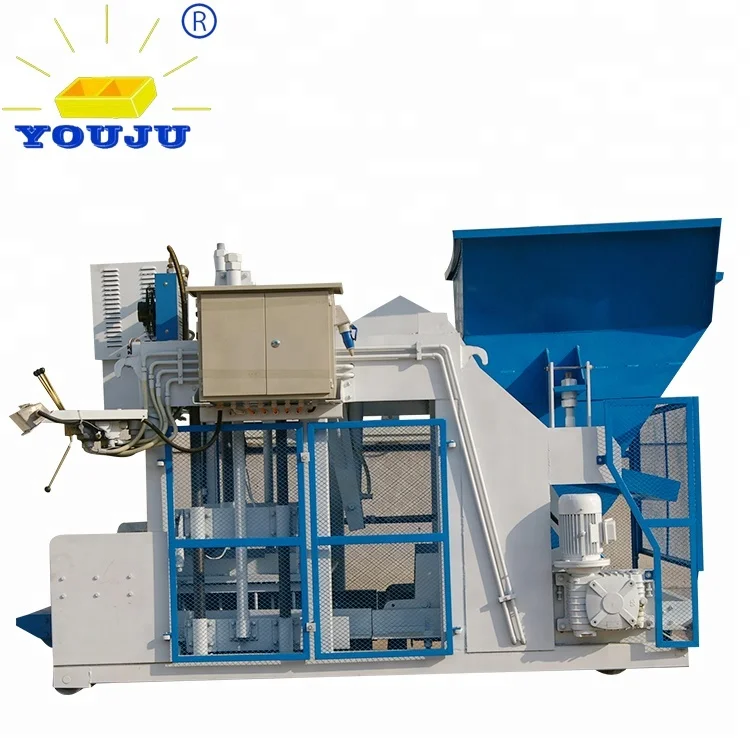
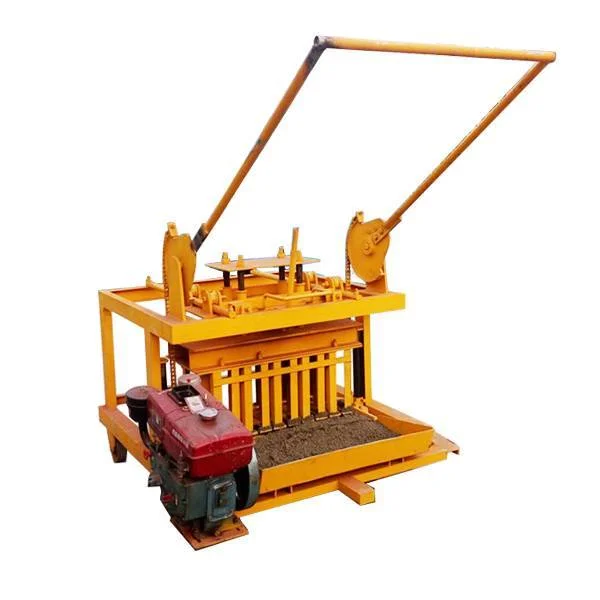 Mobile block machine