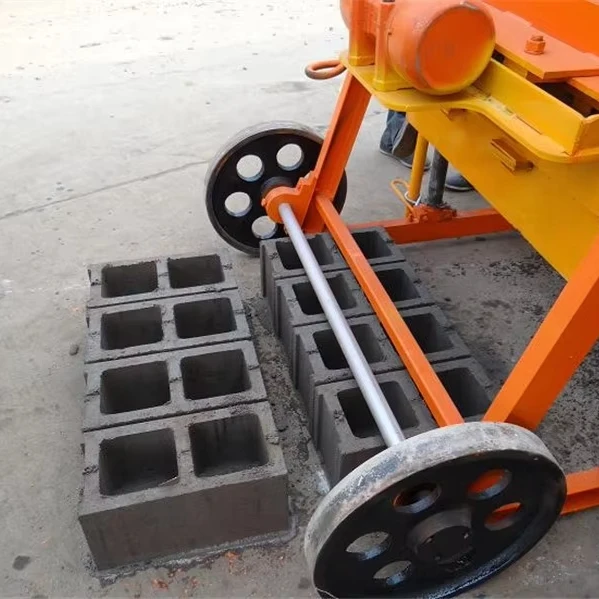
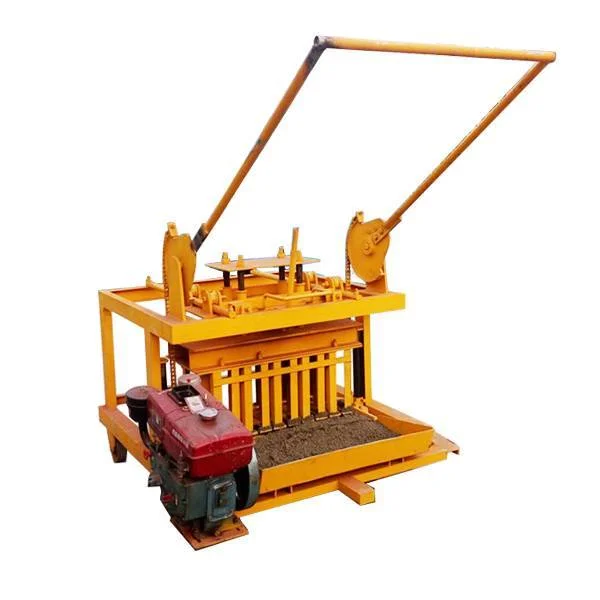
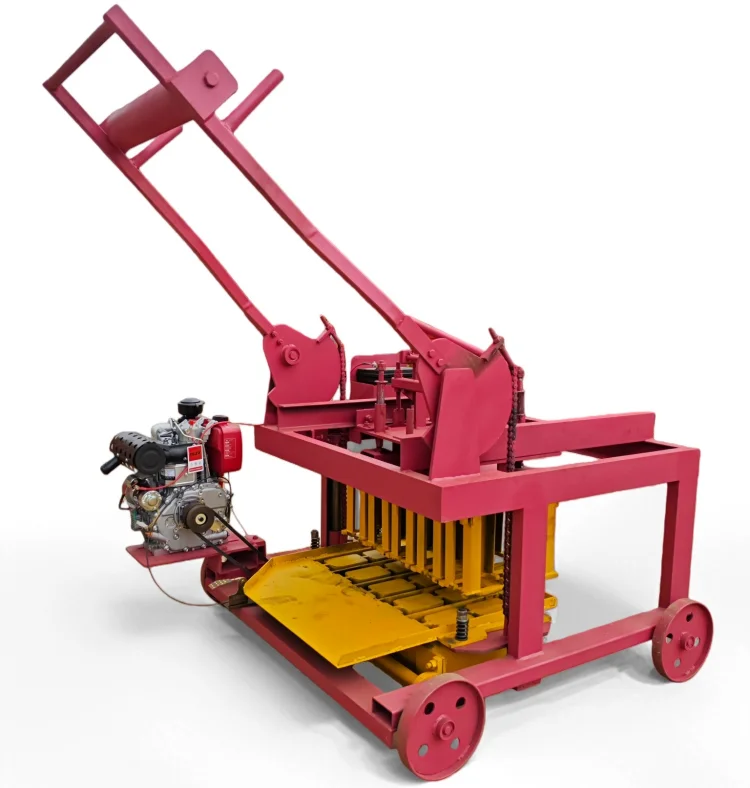
Matched System Design — every QMR4-45 mobile egg-laying block machine ships with mould, power source, and output calculation tied to the hollow block format your market actually buys, not a brochure default.
Technical Specifications
| Parameter |
Value |
| Model |
QMR4-45 |
| Product Type |
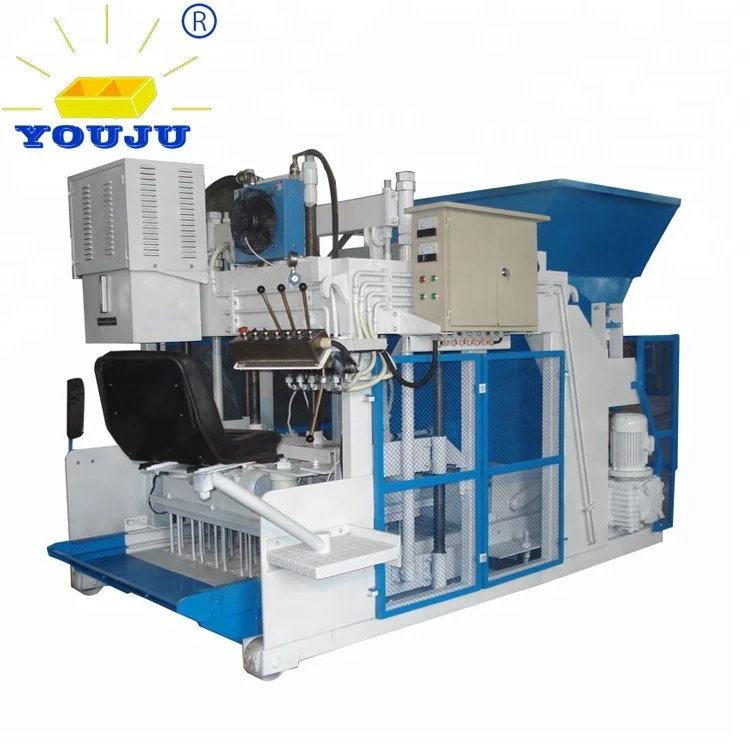
Mobile Egg-Laying Block Making Machine |
| Overall Dimensions (L×W×H) |
2420 × 1320 × 1650 mm |
| Net Weight |
810 kg |
| Rated Power |
6 kW |
| Power Source |
6 kW electric motor or 6–8 HP diesel engine |
| Voltage |
220 V / 380 V (frequency to be confirmed per market) |
| Control System |
Manual operation with diesel-hydraulic assist |
| Moulding Cycle |
40–45 s |
| Output — 400×200×200 mm Hollow Block |
3,000 pcs/day (4 pcs/mould, 8 h shift) |
| Output — 400×150×200 mm Hollow Block |
3,500 pcs/day (5 pcs/mould, 8 h shift) |
| Output — 400×120×200 mm Hollow Block |
4,500 pcs/day (6 pcs/mould, 8 h shift) |
| Pallet Requirement |
None — egg-laying directly on concrete ground |
| Mould Change |
Manual, time to be confirmed |
| Warranty |
1 year for the whole machine |
| Certification |
CE (declaration availability to be confirmed) |
Application Suitability
| Application |
Material or Output |
| On-site hollow block production at housing projects |
Crushed stone, sand, cement, water |
| Contractor yard producing for own infrastructure use |
River sand, quarry dust, cement blend |
| First block plant for small-scale entrepreneur |
Local aggregate with cement binder |
| Remote site without reliable grid electricity |
Diesel-powered production on prepared concrete slab |
What "3,000 Pieces per Day" Actually Means on a Mobile Egg-Laying Block Machine
Capacity only matters when tied to the exact block format, mould cavity count, and shift length.
Most mobile block machine quotations list a single daily output number without telling you which hollow block size it assumes. A buyer expecting 4,500 pieces per day on 400×200×200 mm blocks will be disappointed — that figure only applies to the smaller 400×120×200 mm format with six cavities per mould. I have seen site crews in West Africa discover this gap on the first production day because the capacity document never specified the format basis. The QMR4-45 mobile egg-laying block machine manufacturer documentation we provide breaks output down per format, so your purchasing decision matches what your market actually orders. [NEED_CITE: block format demand varies by regional construction standards]
Mapping Output to the Block Your Market Buys
A mobile egg-laying block machine is only as useful as the format it produces most often. The QMR4-45 covers three standard hollow block sizes from a single platform — 400×200×200 mm at four cavities, 400×150×200 mm at five, and 400×120×200 mm at six. Each format change swaps the mould and shifts the cavity count, which directly changes cycle output. Knowing which format dominates your local sales tells you which capacity row to plan against.
Dual Power for Unpredictable Sites
The QMR4-45 is configurable with either a 6 kW electric motor or a 6–8 HP diesel engine. On construction sites where grid supply is unreliable or absent entirely, the diesel option keeps production running without a generator investment. For established yards with stable three-phase power, the electric motor lowers fuel cost per block and simplifies daily maintenance. This choice is confirmed before production so the machine arrives ready to run. [NEED_CITE: diesel versus electric operating cost comparison for small block plants]
Reading the Specs That Shape Daily Production
The 40–45 second moulding cycle is the heartbeat of output calculation — every second saved or lost compounds across an eight-hour shift. Because the QMR4-45 lays blocks directly on concrete ground without pallets, pallet cost, pallet storage space, and pallet handling labour are eliminated from the operating equation. The 810 kg net weight and wheeled frame let one or two workers relocate the machine across a slab or between project areas without a forklift. Voltage must be confirmed before build — a 220 V machine arriving at a 380 V yard will sit idle until an electrician rewires the supply, and frequency mismatches can damage the motor winding within hours of startup. [NEED_CITE: voltage and frequency standards by export market]

The Cost of Skipping the Format Conversation
When a buyer orders a mobile block machine without specifying the dominant local block format, the factory ships the mould they assume is standard. The result is a machine that runs, but produces a block the local market does not want — or produces it at a rate that falls short of the project schedule. I have watched contractors lose the first week of a housing project because the mould on arrival was for a format their customers never order. Confirming block format, mould cavity count, and daily output per format before the purchase order removes this risk entirely. [NEED_CITE: impact of incorrect mould specification on project timelines]
Why Source This Machine Through Shiyue
Block machinery is our single focus, which means the QMR4-45 is specified as a matched unit — machine, mould, and power source aligned to your target format rather than assembled from catalogue defaults. Our configuration starts with your actual mix design and local aggregate, not a generic test recipe. Mould design covers the hollow block sizes your market sells, with custom drawings available when standard formats do not match. Every machine leaves with a capacity calculation document that names the exact block format, cavity count, and cycle time behind each output figure. Installation support includes operator training so the crew is productive from the first shift, and mould and wear parts supply continues after commissioning.
Documentation & Verification
- Capacity calculation stating block format, cavity count, and cycle time per output tier
- Mould drawing and format list matched to your local hollow block dimensions
- Voltage, frequency, and control language confirmed in writing before production
- Factory test record and packing photographs provided prior to container loading
- Customs documentation support with CE declaration where applicable
Installation, Commissioning & Support
- Requires a level concrete slab with minimum 150 mm thickness to support 810 kg machine weight and vibration during moulding
- Electric configuration needs a dedicated 6 kW circuit at confirmed voltage and frequency; diesel option requires no electrical infrastructure
- Machine arrives fully assembled on wheels — no foundation bolts or structural assembly needed on site
- First-run commissioning includes mould alignment check, hydraulic assist pressure verification, and cycle timing against your mix
- Operator training covers mould change procedure, daily lubrication points, and block curing practice on bare concrete
- Wear parts list and mould reorder catalogue provided at handover for ongoing supply
What to Share With Your Inquiry
To match the QMR4-45 to your project, provide the hollow block format your market sells most, your target daily output, and whether your site has reliable grid electricity or needs diesel power. Include your local voltage and frequency so the motor is wound correctly before shipment. If you have existing aggregate sources, share the material type and grading so the mix design aligns with the machine’s vibration and hydraulic characteristics.
Frequently Asked Questions
Q: How do I verify the real daily output for the hollow block size my market sells?
A: We provide a capacity calculation document that names the exact block format, mould cavity count, and 40–45 second cycle time behind each output figure. For the QMR4-45, output ranges from 3,000 pcs/day on 400×200×200 mm blocks to 4,500 pcs/day on 400×120×200 mm blocks, all based on an eight-hour shift. You can match your dominant format to the correct row before placing an order.
Q: Should I choose the diesel engine or electric motor for my site?
A: If your construction site or yard lacks stable three-phase power, the 6–8 HP diesel engine keeps production independent of grid reliability. For established yards with confirmed voltage supply, the 6 kW electric motor reduces daily fuel cost and simplifies maintenance. We confirm the power source during the inquiry stage so the machine is built to match your actual site conditions.
Q: What ground preparation is needed since this machine lays blocks without pallets?
A: The QMR4-45 requires a smooth, level concrete slab with a minimum thickness of 150 mm. The surface must be clean and free of loose debris so blocks release cleanly during the egg-laying cycle. No pallets, curing racks, or pallet handling equipment are needed, which reduces both startup investment and daily labour requirements.
Q: Can I order additional moulds for other block formats after the initial purchase?
A: Yes. Moulds for alternative hollow block dimensions and other concrete products can be designed to your drawings or selected from standard formats. Each mould change is manual, and we provide the mould drawing and format list so you know exactly what each new mould produces before it ships.
Q: What voltage and frequency will the machine be configured for before shipment?
A: Voltage and frequency are confirmed in writing during the order stage — typically 220 V or 380 V depending on your market. We record this confirmation alongside the control language requirement so the electrical system matches your local supply and the operator can read all labels on the first day of production.

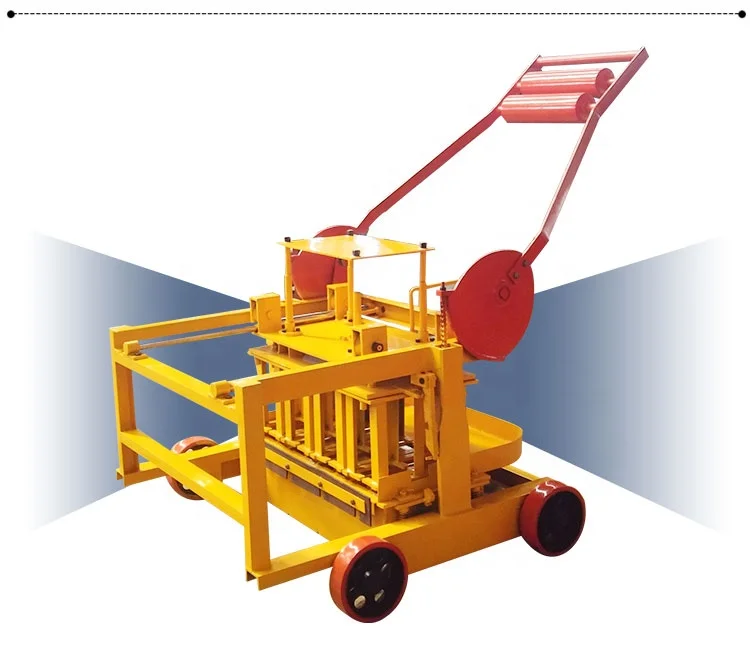
 Mobile block machine