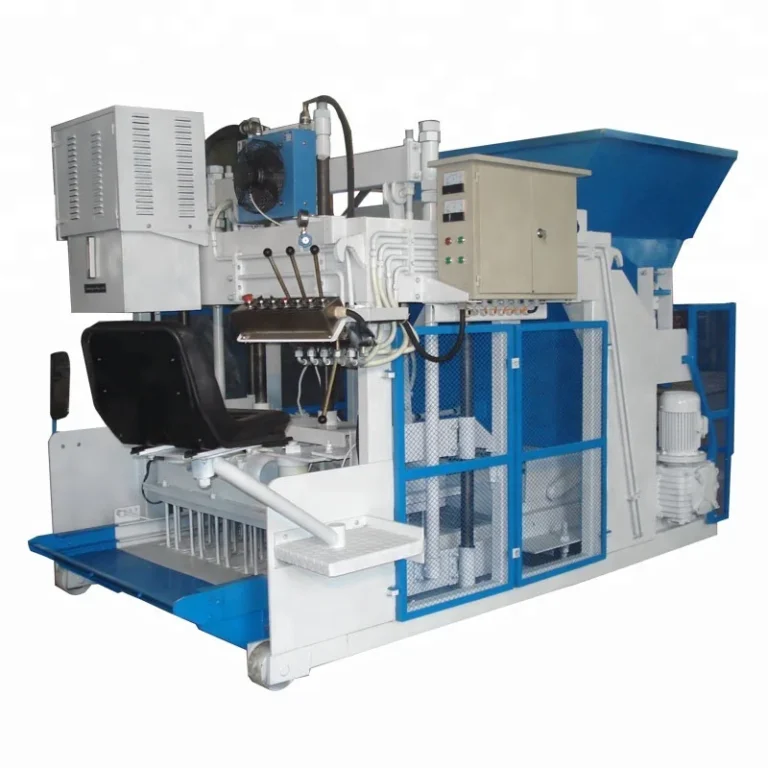
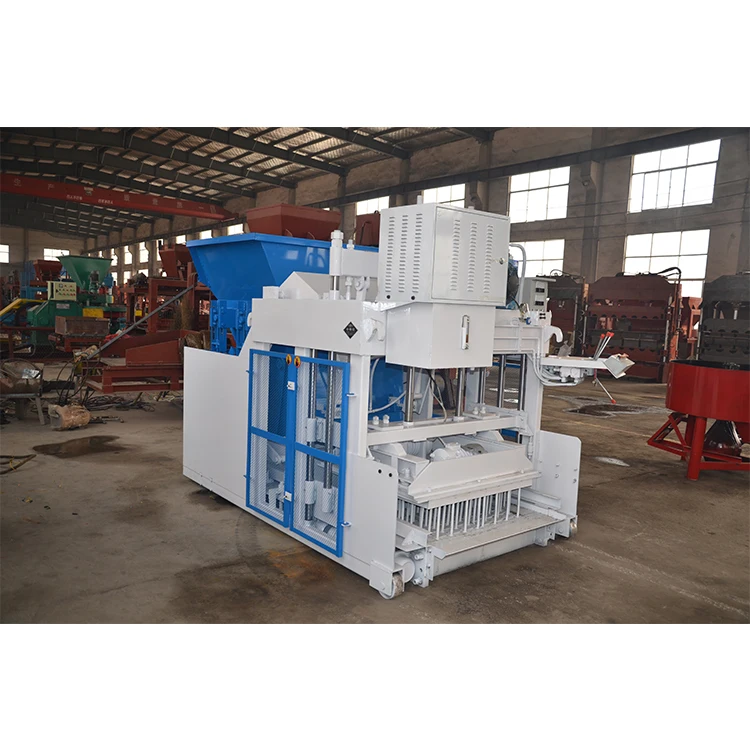
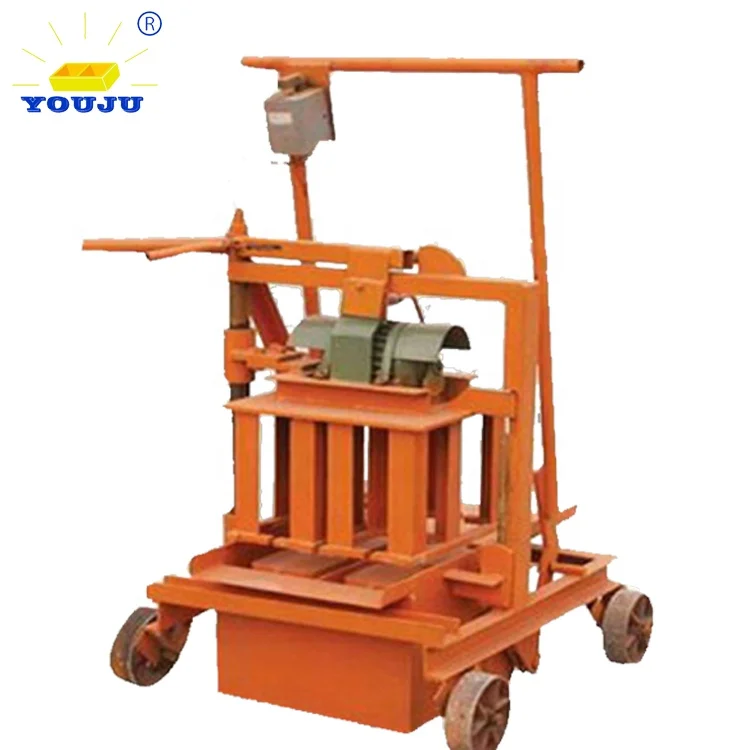
Matched System Sourcing — machine, mould and handling specified as one unit rather than assembled from separate suppliers, with the QMR4-45 positioned as the entry point into the Shiyue block machinery range.
Technical Specifications
| Parameter |
Value |
| Model |
QMR4-45 |
| Product Type |
Mobile Egg Laying Block Making Machine |
| Overall Dimensions (L×W×H) |
2420×1320×1650 mm |
| Moulding Cycle |
40-45 s |
| Pallet Requirement |
No pallet needed (egg laying type) |
| Net Weight |
810 kg |
| Rated Power |
6 kW |
| Diesel Engine Option |
6 kW or 6-8 HP |
| Voltage |
220 V / 380 V / configurable to local supply |
| Hydraulic Pressure Source |
Diesel engine driven hydraulic system |
| Automation Level |
Manual / small-scale operation |
| Assembly State |
Skid-mounted mobile unit |
Application Suitability
| Application |
Material or Output |
| On-site hollow block production |
Crushed stone, sand, cement and water mix |
| Remote construction sites without grid power |
Diesel-driven operation on local aggregate |
| Start-up block plants with limited space |
No fixed curing floor or pallet inventory required |
| Housing project contractors |
Format changes via mould replacement to match local demand |
What "4500 Pieces per Day" Leaves Out When No Block Format Is Named
Capacity only means something when tied to the exact block size you intend to sell.
The QMR4-45 mobile block machine manufacturer literature quotes different daily outputs depending on the mould installed. A 400×120×200 mm hollow block yields up to 4500 pcs/day over an 8-hour shift at 4-6 pcs per mould and a 40-45 s cycle, while the larger 400×200×200 mm format drops to 3000 pcs/day under the same conditions. Without stating which format a quotation assumes, the number on paper can fall noticeably short once production starts [NEED_CITE: capacity calculation methods for mobile block machines]. Always ask the supplier to break output down per block format before comparing offers.

Where the QMR4-45 Sits in the Full Machine Range
Within the Shiyue lineup the egg laying block machine for sale category occupies the lowest investment tier. Buyers who need a fixed plant, automatic pallet circulation or high-volume output will find the semi-automatic and fully automatic tiers further up the range. The QMR4-45 is the starting point for contractors who want to produce on their own site without committing to a curing floor, pallet stock or a dedicated building.
Diesel or Electric — Matching Drive to Site Conditions
The hydraulic system can be driven by a 6 kW electric motor or a 6-8 HP diesel engine. On sites where grid voltage fluctuates or three-phase supply is unavailable, the diesel option keeps production running independently of the local power network [NEED_CITE: voltage and frequency standards by export market]. Where stable electricity is already in place, the electric drive lowers fuel cost per shift and reduces noise inside enclosed work areas.
Reading the Specs That Actually Shape Daily Output
Moulding cycle of 40-45 seconds sets the upper limit on how many moulds the press can complete in a shift. Because this is an egg laying type machine, each completed block is deposited directly onto the ground and the unit moves forward — meaning ground flatness and surface preparation directly affect block integrity. The 810 kg net weight is low enough for the machine to be relocated around a job site by a small loader, yet heavy enough to provide the static mass needed during vibration. Voltage configurability between 220 V and 380 V means the control panel must be wired for the destination country before dispatch, not after arrival.
The Cost of Skipping the Ground-Preparation Step
Egg laying machines deposit wet blocks directly onto the surface beneath them. If that surface is uneven or soft, blocks crack before initial set and the rejection rate climbs. Buyers who budget only for the machine and overlook ground levelling end up reworking large areas of the production zone, sometimes spending more on site preparation after commissioning than they would have by planning it beforehand [NEED_CITE: common causes of block cracking in mobile egg laying production].
Why Source This Tier From a Single-Focus Manufacturer
Block machinery is the only product line here, so the QMR4-45 is evaluated alongside the moulds, handling equipment and automation tiers above it — not sold as a standalone item. Configuration is set against the buyer’s local aggregate and target block format rather than a catalogue default. Mould design covers the hollow block sizes the buyer’s market actually sells, with custom drawings available when standard formats do not match. The same supplier that builds the press also supplies the matching moulds and wear parts, keeping one point of responsibility for the complete unit.
Documentation & Verification
- Line layout stating output per hollow block format, not a single headline number
- Machine specification sheet covering diesel and electric drive options
- Mould drawing and format list matching your local market dimensions
- Voltage and control language confirmation sheet signed before production
- Factory test record on your specified block format before dispatch
- Packing photographs and customs documentation support
Installation, Commissioning & Support
- Skid-mounted design requires level, compacted ground rather than a poured foundation
- 6 kW rated power demands a dedicated circuit or appropriately sized generator
- Diesel engine option arrives without fuel — first fill and bleed handled on-site
- Mould change demonstrated during commissioning so operators can switch formats independently
- Wear parts list provided with recommended reorder intervals for hydraulic and mould components
- One-year machine warranty covering structural and mechanical assemblies
What We Need Before Quoting
Tell us which hollow block dimensions dominate your local market so we can calculate cycle-based output per format. Share your site power conditions — stable grid, generator-only, or a mix — so the correct drive option is selected. If you already operate forklifts or have curing space, let us know the dimensions so the mobile unit’s travel path can be planned around them.
Frequently Asked Questions
Q: How do I verify the real daily output for my block size?
A: Ask the supplier to provide a capacity table listing moulding cycle, pieces per mould and shift hours for each block format you plan to produce. The QMR4-45 output varies from 3000 to 4500 pcs/day across hollow block sizes, so a single headline number is not enough for planning.
Q: Should I choose diesel or electric drive?
A: If your site has stable three-phase power, the electric motor keeps running cost low. Where electricity is unreliable or unavailable, the 6-8 HP diesel engine lets production continue independently. Confirm voltage and frequency before the machine is wired at the factory.
Q: What ground conditions does egg laying production require?
A: The surface must be level and compacted so freshly deposited blocks do not crack or tilt. A smooth concrete apron or well-rolled hardcore gives the best result. Uneven ground leads to breakage that is often blamed on the machine rather than the site.
Q: Can the mould be changed to produce different block types?
A: Yes. Mould replacement lets the same machine produce different hollow block dimensions. Confirm with the supplier that the mould format list covers the sizes sold in your market, and ask about lead time for any custom mould drawings you may need.
Q: When should voltage and control language be confirmed?
A: Before production starts at the factory. Once the control panel is wired and labelled, changing voltage or display language on-site adds cost and delays commissioning. Provide your local voltage, frequency and preferred interface language at the inquiry stage.

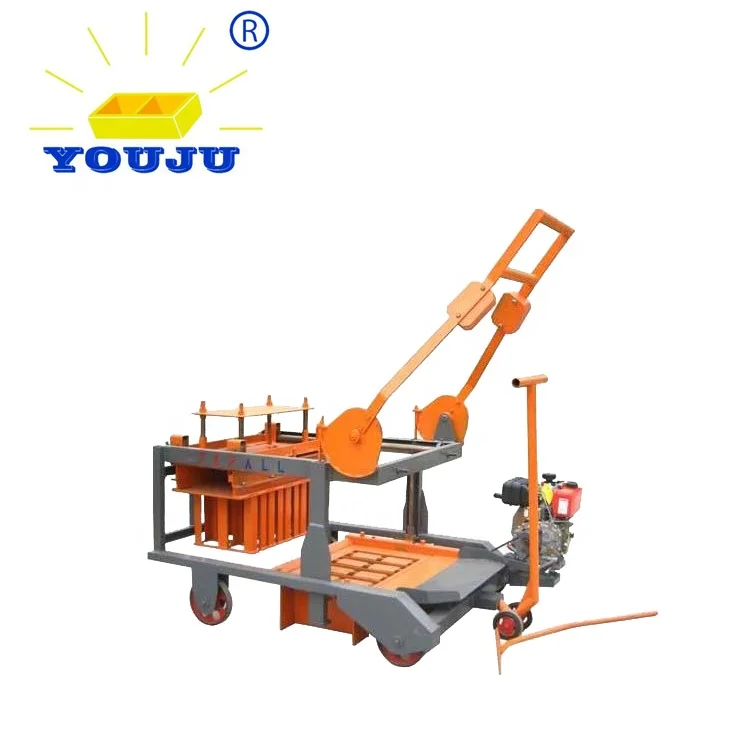
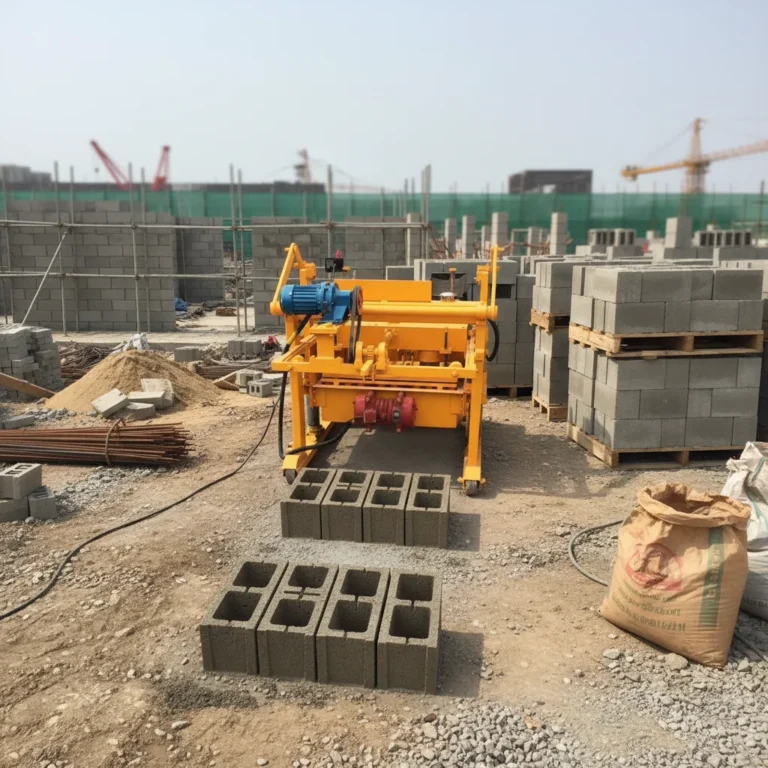 Mobile block machine