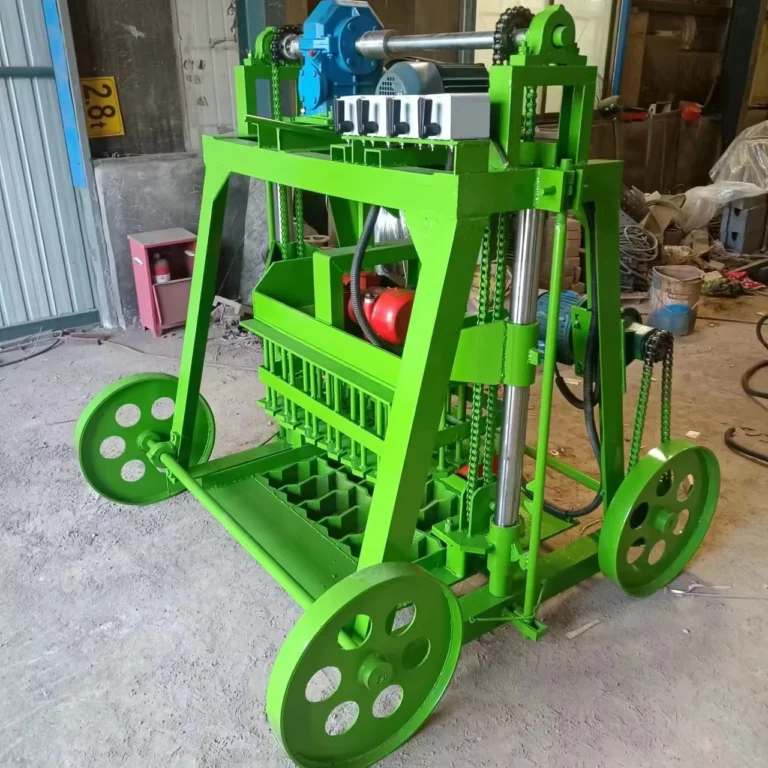
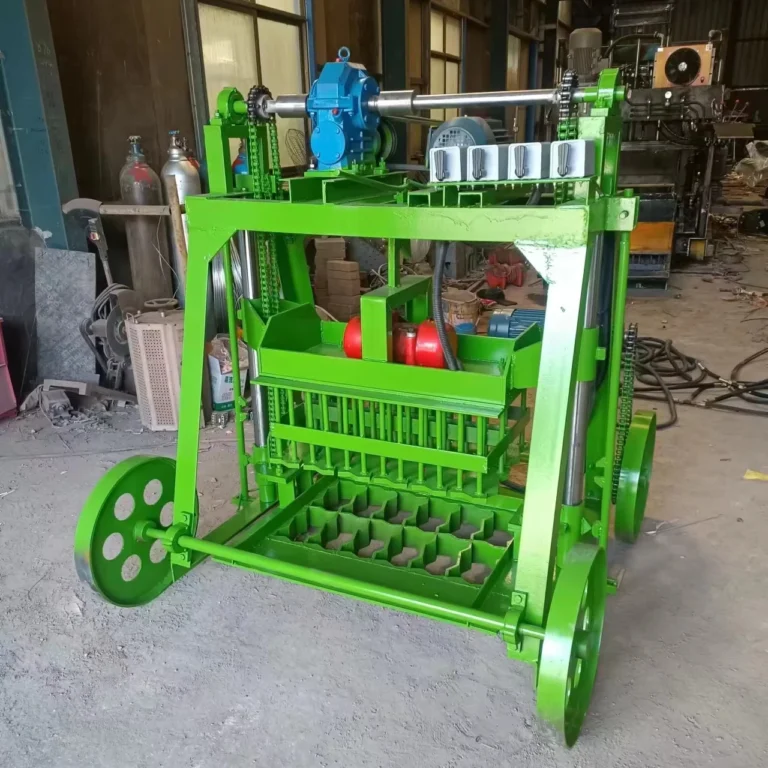
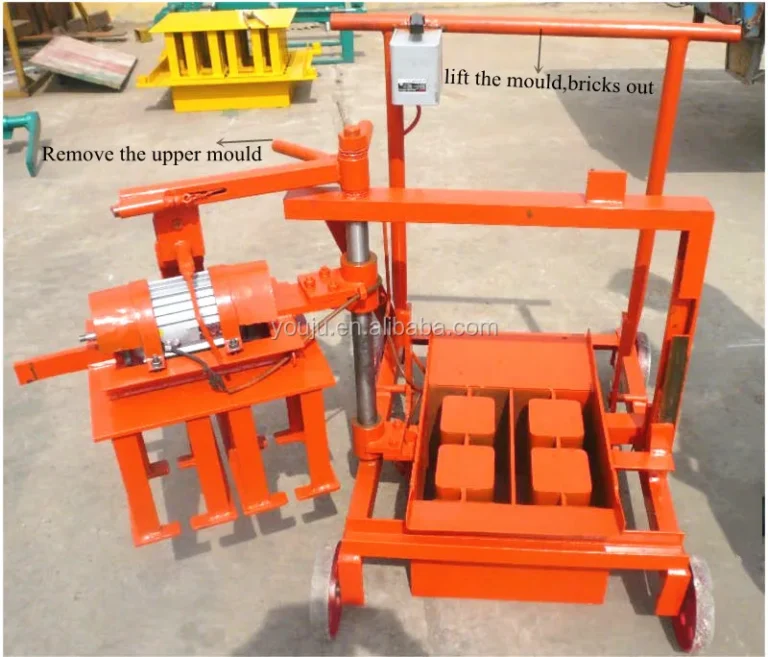
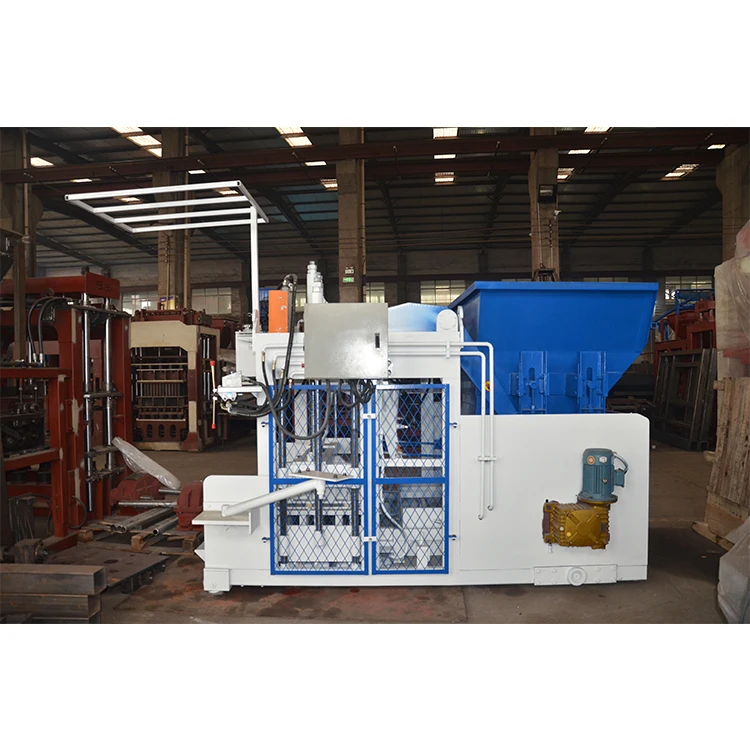
Matched System Design — Every QMR4-45 is configured as a complete mobile production cell with mixer and trolley, so the buyer knows exactly what arrives on site before the container is sealed.
Technical Specifications
| Parameter |
Value |
| Model |
QMR4-45 |
| Product Type |
Mobile Concrete Block Making Machine |
| Overall Dimensions (L×W×H) |
1100 x 950 x 2100 mm |
| Net Weight |
810 kg |
| Molding Cycle |
30–45 s |
| Power Source Options |
Diesel / Petrol Engine / Electric |
| Daily Output Capacity |
2560 pcs/day (basis not stated in source — confirm block format and material) |
| Pallet Requirement |
No pallet required |
| Mobility |
Mobile, movable across job site |
| Basic Equipment Included |
JZC350 Diesel Concrete Mixer or JQ350 Diesel Concrete Mixer with Electric Generating Unit; Trolley |
| Automation Level |
Manual operation with pneumatic and electric assists |
| Compatible Block Formats |
Paver brick, hollow block, concrete block, solid brick, fly ash brick |
| Warranty |
1 Year |
Application Suitability
| Application |
Material or Output |
| On-site residential wall construction |
Hollow concrete blocks from crushed stone, sand and cement |
| Remote infrastructure projects without grid power |
Solid bricks and pavers using diesel-driven mixer and press |
| Small contractor yards producing for local sale |
Fly ash bricks from thermal plant waste and cement binder |
| Housing development sites cutting transport cost |
Interlocking pavers and kerb-format blocks laid directly on cured ground |
| First-time entrepreneur block yard |
Standard hollow blocks with minimal fixed infrastructure |
What "2560 Pieces per Day" Actually Means for a Mobile Block Making Machine Manufacturer
Capacity only matters when you know which block format the number assumes.
Many mobile machines are quoted with a headline daily figure that was measured on the smallest, lightest brick in the catalogue. When the same machine is switched to a 200 mm hollow block, the cycle lengthens and the actual count drops noticeably. A mobile block making machine manufacturer that does not state the reference format is leaving the buyer to discover the gap on the first day of production [NEED_CITE: block format impact on cycle time in mobile machines].

Where the QMR4-45 Sits in the Mobile Range
The QMR4-45 occupies the entry-mobile tier for contractors who need a mobile block making machine manufacturer to supply a self-contained cell rather than a single press. The package includes a diesel or electric mixer and a trolley, which means the operator can mix, press and wheel fresh blocks to the curing area without waiting for a separate batching plant to be installed. This tier suits projects where the work face moves as the building rises and a fixed conveyor line would be dismantled before it pays for itself.
Power Source Flexibility for Off-Grid and Urban Sites
Choosing between diesel, petrol and electric drive is not just a fuel-cost decision — it determines whether the machine can run at all on the first week of a remote site. Diesel gives continuous torque through the high-resistance stroke of a hollow block and keeps the JZC350 mixer turning when grid power is unreliable. Petrol is lighter for frequent relocation between small plots. Electric eliminates exhaust in enclosed urban yards and cuts running cost where stable three-phase supply exists [NEED_CITE: power source selection for mobile block plants].
How Cycle Time and Vibration Shape Block Density
The 30–45 second molding cycle is the window in which vibration force and hydraulic assist consolidate the mix. A shorter cycle only delivers strength if the vibration frequency and amplitude are matched to the aggregate gradation and cement content of the local mix. The QMR4-45 uses manual operation with pneumatic assist, so the operator controls the fill depth and vibration duration by feel; this keeps the machine simple but demands a repeatable mix design to hold consistent block density from batch to batch.
Pallet-Free Operation and Its Effect on Site Layout
Eliminating pallets removes a whole layer of handling: no pallet return conveyor, no pallet cleaning, no pallet store. Fresh blocks are deposited directly onto the ground or a leveled sand bed, which means the curing area can expand or contract as the project demands. The trade-off is that ground flatness becomes critical — any dip will tilt a hollow block while the cement is still green — so site preparation must include a compacted, level strip at least twice the daily output length.
The Hidden Cost of Overlooking Spare Moulds
When a mobile machine is the sole production asset on a project, a single damaged mould stops every block until a replacement arrives. Remote sites that ordered only the block format shown in the brochure have faced multi-week shutdowns waiting for air-freight spares. Planning the first mould order around the full format list the local market actually sells — hollow, solid, paver — prevents the machine from sitting idle while a single format wears out.
Why Source This Mobile Range Here
The QMR4-45 is supplied as a matched cell: press, mixer and trolley are specified together so the cycle times of mixing and pressing do not leave either station waiting. Every quotation states the block format behind the capacity figure, removing the guesswork that turns a headline number into a site disappointment. Mould drawings are confirmed against the buyer’s market formats before production starts, and the wear parts list is issued with the machine so the first replacement is planned rather than reactive. Installation support covers the first day of operation, ensuring the operator understands fill depth, vibration timing and mould change procedure before the trainer leaves site.
Documentation & Verification
- Line capacity calculation naming the specific block format used for the 2560 pcs/day reference.
- Machine specification sheet confirming dimensions, net weight and selected power source.
- Mould drawing pack showing each block format and compatible cavity count.
- Voltage and control language confirmation sheet signed before dispatch.
- Factory test record on the buyer’s chosen mix and block format prior to container loading.
- Operation and maintenance manual covering daily checks on vibration motor and pneumatic assist.
Installation, Commissioning & Support
- Compact 1100 x 950 mm footprint allows placement on a leveled hardcore pad without a poured foundation.
- Diesel variant requires a dedicated fuel storage and drip tray compliant with local site environmental rules.
- Electric variant needs confirmed voltage and frequency matching before the motor is wired at the panel.
- Mixer and press are dispatched as separate packages to fit standard container door clearance and reassembled on site.
- First-day commissioning covers mix consistency, vibration timing and mould release technique with the site operator.
- Wear parts list issued at handover so mould liners and vibration springs are reordered before they fail.
What We Need to Size Your Machine Correctly
To match the QMR4-45 to your actual production plan, please share the block formats your market sells most, the daily volume you need per format, and the aggregate sources available near your site. Confirm your local voltage and frequency so the electric option can be quoted without rework, and let us know whether diesel or petrol is the preferred backup. If you already run a mixer or curing racks, tell us the pallet or slab dimensions so the pallet-free curing area can be laid out around your existing equipment.
Frequently Asked Questions
Q: How is the 2560 pcs/day output calculated, and which block format does it assume?
A: That figure is based on a specific block format and cycle time that were recorded during factory testing. The exact format — whether a small solid brick or a larger hollow block — changes the piece count noticeably. We restate the capacity against the format you actually plan to produce before the order is confirmed, so the number on the quotation reflects your real daily target.
Q: Diesel vs electric — which power source fits my site conditions?
A: Diesel suits remote or off-grid projects where grid voltage is unstable and the machine must run the moment it is unloaded. Electric cuts running cost and removes exhaust fumes on enclosed urban sites with reliable three-phase supply. Petrol sits between the two for short-duration, frequently moved setups. We confirm fuel or voltage availability before locking the configuration.
Q: What block formats and moulds are available, and how long does a change take?
A: The QMR4-45 accepts moulds for hollow block, solid brick, paver and fly ash brick in sizes that match your market demand. Mould change is a manual bolt-off, bolt-on operation that an experienced operator completes within a short break. We supply the format list and cavity drawings with the machine so every mould is ready when you need it.
Q: What is included in the basic package, and what must I source locally?
A: The package contains the QMR4-45 press, a JZC350 or JQ350 diesel mixer with generating unit, and a trolley for moving fresh blocks. You provide raw materials, water, a leveled curing strip and any hand tools for block inspection. No pallets, no pallet return system and no fixed conveyor are needed, which keeps the site setup minimal.
Q: Where does the QMR4-45 sit on the range, and when should I consider stepping up?
A: It is the entry-mobile tier for contractors producing on their own job site without fixed infrastructure. When daily volume outgrows what a single mobile cell can deliver, or when multiple block formats must run simultaneously, the next step is a semi-automatic stationary line with pallet handling and stacking. We map that transition so the upgrade path is clear before you commit.

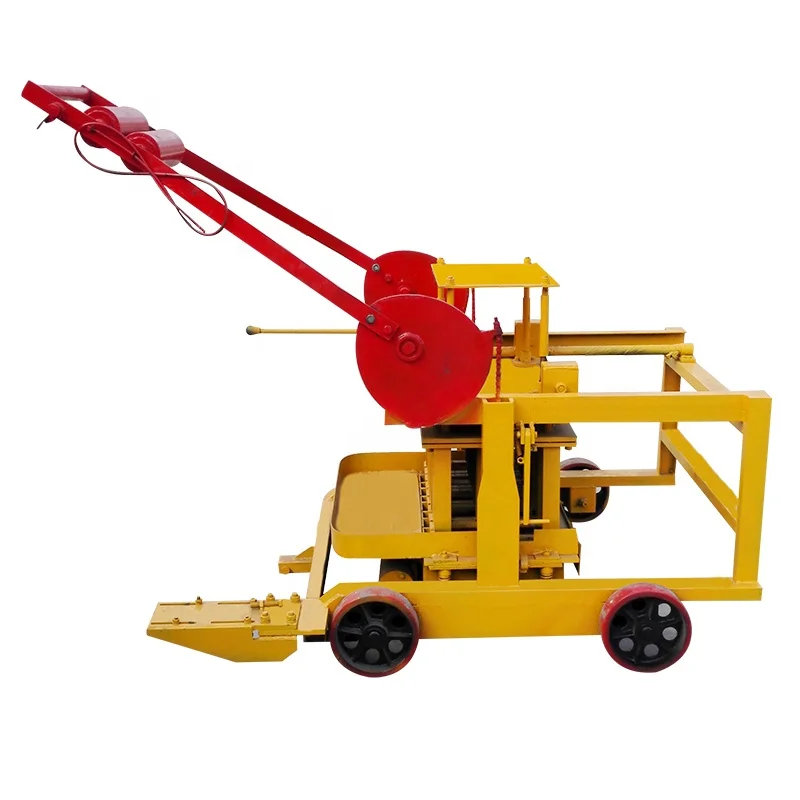
 Mobile block machine