Matched System Sizing — every output figure here is tied to a specific block format and cycle time, so buyers see real daily capacity before committing.
Technical Specifications
| Parameter |
Value |
| Model |
QMR4-45 |
| Product Type |
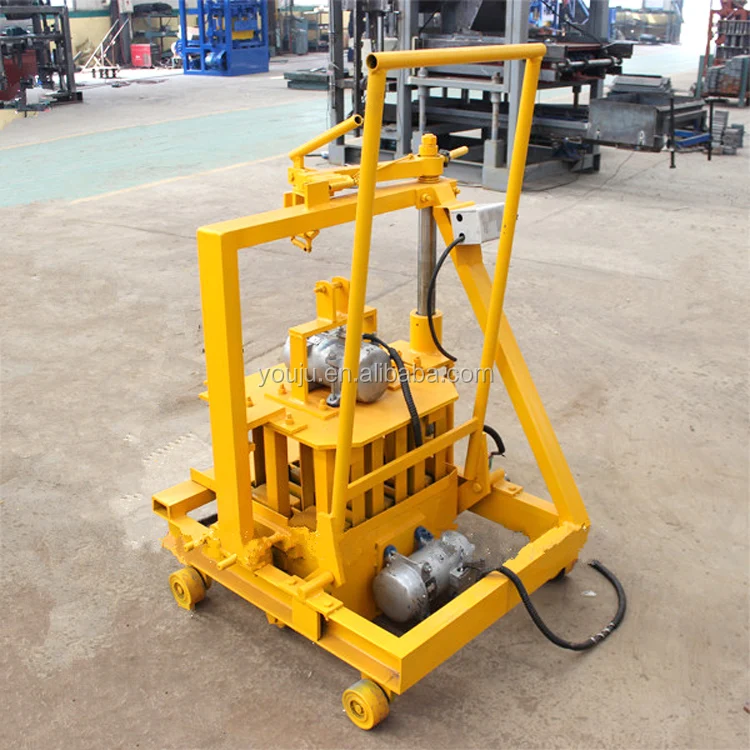
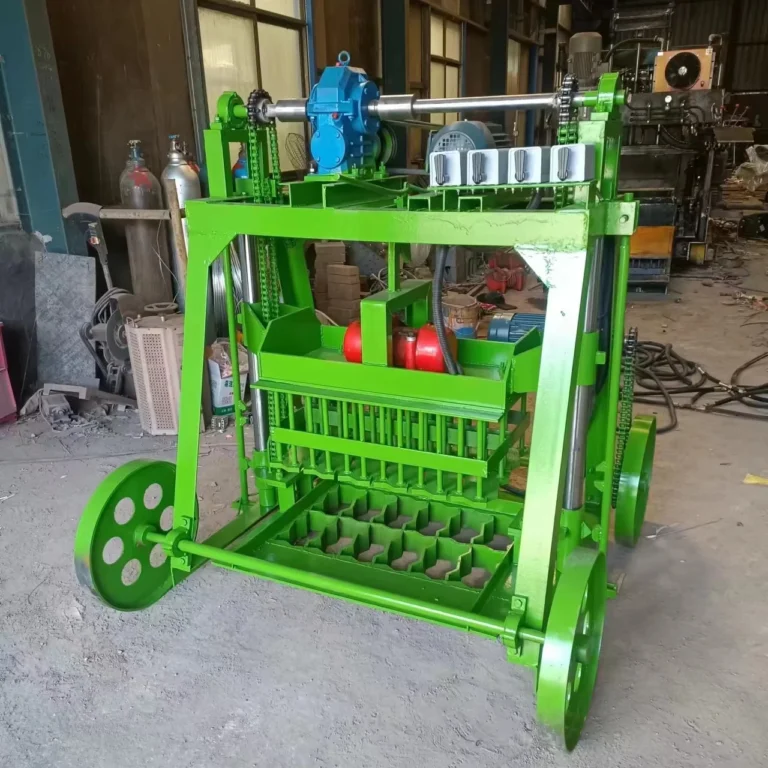
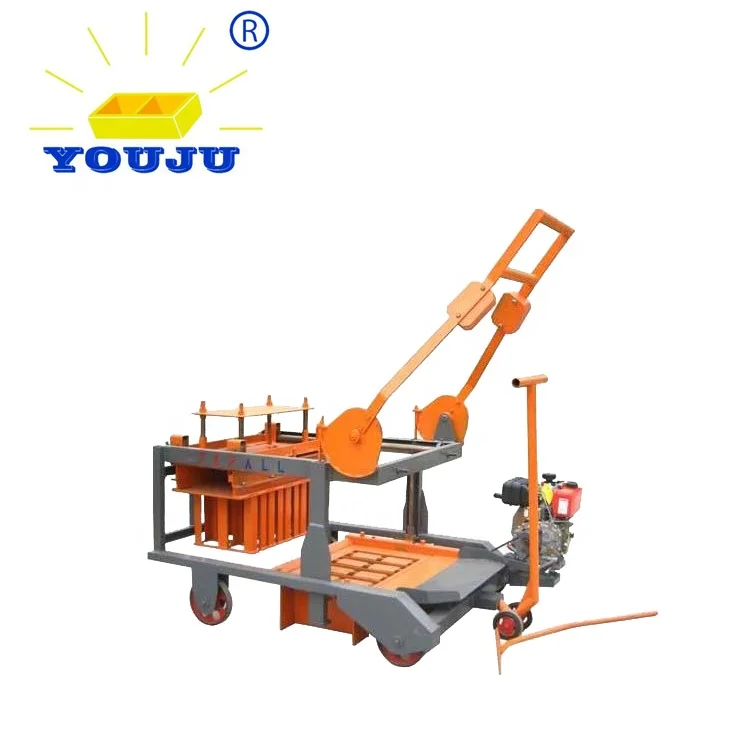
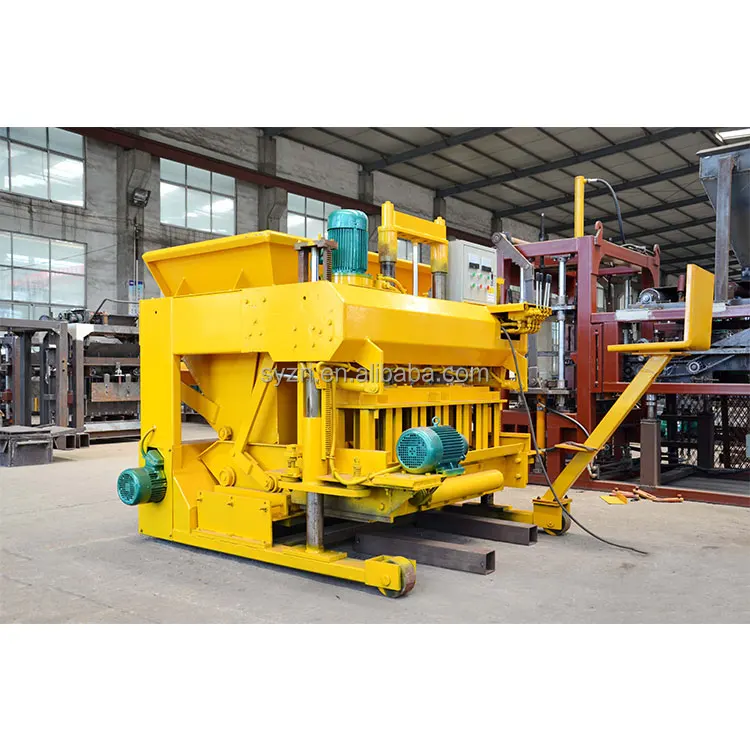
Mobile Egg-laying Block Making Machine |
| Power Source |
Diesel engine or Electric motor (dual option) |
| Pallet Requirement |
No pallet required (egg-laying type) |
| Concrete Floor Requirement |
No concrete floor required |
| Hydraulic Pressure Source |
Diesel engine driven |
| Cycle Time |
30-45s (basis not stated in source — confirm block format / material / thickness) |
| Output Capacity (Hollow brick 400×200×200mm) |
4 pcs/mould, 320 pcs/hour, 2600 pcs/8hr |
| Output Capacity (Hollow brick 400×150×200mm) |
5 pcs/mould, 400 pcs/hour, 3200 pcs/8hr |
| Output Capacity (Hollow brick 400×100×200mm) |
7 pcs/mould, 560 pcs/hour, 4480 pcs/8hr |
| Block Formats Supported |
Hollow brick (multiple sizes via mould change), clay interlocking paving brick |
| Automation Level |
Manual / Semi-automatic (mobile egg-laying operation) |
| Operating Environment |
Suitable for sites with insufficient electricity (diesel option) |
| Assembly State |
Skid-mounted / mobile, no fixed plant required |
Application Suitability
| Application |
Material or Output |
| On-site block production for construction contractors |
Hollow bricks from local aggregate and cement without a fixed plant |
| Remote or off-grid project sites |
Diesel-powered operation where grid electricity is insufficient or unavailable |
| Small-scale entrepreneurs setting up first production |
Entry-level mobile egg-laying block making machine for sale with minimal capital outlay |
| Housing and development project contractors |
Locally produced hollow and interlocking bricks at the build site |
| Clay interlocking paving brick production |
Interlocking formats from clay-based mixes via dedicated moulds |
What "320 Pieces per Hour" Actually Means for Your Site
Every mobile block machine manufacturer quotes a headline cycle time, but few state which block format that number assumes.
A 45-second cycle producing 400×200×200mm hollow blocks yields a different daily total than the same cycle producing 400×100×200mm units, yet both are sometimes presented under a single "up to X pieces" claim. Buyers discover the gap only after the machine arrives and the crew counts real output at the end of the first shift. [NEED_CITE: capacity calculation standards for block making equipment]. I have seen project schedules slip because the procurement team planned around a number that assumed a block size the site never actually needed.

Where the QMR4-45 Sits in the Shiyue Range
This mobile block machine manufacturer positions the QMR4-45 at the entry-mobile tier — designed for buyers who need production at the project site without investing in a fixed batching plant, conveyor network, or curing chamber. It handles hollow brick and clay interlocking formats through mould changes on a single skid-mounted frame.
Diesel or Electric: Matching Power to the Site
The dual power-source option means the machine can run from a diesel engine on off-grid developments or switch to an electric motor where stable three-phase supply exists. Choosing between them depends on local fuel cost, grid reliability, and whether the project will move to a second site after completion. [NEED_CITE: typical voltage and frequency requirements for construction site equipment in export markets]. The electric option requires confirming voltage, frequency, and control display language before the machine enters production.
Reading the Capacity Table Honestly
The 30-45 second cycle time produces 320 pieces per hour only when running 400×200×200mm hollow blocks — four per mould. Switch to the 400×100×200mm format and the same cycle yields 560 pieces per hour because each mould drop contains seven units. Vibration force and hydraulic pressure must match the buyer’s mix design; if local aggregate holds more moisture than the test batch, cycle time lengthens and block strength drops. Mould change between formats lets one machine serve multiple product lines, but the time cost of that change must fit the production schedule.
The Hidden Cost of Specifying the Wrong Mould Set
Ordering a machine with moulds for a block format the local market does not buy leaves the buyer paying for flexibility that never earns revenue. Mould changeovers that consume most of a shift cancel out the format variety the machine was supposed to deliver. [NEED_CITE: mould change procedures and typical downtime for egg-laying block machines]. I have watched crews abandon format switching entirely and run a single mould size for months, effectively reducing a versatile machine to a single-product unit.
Why Source This Egg-laying Block Machine for Sale Through Shiyue
Block machinery is the single focus here, so the machine, mould, pallet-free laying pattern, and handling sequence are specified as one matched system. Configuration starts from the buyer’s actual mix design and local aggregate rather than a catalogue default. Mould design covers the hollow and interlocking formats the buyer’s market sells, with custom drawings available. The automation level is selectable — a buyer can begin with manual egg-laying operation and step up to a semi-automatic or automatic line later. Installation support includes operator training on-site so the crew understands cycle timing and mould change before the first production day ends.
Documentation & Verification
- Line layout and capacity calculation stating the block format assumed for each output figure
- Machine specification sheet confirming diesel or electric power source selection
- Mould drawing and format list showing all available hollow and interlocking block sizes
- Operation and maintenance manual with wear parts and mould list for ongoing supply
- Factory test record on the buyer’s target block format before dispatch
Installation, Commissioning & Support
- Skid-mounted assembly allows the QMR4-45 to be offloaded and positioned without a poured foundation
- Diesel engine option removes the need for a dedicated electrical circuit on remote sites
- Mould change procedure trained on-site so crews can switch formats within the first production week
- Cycle time and vibration parameters adjusted during commissioning to match local aggregate moisture
- Wear parts list provided with the machine so first replacements can be ordered before stock runs out
Before You Request a Quote
To size the QMR4-45 correctly, share the block formats your market actually buys, your target daily output per format, and the local aggregate type and moisture range. If you are considering the electric motor option, confirm your site voltage, frequency, and preferred control display language. This information allows an accurate capacity calculation tied to your specific product mix rather than a generic figure.
Frequently Asked Questions
Q: How is the output capacity calculated, and which block format does each figure assume?
A: Each capacity line states the block dimensions, pieces per mould, hourly rate, and eight-hour total. The 320 pieces per hour figure assumes 400×200×200mm hollow blocks at four per mould. Changing to smaller formats increases pieces per cycle. Real output depends on crew speed, mix consistency, and whether the 30-45 second cycle holds across your material.
Q: Diesel or electric — how do I choose the right power source for my site?
A: Diesel suits remote sites with unreliable or absent grid power. Electric suits locations with stable three-phase supply and lower running cost. Confirm local voltage and frequency before ordering the electric option, as motor winding and control components must match. Some buyers choose diesel for a temporary project and switch to electric for a permanent site later.
Q: What block formats and mould options are available, and how long does a mould change take?
A: The QMR4-45 supports multiple hollow brick sizes and clay interlocking paving bricks through mould swaps. Available formats depend on the mould set ordered. Mould change time varies with crew familiarity — trained operators complete the swap faster than a first-time crew. Specify your target formats during inquiry so the correct mould set ships with the machine.
Q: Where does the QMR4-45 sit in the Shiyue range, and when should I step up?
A: This unit occupies the entry-mobile tier for buyers producing on-site without a fixed plant. When daily volume requirements grow beyond what a single egg-laying machine delivers, or when pallet-based automatic stacking becomes necessary, stepping to a semi-automatic or fully automatic line in the Shiyue range is the logical next move.

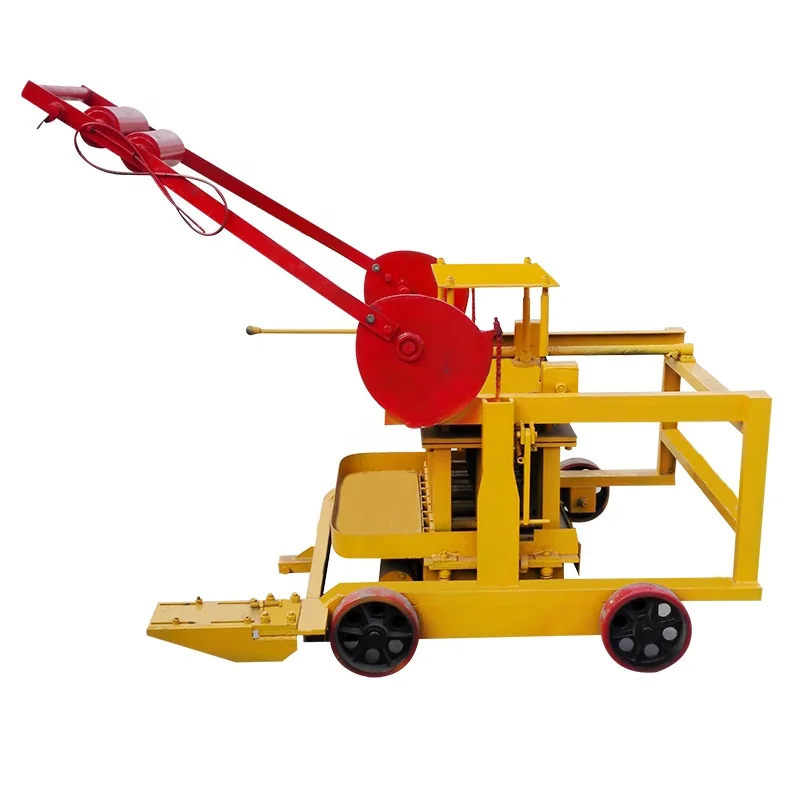
 Mobile block machine