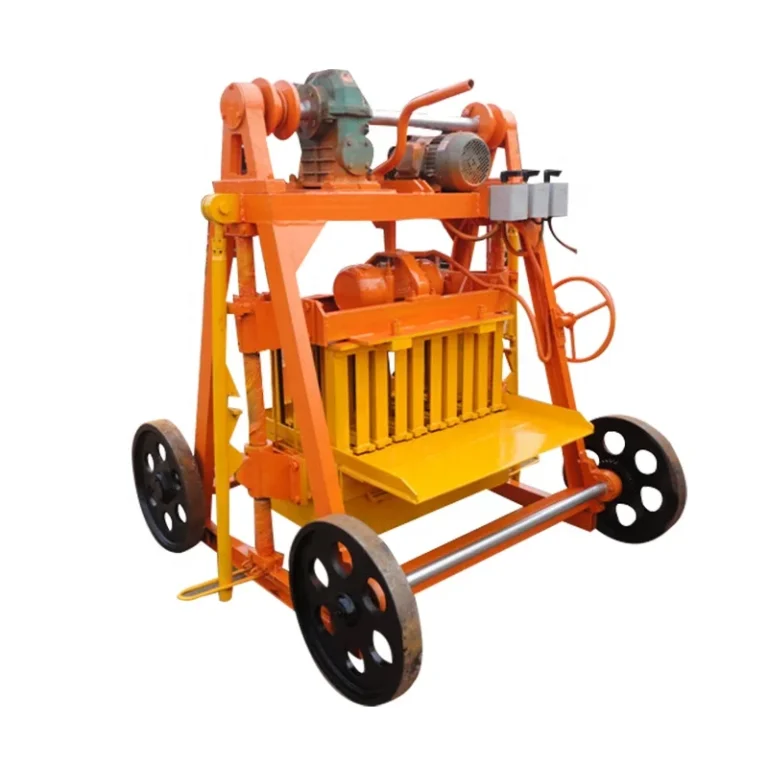
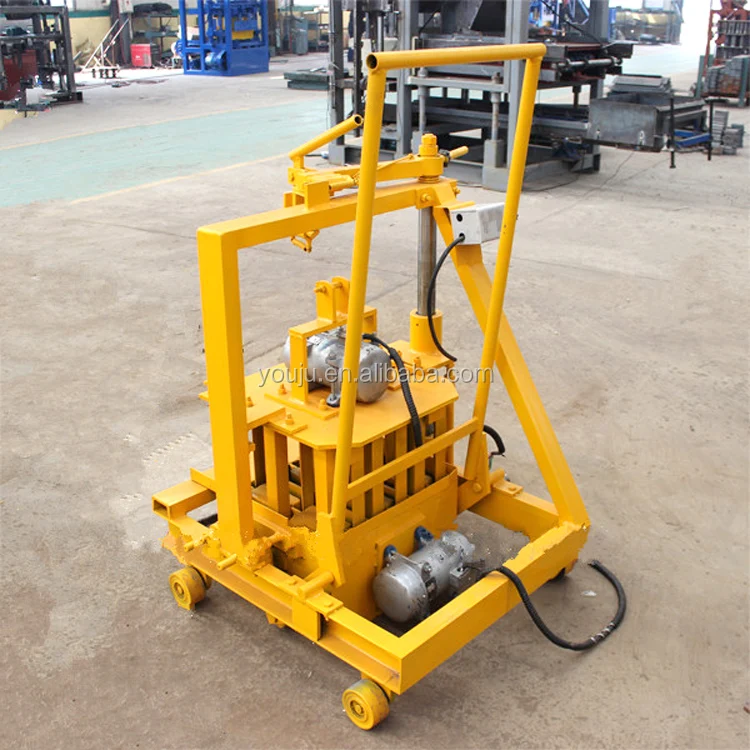
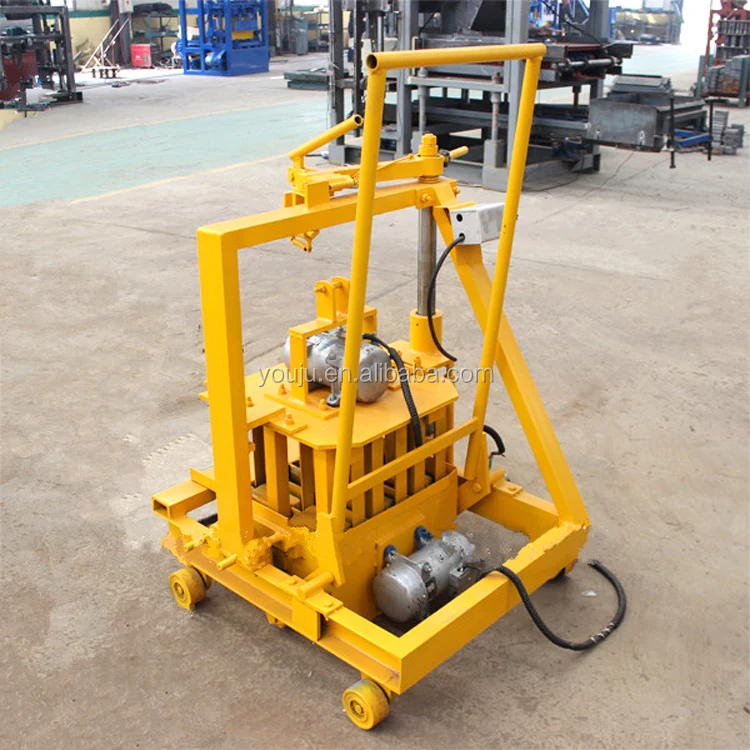
Matched System Sourcing — The QMJ4-45 mobile block machine is specified alongside its compatible moulds and handling setup as a single package, not a standalone press, ensuring buyers know the exact block formats it can produce before ordering.
Technical Specifications
| Parameter |
Value |
| Model |
QMJ4-45 |
| Product Type |
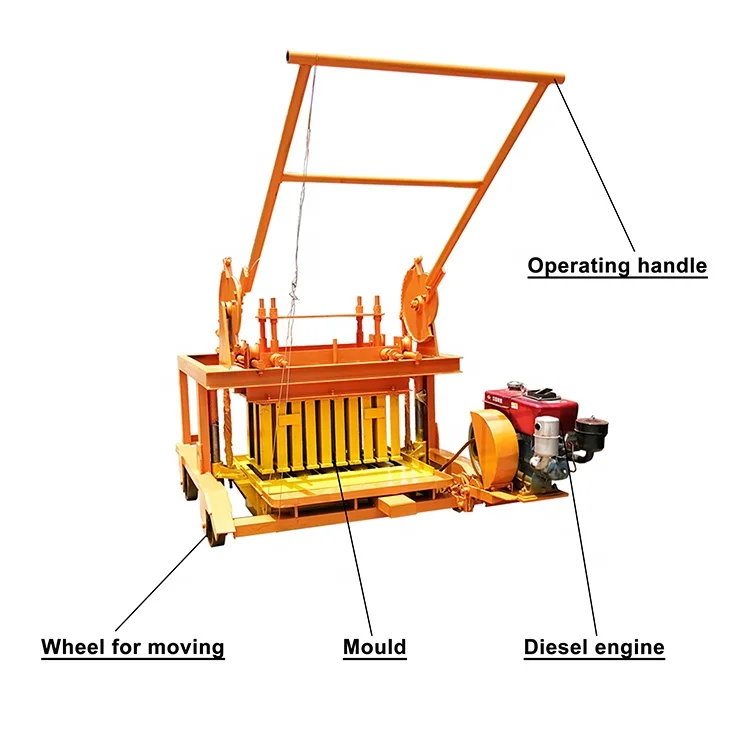
Mobile Egg Laying Block Making Machine |
| Category |
Mobile block machine |
| Rated Power |
7.4 kW |
| Molding Cycle |
45 s |
| Output Capacity |
2400 pcs/8 hours (based on 400×200×200mm hollow block, 4 pcs/mould) |
| Alternate Output |
3200 pcs/8 hours (based on 400×150×200mm block, 5 pcs/mould) |
| Production Rate |
300 pcs/h (based on 400×200×200mm hollow block) |
| Alternate Rate |
400 pcs/h (based on 400×150×200mm block) |
| Raw Materials |
Concrete, sand, cement, fly ash, lime, gypsum |
| Net Weight |
1 T (source value — verify against manufacturer catalog) |
| Overall Dimensions |
1550×1335×1580 mm |
| Pallet Requirement |
None (egg-laying type, produces directly on ground) |
| Voltage |
Configurable according to local supply (basis to be confirmed) |
| Control System |
Manual force control with jog control |
| Orientation Mechanism |
Four poles oriented with ultralong orientation bearing |
| Mould Change |
Supported (multi-format via mould change) |
| Electrical Components |
Imported electrical appliances, sealing parts, and hydraulic components |
| Block Formats |
Road blocks, curb stones, hollow bricks (via mould change) |
| Automation Level |
Manual / semi-automatic |
| Assembly State |
Skid-mounted mobile unit |
Application Suitability
| Application |
Material or Output |
| On-site block production for contractors |
Concrete and local aggregate mixes |
| Small-scale hollow block manufacturing |
Crushed stone, sand, and cement blends |
| Road block and curb stone production |
High-density concrete for paving and kerbs |
| Entry-level block plant setup |
Standard masonry formats using locally sourced raw materials |
| Remote housing project supply |
Mobile production without fixed plant infrastructure |
What "300 Pieces per Hour" Actually Means for This Mobile Block Machine for Sale
Output figures only matter when tied to a specific block format and mould configuration.
When buyers evaluate a mobile block machine for sale, the first question should always be which block size the capacity number assumes. The QMJ4-45 produces 300 pieces per hour on standard 400×200×200mm hollow blocks with a 45-second molding cycle. If you switch to 400×150×200mm blocks, the rate rises to 400 pieces per hour because the mould holds five cavities instead of four. Without this context, a quoted hourly figure becomes meaningless on the production floor. Buyers who skip this verification often find their daily targets impossible to meet [NEED_CITE: block machine capacity calculation standards by format].

Where the QMJ4-45 Sits in the Full Machine Range
The QMJ4-45 occupies the entry tier of the mobile block machine range, designed for buyers who need production capability without committing to a fixed plant layout. Unlike stationary hydraulic presses that require pallet systems, curing racks, and dedicated factory space, this egg-laying unit produces blocks directly on a prepared concrete floor. This makes it a practical starting point for contractors managing a single housing development or entrepreneurs testing a local block market before scaling investment.
Comparing Footprint and Investment Across Tiers
Moving up the range to semi-automatic stationary lines introduces pallet feeding, vibration tables with higher hydraulic pressure ratings, and basic stacking systems. These additions increase daily output and block consistency but also demand a larger site footprint, a three-phase power supply, and a curing area sized for pallet circulation. The QMJ4-45 eliminates pallet and rack requirements entirely, compressing the initial investment to the machine, a level working surface, and raw material stockpile [NEED_CITE: typical site preparation requirements for mobile versus stationary block plants]. Buyers evaluating their position on the range should weigh current demand certainty against the cost and complexity of each tier.
Reading the Specs Beyond the Catalogue Default
The 7.4 kW rated power drives both the vibration motor and the hydraulic system that controls the mould head. For an egg-laying machine of this size, that power rating is adequate for standard hollow block and solid block mixes but requires the buyer to confirm that local aggregate particle size falls within the machine’s feed capability. The four-pole orientation system with an ultralong bearing ensures the mould box and pressure head align precisely during each 45-second cycle, which directly affects block dimensional consistency. Voltage is configurable to local supply, but frequency must also be confirmed — running a 50 Hz motor on a 60 Hz supply alters vibration frequency and can compromise compaction density. The manual jog control system keeps operator training straightforward, though it does mean cycle consistency depends on the operator’s rhythm.
The Hidden Cost of Skipping Ground Preparation
An egg-laying mobile block machine for sale eliminates pallet costs, but it transfers that requirement to the ground surface. If the production area is not leveled and compacted, blocks will cure with uneven bases, leading to rejection rates that erode the savings from skipping pallet infrastructure. Contractors who set up on raw soil or uneven concrete slabs frequently report inconsistent block heights and corner damage during handling [NEED_CITE: ground preparation standards for egg-laying block machines]. The QMJ4-45 weighs approximately one tonne, so the surface must also bear that concentrated load without settling.
Why Source This Machine Through a Matched Configuration Approach
The QMJ4-45 is specified as part of a matched system that includes the mould formats your market actually sells, not just a default hollow block cavity. Mould drawings and format lists are confirmed before production, so you know exactly which road blocks, curb stones, and brick formats the machine will handle upon arrival. Voltage and control language are verified against your local supply and operator requirements, preventing commissioning delays. The factory test record documents performance on your specified block format, not a generic test cycle. Wear parts and mould replacement lists are provided upfront, so the first maintenance interval does not become a sourcing emergency [NEED_CITE: standard documentation package for block machine exports].
Documentation & Verification
- Line layout and capacity calculation stating block format assumed for each output figure
- Machine specification sheet with voltage and frequency confirmed to your local supply
- Mould drawing and format list showing every block type the QMJ4-45 can produce
- Factory test record on your specified block format and mix design before dispatch
- Operation and maintenance manual with wear parts and mould replacement list
Installation, Commissioning & Support
- Leveled and compacted concrete ground surface required for the QMJ4-45 egg-laying operation
- Dedicated power circuit matching confirmed voltage and frequency for the 7.4 kW rated load
- Skid-mounted unit arrives assembled; position on prepared ground and connect power supply
- First-cycle commissioning includes jog control familiarization and 45-second cycle timing verification
- Operator training covers mould change procedure for switching between hollow block and road block formats
- Wear parts list provided for vibration motor components and orientation bearing maintenance intervals
What to Include in Your Inquiry
To configure the QMJ4-45 for your project, share the block formats you intend to produce, including dimensions and daily volume targets. Specify your local voltage and frequency so the electrical system is built to match. Describe the raw materials available at your site, particularly the sand type and aggregate particle size, so the mix design can be validated against the machine’s feed and vibration characteristics.
Frequently Asked Questions
Q: How is the capacity figure calculated, and which block format does it assume?
A: The 2400 pieces per 8-hour shift assumes production of 400×200×200mm hollow blocks using a four-cavity mould at a 45-second cycle. If your primary product is a different format, the output will change based on mould cavity count and cycle time for that specific block size.
Q: Where does this mobile machine sit in the overall range compared to automatic tiers?
A: The QMJ4-45 is the entry mobile tier, requiring no pallets or fixed plant infrastructure. Semi-automatic and automatic stationary lines above it add pallet systems, higher hydraulic pressure, and stacking equipment for larger daily volumes but require a greater site footprint and investment.
Q: What voltage and frequency options are available for my target market?
A: Voltage is configurable to match your local supply. Both voltage and frequency must be confirmed before production to ensure the vibration motor and hydraulic pump operate correctly at your site without performance loss or component damage.
Q: What plant footprint and ground conditions does this egg-laying machine require?
A: The QMJ4-45 requires a leveled, compacted concrete surface large enough for production and curing in place. The one-tonne machine weight demands a stable base that will not settle under load during the 45-second molding cycles.
Q: Can I start with the QMJ4-45 and upgrade to a higher tier later?
A: Starting with the QMJ4-45 lets you establish block production and market demand before committing to a stationary line. When you are ready to scale, the mould formats and block specifications you validated on this machine inform the configuration of your next equipment tier.

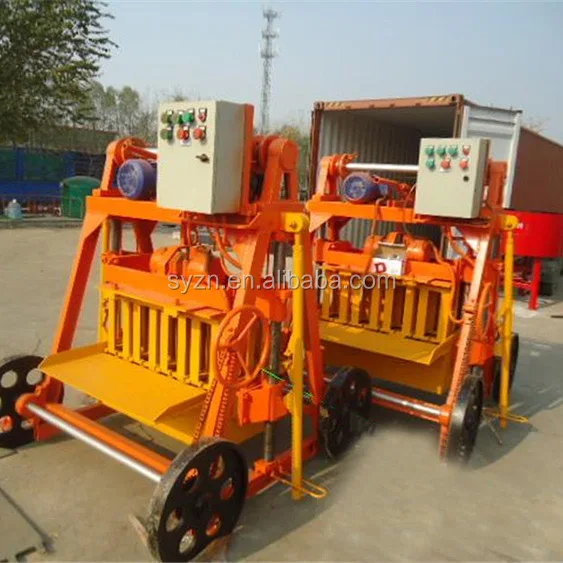
 Mobile block machine