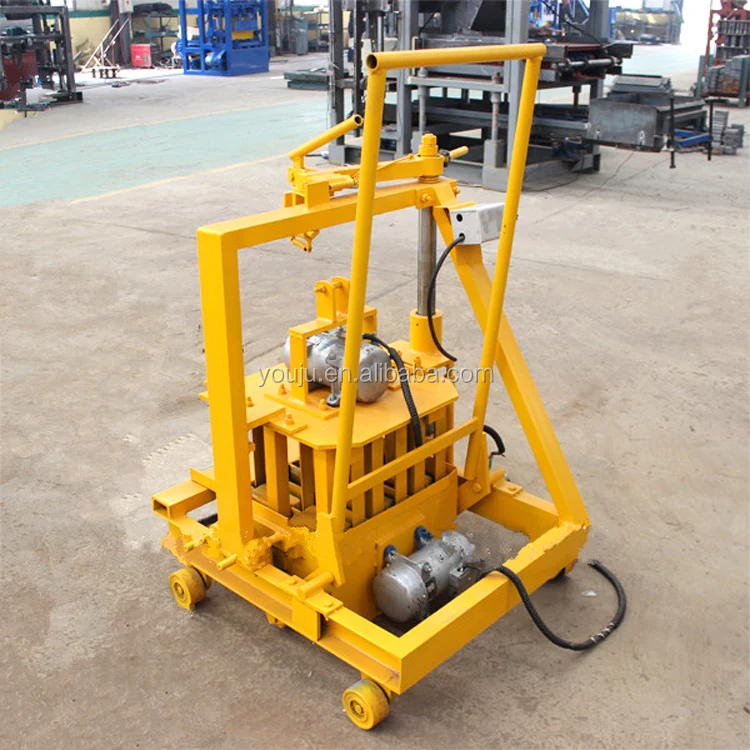
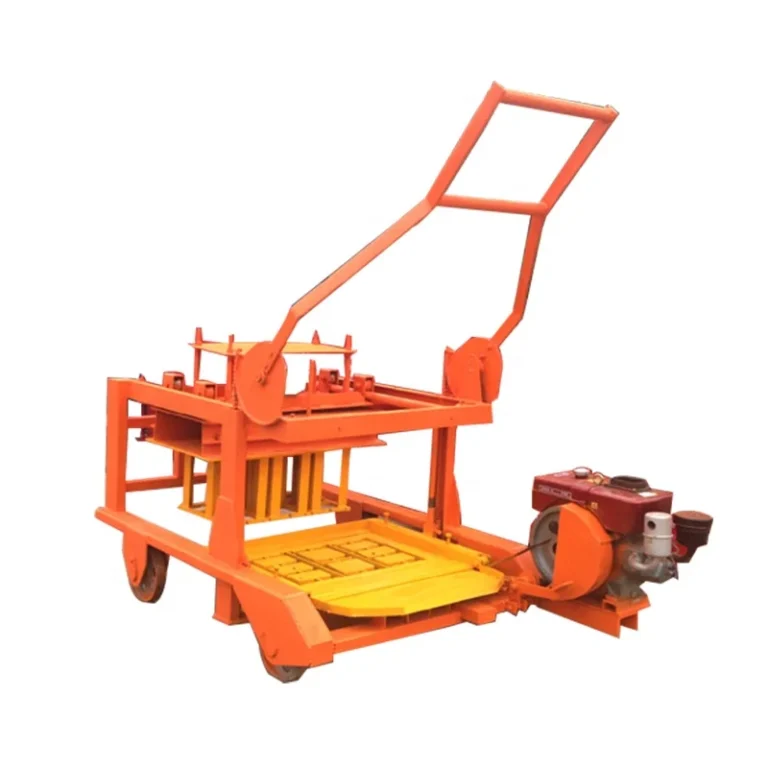
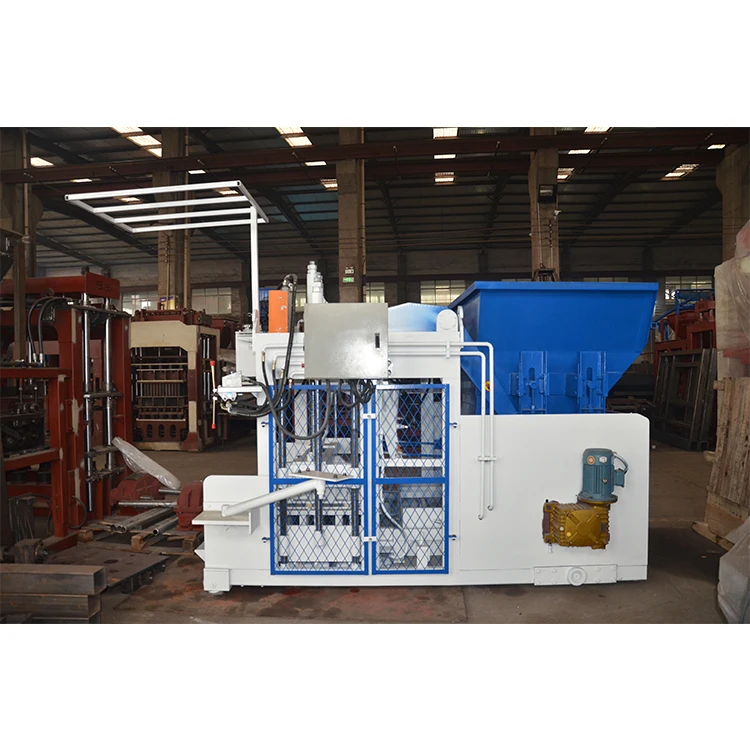
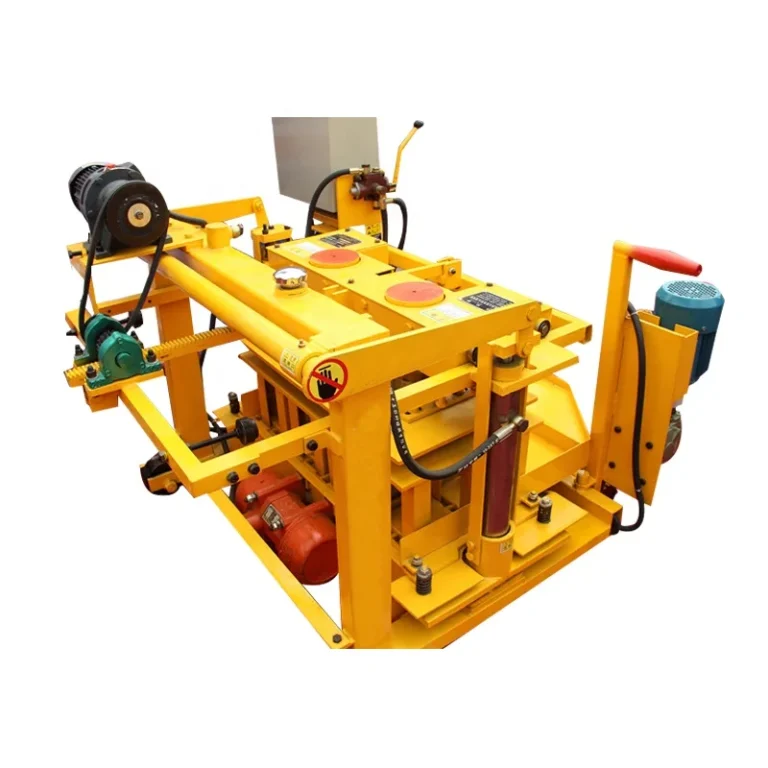
Entry-level positioning — the QMJ2-45 mobile block making machine is configured against your actual aggregate and mix, not shipped as a catalogue default.
Technical Specifications
| Parameter |
Value |
| Model |
QMJ2-45 |
| Product Type |
Mobile Concrete Block Making Machine |
| Machine Operation |
Hand-pushed, motorized mobile (egg-laying) |
| Pallet Requirement |
No pallets required |
| Supported Hollow Brick Formats |
400×200×200 mm, 400×150×200 mm, 400×100×200 mm |
| Output Capacity (400×200×200 mm) |
160 pcs/h, 1280 pcs/8hr (basis: 2 pcs/mould, 25-30 s cycle) |
| Output Capacity (400×150×200 mm) |
240 pcs/h (basis not stated in source), 1920 pcs/8hr calculated |
| Output Capacity (400×100×200 mm) |
320 pcs/h, 2560 pcs/8hr (basis: 4 pcs/mould, 25-30 s cycle) |
| Moulding Cycle |
25–30 s |
| Labour Requirement |
1 to 3 workers |
| Mould Technology |
Heat treatment & carburization |
| Certification |
ISO9001:2000, CE |
| Rated Power |
Available on request (basis to be confirmed) |
| Voltage & Frequency |
Configurable for destination market |
Application Suitability
| Application |
Material or Output |
| On-site housing project production |
Hollow blocks from local crushed stone, sand and cement |
| First-time block plant with limited space |
Entry-tier output without pallet investment or fixed infrastructure |
| Contractor producing blocks at remote job sites |
Egg-laying production on prepared concrete ground |
| Building material distributor evaluating mobile tier |
Hollow brick formats matched to local market demand |
What "160 Pieces per Hour" Actually Means on Site
Capacity figures only matter when tied to the exact block format you intend to sell.
The QMJ2-45 mobile block making machine is often quoted at a single headline number, yet real daily output shifts the moment you change the mould from a 200 mm to a 100 mm hollow block. Vibration force must also match the density your local aggregate allows; high-silt sand common in Gulf regions, for instance, demands different amplitude settings than clean river sand. Without this alignment, a machine rated for a standard cycle can spend most of a shift producing cracked or under-compacted units [NEED_CITE: effect of aggregate silt content on block compaction].

Where the QMJ2-45 Sits in the Full Block Machine Range
The QMJ2-45 occupies the entry tier of our mobile block making machine manufacturer lineup, requiring no pallets and no fixed plant foundation. It is designed for buyers who need to start producing hollow blocks immediately on a project site or within a small yard, with the option to move toward semi-automatic or fully automatic tiers later. Because it lays blocks directly onto the ground, the curing area becomes the main spatial constraint rather than the machine footprint itself.
Output Tiers and Investment Positioning
Moving from this manual mobile unit to a semi-automatic stationary press introduces pallet handling, a mixer, and a batching system, which multiplies output but also increases the capital outlay and floor space. The QMJ2-45 keeps the initial investment minimal and the labour footprint between one and three workers. Buyers planning to scale can treat this machine as a proof-of-concept: validate the local market for hollow blocks, then reinvest earnings into a higher-tier line with automatic stacking and cubing [NEED_CITE: typical block plant scale-up path].
Reading the Specification Sheet Beyond the Headline Number
The 25–30 second moulding cycle determines how many times the press completes a stroke in an hour, but the pieces-per-mould count varies with format: two pieces for 400×200×200 mm hollow blocks, four pieces for the 100 mm variant. Heat-treated and carburized moulds resist abrasion from angular aggregate, extending service intervals. Voltage and frequency remain configurable before dispatch, which prevents the common delay of rewiring a motor after the container arrives. Since no hydraulic system is involved, maintenance centres on the vibration motor, the mould surfaces, and the wheel assemblies that carry the unit across the curing floor.
The Hidden Cost of Skipping the Raw Material Conversation
Dispatching a mobile block machine without first reviewing the buyer’s sand source and cement ratio often leads to loose, low-strength blocks that fail drop tests on site. The vibration amplitude set at the factory for standard washed sand will not consolidate high-clay desert sand, and operators compensate by overwatering the mix, which in turn weakens the final product. I have seen entire project batches rejected because the machine arrived tuned for a material the buyer could not source locally [NEED_CITE: compressive strength variance from unadjusted vibration settings].
Why Buyers Source the QMJ2-45 from This Range
Block machinery is our single focus, so the QMJ2-45 is specified alongside the mould, the power supply, and the ground preparation advice as one matched package. Configuration starts with the buyer’s actual mix design and target block format rather than a default catalogue setting. Mould formats cover the hollow brick sizes the buyer’s market demands, with custom drawings available for non-standard dimensions. Because the automation level is selectable across our full range, a buyer who starts with this mobile unit can later add a stationary press and link it into the same pallet and handling ecosystem.
Documentation & Verification
- Capacity calculation sheet listing output per hollow brick format
- Machine specification confirming voltage, frequency, and motor rating for your market
- Mould drawing set covering all ordered hollow brick dimensions
- Factory test record on your specified mix before dispatch
- CE declaration and ISO9001:2000 certificate copy
Installation, Commissioning & Support
- Level concrete floor required; no fixed foundation or anchor bolts needed
- Dedicated circuit matching confirmed voltage and frequency before first start
- Hand-push mobility allows repositioning across the curing yard as production progresses
- Vibration amplitude adjusted on site to match your aggregate and cement ratio
- Mould change procedure covered during operator training, typically under one shift
- Heat-treated mould surfaces inspected and spare wear parts listed before handover
Starting the Inquiry
To match the QMJ2-45 to your project, provide the hollow brick dimensions your market requires, the daily volume you aim to reach, and the source and type of sand and aggregate available locally. Include your site voltage and frequency so the motor and control wiring can be prepared before shipment.
Frequently Asked Questions
Q: How is output capacity calculated, and which block format does each figure assume?
A: Output is derived from the moulding cycle of 25–30 seconds multiplied by the number of cavities in the mould. For 400×200×200 mm hollow blocks, two cavities yield 160 pieces per hour; for 400×100×200 mm, four cavities yield 320 pieces per hour. Always confirm the format before comparing machines.
Q: Where does the QMJ2-45 sit compared to semi-automatic and automatic tiers?
A: It sits at the entry tier of our range, requiring no pallets and minimal infrastructure. Semi-automatic and automatic tiers add pallet handling, batching, and stacking for higher output, but also require greater capital, floor space, and power supply capacity.
Q: What voltage, frequency, and motor specifications are available?
A: Voltage and frequency are confirmed with each buyer before production. The motor is wound and the wiring prepared to match the destination market’s grid standard, preventing commissioning delays upon arrival.
Q: What ground conditions does a mobile egg-laying machine require?
A: A level, smooth concrete surface is essential so the blocks release cleanly and the machine can be hand-pushed to the next position. Uneven or soft ground leads to tilted blocks and uneven compaction during the vibration cycle.
Q: Which mould formats are available, and can custom moulds be designed?
A: Standard hollow brick formats include 400×200×200, 400×150×200, and 400×100×200 mm. Custom moulds can be designed to buyer drawings, with heat treatment and carburization applied to match the abrasiveness of the local aggregate.

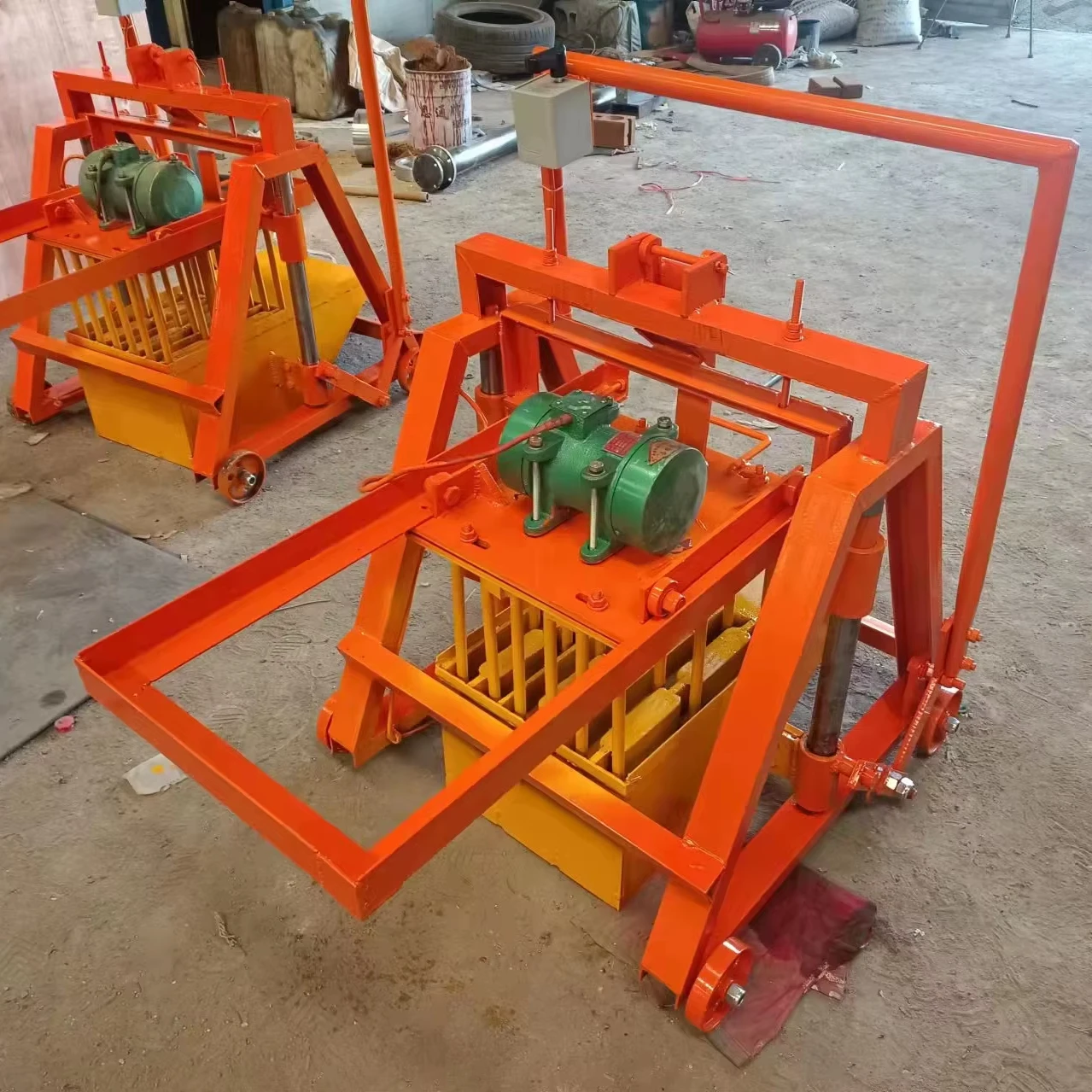
 Mobile block machine