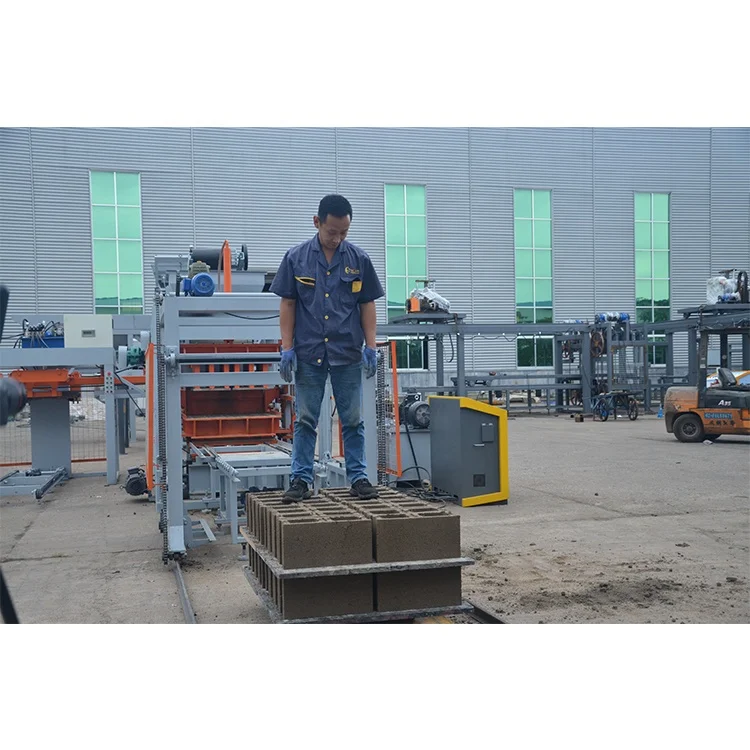
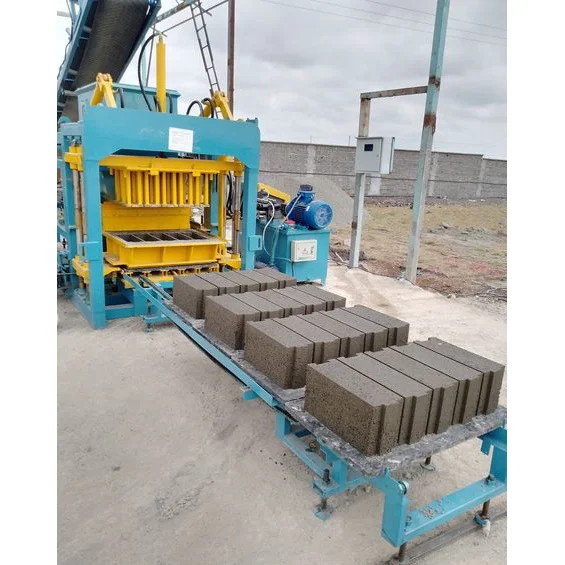
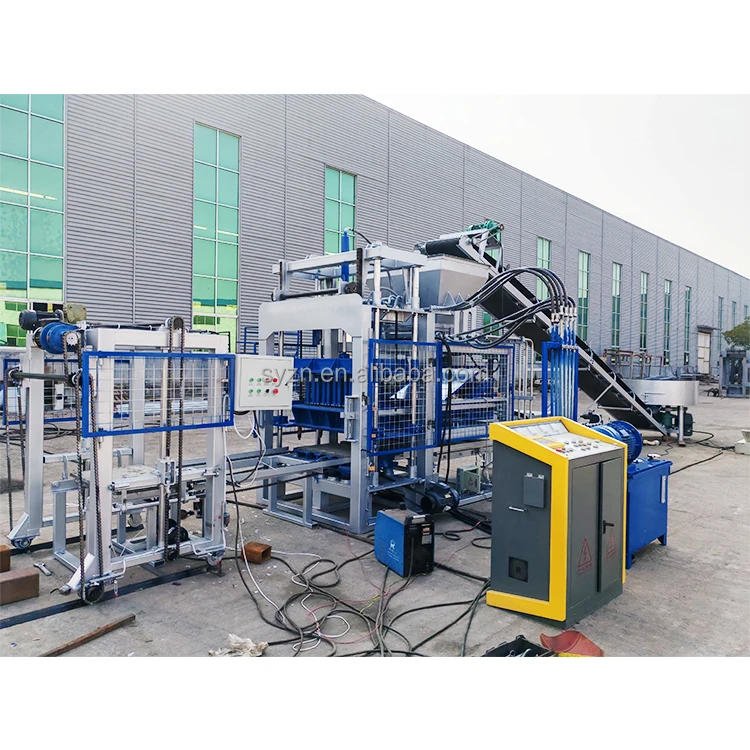
Complete Range Mapping — the M7MI anchors the mobile diesel tier of the Shiyue block machine lineup, giving off-grid buyers a clearly defined entry point before stepping up to semi-automatic or full-line configurations.
Technical Specifications
| Parameter |
Value |
| Model |
M7MI |
| Product Type |
Hydraulic Clay Interlocking Block Machine |
| Engine Type |
Diesel Engine |
| Hydraulic Pressure |
16 MPa |
| Molding Cycle |
15–20 s |
| Capacity per Format |
1600 pcs/8hr (based on 300×150×100mm interlocking block, 1 pc/mould, 20s cycle) |
| Qty per Mould |
1 pc |
| Overall Dimensions (L×W×H) |
3200×1100×1500 mm |
| Total Mass |
1100 kg |
| Raw Materials |
Clay, soil, concrete, cement |
| Mould Change |
Interchangeable moulds for different interlocking block formats |
| Automation Level |
Manual / semi-manual |
| Power Source |
Diesel engine |
Application Suitability
| Application |
Material or Output |
| On-site interlocking wall construction |
Locally sourced clay or soil mixed with small cement ratios |
| Remote housing projects without grid power |
Diesel-powered production using available earth materials |
| Contractor-run block yards in East and Southern Africa |
Interlocking blocks from site-excavated soil |
| Small to medium block production startups |
Concrete interlocking pavers and wall blocks |
| Rural development builds |
Mud-soil interlocking bricks for single-storey structures |
What "2200 Pieces per Day" Actually Means on Site
Capacity only matters when you know which block format it was measured on.
I have seen buyers plan an entire dry-season build around a quoted daily figure, only to discover on arrival that the number assumed a thin paver while their market needs a 300×150×100mm interlocking wall block. The M7MI produces one piece per mould cycle, so a 20-second cycle on that specific format yields a realistic 1600 units in an eight-hour shift. Anything above that figure assumes a smaller or thinner profile. [NEED_CITE: block format and cycle time assumptions in capacity quotations] When a supplier quotes output without naming the format, the number is a catalogue placeholder — not a planning tool.

Where the M7MI Sits on the Shiyue Range
The M7MI occupies the entry-mobile tier of the Shiyue block machine family. It is designed for contractors and first-time entrepreneurs who need hydraulic clay interlocking block machine production without relying on grid electricity. The diesel engine makes it deployable on rural sites in Tanzania, Mozambique, Ethiopia and similar markets where power infrastructure is unreliable or absent. This positioning matters because it lets buyers start production immediately and evaluate demand before committing to a fixed-plant line.
Scaling from Mobile to Automatic
As daily volume requirements grow beyond what a single-operator diesel unit can sustain, the range steps up through semi-automatic machines with electric motors and pallet systems, and then into fully automatic lines with batching, stacking, and cubing. The M7MI does not lock the buyer into a dead-end configuration; mould knowledge and mix design experience gained on this unit transfer directly to larger machines. Planning for that transition early prevents the common trap of buying a mobile unit that cannot feed the throughput a project eventually demands. [NEED_CITE: typical production scaling paths in interlocking block ventures]
Reading the Spec Sheet Against Your Project
The 16 MPa hydraulic pressure is the figure that governs block density and, ultimately, compressive strength. For interlocking wall blocks that rely on dry-stack stability rather than mortar bonding, consistent pressure across every cycle is non-negotiable. The 15–20 second molding cycle is achievable with a well-prepared clay-soil mix; if the raw material arrives with inconsistent moisture — a common issue with excavated red soil in wet seasons — cycle time stretches as operators adjust feed consistency by hand. The 1100 kg total mass keeps the machine towable and trailer-loadable, but it also means vibration isolation relies entirely on the ground surface, so a levelled compacted pad is essential to avoid uneven compaction across the mould face.
The Cost of Skipping the Format Conversation
When buyers do not confirm which interlocking profile their local market actually buys before ordering, they end up with moulds that produce blocks nobody in their region specifies. Interlocking patterns vary by country — some markets expect a two-hole lock, others a flat tongue-and-groove. Ordering the wrong profile means paying for replacement moulds, waiting weeks for fabrication, and losing the construction window. [NEED_CITE: regional interlocking block profile preferences in African construction markets] A few emails with sample drawings and local block photographs before the purchase order saves an entire lost season.
Why Buyers Source This Machine Through Shiyue
Block machinery is Shiyue’s single focus, so the M7MI arrives as a matched system — machine, mould, and pallet specified together rather than assembled from unrelated suppliers. Configuration is set against the buyer’s actual soil sample and target block format, not a catalogue default. Mould design covers the interlocking profiles the buyer’s market sells, with custom drawings available for regional variations. The automation level is selectable, so a buyer can begin with the manual diesel setup and step up later. Installation support and operator training are included so first-time producers are not left guessing at commissioning.
Documentation & Verification
- Machine specification sheet with hydraulic pressure and cycle time stated per block format
- Mould drawing and interlocking profile list confirming included and optional formats
- Line layout sketch showing curing area and raw material staging space around the M7MI
- Engine specification with fuel consumption rate and recommended spare parts list
- Factory test record on the buyer’s specified interlocking block format before dispatch
- Operation and maintenance manual in the confirmed control language
Installation, Commissioning & Support
- Compacted level ground pad matching the 3200×1100 mm footprint with drainage clearance
- Diesel fuel storage and filtration setup sized for continuous eight-hour shifts
- Machine arrives fully assembled; operator walks through hydraulic pressure calibration on day one
- First production run supervised to match cycle time to the buyer’s clay mix consistency
- Mould change procedure trained on-site so format switches take minutes, not hours
- Spare hydraulic seals and engine filters shipped with the machine for the first maintenance interval
What to Prepare Before You Inquire
To get a configuration that matches your project rather than a generic catalogue quote, share the interlocking block profile your market buys, the daily volume you need to sustain, and a description of the clay or soil available on site. Include whether grid electricity exists or if diesel-only operation is required. If you already have a curing area or pallet inventory, note the dimensions so the proposal accounts for downstream handling.
Frequently Asked Questions
Q: How do I confirm the real daily output for my specific interlocking block format?
A: Share your block dimensions and target wall thickness with the supplier before ordering. The M7MI produces one piece per mould cycle, so daily output is calculated by dividing available production seconds by the cycle time for that exact format. A 300×150×100mm block at a 20-second cycle yields around 1600 units per eight-hour shift. Always ask for the calculation in writing tied to your chosen profile.
Q: Which interlocking mould profiles are available and can I order a custom one?
A: Standard moulds cover common two-hole and tongue-and-groove interlocking profiles sold across East and Southern African markets. Custom profiles are available from buyer-supplied drawings or photographs of locally sold blocks. Confirm the profile early so the mould is fabricated and tested before the machine ships, avoiding on-site delays.
Q: What does diesel engine maintenance look like in the field?
A: The M7MI’s diesel engine follows standard small-engine service intervals — oil changes, filter replacements, and injector checks. Fuel consumption rate and a recommended spare parts list are documented before shipment. Buyers in remote areas should stock air filters and fuel filters locally, as these are the most frequently replaced consumables during high-dust dry-season production.
Q: When should I move from the M7MI to a semi-automatic or automatic line?
A: The transition point arrives when daily demand consistently exceeds what a single-operator mobile unit can sustain, or when block quality requirements tighten beyond manual feeding consistency. Semi-automatic lines add electric motors, pallet systems, and batching control. Discussing your growth timeline at the inquiry stage ensures the initial M7MI purchase does not become an orphan asset when you scale.
Q: What site preparation does the M7MI need before production starts?
A: Level and compact a ground area slightly larger than the 3200×1100 mm machine footprint, with space beside it for raw material staging and behind it for a curing zone. Ensure drainage so rainwater does not pool under the hydraulic rams. A simple compacted gravel pad is sufficient; a concrete slab is only necessary if the machine will remain in one location for an extended campaign.

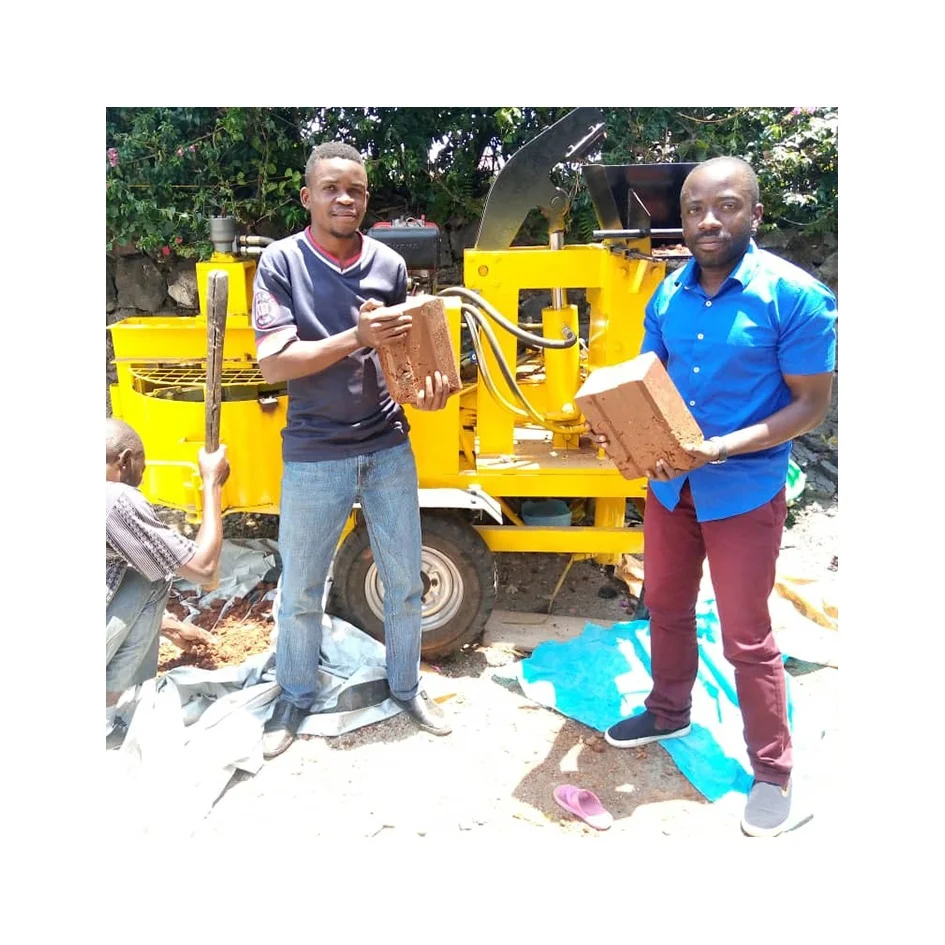
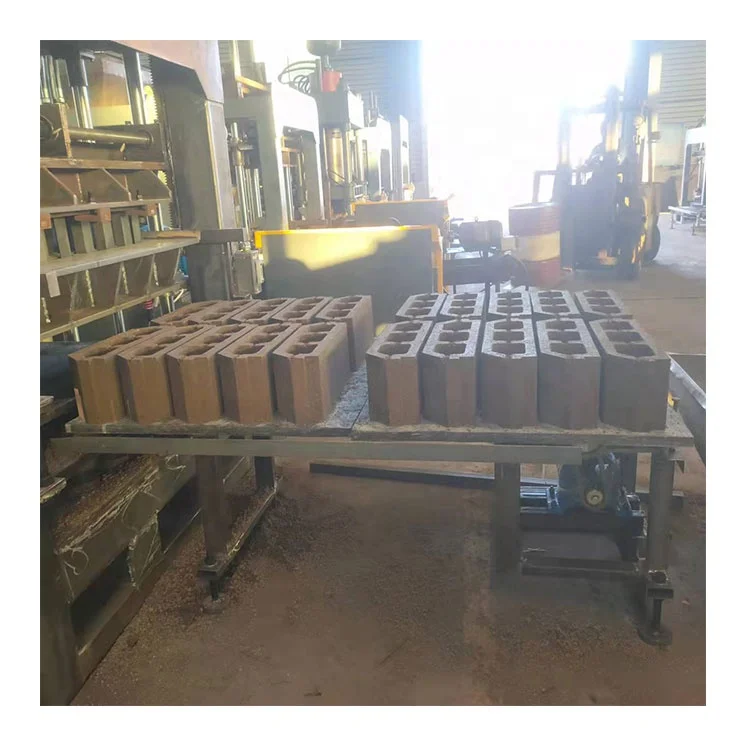 High quality block machine