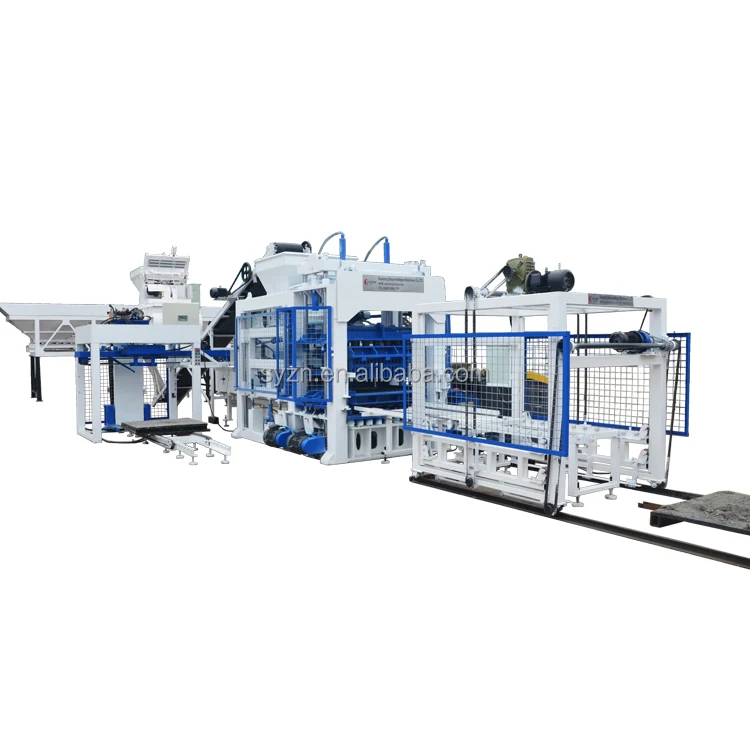
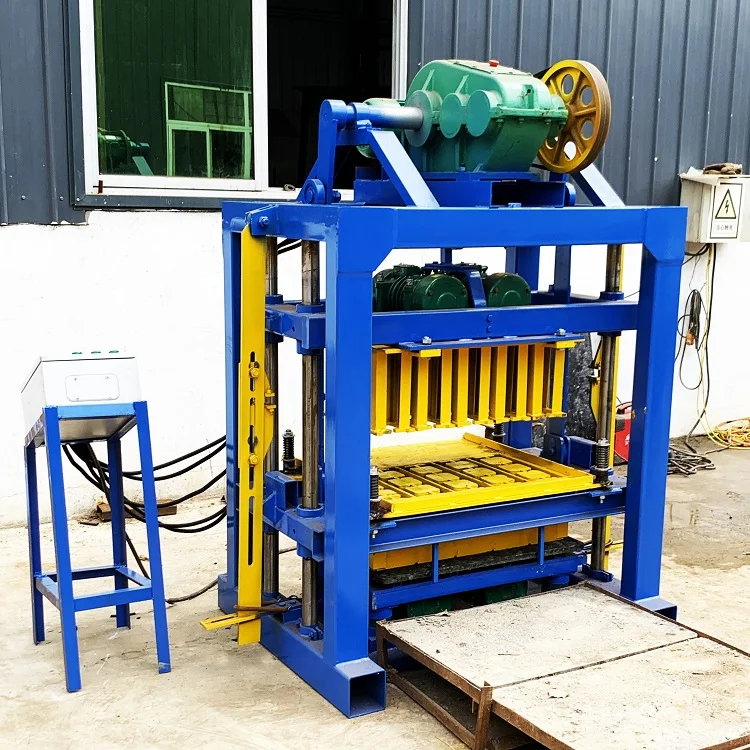
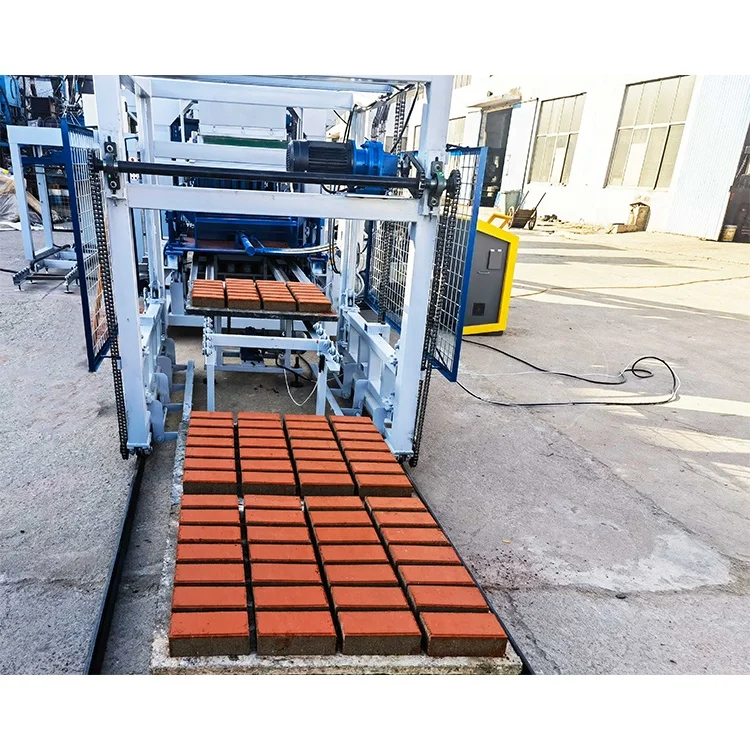
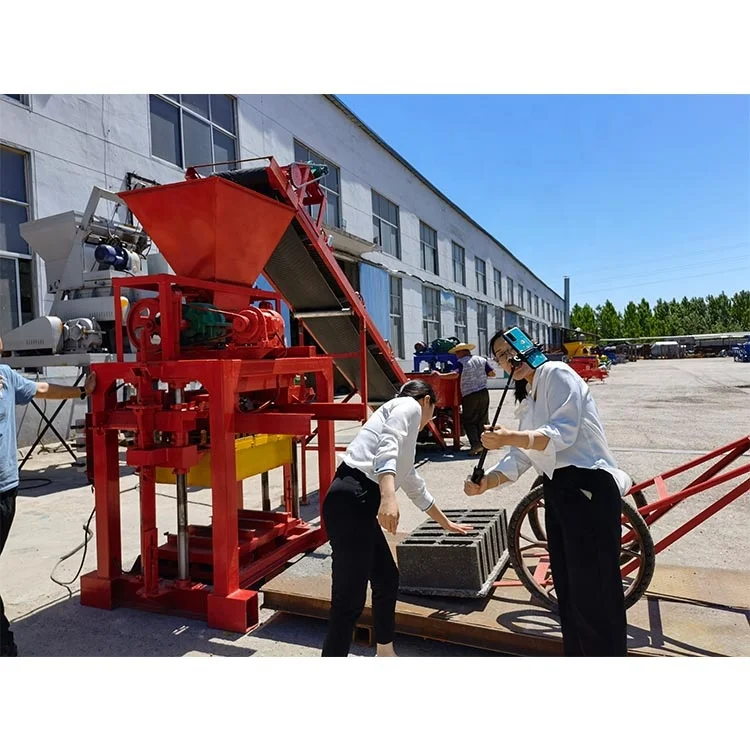
Single-focus block machinery — Machine, mould, pallet and handling specified as one matched system rather than assembled from separate suppliers, ensuring the LY7-10 operates as a cohesive production unit from raw material feed through to stacking.
Technical Specifications
| Parameter |
Value |
| Model |
LY7-10 |
| Product Type |
Automatic Compressed Earth Interlocking Block Making Machine |
| Machine Type |
Stationary / Automatic |
| Block Format |
Compressed Earth Interlocking Block |
| Raw Material |
Clay Soil |
| Mould Format |
Interlocking earth block |
| Automation Level |
Automatic |
| Hydraulic Pressure |
(basis to be confirmed) |
| Vibration Force |
(basis to be confirmed) |
| Pallet Size |
(basis to be confirmed) |
| Cycle Time |
(basis to be confirmed) |
| Output Capacity |
(basis to be confirmed — confirm block format and dimensions) |
| Control System |
(basis to be confirmed — PLC or MCC) |
| Voltage & Frequency |
(basis to be confirmed) |
| Rated Power |
(basis to be confirmed) |
| Overall Dimensions (L×W×H) |
(basis to be confirmed) |
| Net Weight |
(basis to be confirmed) |
| Certification |
(basis to be confirmed) |
Application Suitability
| Application |
Material or Output |
| Compressed earth interlocking block production |
Clay soil with local aggregate, moisture conditioned |
| On-site or stationary plant block manufacturing |
Wall blocks for residential and low-rise construction |
| Interlocking block formats for mortar-free walls |
Tongue-and-groove profiles enabling dry-stack wall assembly |
Why Capacity Quoted Without Block Format Is Unusable
Every throughput figure for the LY7-10 must be tied to a specific interlocking earth block size and soil mix. [NEED_CITE: standard practice for block machine capacity disclosure in international tenders]
When a supplier quotes cycles per hour without stating the assumed block format, buyers routinely discover that their actual daily output falls far short of the number on the quotation. A 300mm-long interlocking block and a 200mm-long one consume different cycle times and raw material volumes per press stroke. For a compressed earth block machine, soil moisture content and clay-to-sand ratio further affect how long each compaction stroke must hold before the next cycle begins. I once saw a buyer in West Africa budget for 4,000 blocks per day based on a generic capacity number, only to learn after commissioning that his chosen interlocking format realistically produced roughly half that figure.

Placing the LY7-10 on the Full Machine Range
Buyers evaluating their first block plant or replacing an older unit need to understand where an automatic compressed earth block machine for sale sits relative to semi-automatic and mobile alternatives. The LY7-10 occupies the stationary automatic tier, meaning the press stays fixed and pallets move through the line automatically. This tier requires a dedicated curing area and pallet return path, which demands more floor space than a mobile egg-laying machine but delivers noticeably higher consistency between batches.
Stationary Versus Mobile: The Footprint Decision
A mobile block machine lays blocks directly on the ground and moves away, eliminating the need for pallets but limiting output and block density. A stationary automatic unit like the LY7-10 uses hydraulic pressure and vibration against a steel mould box, producing interlocking blocks with uniform density and dimensional tolerance that mobile units typically cannot match. [NEED_CITE: comparative density ranges of stationary versus mobile compressed earth block presses] The trade-off is a larger plant footprint that includes mixer station, pallet circulation loop, and curing racks, all of which must be planned before the machine arrives on site.
Reading the Spec Sheet Against Your Local Soil
Hydraulic pressure and vibration force must be matched to the clay soil available at the buyer’s location. Soil with a high sand fraction requires greater compaction force to achieve adequate block strength, while high-clay soils may need reduced pressure to prevent surface cracking after ejection. The mould box design must also account for the shrinkage rate of the specific soil being used; a mould that produces dimensionally accurate blocks in one soil type may yield undersized blocks in another. Pallet size determines how many blocks travel through the curing area per cycle, and this size must align with the forklift and curing rack dimensions the buyer already has or plans to procure.
What Happens When Configuration Is Skipped
Selecting an automatic compressed earth block machine for sale without confirming local soil composition and pallet logistics leads to costly corrections after installation. Buyers who skip soil testing often find their first production run yields blocks that crack during curing or crumble under handling. When pallet size is chosen without regard to existing forklift capacity, workers end up re-stacking every pallet by hand, negating the automation investment. [NEED_CITE: common causes of compressed earth block failure in tropical climates] Voltage mismatches discovered after the machine arrives can delay commissioning by weeks while a replacement transformer is sourced locally.
Why the Machine Is Specified Here, Not Assembled From Catalogues
The LY7-10 is configured against the buyer’s actual soil sample and target block format before a production slot is booked, not shipped from catalogue defaults. Mould profiles are designed for the interlocking shapes that sell in the buyer’s regional market, including custom profiles drawn to buyer specifications. Pallet material and dimensions are chosen to fit the curing area and handling equipment already on site. Automation level starts at full automatic, with the option to reduce initial investment by deferring stacking automation to a later phase. Installation support includes operator training on the specific soil mix and mould change procedure for the formats the buyer will produce daily.
Documentation & Verification
- Line layout showing pallet circulation, curing rack positions, and capacity calculation tied to chosen interlocking block format
- Machine specification sheet with hydraulic pressure, vibration force, and electrical data confirmed for your local grid
- Mould drawing and interlocking profile list covering every block shape included in your order
- Factory test record produced using your soil sample or an agreed substitute before dispatch
- Voltage, frequency, and PLC display language confirmed in writing prior to production start
Installation, Commissioning & Support
- Foundation plan accounts for the LY7-10 footprint, vibration isolation requirements, and local soil bearing capacity
- Dedicated power circuit sized to the confirmed rated power with voltage stabiliser recommended for unstable grids
- Machine arrives partially dismantled for container loading; reassembly guided by included schematics
- Commissioning includes first-run block pressing with your soil mix and mould adjustment on site
- Operator training covers mould change sequence, daily maintenance checkpoints, and hydraulic line inspection
- Wear parts list provided with recommended reorder intervals based on soil abrasiveness
Before You Request a Quotation
Please provide the specific interlocking block dimensions your market requires and a soil analysis report or sample from your intended clay source. Confirm the total floor area available for the press, mixer, curing racks, and pallet return loop, along with local voltage and frequency. Specify whether you need the control interface in English, French, or another language, and indicate which pallet size fits your existing forklift and curing infrastructure.
Frequently Asked Questions
Q: How does the LY7-10 output tier compare to semi-automatic and mobile machines?
A: The LY7-10 sits at the automatic stationary tier, delivering higher batch consistency and daily throughput than semi-automatic or mobile alternatives. It requires a dedicated curing area and pallet loop that mobile machines eliminate, but the trade-off is a noticeably more uniform interlocking block with tighter dimensional tolerance across long production runs.
Q: What plant footprint and investment level should I budget?
A: A stationary automatic compressed earth block machine for sale requires space for the press, raw material mixer, pallet circulation system, and curing racks. Budget must account for foundation work, electrical supply upgrades, and the curing shelter. We provide a line layout drawing after confirming your block format and daily target so the exact footprint is known before commitment.
Q: Which interlocking block profiles are available for this machine?
A: The LY7-10 accepts moulds for tongue-and-groove interlocking earth blocks in various lengths and widths. Custom mould profiles can be manufactured to buyer drawings. We confirm which profiles are included in your quotation and provide a full mould format list so you know exactly which wall block shapes your plant will produce from day one.
Q: How do I confirm voltage and control language before shipment?
A: Voltage, frequency, and PLC display language are confirmed in writing during the order stage, before the control cabinet is assembled. We supply an electrical schematic showing the exact configuration for your grid. This prevents commissioning delays caused by voltage mismatch or an operator interface in an unsupported language.
Q: Can I increase capacity later without replacing the press?
A: The LY7-10 can be upgraded by adding automatic stacking and cubing equipment if you started with manual pallet handling. Mould additions allow new block formats without changing the press itself. We discuss the upgrade path during initial configuration so the foundation layout and pallet return system leave room for future expansion.

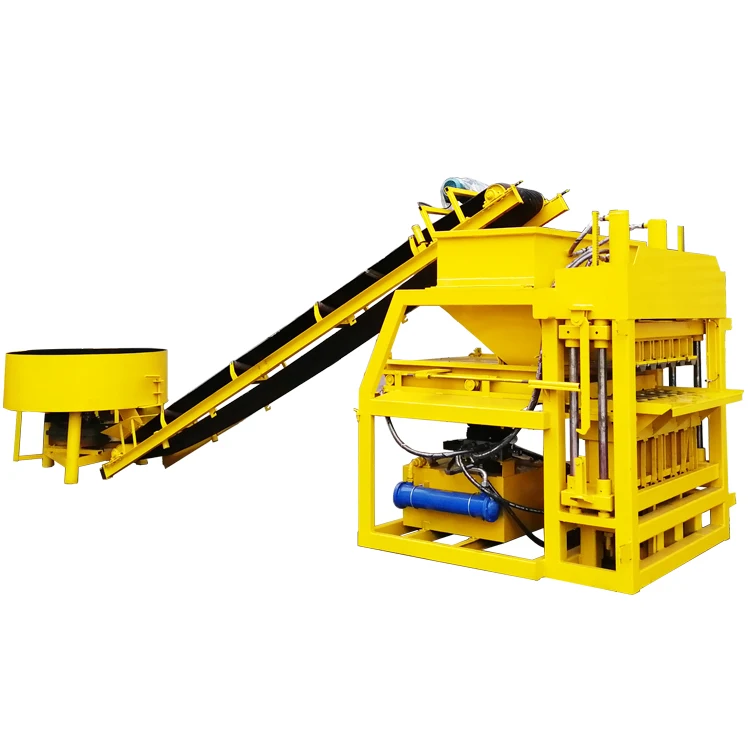
 Stationary block machine