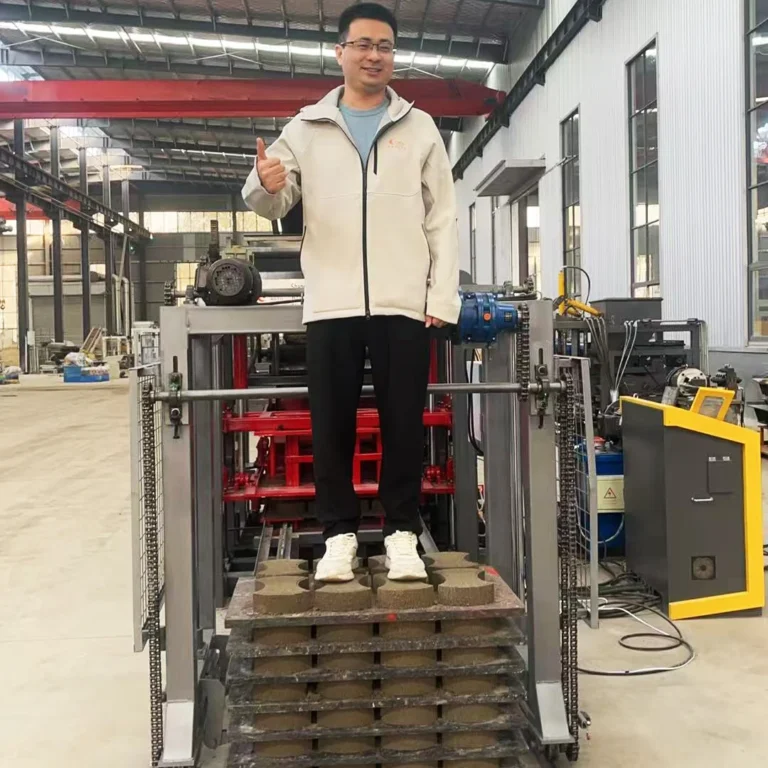
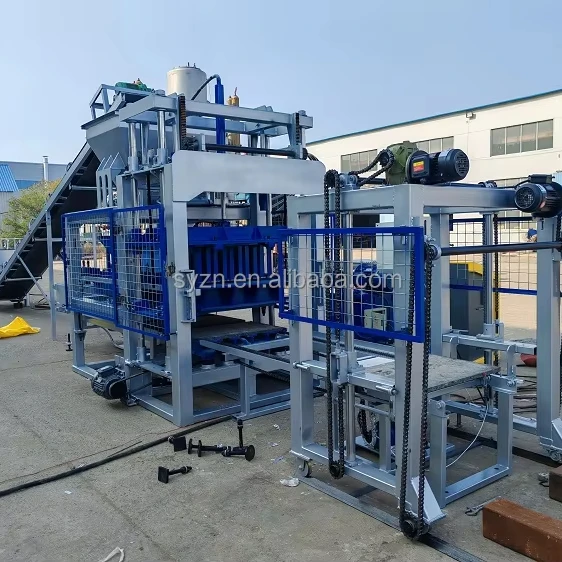
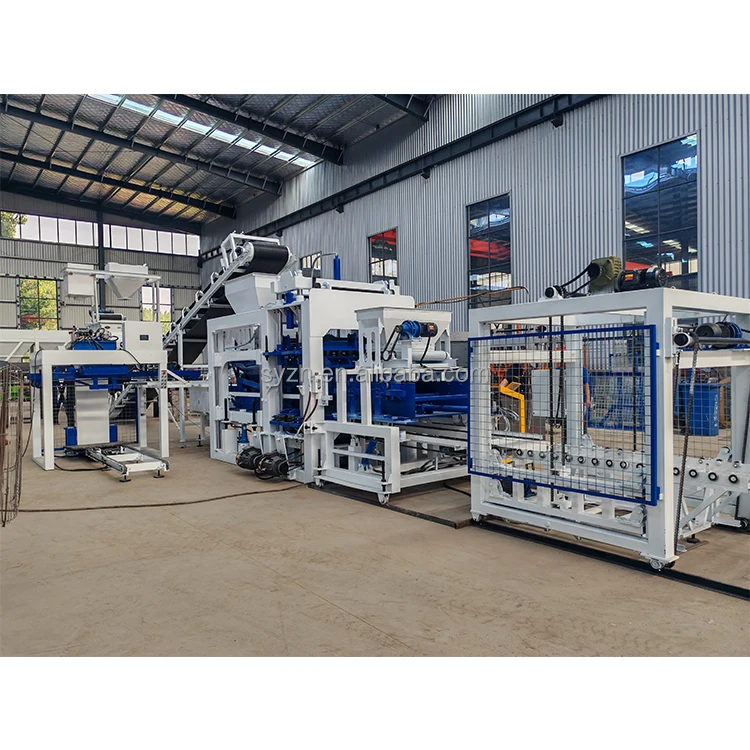
Block machinery as a single focus — the LY4-10 is positioned within a tiered range where every press, mould, pallet and handling element is specified as one matched system rather than sourced from separate suppliers.
Technical Specifications
| Parameter |
Value |
| Model |
LY4-10 |
| Product Type |
Automatic Clay Interlocking Block Making Machine |
| Rated Power |
11 kW |
| Control System |
PLC control system with hydraulic system |
| Automation Level |
Automatic (material feeding, mould pressing, and mould lifting automated) |
| Molding Cycle |
10–15 s (basis not stated in source — confirm block format / material / thickness) |
| Output per Cycle |
4 bricks per cycle (basis not stated in source — confirm block format / material / thickness) |
| Raw Materials |
Clay, soil, earth, mud, concrete, cement, fly ash, water |
| Overall Dimensions (L×W×H) |
2260 × 1500 × 2380 mm |
| Mould Format |
Interlocking bricks (multiple formats via mould change) |
| Hydraulic Pressure |
(basis to be confirmed) |
| Vibration Force |
(basis to be confirmed) |
| Pallet Size |
(basis to be confirmed) |
| Voltage & Frequency |
(basis to be confirmed) |
Application Suitability
| Application |
Material or Output |
| Interlocking clay brick production for low-rise housing |
Local clay and soil blended with water and stabilizer |
| Cement-based interlocking paver and wall block runs |
Cement, fly ash, sand and crushed stone mixes |
| On-site block manufacturing for construction contractors |
Locally available earth, mud or fly ash |
| Block plant start-ups adding interlocking formats |
Clay or cement-bound aggregate within machine capacity |
Why the Block Format Must Be Stated Before the Capacity Figure
An output number without a format attached is a guess, not a guarantee.
Catalogue sheets for an automatic clay interlocking block making machine manufacturer often list cycles per hour and bricks per cycle without naming the exact interlocking profile, thickness or mix that produced those numbers. In my time commissioning presses across Southeast Asia, I have seen buyers base entire project schedules on a headline figure that assumed a thin solid brick — only to find their actual interlocking format, which is heavier and requires longer compaction, cut daily output well below that expectation. The LY4-10 completes a cycle in 10–15 seconds and delivers 4 bricks per cycle, but those values are tied to a specific block format, material and thickness that must be confirmed before any daily or monthly projection is made [NEED_CITE: block format influence on cycle time and daily output in hydraulic interlocking machines].

Where the LY4-10 Sits in the Full Machine Range
The LY4-10 occupies the automatic tier of a broader line that also includes semi-automatic and mobile egg-laying machines. Buyers surveying options for a first or replacement unit use this positioning to weigh whether the PLC-controlled automation and hydraulic pressing of the LY4-10 match their investment level and plant footprint, or whether a smaller semi-automatic press or a site-mobile unit is a better entry point. The 2260 × 1500 × 2380 mm envelope means it fits into workshops where a high-capacity automatic line would require structural changes.
Matching the Automatic Clay Interlocking Block Making Machine Manufacturer Range to Your Output Target
Before narrowing down, buyers map their target daily output against the output tiers available. The LY4-10 sits in the small-to-mid volume bracket, suited to entrepreneurs launching a first interlocking block plant or contractors producing for a single project. When projected volumes grow beyond what this tier can sustain, the range includes higher-capacity automatic lines with larger pallets and faster cycles. Starting at the LY4-10 tier lets a buyer establish production, build market demand and plan an upgrade path without over-investing on day one [NEED_CITE: block plant scaling paths from entry-tier to high-capacity automatic lines].
Reading the Specs That Actually Shape Interlocking Block Quality
Hydraulic pressure and vibration force together determine how densely the interlocking profile is compacted — insufficient pressure leaves weak tongues and grooves that chip during handling, while excessive vibration on a dry clay mix can cause lamination. The PLC-controlled cycle coordinates material feeding, pressing and mould lifting so each step repeats within a consistent window, which is essential for interlocking profiles where dimensional tolerance governs how well courses lock together. An 11 kW rated power package drives both the hydraulic pump and vibration motor within the compact frame, keeping energy draw manageable for sites with limited transformer capacity. The mould-change capability means a single LY4-10 can produce several interlocking profiles, but the time required for each change and the available format list must be confirmed against your market’s actual demand. Pallet size, though unconfirmed in the draft, must align with the curing racks and forklifts already on site; a mismatch forces double-handling that erodes whatever cycle advantage the press itself delivers.
What a Misread Specification Costs After Arrival
I once watched a contractor in the Philippines take delivery of a clay brick press whose voltage and frequency were never verified against the local grid; the control board failed within the first week and the PLC display language was set to a script none of the operators could read. That kind of oversight stalls commissioning, burns through air freight costs for replacement components and damages the contractor’s credibility with a project owner. When pallet size, stacking method and curing rack layout are left out of the quotation, the buyer discovers after installation that output must be moved and stacked by hand — effectively negating the automation the machine was supposed to deliver [NEED_CITE: common commissioning delays from unconfirmed electrical and pallet specifications in block machine exports].
Why Buyers Source This Tier From Us
Block machinery is our single focus, so the LY4-10 arrives with machine, mould, pallet and handling specified as one system rather than assembled from separate vendors. Configuration is set against the buyer’s actual mix design, local aggregate and target interlocking format, not pulled from a catalogue default. Mould design covers the profiles the buyer’s market sells, with custom drawings available when standard formats do not match local building codes. Automation level is selectable, so a buyer can start the LY4-10 in its automatic mode and move to a higher-capacity line when demand justifies it. Installation and commissioning support includes operator training on the PLC interface and hydraulic maintenance routines, reducing the gap between first brick and consistent production.
Documentation & Verification
- Line layout and capacity calculation stating the interlocking block format assumed for the LY4-10
- Machine specification sheet confirming hydraulic pressure, vibration force and 11 kW power rating
- Mould drawing and format list showing available interlocking profiles and change procedure
- Voltage and frequency confirmation matched to the buyer’s local grid before production
- Factory test record documenting actual cycle time with the buyer’s chosen block format
Installation, Commissioning & Support
- Foundation plan sized to the 2260 × 1500 mm footprint with anchor bolt layout
- Dedicated circuit provision for the 11 kW rated power and hydraulic pump start-up current
- PLC display language and control parameters set to buyer’s preference before dispatch
- On-site commissioning covering mould alignment, hydraulic pressure calibration and cycle tuning
- Operator training on automatic material feeding, mould pressing and mould lifting sequences
- Wear parts list identifying hydraulic seals, mould liners and vibration mounts for first reorder
What to Share With Your Quotation Request
To size the LY4-10 correctly within the full range, send the target interlocking block format including dimensions, the daily output you need to meet project commitments and the local clay or cement-bound mix you intend to run. Include your site voltage, frequency and preferred PLC display language so the electrical package is confirmed before production begins. If you already have curing racks, pallets or a forklift on site, share their dimensions so the pallet and handling specification can be matched.
Frequently Asked Questions
Q: How is the LY4-10’s daily output calculated, and which interlocking block format is assumed?
A: The 10–15 second cycle and 4-brick-per-cycle figures are tied to a specific block format, material and thickness that must be confirmed with your target interlocking profile. We provide a capacity calculation that names the exact format assumed, so your daily projection is based on the brick you actually plan to sell rather than a generic headline number.
Q: Where does the LY4-10 sit in the range, and how do I choose the right tier?
A: The LY4-10 is positioned in the automatic tier between semi-automatic entry machines and high-capacity lines. Buyers choosing this tier typically need PLC-controlled consistency and hydraulic pressing without the footprint or investment of a full automatic plant. If your projected volume later exceeds this tier, the range includes larger machines for the upgrade path.
Q: What voltage, frequency and PLC display language options are available for my market?
A: Voltage and frequency are confirmed to match your local grid before the LY4-10 enters production, avoiding transformer mismatches on arrival. The PLC display language is set to your operators’ preference so commissioning is not delayed by an unreadable interface — a detail that is easily overlooked when ordering remotely.
Q: What plant footprint and auxiliary equipment does the LY4-10 require?
A: The press itself measures 2260 × 1500 × 2380 mm, but the full line needs space for a mixer, raw material feeder, pallet return system and curing racks. We provide a line layout that shows how each station connects and where cycle times must match so the press is never left waiting for pallets or material.
Q: Can I start with the LY4-10 and move to a higher-capacity line later?
A: Yes. The LY4-10 is designed as an entry point to the automatic tier, and the range includes higher-capacity lines that use the same mould format philosophy. When your market demand grows beyond this tier’s output, the transition to a larger press is planned with matching pallet sizes and handling equipment to minimize duplication.

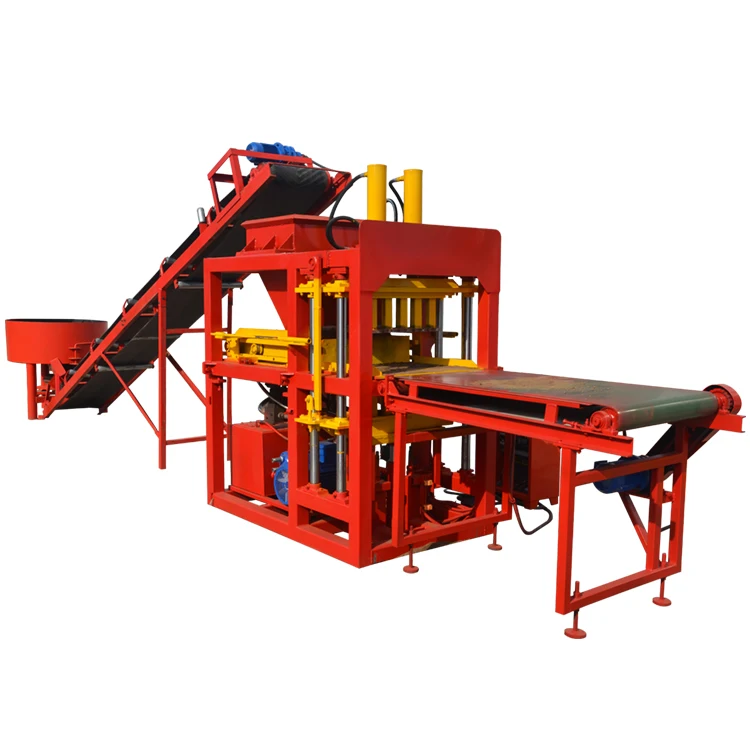
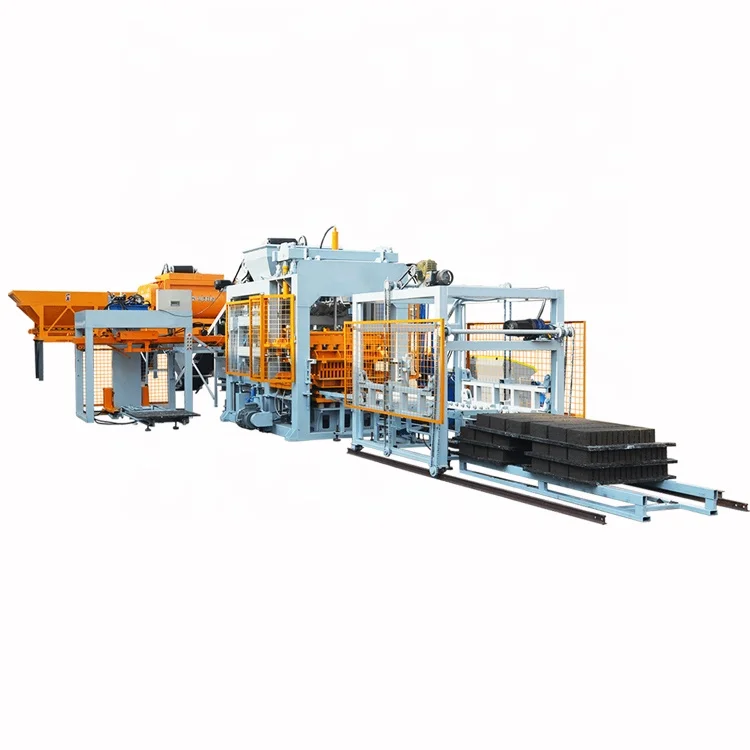 High quality block machine