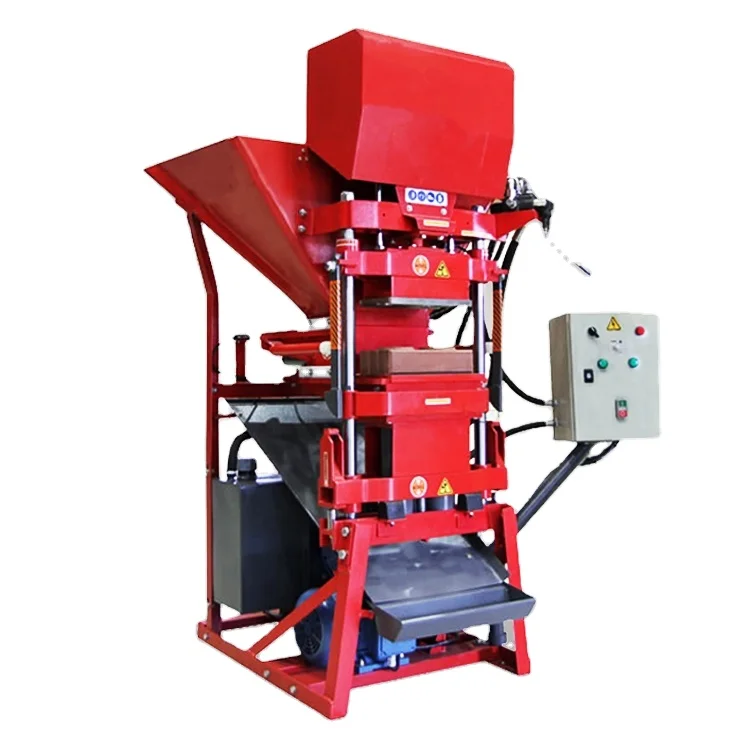
Single-focus machinery sourcing — every LY2-40 unit is specified as a matched system of press, mould, and mixer rather than assembled from separate catalogue items.
Technical Specifications
| Parameter |
Value |
| Model |
LY2-40 |
| Product Type |
Manual Clay Interlocking Brick Making Machine |
| Overall Dimensions (L×W×H) |
1600 x 700 x 1200 mm |
| Net Weight |
200-240 kgs |
| Total Power |
No Power, Completely Manual |
| Molding Cycle |
30-40s |
| Output Capacity |
400-1000 pcs/day (basis not stated in source — confirm block format, material, and thickness) |
| Lifting System |
Manual |
| Mobility |
Steel wheels |
| Mould Change |
Moulds changeable for various interlocking profiles |
| Basic Equipment |
JFA-1 Mixer or JQ350 Mixer |
| Warranty |
1 Year |
| Automation Level |
Completely manual, no power required |
Application Suitability
| Application |
Material or Output |
| Off-grid rural housing projects |
Soil-cement mixes using locally excavated clay and Portland cement |
| Remote construction sites with no grid power |
Interlocking clay bricks produced directly on the building plot |
| First-tier entrepreneur brick plants |
Low-volume interlocking brick runs before scaling to semi-automatic lines |
| Community-scale building material supply |
Solid and interlocking profiles from available topsoil and stabiliser |
What "400 to 1000 Pieces per Day" Actually Means on Site
Daily output depends entirely on which interlocking profile you press and how your local soil behaves under manual compaction.
Capacity figures for a Manual Clay Interlocking Brick Making Machine for sale are often quoted as a single range without naming the brick format, the soil-cement ratio, or the number of operating hours assumed. I have watched contractors order a manual press expecting the upper end of that range, only to find their clay has a sand fraction that slows the molding cycle well beyond the 30-40 second mark. When the mix sticks to the mould walls or the interlocking lips do not release cleanly, each cycle stretches and the daily count drops. Always ask the supplier to state the exact brick dimensions and mix recipe behind the quoted figure [NEED_CITE: capacity calculation standards for manual brick presses].

Where the LY2-40 Sits in the Full Machine Range
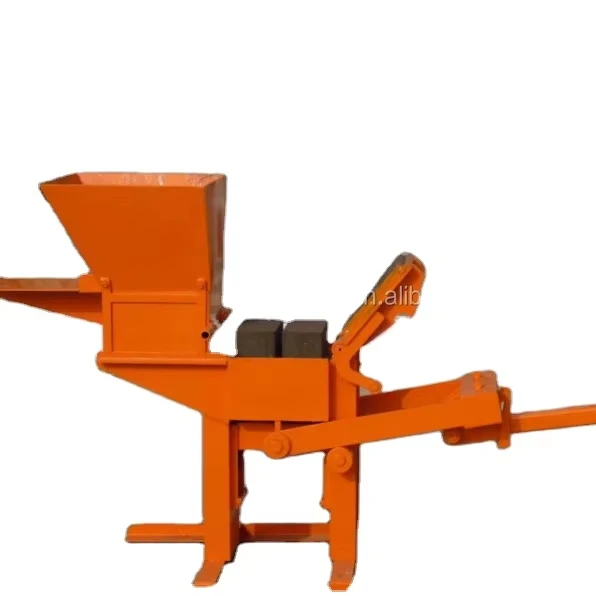
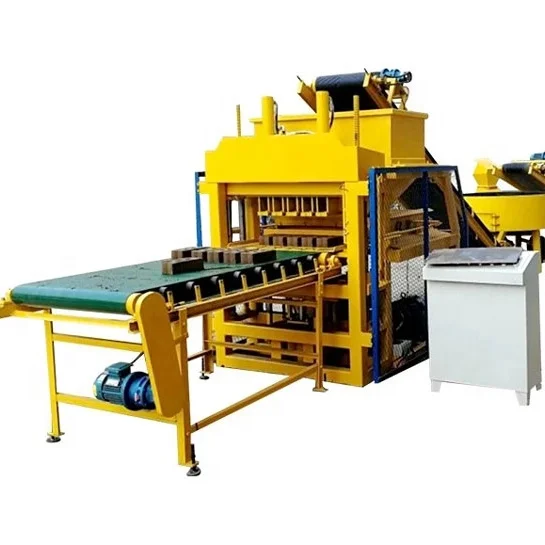
The LY2-40 occupies the entry tier of the block machine lineup — a zero-power, fully manual unit designed for buyers who have no electrical infrastructure and need to start producing interlocking clay bricks immediately. Above it sit semi-automatic machines with electric vibration and hydraulic assist, and further up the range are fully automatic lines with PLC-controlled batching and stacking. Positioning this manual press correctly in the range helps buyers understand what they gain in simplicity and what they accept in cycle speed and labour intensity. A Manual Clay Interlocking Brick Making Machine for sale at this tier is not a compromise; it is the right tool for a specific set of site constraints.
Mobility and Footprint Without a Fixed Plant
Steel wheels allow the LY2-40 to be rolled across a building site as production follows the construction sequence, eliminating the need for a fixed curing yard next to a stationary press. The overall footprint of 1600 x 700 mm means the machine fits through a standard doorway and can be positioned inside a temporary shelter during wet-season work. Because there is no motor, hydraulic pump, or control panel, the only ground preparation required is a level concrete slab or compacted earth base [NEED_CITE: site preparation requirements for mobile manual presses]. This mobility is the defining advantage for contractors who move between rural housing projects every few weeks.
Reading the Specifications That Matter for Clay Work
The 30-40 second molding cycle applies when the soil-cement mix has been pre-blended in the companion JFA-1 or JQ350 mixer to a uniform moisture content and the operator has developed a consistent lever technique. Heavier clay with high plasticity will cling to the mould cavity and extend the release phase, while sandy loam may require a slightly higher cement percentage to hold the interlocking lip geometry. The manual lifting system means the operator controls compaction force directly — too little pressure and the brick crumbles on demoulding, too much and the interlocking tongues fracture. Net weight of 200-240 kgs provides enough mass to resist shifting during vigorous lever strokes, but the machine can still be tilted onto its wheels by two people for repositioning. Mould changeability across various interlocking profiles lets a single frame produce wall bricks and paving units, though each swap requires hand tools and a brief alignment check.
The Cost of Skipping a Soil Test Before Ordering
I once worked with a buyer who ordered a manual clay interlocking brick machine based on the catalogue capacity range without testing his soil first. The clay on his site had a swelling index that caused bricks to crack during sun-curing, and the interlocking lips deformed under the weight of stacking. Re-engineering the mix and adjusting the mould gap consumed weeks of production time. When soil behaviour is unknown, the entire quoted output range becomes unreliable and the buyer ends up paying for a machine whose real-world throughput is a fraction of the number on the spec sheet [NEED_CITE: soil-cement compatibility testing before machine procurement].
Why Source This Manual Press Through a Single-Focus Supplier
Block machinery is the sole product category here, so the LY2-40 is never bundled with unrelated equipment from a trading catalogue. Machine, mould, and mixer are specified together as a matched set, meaning the JFA-1 or JQ350 mixer output is aligned with the manual cycle rate so the operator is never waiting for the next batch. Mould design covers the interlocking profiles that sell in the buyer’s local market, and custom drawings are accepted when standard profiles do not match regional building codes. Configuration is adjusted to the buyer’s actual soil type and target brick format rather than shipped as a default unit. Installation guidance addresses the reality of a zero-power site, and operator training covers the lever technique that keeps cycle times within the 30-40 second band.
Documentation & Verification
- Machine specification sheet confirming LY2-40 dimensions, weight, and manual cycle parameters
- Mould drawing and format list showing available interlocking profiles and change procedure
- Line layout noting the block format assumed in the 400-1000 pcs/day range
- Factory test record on the buyer’s target soil-cement mix before dispatch
- Operation and maintenance manual covering lever lubrication and mould release care
Installation, Commissioning & Support
- Level compacted base or concrete slab sized to the 1600 x 700 mm footprint before delivery
- No electrical connection required; confirm site has shaded curing area for daily output volume
- Machine arrives as a mobile unit on steel wheels; minimal on-site assembly needed
- First-day production run supervised to verify cycle consistency with local clay mix
- Operator training on lever stroke rhythm and mould release technique for interlocking profiles
- Wear parts list covering mould liner plates and lever pivot bushings for future ordering
Before You Request a Quote
To match the right mould and mixer combination, share the type of soil available on your site, the interlocking brick profile your market requires, and the daily volume you need to sustain. Let us know whether grid power exists anywhere on the project or if the entire operation must remain off-grid. If you have an existing curing area or a specific stacking method, describe those so the pallet and handling recommendations align with your layout.
Frequently Asked Questions
Q: How is the 400-1000 pcs/day capacity verified, and which brick format does it assume?
A: That range depends on the specific interlocking profile dimensions, the soil-cement mix, and the number of operating hours per shift. Before confirming an order, we run a factory test with your target mix and document the cycle time and daily count for the exact brick format you will produce.
Q: What mould formats are available, and how long does a mould change take?
A: The LY2-40 accepts moulds for several interlocking wall and paving profiles. Changeover requires basic hand tools and typically takes one operator a short period to swap the cavity plate and realign the guide pins. Custom mould drawings can be produced to match regional building standards.
Q: Which soil types and cement ratios work with this manual press?
A: Sandy loam, laterite, and moderate-plasticity clays are all workable once the cement percentage and moisture content are tuned. We recommend a soil analysis before ordering so the mould gap and compaction technique can be adjusted to your specific material.
Q: Where does the LY2-40 sit in the range, and what is the upgrade path?
A: It is the entry-tier, zero-power machine for off-grid sites. Buyers who later gain grid access and need higher output can step up to a semi-automatic press with electric vibration, keeping the same mould family for product continuity.

 Clay interlocking brick