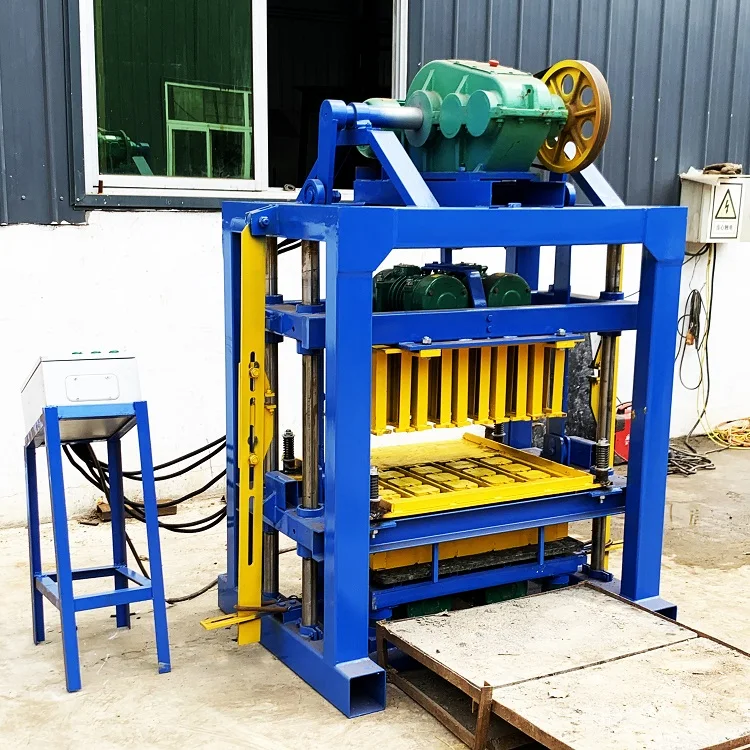
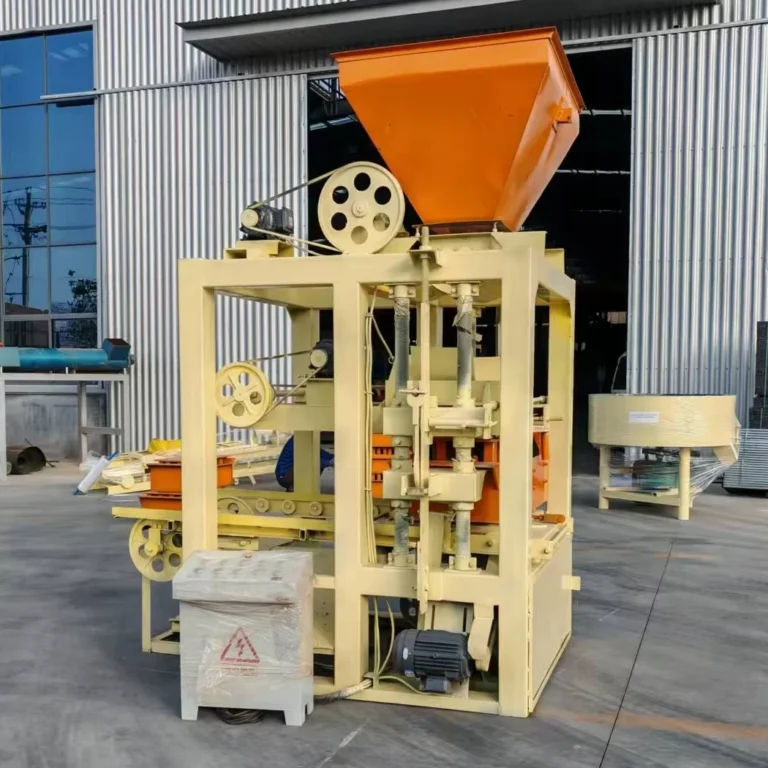
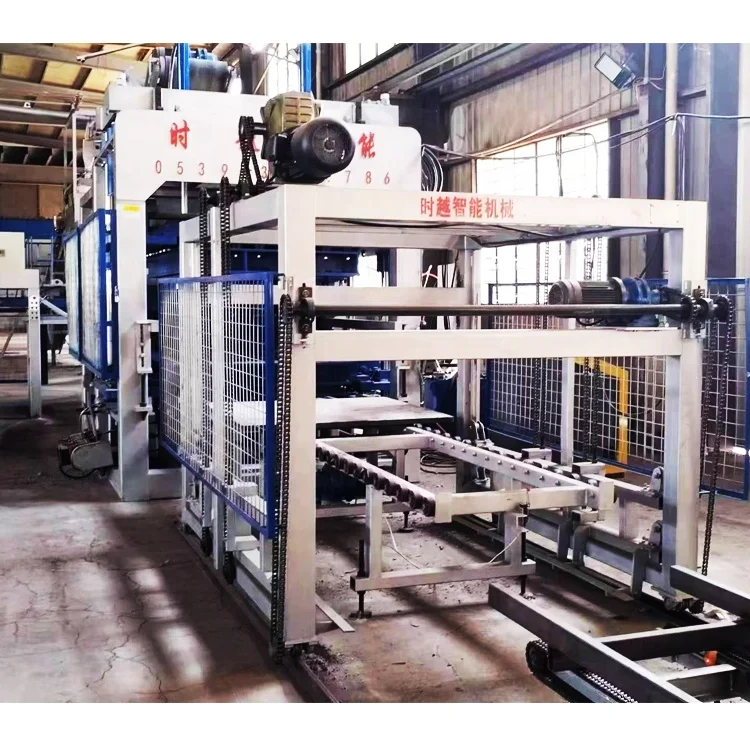
Hydraulic Drive Matched to Mix Design — we configure the QT6-15 vibration force and pressure curve around your local aggregate, not a catalogue default.
Technical Specifications
| Parameter |
Value |
| Model |
QT6-15 |
| Product Type |
Hydraulic Block Making Machine |
| Overall Dimensions (L×W×H) |
7100×1500×3000 mm |
| Rated Pressure |
21 MPa |
| Main Vibration Form |
Platform vibration |
| Vibration Frequency |
4500–5100 r/min |
| Pallet Size |
880×850 mm |
| Moulding Cycle |
15–25 s (basis to be confirmed per block format) |
| Overall Power |
31.25 kW |
| Weight of Machine |
8700 kg |
| Control System |
PLC intelligence control (human-machine dialogue) |
| Drive Type |
Hydraulic drive |
| Block Strength (Hollow) |
8–10 MPa |
| Block Strength (Solid) |
10–20 MPa |
| Raw Material Ratio |
Cement 8%–10%, Sand 30%–40%, Stone 50%–60% |
| Automation Level |
Fully automatic |
| Voltage & Frequency |
Configurable per buyer’s local grid (basis to be confirmed) |
| PLC Display Language |
Configurable (basis to be confirmed) |
Application Suitability
| Application |
Material or Output |
| Hollow block production plants |
Crushed stone, sand, and cement blends |
| Solid brick manufacturing |
Fine aggregate with higher cement ratios |
| Construction contractors producing on-site |
Locally sourced gravel and sand |
| Manufacturers expanding existing format range |
Interchangeable moulds for multiple block types |
What "Fully Automatic" Actually Means for Your Daily Output
The QT6-15 hydraulic block making machine manufacturer delivers PLC-controlled cycles, but daily throughput depends entirely on which block format you run and how your downstream handling is configured.
I have watched lines in Latin America sit idle because a buyer was quoted a cycle time that only applied to one specific hollow block size, then switched to a solid paver format without adjusting expectations. The machine kept running, but the curing racks filled at a different rate, the forklift couldn’t keep up, and the pallets bottlenecked at the stacking station. When you evaluate a hydraulic block making machine, the conversation must start with your actual product mix, not a headline number [NEED_CITE: block format assumptions in capacity quotations].

Where the QT6-15 Sits in the Stationary Range
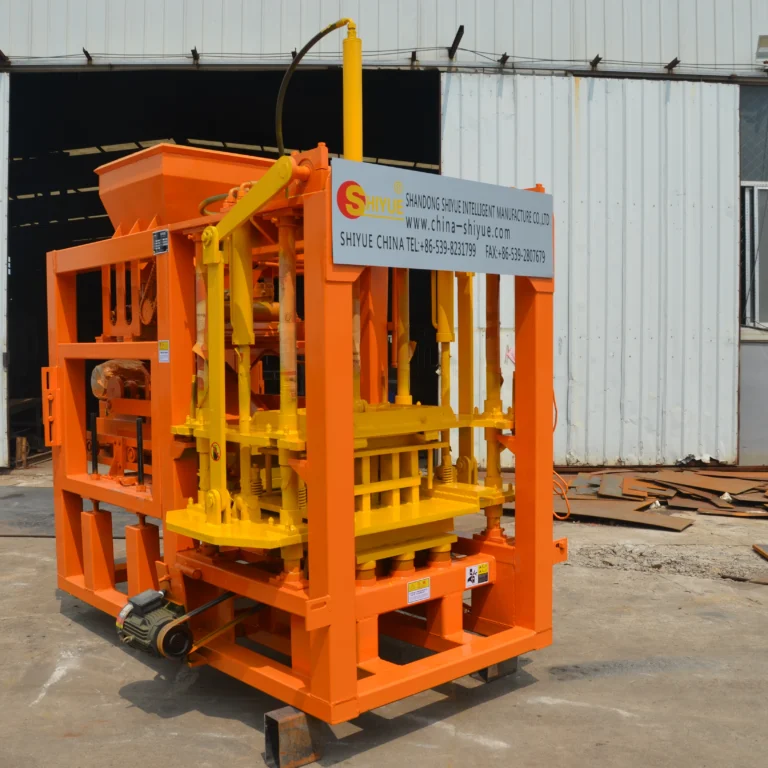
This hydraulic block making machine occupies the mid-to-high tier of our stationary range, positioned between smaller semi-automatic models that require manual pallet handling and the larger high-capacity lines built for continuous two-shift operation. Buyers moving up from a workshop-scale setup typically choose this tier when their daily output requirement outgrows manual stacking but they are not yet ready to commit to the footprint and investment of a full cubing and wrapping line.
Matching the Machine to Your Block Format
The platform vibration at 4500–5100 r/min paired with 21 MPa hydraulic pressure gives the QT6-15 enough forming force to produce both hollow blocks and dense solid bricks. The critical detail is which format you intend to run most days, because the moulding cycle shifts between 15 and 25 seconds depending on block geometry and the compaction your specific mix design demands. A hydraulic block making machine manufacturer that does not ask for your target format before quoting is guessing [NEED_CITE: cycle time variation by block geometry and mix].
Reading the Numbers That Actually Matter
The 21 MPa rated pressure works together with platform vibration to compact the concrete mix inside the mould cavity. Higher vibration frequency alone does not guarantee block strength — the hydraulic pressure must be sufficient to hold the mould box rigid while vibration consolidates the aggregate. The 880×850 mm pallet size determines how many blocks you produce per cycle and must match the curing rack spacing and forklift tine width already in your yard. The 31.25 kW overall power draw tells your electrician what dedicated circuit to prepare before the machine arrives, avoiding the voltage drop problems I have seen trip breakers on shared workshop feeds.
The Cost of Skipping Voltage and Language Confirmation
I have arrived at job sites where the machine was wired for a frequency that did not match the local grid, and the PLC display was locked in a language the operators could not read. Commissioning stalled while we sourced a step-down transformer and waited for a firmware update. These delays have nothing to do with the hydraulic block making machine itself — they happen because voltage, frequency, and control language were left blank on the order form [NEED_CITE: voltage and frequency standards by export market].
Why Sourcing the Full Line From One Supplier Matters
We specify the QT6-15 together with its pallet size, mould set, and downstream handling as one system rather than assembling from separate vendors. Configuration is set against your actual mix design and local aggregate, not a generic setting. Mould design covers the formats your market sells, with custom drawings when your specification falls outside the standard catalogue. Automation level is selectable, so you can begin with the QT6-15 in its fully automatic mode and add stacking or cubing stations later without replacing the press. Installation support includes operator training and a wear parts list specific to your hydraulic and mould components.
Documentation & Verification
- Line layout drawing showing QT6-15 footprint with pallet flow direction and curing rack spacing
- Capacity calculation sheet stating the exact block format and cycle time assumed for daily output
- Hydraulic and electrical schematic matching your confirmed voltage and frequency
- Factory test record run on a mix ratio close to your local material availability
- Mould drawing and format list with cycle times for each block type you intend to produce
Installation, Commissioning & Support
- Foundation pad must accommodate the 7100×1500 mm machine footprint and 8700 kg static weight
- Dedicated circuit required for the 31.25 kW total power draw to prevent voltage drop under load
- Machine ships dismantled for container loading; reassembly on-site covers hydraulic lines and PLC connections
- First-run commissioning includes cycle timing verification against your confirmed block format
- Operator training covers PLC dialogue navigation, mould change procedure, and daily hydraulic fluid checks
- Wear parts list identifies hydraulic valve cores and vibration motor brushes as priority spares for year one
Before You Request a Quote
Send your target block format with dimensions, the local aggregate type you plan to use, and your available workshop footprint. Confirm your site voltage and frequency, and let us know the PLC display language your operators need. If you already have curing racks or a forklift in place, share the pallet dimensions they accept so we can verify the 880×850 mm pallet integrates without modification.
Frequently Asked Questions
Q: How is the QT6-15 output capacity calculated, and which block format does it assume?
A: Output depends on the block format, mould cavity count, and cycle time per format. We provide a capacity sheet that names the exact block size and the cycle seconds used in the calculation, so you can compare daily output across different formats before deciding which moulds to order.
Q: Where does the QT6-15 sit compared to semi-automatic and higher-tier models?
A: It occupies the mid-to-high tier, offering fully automatic PLC operation without the larger footprint of high-capacity lines. Buyers scaling from semi-automatic presses choose this tier when they need consistent cycle times and reduced manual pallet handling but are not yet running multi-shift continuous production.
Q: What voltage and PLC language options are available?
A: Voltage and frequency are configured to match your local grid before production. The PLC display language is confirmed during the order process so operators can navigate the human-machine dialogue interface in a language they read comfortably upon arrival.
Q: How does pallet size affect my curing area setup?
A: The 880×850 mm pallet determines rack spacing and forklift handling requirements. If your existing curing racks or forklift tines are set for a different dimension, we either adjust the pallet specification or recommend rack modifications before the machine ships to avoid handling delays.
Q: What is the plant footprint for a full line built around the QT6-15?
A: The press itself measures 7100×1500×3000 mm, but the full line includes raw material feeding, mixer, pallet return, and curing rack handling. We provide a layout drawing that shows each station and the total floor space required, accounting for pallet circulation and operator access paths.

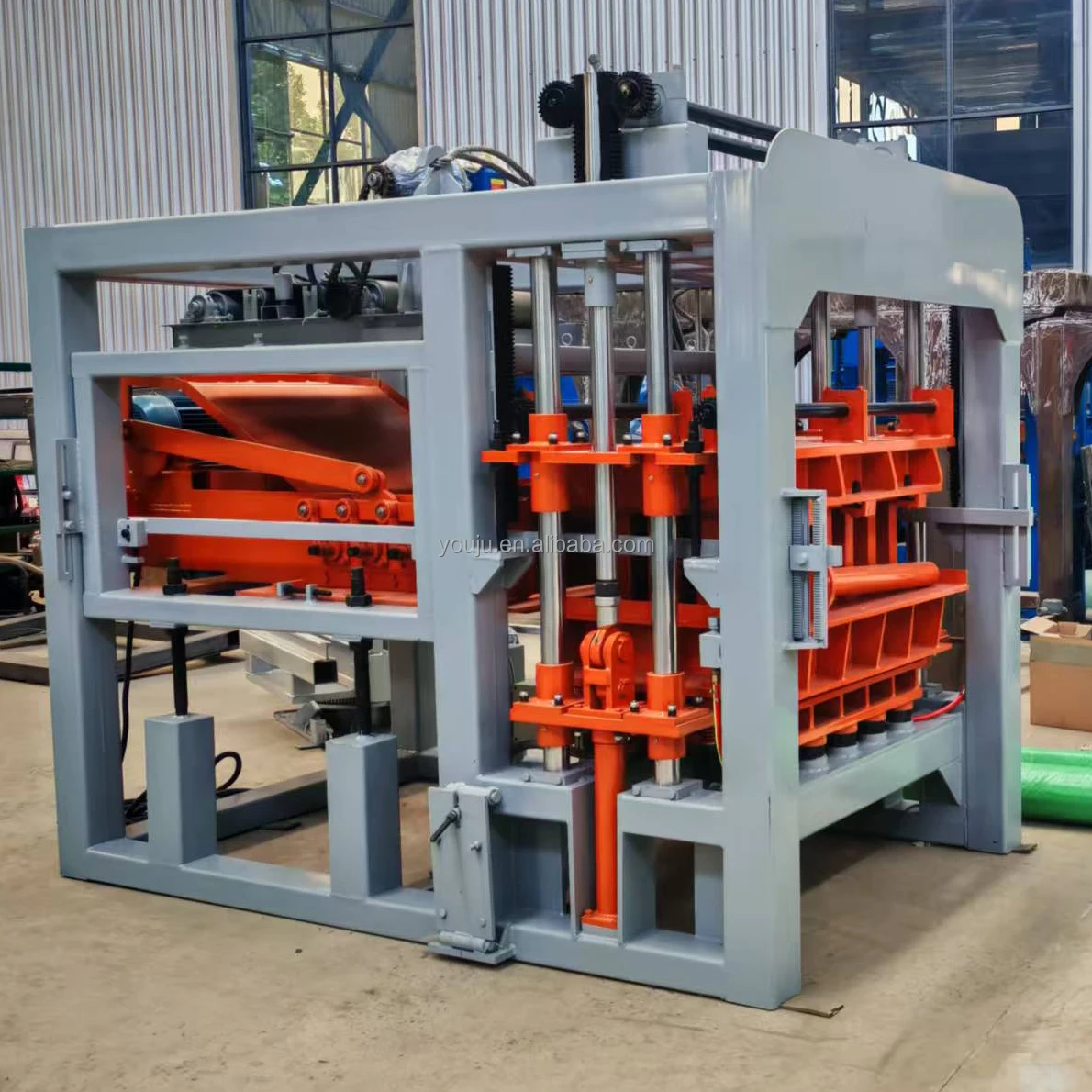
 Stationary block machine