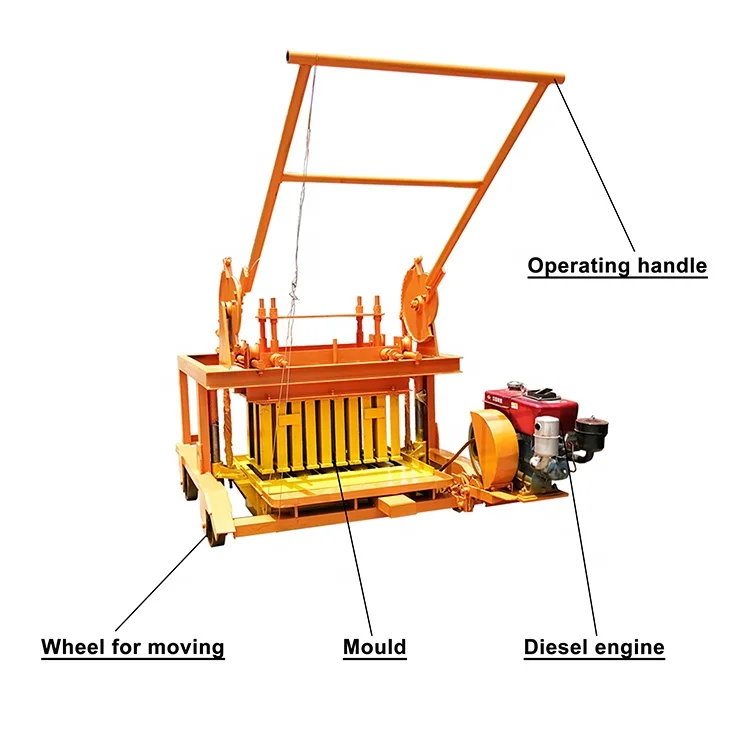
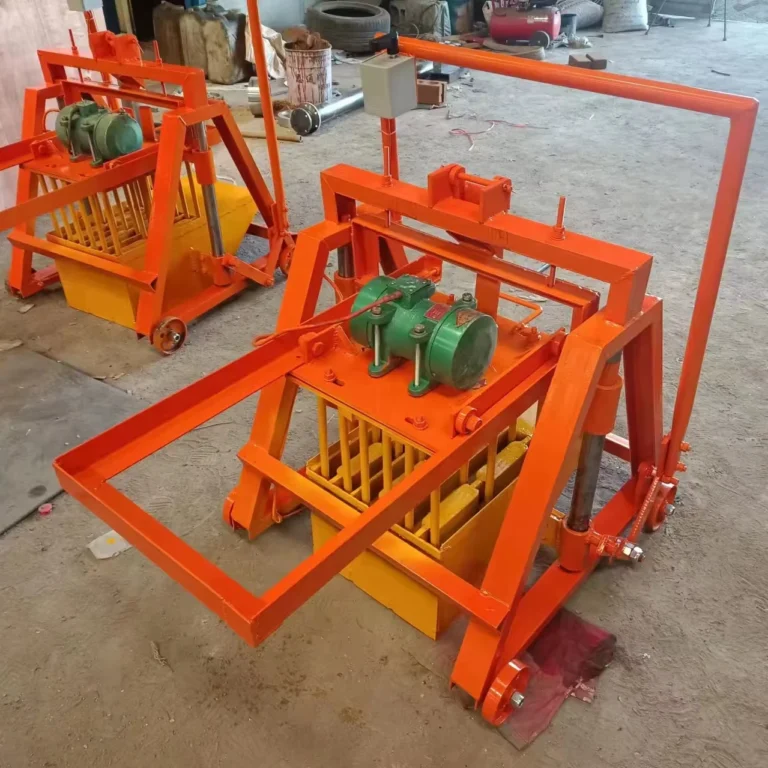
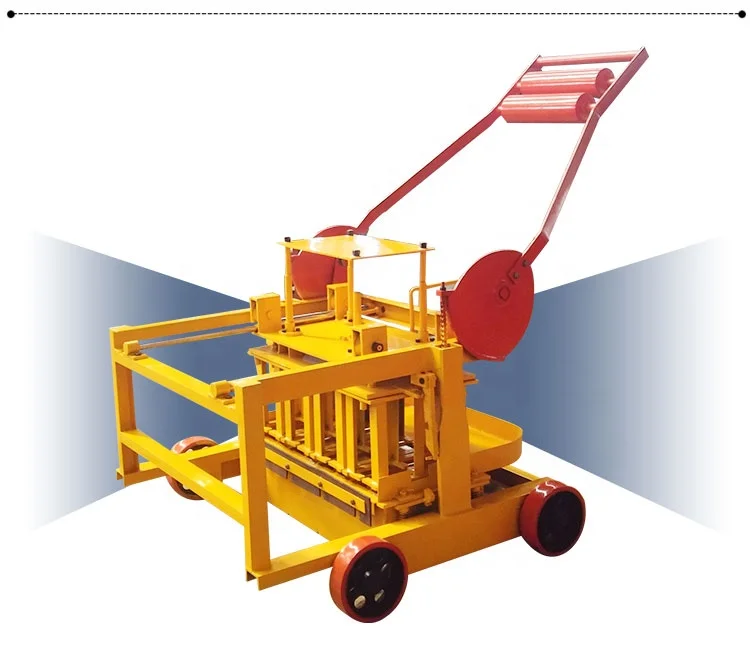
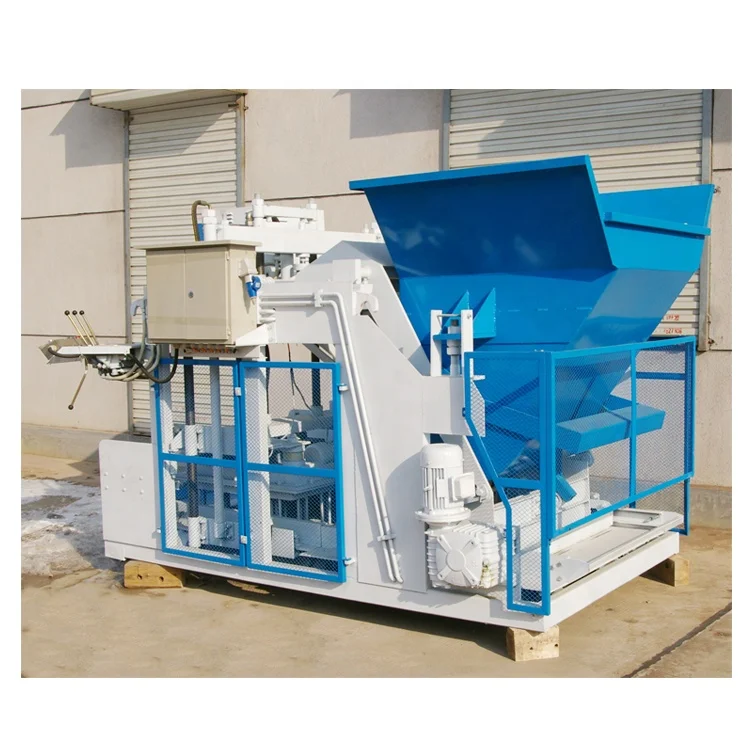
Machine, mould and handling specified as one matched system — the QMJ4-45 is quoted with its block format, pallet approach and engine type together, so nothing arrives missing from the line.
Technical Specifications
| Parameter |
Value |
| Model |
QMJ4-45 |
| Product Type |
Mobile Egg-Laying Block Making Machine |
| Molding Capacity |
4 pcs/mould (standard hollow block format) |
| Molding Cycle |
40–45 s |
| Vibration Frequency |
2400 r/m |
| Vibration Method |
Mold vibration (twice-vibration of molding core) |
| Productivity (400×200×200mm hollow block) |
3000 pcs/day (8-hour shift, 4 pcs/mould, 40–45s cycle) |
| Productivity (400×150×200mm hollow block) |
3500 pcs/day (8-hour shift, 5 pcs/mould, 40–45s cycle) |
| Productivity (400×120×200mm hollow block) |
4500 pcs/day (8-hour shift, 6 pcs/mould, 40–45s cycle) |
| Total Power |
6 kW |
| Power Source |
Diesel / Petrol engine |
| Demold Method |
Manual |
| Turning Method |
Manual |
| Pallet Requirement |
No fixed pallets required (egg-laying operation) |
| Automation Level |
Manual (egg-laying / mobile type) |
| Certification |
CE |
| Warranty |
1 year |
Application Suitability
| Application |
Material or Output |
| On-site hollow block production |
Crushed stone, sand, cement and water mix laid directly on compacted ground |
| Remote or off-grid construction sites |
Diesel or petrol engine operation where grid electricity is unavailable |
| Small-scale cement block manufacturing |
Hollow blocks in 200mm, 150mm and 120mm widths at 400mm length |
| Contractor self-production at project sites |
Hollow blocks produced and cured adjacent to the building footprint |
| Entrepreneur first plant setup |
Low-capital block production without a fixed factory building or pallet investment |
What "3000 Blocks per Day" Actually Means for Your Site
Daily output only holds true when the block format, cycle time and shift length match your production plan.
Suppliers often quote a single daily number for a mobile egg-laying block making machine for sale without stating which block size it assumes. A buyer expecting 4500 pieces from a QMJ4-45 may discover the figure applies only to 120mm-wide blocks, while the 200mm hollow blocks their market actually demands yield closer to 3000 pieces in an eight-hour shift. That gap between quoted and real output has derailed more than one project timeline I have witnessed [NEED_CITE: common capacity quoting practices in mobile block machinery]. When the machine arrives and the first day’s count falls short, the contractor scrambles to add shifts or rent a second unit — costs that were never in the budget. The mobile egg-laying block making machine for sale must be evaluated against the specific format you sell, not the most optimistic number on the spec sheet.

Where the QMJ4-45 Sits in the Full Machine Range
The QMJ4-45 occupies the entry-mobile tier of a complete block machine range that extends through semi-automatic and fully automatic stationary lines. For a buyer surveying options, the distinction matters: this mobile egg-laying block making machine for sale eliminates the need for a fixed plant building, pallet inventory and curing racks, trading automation for lower capital and immediate deployment. A first-time entrepreneur or a contractor producing blocks at a remote job site will find this tier matches their investment level and footprint constraints.
Engine-Driven Independence from Grid Limitations
Because the QMJ4-45 runs on a 6 kW diesel or petrol engine, commissioning does not depend on confirming local voltage, frequency or three-phase availability. I have seen stationary machines sit idle for weeks at export destinations because the site’s power supply did not match the motor specification — an issue that simply does not arise here [NEED_CITE: voltage and frequency mismatches in exported machinery]. The engine-driven configuration also means the machine can follow the work: once a project site is finished, the unit moves to the next location without electrical reconnection.
Reading the Specs That Shape Daily Output
The twice-vibration molding core operates at 2400 r/m, delivering two vibration impulses per cycle rather than one, which compacts the mix more evenly and produces consistent wall density across the block. For hollow blocks, uniform wall density directly determines compressive strength and breakage rates during handling. The 40–45 second molding cycle sets the rhythm of production: at 4 pieces per mould for 400×200×200mm blocks, that cycle yields 3000 pieces over an eight-hour shift, while narrower 120mm blocks at 6 pieces per mould reach 4500 pieces in the same period. The manual demold and turning design keeps operator count low but places physical demands on the crew over a full shift — a factor worth weighing when planning labour allocation against the available upgrade path to semi-automatic operation.
The Hidden Cost of Skipping Format-Level Capacity Checks
When a buyer orders a mobile machine based on a headline output number, the consequences surface within the first production week. Blocks that do not meet the local market’s dominant format sit unsold while the contractor searches for buyers who want a non-standard size. Meanwhile, the project schedule slips because the block supply assumed a throughput the machine cannot deliver in the specified format [NEED_CITE: block format demand and production planning in construction projects]. Correcting the mismatch after delivery means either accepting lower revenue per block or investing in additional moulds and recalculating the entire production plan.
Why Source This Mobile Tier Here
Block machinery is our single focus, so the QMJ4-45 is specified alongside its moulds and operational requirements as a matched set rather than assembled from separate suppliers. Configuration is set against your actual mix design and local aggregate, not a catalogue default, which prevents the vibration force and cycle time mismatch that causes inconsistent block strength. The mould range covers the hollow block formats your market sells, and custom mould design to buyer drawings is supported when standard formats do not match. Automation level is selectable within the range, so a buyer starting with this mobile egg-laying block making machine for sale can plan a clear upgrade path to semi-automatic or fully automatic lines as volume grows.
Documentation & Verification
- Machine specification sheet listing output per block format with cycle time assumptions
- Mould drawing and format list confirming available hollow block widths
- Voltage and power source confirmation document for engine type
- Factory test record on your specified block format before dispatch
- Operation and maintenance manual with wear parts list
Installation, Commissioning & Support
- Compacted ground surface required as the egg-laying production area, no fixed foundation needed
- Diesel or petrol engine eliminates dedicated electrical circuit requirements
- Machine arrives assembled and ready for immediate on-site operation
- Mould change procedure covered during operator training session
- Wear parts list supplied with first-order spare recommendations
- Daily greasing points identified in the maintenance manual for 6 kW drive system
Before You Request a Quote
To size this mobile egg-laying block making machine for sale correctly for your project, share the hollow block formats your market demands, the daily output you need per format, and whether diesel or petrol engine operation suits your site conditions. If you are comparing this mobile tier against a semi-automatic or automatic line, let us know your available production area and labour capacity so the range comparison addresses your actual constraints.
Frequently Asked Questions
Q: How is daily capacity calculated and which block format does it assume?
A: Daily capacity for the QMJ4-45 is calculated per block format using the mould cavity count and a 40–45 second cycle over an eight-hour shift. For 400×200×200mm hollow blocks the figure is 3000 pieces, while 400×150×200mm and 400×120×200mm formats yield 3500 and 4500 pieces respectively. Always confirm which format the quoted number assumes before comparing machines.
Q: Where does the QMJ4-45 sit in the full range compared to semi-automatic and automatic tiers?
A: The QMJ4-45 is the entry-mobile tier, designed for on-site production without a fixed plant, pallets or curing racks. Semi-automatic and automatic tiers add pallet systems, stacking and higher output for buyers with established factory space. The range lets you start mobile and move up when volume justifies the investment.
Q: What block formats and mould options are available for this model?
A: Standard moulds cover 400×200×200mm, 400×150×200mm and 400×120×200mm hollow blocks. Custom mould design to buyer drawings is available when local market demand requires non-standard formats. The mould change is manual, and format flexibility depends on which moulds you include in the initial order.
Q: What installation footprint and site conditions does the egg-laying machine require?
A: The QMJ4-45 needs a compacted, level ground surface for blocks to be laid directly. No fixed foundation, curing racks or pallet storage area is required. The engine-driven power source removes electrical infrastructure from the setup, making the machine deployable at remote sites with minimal preparation.
Q: What is the upgrade path from this mobile machine to a semi-automatic or fully automatic line?
A: The range is designed so a buyer can transition from the QMJ4-45 mobile tier to a stationary semi-automatic or automatic line when production volume grows. The upgrade adds pallet handling, automatic stacking and higher cycle rates while the mould design knowledge and mix design experience carry over from the mobile operation.

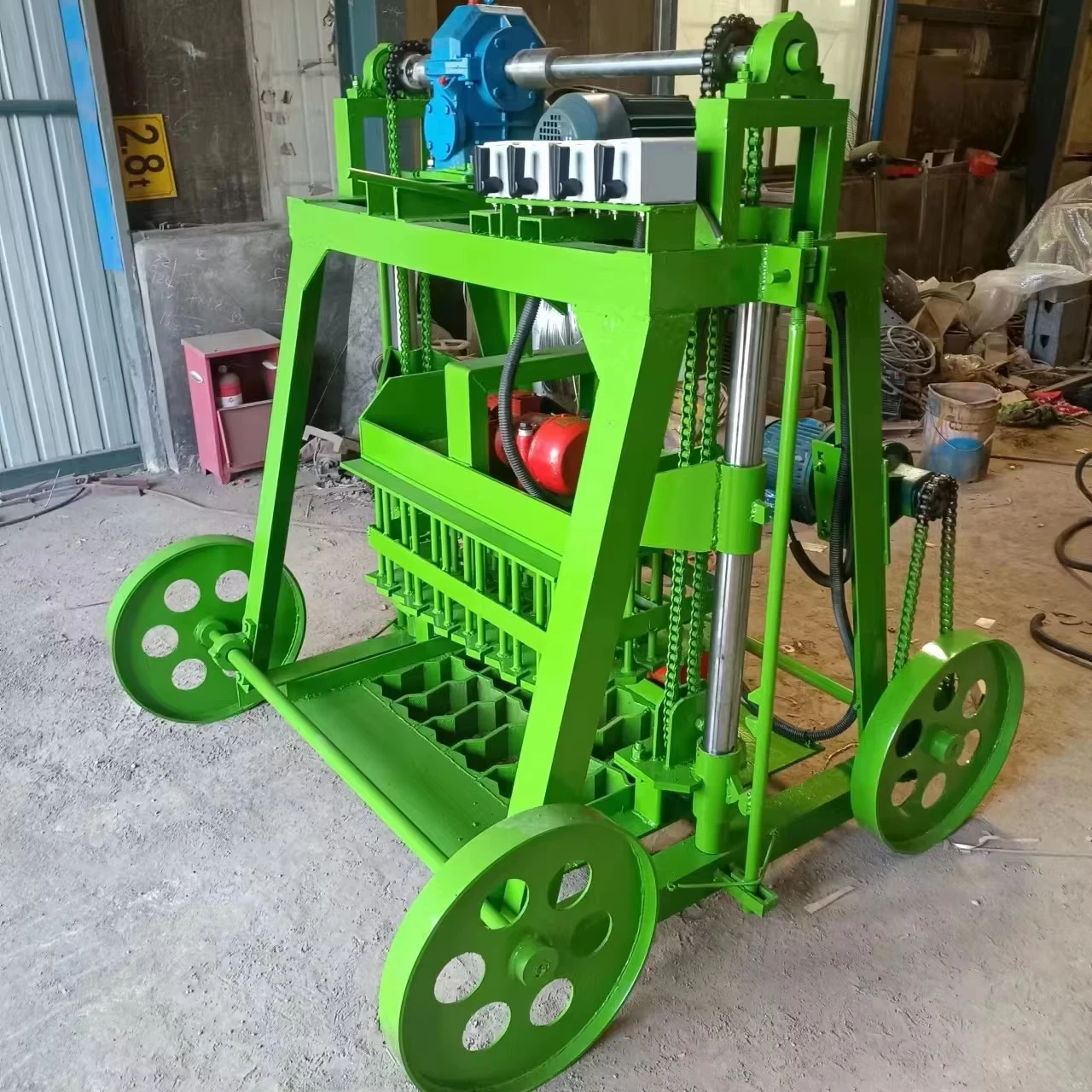
 Mobile block machine