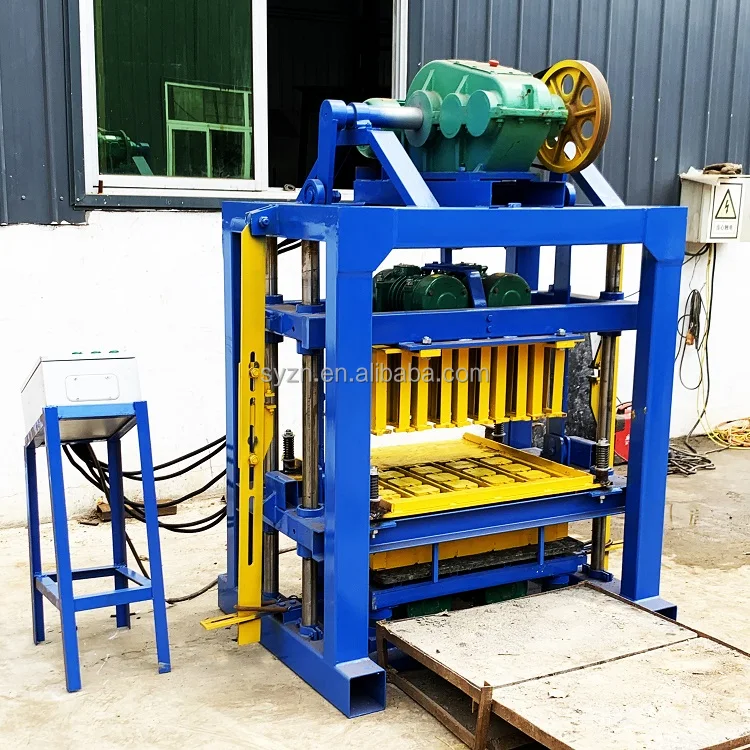
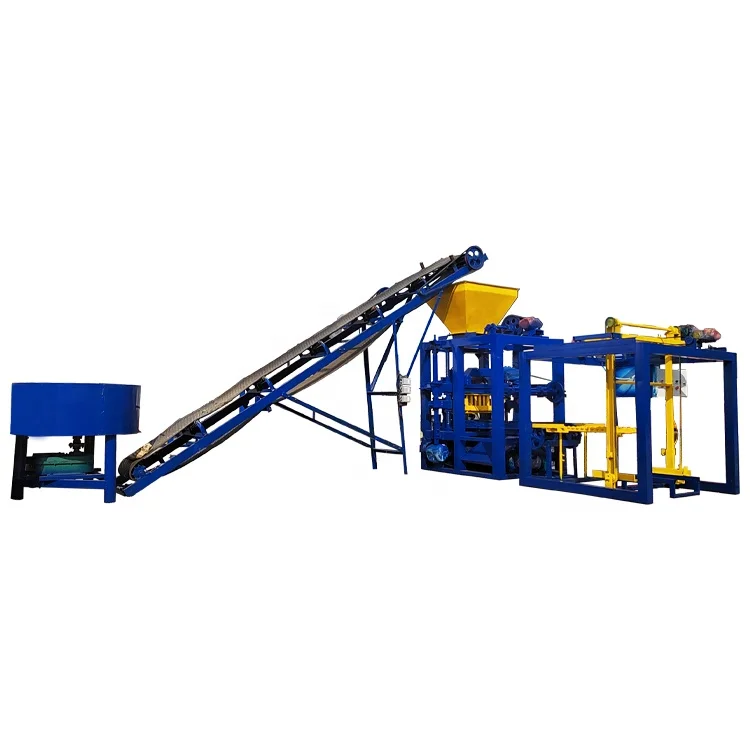
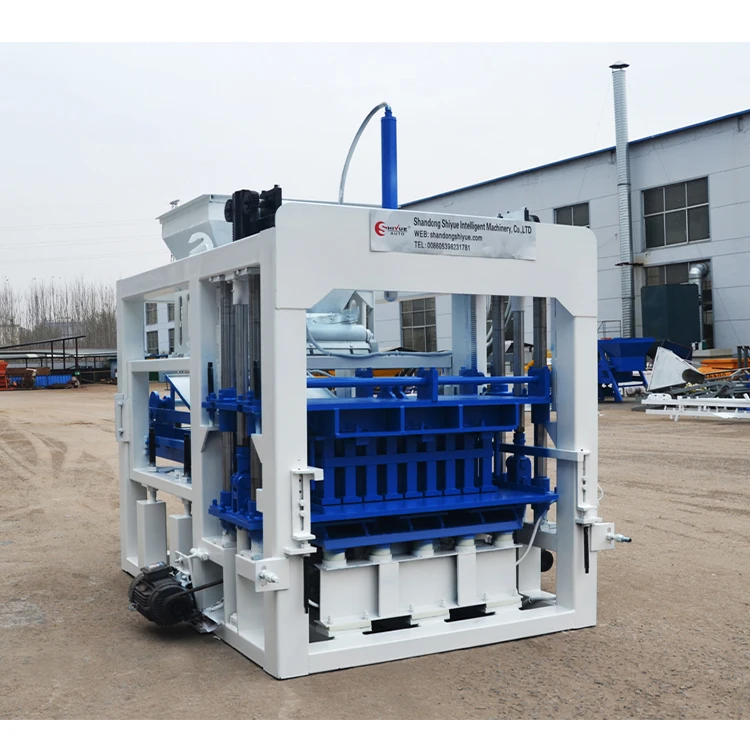
Matched System Configuration — the QT5-15 block machine, moulds, pallets and handling equipment are specified together against your actual mix design and target format, not pulled from a generic catalogue.
Technical Specifications
| Parameter |
Value |
| Model |
QT5-15 |
| Product Type |
Automatic Hydraulic Concrete Block Making Machine |
| Overall Dimensions (L×W×H) |
7400×1950×2800 mm |
| Rated Pressure |
21 MPa |
| Main Vibration Form |
Hydraulic platform vibration |
| Vibrating Frequency |
2800-4500 rolls/minute |
| Cycle Time |
15~20 seconds |
| Motors Power |
26.5 kW |
| Pallet Size |
1100×550 mm |
| Machine Weight |
6T |
| Voltage |
Configurable to buyer’s electrical standard |
| Control System |
PLC with fault diagnosis system |
| Automation Level |
Full automatic |
| Output (Standard Brick) |
23040-28800 pcs/8h based on 240×115×90mm, 16 pcs/mould |
| Output (Paving Brick) |
61440-70400 pcs/8h based on 400×115×53mm, 32 pcs/mould |
| Output (Hollow Block) |
7200-9600 pcs/8h based on 400×200×200mm, 5 pcs/mould |
| Standards |
CE |
Application Suitability
| Application |
Material or Output |
| Hollow block production |
400×200×200mm format from crushed stone, sand and cement |
| Standard solid brick |
240×115×90mm format for housing and masonry walls |
| Paving brick production |
400×115×53mm interlocking pavers from fine aggregate and cement |
| Multicellular brick |
Perforated formats for load-bearing and insulation walls |
| Interlocking block |
Dry-stack formats for retaining walls and landscape applications |
What a Cycle Time Number Actually Means for Daily Output
Capacity is meaningless without the block format it was measured on.
I watched a buyer receive a mid-tier automatic machine quoted at "10,000 blocks per day" and discover on arrival that the figure assumed a small solid brick, while his market needed 400×200×200mm hollow blocks — real output dropped to roughly a third of what he planned his business around. The QT5-15 automatic block making machine manufacturer provides cycle time across the 15~20 second range, but what that translates into over an eight-hour shift depends entirely on the mould installed and the number of cavities per cycle. A five-cavity hollow block mould yields a fundamentally different daily tally than a thirty-two-cavity paving brick mould. [NEED_CITE: block machine capacity measurement standards by format]
Where the QT5-15 Sits Across the Automatic Range
The full automatic machine lineup spans from small workshop units to high-capacity production lines, and the QT5-15 occupies the middle tier. It serves buyers who have outgrown semi-automatic operation and need PLC-controlled consistency without committing to the footprint and staffing of a fully cubing-equipped high-output plant. The 7400 mm machine length and 26.5 kW total motor power place it within reach of first-time block plant entrepreneurs while still supporting the format variety that established distributors require. This QT5-15 automatic block making machine manufacturer positions the model as the entry point into hydraulic platform vibration rather than mechanical box vibration — a shift that affects block density uniformity across the entire pallet surface.
Matching Automation Level to Your Current Operation
Buyers stepping up from manual pallet handling find the QT5-15’s full automatic cycle removes the most labour-intensive station: pallet feeding and green block transport. The PLC control with fault diagnosis issues warning signals when a sensor detects a pallet misalignment or hydraulic pressure deviation, allowing corrective action before a full shift of off-spec product accumulates. For buyers planning a future upgrade to automatic stacking and cubing, the machine’s control architecture supports that expansion without replacing the press itself. [NEED_CITE: PLC fault diagnosis standards for block making equipment]
Reading the Specification Sheet Against Your Local Conditions
The rated pressure of 21 MPa combined with hydraulic platform vibration at 2800-4500 rolls/minute gives the QT5-15 a wide adjustment window, but that window must be set against your specific aggregate. Volcanic scoria, river sand and crushed granite each demand a different vibration frequency and pressure hold time to reach target block strength — a setting that works for one aggregate may leave blocks friable or over-compacted with another. The 1100×550 mm pallet size should be checked against the curing rack dimensions and forklift capacity already in your yard; a mismatch here forces a separate pallet investment before the first block is produced. Cycle time of 15~20 seconds is measured under factory test conditions with optimal mix moisture — field conditions with high ambient humidity or cold raw materials typically extend this by several seconds per cycle, which the daily output calculation must accommodate.

The Cost of Overlooking Voltage and Control Language Before Shipment
Commissioning delays almost always trace back to two items that could have been confirmed in minutes: the voltage and frequency match for the destination country, and the PLC display language for the operators who will run the machine daily. A QT5-15 arriving with a control panel in a language the floor crew cannot read means every fault diagnosis message requires translation before corrective action — turning a minor sensor trip into extended downtime. [NEED_CITE: industrial machinery voltage and frequency standards by region] Electrical reconfiguration after arrival is costly and may void warranty terms on the motor and PLC components.
Why Source the QT5-15 from a Single-Focus Manufacturer
Block machinery as a single focus means the press, mould, pallet and handling stations are specified as one matched system, eliminating the integration gaps that appear when components arrive from separate suppliers. Mould design covers the formats your market actually sells, with custom drawings available when standard cavities do not match local building codes. Capacity calculations in every proposal state the exact block format assumed, so the 7200-9600 pcs/8h figure for hollow blocks or the 23040-28800 pcs/8h figure for standard bricks can be verified against your production plan before the order is placed. Automation level is selectable and upgradeable, allowing a buyer to start with full automatic operation and add stacking or cubing stations as demand grows. Installation support includes on-site commissioning and operator training calibrated to the PLC fault diagnosis system.
Documentation & Verification
- Line layout drawing showing capacity calculation per block format for the QT5-15
- Machine specification sheet confirming hydraulic pressure matched to buyer’s aggregate
- Mould drawing and format list for each cavity type included in the order
- Pallet specification detailing 1100×550 mm material grade and load rating
- Voltage and PLC control language confirmation signed before production begins
- Factory test record on buyer’s target block format before dispatch
Installation, Commissioning & Support
- Foundation plan reflecting the 7400×1950 mm footprint and 6T operating weight
- Dedicated electrical circuit sized for 26.5 kW total motor power at confirmed voltage
- Machine arrives in shipping configuration with reassembly on prepared foundation
- First-run parameter setting for vibration frequency and hydraulic pressure per local mix
- PLC fault diagnosis walkthrough with floor operators in confirmed display language
- Wear parts list covering hydraulic seals and mould liners with reorder intervals
Preparing Your Inquiry
Provide your target block format and the daily volume your market absorbs, along with the raw material available locally — whether that is river sand, crushed granite or volcanic aggregate. Confirm the electrical standard at your site, including voltage and frequency, and specify the preferred PLC display language for your operators. If you already have curing racks or forklifts on site, share those dimensions so pallet size and handling equipment can be matched before the proposal is drafted.
Frequently Asked Questions
Q: How do I confirm the QT5-15 capacity claim matches my target block format?
A: Every proposal from this QT5-15 automatic block making machine manufacturer states the exact block format and cavity count behind each output figure. The 7200-9600 pcs/8h hollow block figure assumes 400×200×200mm at 5 cavities per mould, while the standard brick figure assumes 240×115×90mm at 16 cavities. Request the capacity table with your specific format before ordering.
Q: What voltage and frequency must I confirm before the QT5-15 enters production?
A: The QT5-15 is voltage configurable, but the exact voltage, frequency and phase must be confirmed for your site before the electrical panel is assembled. Providing the local standard early prevents motor rewinding or transformer costs after the machine arrives at your plant.
Q: Can the PLC display and manual be supplied in my local language?
A: The PLC fault diagnosis system supports multiple display languages, but the required language must be specified before the control panel is programmed. Confirm this alongside the voltage details so the operator interface matches your floor crew from the first day of commissioning.
Q: How long does a mould change take between hollow block and paving formats?
A: Mould changeover duration depends on the quick-release system fitted and the operator’s familiarity with the procedure. Request the documented changeover time for your specific mould combination from the QT5-15 automatic block making machine manufacturer before placing the order.
Q: Where does the QT5-15 fit compared to smaller or larger models in the automatic range?
A: The QT5-15 sits in the mid-tier of the automatic range, offering hydraulic platform vibration and PLC control with a 26.5 kW power requirement. Buyers below this tier typically run semi-automatic machines, while those above move to higher cavity counts with automatic cubing lines.

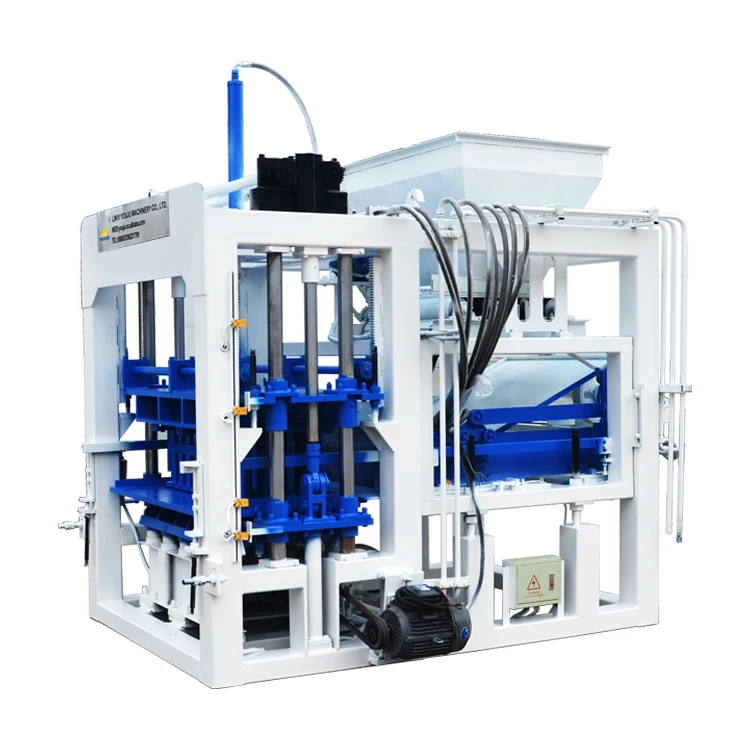
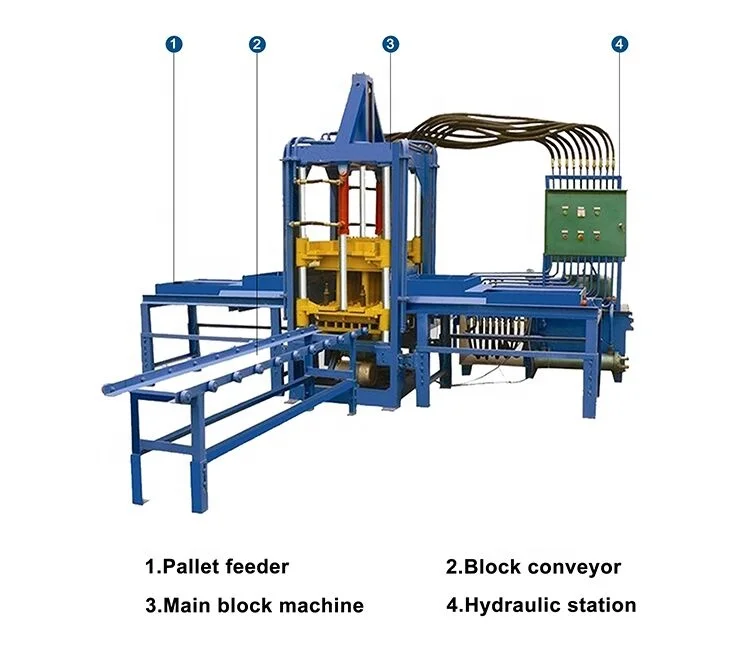 Stationary block machine