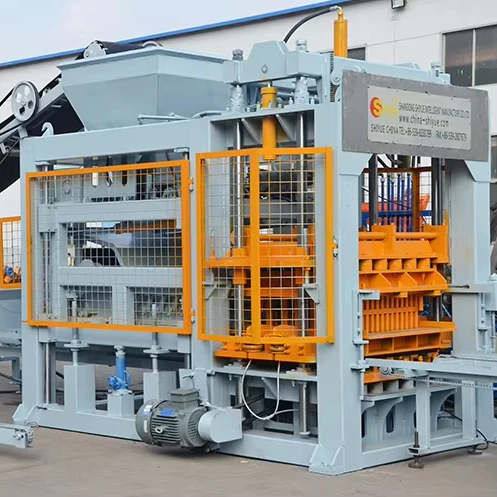
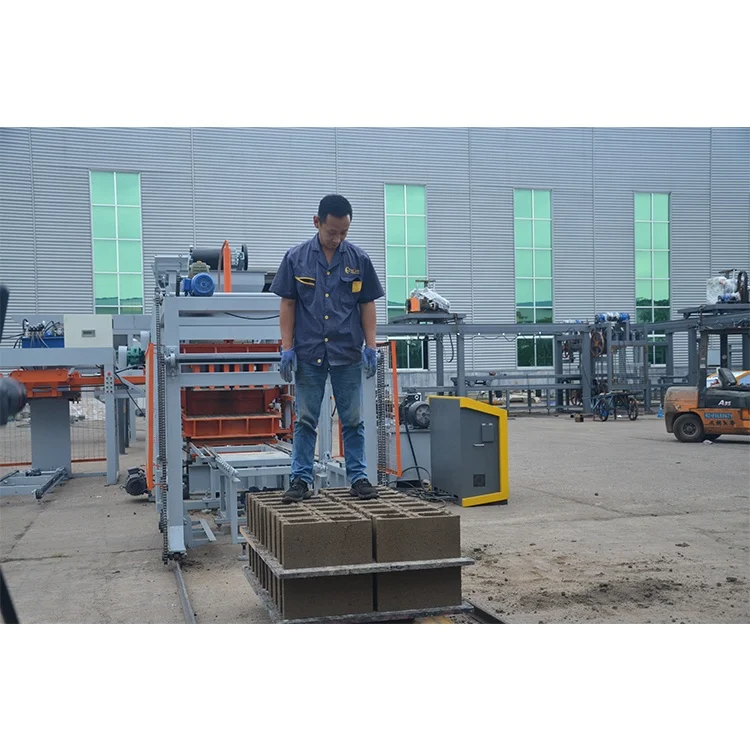
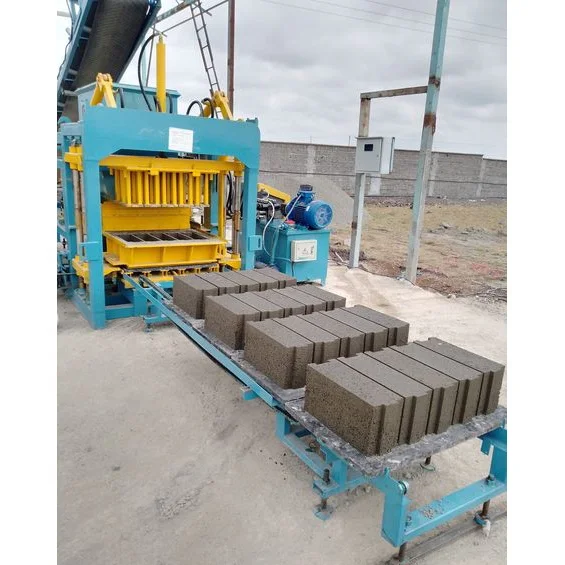
Matched System Design — The QT5-15 block machine manufacturer specifies machine, mould, pallet and handling together against the buyer’s actual block format rather than quoting isolated cycle speeds.
Technical Specifications
| Parameter |
Value |
| Model |
QT5-15 |
| Product Type |
Hydraulic Hollow Block Making Machine |
| Overall Dimensions (L×W×H) |
7400×1950×2800 mm |
| Total Mass |
5000 kg |
| Overall Power |
32 kW |
| Voltage & Frequency |
Configurable to buyer’s site supply (basis to be confirmed) |
| Control System |
PLC (Programmable Logic Controller) |
| Vibration Frequency |
0–60 Hz |
| Vibration Form |
Platform Vibration |
| Vibration Force |
80 kN |
| Moulding Mode |
Automatic loading, vibration moulding |
| Demolding Method |
Hydraulic |
| Pallet Size |
1100×550 mm |
| Moulding Cycle |
15–20 s |
| Factory Area Required |
1000 m² |
| Output — 400×200×200 mm Hollow Block |
7200–9600 pcs/8hr (basis: 5 pcs/mould, 15–20s cycle) |
| Output — 400×150×200 mm Hollow Block |
8640–11520 pcs/8hr (basis: 6 pcs/mould, 15–20s cycle) |
| Output — 240×115×53 mm Solid Brick |
46080–61440 pcs/8hr (basis: 32 pcs/mould, 15–20s cycle) |
| Output — 200×100×60 mm Rectangular Paver |
28800–36000 pcs/8hr (basis: 25 pcs/mould, 20–25s cycle) |
| Compressive Strength |
>15 MPa |
| Raw Material Compatibility |
Fly ash (up to 70%), slag, gangue, sand, crushed stone, cement, water |
| Automation Level |
Automatic (pallet feeding, material feeding, vibrating, demoulding) |
| Hydraulic System |
Independent integrated hydraulic station |
| Key Features |
Simple mould replacement, pallet feed machine, storage hopper, conveyor, PLC cabinet |
| Warranty |
1 year for whole machine (excluding spare parts) |
| Certification |
CE declaration where applicable |
Application Suitability
| Application |
Material or Output |
| Hollow block production for building construction |
400×200×200 mm and 400×150×200 mm formats from sand, cement and fly ash blends |
| Solid brick production for masonry walls |
240×115×53 mm standard bricks using crushed stone and cement mixes |
| Rectangular paving brick production |
200×100×60 mm pavers from high-strength aggregate and cement |
| Interlocking paver production |
225×112.5×60 mm zigzag format for driveways and walkways |
| Industrial residue utilization |
Blends incorporating fly ash up to 70%, slag or gangue with cement binder |
What "9600 Blocks per Shift" Leaves Out When Comparing Machines
A capacity number without its block format and cycle time is not a capacity number — it is a marketing headline.
I have watched buyers compare three quotations side by side and choose the one with the highest hourly figure, only to discover on site that the quoted rate assumed a small solid brick they never intended to produce. The block machine manufacturer you work with should state the mould count, block dimensions and cycle seconds behind every output claim. When a supplier quotes cycles per hour but omits the format, the real daily tonnage through your curing yard often falls well short of what the spreadsheet promised. [NEED_CITE: capacity calculation transparency in block machine procurement]

Placing the QT5-15 Within the Complete Machine Range
The QT5-15 occupies the mid-output tier, sitting above small workshop machines that run semi-automatic pallet handling and below high-capacity lines with full cubing and rack systems. For a buyer surveying options for a first or replacement plant, this tier offers automatic pallet feeding, material feeding, vibration and hydraulic demoulding as one integrated process without the capital jump to a fully stacked and cured end-of-line. The 1000 m² factory area requirement keeps the building footprint manageable while still accommodating a curing rack layout that matches the pallet output rate.
Where the Mid-Tier Machine Meets the Real Project Timeline
Construction contractors who need hollow blocks, pavers and solid bricks from one press find the QT5-15 range covers the formats that typically appear in a single housing or infrastructure project. The simple mould replacement system lets the crew switch from 400×200×200 mm hollow blocks in the morning to 200×100×60 mm rectangular pavers after lunch, keeping one machine busy across phases instead of leaving a specialised press idle. This format flexibility matters when the block machine manufacturer ships the unit to a site where the product mix evolves as the project moves from structural walls to external paving. [NEED_CITE: on-site block production for phased construction projects]
How Vibration Force and Hydraulic Pressure Shape Block Density
The 80 kN vibration force operating across a 0–60 Hz frequency range works together with the independent integrated hydraulic station to compact the mix inside the mould cavity. Platform vibration transmits energy through the 1100×550 mm pallet, and the hydraulic demoulding lifts the formed block without cracking green edges. If the vibration force were too low for a stiff, low-slump mix, the block would emerge with voids and fail the >15 MPa compressive strength target. If the hydraulic pressure were mismatched, the block would stick to the mould or crack during extraction — problems that show up only after the first production run.
The Cost of Ignoring Pallet Size and Curing Yard Layout
A buyer who selects a machine without checking whether the 1100×550 mm pallet fits the existing forklift tines and curing rack slots will spend the first week rearranging the yard or ordering new racks. Pallets that do not match the curing area force manual restacking, which negates the output advantage of the automatic tier and turns the end of each shift into a bottleneck. I have seen entire production lines sit idle while the crew searched for pallets that could survive the vibration cycle without splitting. [NEED_CITE: pallet specification and curing yard compatibility]
Why Procurement Starts with Format, Not Horsepower
Our machine, mould, pallet and handling components are specified as one matched system for the QT5-15, so the vibration force, pallet size and hydraulic pressure align with the block formats your market actually sells. Configuration is set against your local aggregate and mix design rather than a catalogue default — meaning the sand source and cement ratio you can actually obtain drive the setup. Mould design covers the formats in your quotation list, with custom drawings available when your market demands a profile outside the standard range. Automation level is selectable, letting you begin with the automatic QT5-15 and add stacking or cubing stations as volume grows. Installation support includes operator training so the crew can run format changes and daily maintenance from week one.
Documentation & Verification
- Line layout and capacity calculation stating the block format and cycle time assumed for each output figure
- Machine specification sheet confirming voltage, frequency and PLC display language before shipment
- Mould drawing and format list showing all compatible block types and the mould change procedure
- Pallet specification matched to curing rack spacing and forklift capacity at the buyer’s site
- Factory test record on the buyer’s block format before dispatch
Installation, Commissioning & Support
- 1000 m² factory area with level concrete floor to support the 5000 kg machine mass and vibration loads
- 32 kW dedicated power circuit with voltage and frequency confirmed to local supply before wiring
- Shipped dismantled or assembled — confirm container loading plan and on-site reassembly sequence
- PLC control cabinet commissioned with operator language set and cycle parameters tuned to the buyer’s mix
- Operator training covering mould change, pallet feed adjustment and hydraulic system daily checks
- Wear parts list and mould inventory supplied at handover for first replacement cycle planning
What to Prepare Before Requesting a Quotation
Send the target block formats with dimensions, the daily output you need per format, and a sample of your local sand or aggregate so the mix can be tested before the machine is configured. Confirm your site voltage, frequency and preferred PLC display language, along with the curing area dimensions and the forklift model already on site.
Frequently Asked Questions
Q: How do I verify the QT5-15 capacity for my specific hollow block size?
A: We provide a capacity calculation document that states the block dimensions, mould cavity count and cycle seconds behind every output figure. You compare that document against your daily target rather than relying on a single headline cycles-per-hour number that may assume a different format entirely.
Q: Where does the QT5-15 sit compared to semi-automatic and higher-output automatic models?
A: The QT5-15 is the mid-output tier with automatic pallet feeding, material feeding and hydraulic demoulding. It sits above semi-automatic machines that require manual pallet handling and below high-capacity lines with full stacking and cubing, matching buyers who need consistent automatic output without the capital outlay of an end-to-end line.
Q: What voltage, frequency and PLC language options are available?
A: Voltage and frequency are configured to your site supply, and the PLC display language is confirmed before the control cabinet is built. We lock these details in writing during the quotation stage so commissioning is not delayed by an electrical mismatch after the machine arrives.
Q: What plant footprint and supporting equipment do I need alongside the QT5-15?
A: The machine requires approximately 1000 m² of factory area, a concrete floor rated for the 5000 kg mass and vibration, a mixer matched to the 32 kW power envelope, and curing racks sized for 1100×550 mm pallets. Supporting equipment specifications are included in the line layout document.
Q: Can I start with the QT5-15 and add automation later?
A: The QT5-15 platform supports future additions such as automatic stacking and curing rack handling stations. The automation level is selectable at order, so you can begin with the core automatic press and expand the line as production volume and capital allow.

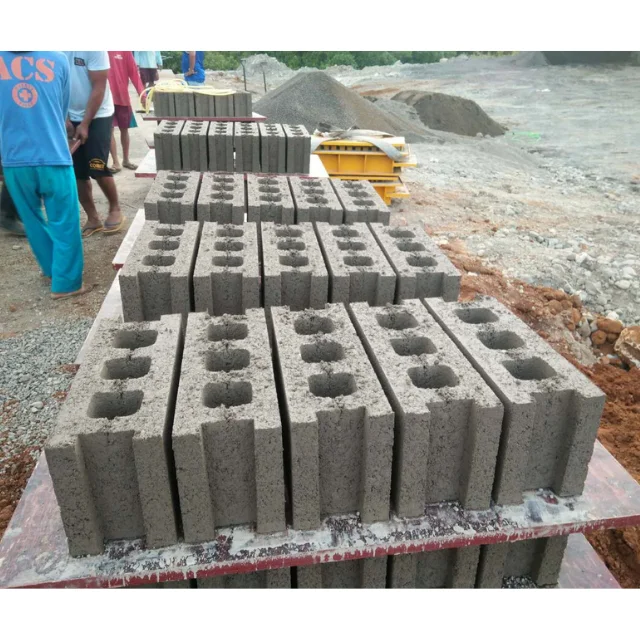
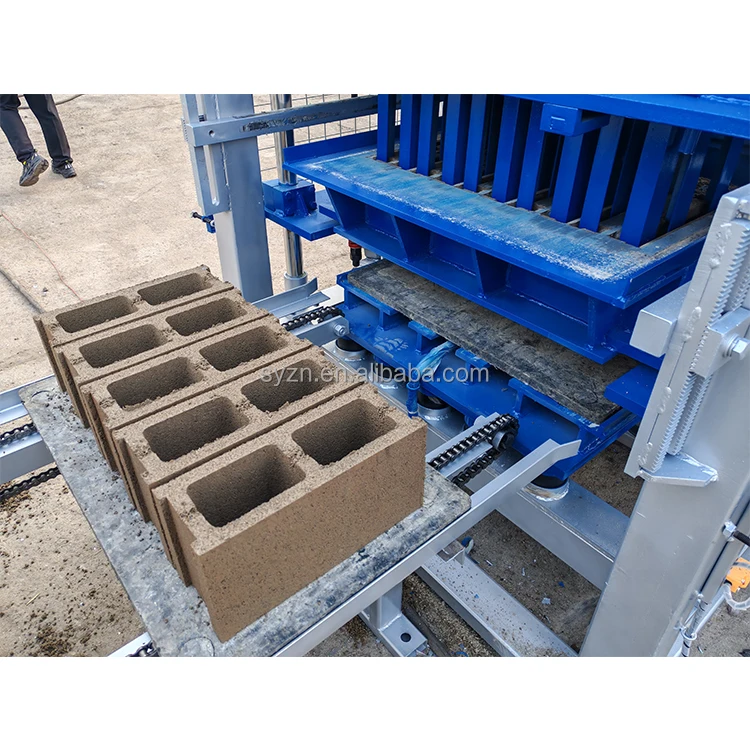 High quality block machine