

Shiyue QT4-15 Fly Ash Block Machine Troubleshooting Guide for Sale
Most hydraulic leaks in tropical plants are not seal failures; they are thermal management failures.
When a QT4-15 fly ash block machine starts leaking oil or producing cracked blocks in Southeast Asia or Africa, the immediate instinct is to replace seals or adjust vibration time. This is rarely the root cause. The core issue is almost always a mismatch between the machine’s standard thermal design and the local ambient heat load, combined with unadjusted mix ratios for coarse local fly ash. Effective troubleshooting requires ignoring the manual’s default settings and instead calibrating the hydraulic cooling system and material moisture content to the specific site conditions.
I have seen this pattern repeat across multiple installations in Vietnam and Indonesia. A plant manager will call because the main cylinder seals are blowing every few weeks. They order replacements, install them, and the problem returns within days. The missing variable is often the delta between ambient temperature and hydraulic oil temperature. In regions where daytime temperatures consistently exceed thirty-five degrees Celsius, the standard air-cooled radiator on a QT4-15 fly ash block machine cannot dissipate heat fast enough if the fan duty cycle is not adjusted or if the oil viscosity is too high for the climate. This overheating degrades the seal material from the inside out, making any replacement temporary. [NEED_CITE: hydraulic seal failure modes related to thermal degradation]
Why Do Hydraulic Systems Fail Prematurely in Hot Climates?
Heat dissipation limits are frequently exceeded in tropical installations, requiring proactive cooling adjustments rather than component replacement.
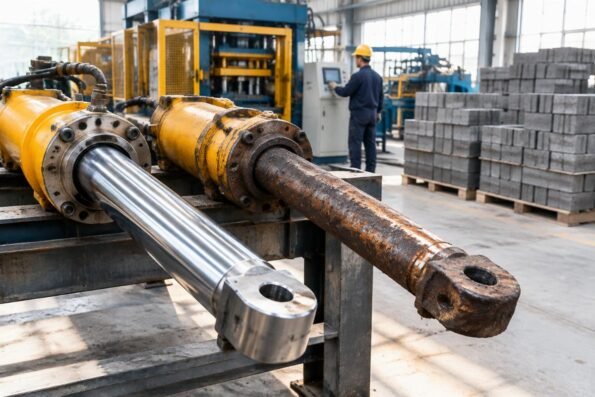
The hydraulic system is the heart of the QT4-15 fly ash block machine, driving the mold box movement and compaction pressure. In temperate climates, the standard cooling setup works fine. However, in high-humidity, high-temperature environments, the efficiency of air-cooled radiators drops significantly. The oil temperature rises, reducing its viscosity and lubricating film strength. This leads to increased wear on pump internals and, critically, thermal expansion of sealing surfaces that exceeds the tolerance of standard nitrile seals.
A common mistake is assuming that a higher-pressure pump will solve slow cycling issues. In reality, adding pressure generates more heat. If the cooling system is already saturated, this accelerates failure. I once visited a site where the operator had increased the system pressure to compensate for sluggish mold movement. The result was not faster production but a complete hydraulic hose burst within forty-eight hours. The correct approach is to check the oil temperature first. If it runs significantly hotter than the ambient air plus a standard operational delta, the cooling fan needs to run continuously, or an auxiliary water-cooling loop may be required. [NEED_CITE: thermal balance calculation methods for hydraulic systems in high-humidity environments]
Another factor is oil selection. Many plants use generic hydraulic oil that does not account for local heat indices. Switching to a synthetic blend with higher thermal stability can reduce operating temperatures noticeably, extending the life of both seals and pumps. This is a simple fix that avoids the downtime of major component replacement.
How Does Local Fly Ash Quality Affect Block Integrity?
Material granularity varies globally; mix recipes must be tuned locally to prevent cracking and ensure density.
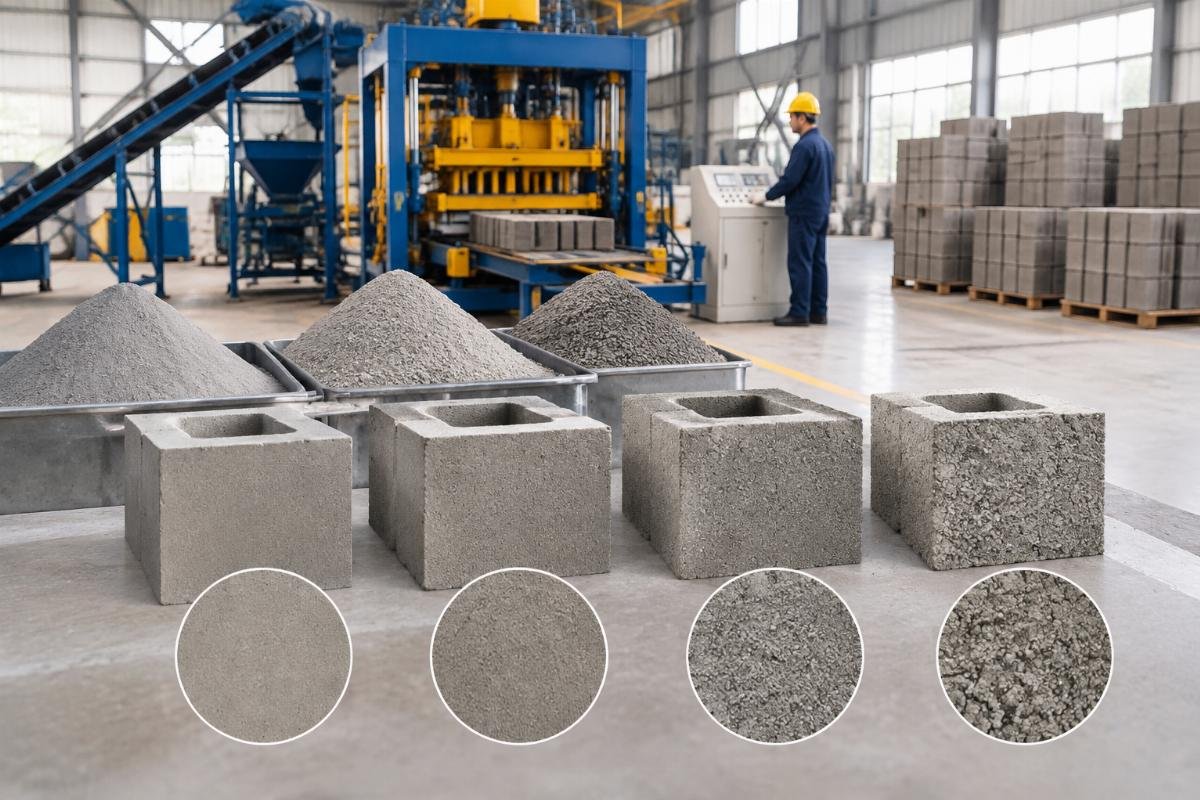
Fly ash is not a uniform commodity. Its particle size distribution, carbon content, and moisture retention vary drastically depending on the coal source and combustion process at the local power plant. A QT4-15 fly ash block machine calibrated for fine, dry fly ash from one region will struggle with coarse, wet fly ash from another. The most visible symptom of this mismatch is block cracking, either immediately after ejection or during curing.
Operators often blame the vibration system when blocks crack. They increase vibration time, which further compacts the mix but also increases internal stress. If the fly ash particles are too coarse, they do not bond well without sufficient cement paste. Increasing vibration without adjusting the water-cement ratio simply rearranges the particles without improving cohesion. The solution lies in adjusting the mix design. For coarser fly ash, the water content may need to be increased slightly to ensure proper hydration and workability, while the cement content might need adjustment to maintain strength. [NEED_CITE: impact of fly ash particle size on concrete block compressive strength]
I recall a project where the local fly ash had a high percentage of unburnt carbon, which absorbed more water than expected. The initial mix design resulted in blocks that looked green and wet but crumbled when handled. By reducing the water addition and allowing a longer mixing time to ensure uniform distribution, the block integrity improved significantly. This adjustment did not require any mechanical changes to the QT4-15 fly ash block machine, only a change in the batching logic. Regular testing of incoming fly ash moisture and granularity is essential to keep the mix recipe dynamic and responsive to material variations.
What Causes Uneven Mold Wear and How to Prevent It?
Inconsistent feeding and vibration imbalance accelerate wear; regular calibration is key to longevity.
Mold wear is inevitable, but uneven wear is a sign of operational imbalance. On a QT4-15 fly ash block machine, the mold box is subjected to intense vibration and pressure. If the feed shoe does not distribute material evenly across the mold cavity, some sections experience higher compaction forces than others. This leads to localized wear on the mold liners and pallets. Over time, this causes dimensional inaccuracies in the blocks, leading to fitting issues in construction applications.
The primary culprit is often the feed mechanism. If the feed box height is incorrect or the stroke length is not synchronized with the mold movement, material will pile up on one side. Operators should check the feed box adjustment regularly. Additionally, the vibration motors must be synchronized. If one motor lags behind the other, the mold will twist slightly during compaction, causing uneven pressure distribution. This twisting action grinds the mold liners against the pallets, accelerating wear. [NEED_CITE: standardized checklist for daily mold inspection and pallet alignment]
Another overlooked factor is pallet flatness. Warped pallets create gaps between the pallet and the mold bottom, allowing slurry to leak and causing uneven support during vibration. Inspecting pallets for warping and replacing them before they cause mold damage is a cost-effective maintenance strategy. In one instance, a plant was replacing mold liners every few months due to excessive wear. Upon inspection, we found that the pallets were severely warped. Replacing the pallets reduced mold wear rates substantially, extending liner life by a significant margin.
Step-by-Step Diagnostic Checklist for QT4-15 Operators
A systematic approach isolates electrical, hydraulic, or mechanical faults quickly, minimizing downtime.
When a QT4-15 fly ash block machine fails, panic often leads to random part swapping. A structured diagnostic process saves time and money. Start with the simplest checks before moving to complex systems.
- Check Power and Controls: Verify that all emergency stops are reset and that the main power supply is stable. Loose connections in the control cabinet can cause intermittent PLC errors. Look for error codes on the HMI screen and cross-reference them with the manual. [NEED_CITE: step-by-step diagnostic flow for vibration frequency deviations]
- Inspect Hydraulic Levels and Temperature: Low oil levels cause cavitation in the pump, leading to noise and damage. Check the sight glass. Feel the hydraulic tank; if it is too hot to touch comfortably, the cooling system is failing. Address cooling issues before proceeding.
- Examine Vibration Motors: Ensure that the vibration motors are securely bolted and that the eccentric weights are set to the same position on both sides. Uneven settings cause imbalance and structural stress. Listen for unusual noises that might indicate bearing failure.
- Verify Sensor Alignment: Proximity sensors detect the position of the mold box and feed shoe. If these are misaligned or dirty, the machine will stop or behave erratically. Clean the sensor faces and check their gap distance.
- Test Manual Mode: Switch to manual mode and operate each function individually. This helps isolate whether the issue is with a specific valve, cylinder, or mechanical linkage. If a function works in manual but not automatic, the issue is likely in the PLC logic or sensor input.
For complex issues that persist despite these checks, remote diagnostic support can be invaluable. Technicians can analyze data logs and guide local staff through advanced troubleshooting steps. Having access to climate-specific spare part kits ensures that replacements are available when needed, reducing wait times for overseas shipping.
Conclusion
Troubleshooting a QT4-15 fly ash block machine requires understanding local conditions, not just following a manual.
Success depends on adapting the machine to the specific thermal and material environment. By focusing on cooling efficiency, mix design flexibility, and regular mechanical calibration, operators can avoid common pitfalls and maintain consistent production. This approach turns potential downtime into manageable maintenance routines.

Industry expert sharing insights about concrete machinery, block making technology and turnkey production solutions.
View all posts →
Leave a Reply