

Concrete Block Machine vs Predecessor: Shiyue Manufacturer for Sale
Higher output does not automatically mean higher profit; consistent quality that reduces waste is the true margin driver.
Upgrading from manual or older semi-automatic models to modern QT series automatic lines is primarily about reducing hidden operational costs like labor dependency and material waste, rather than just increasing speed. A Concrete Block Machine Comparison reveals that while initial investment is higher, the reduction in crew size, extended maintenance intervals, and lower rejection rates create a faster return on investment for serious plant investors.
I still remember the smell of diesel and wet concrete at a port in Lagos. A client had purchased a legacy manual machine years prior, thinking he was saving capital. By the time I visited his site, he was struggling with a crew of over ten workers, high turnover, and inconsistent block density that led to frequent rejections by local contractors. The real cost wasn’t the machine; it was the chaos. [NEED_CITE: labor cost trends in emerging market construction sectors] When we later installed a QT6-15 automated line for him, the shift was not just in speed but in stability. The crew dropped to four skilled operators, and the monthly wage bill fell significantly. This experience highlights why a thorough Concrete Block Machine Comparison is essential before signing any purchase order.
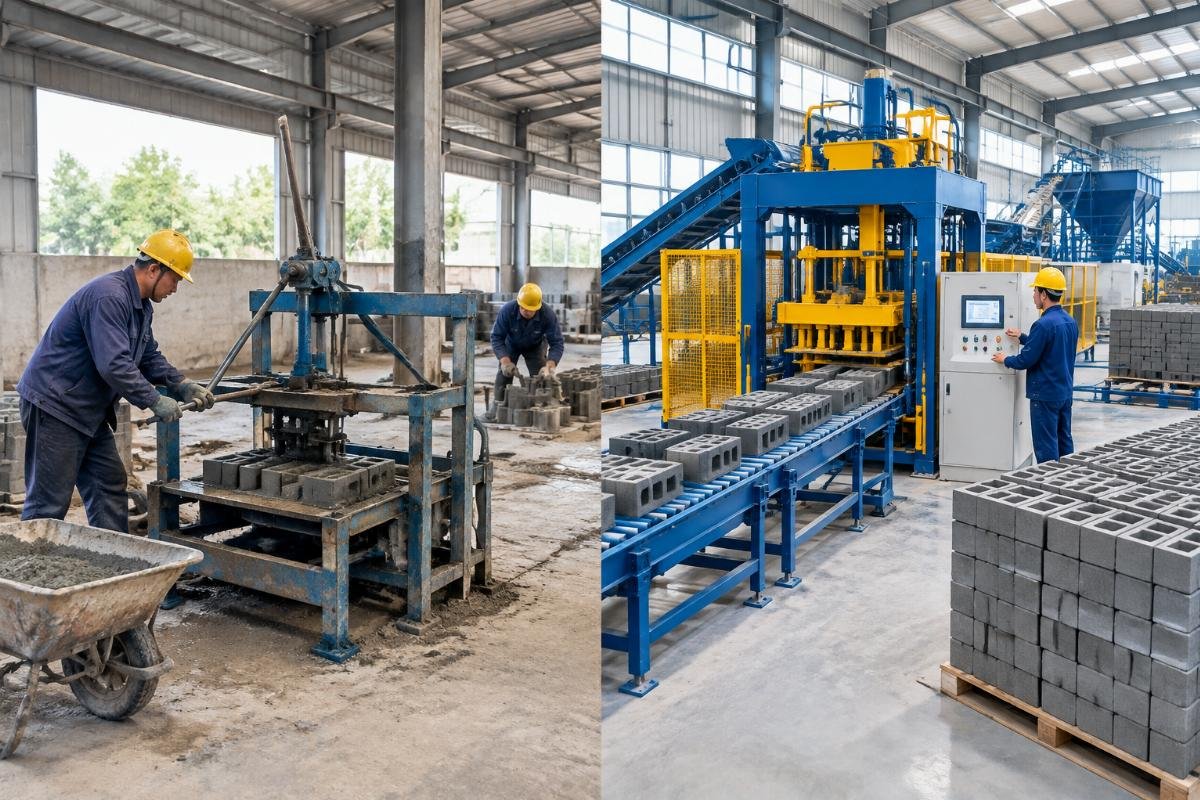
The transition from mechanical relays to programmable logic controllers marks the biggest divide in this industry. It is not merely a technical upgrade; it is a shift in how a business manages risk and consistency.
What Are the Key Differences Between Predecessor and Modern QT Series?
The core difference lies in the control system: shifting from simple mechanical relays to advanced PLC automation and enhanced hydraulic stability.
Older machines often rely on basic relay circuits that are prone to failure under continuous heavy load. In contrast, modern QT series machines use industrial-grade PLCs with touch-screen interfaces, allowing for precise control over vibration time, pressure, and cycle duration. [NEED_CITE: industrial automation standards for construction machinery] This precision ensures that every block has uniform density, which is critical for meeting structural standards.
| Feature | Legacy Manual/Semi-Auto Machines | Modern QT Series Automatic Lines |
|---|---|---|
| Control System | Mechanical Relays / Simple Buttons | Industrial PLC with Touch Screen |
| Hydraulic Stability | Prone to pressure fluctuations | High-stability sealed systems |
| Vibration Control | Manual adjustment, inconsistent | Automated, precise frequency control |
| Maintenance Interval | Frequent, often weekly | Extended, typically monthly |
| Operational Complexity | High labor dependency | Low labor, high skill requirement |
A Southeast Asian producer I worked with previously faced constant downtime with their older semi-auto unit. The hydraulic seals would fail weekly, requiring days of repair. After switching to a newer PLC model, the improved sealing technology extended maintenance intervals to once a month. [NEED_CITE: hydraulic system reliability metrics in heavy machinery] This reliability is a key factor in any Concrete Block Machine Comparison, as downtime directly eats into production capacity.
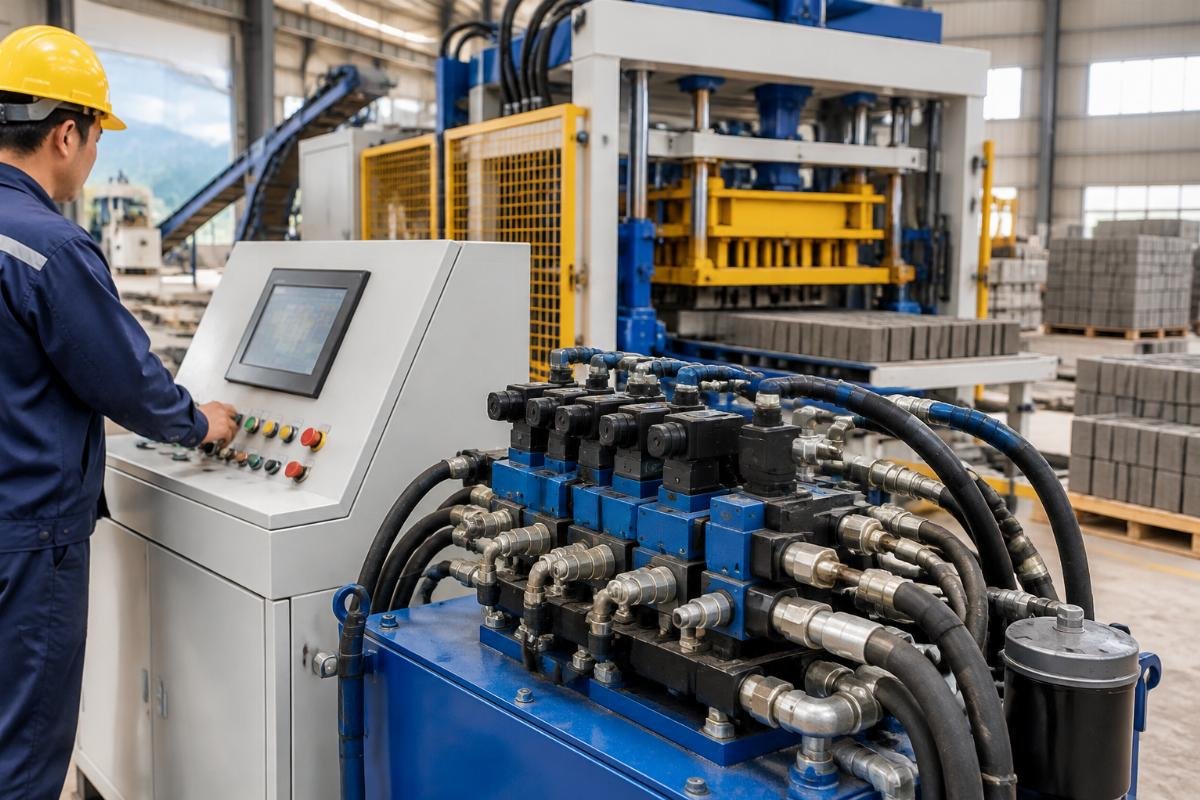
The move to automation also means that the machine can self-diagnose issues, alerting operators before a minor fault becomes a major breakdown. This predictive capability is absent in predecessor models, where problems are only discovered after production stops.
How Does Automation Impact Operational Costs?
Many believe manual machines are cheaper long-term; actually, labor turnover and training costs often exceed the price difference of automation.
When conducting a Concrete Block Machine Comparison, most buyers focus on the sticker price. However, the operational expenditure (OPEX) tells a different story. Manual machines require a large workforce for mixing, feeding, pressing, and curing. Each additional worker introduces variability and cost. Automation consolidates these roles into a few monitoring positions.
Consider the case of a Nigerian client who switched to a QT6-15. His crew size reduced from twelve to four. This was not just a reduction in headcount; it was a reduction in management overhead, training time, and potential errors. [NEED_CITE: impact of automation on labor productivity in manufacturing] The monthly wage bill dropped noticeably, offsetting the higher initial cost of the automated line within a reasonable payback period.
Furthermore, energy efficiency plays a role. Modern QT machines are designed to optimize power consumption per cycle. Older machines often run motors at full capacity regardless of load, leading to wasted electricity. A Concrete Block Machine Comparison must include energy usage, as this is a recurring cost that accumulates over years.
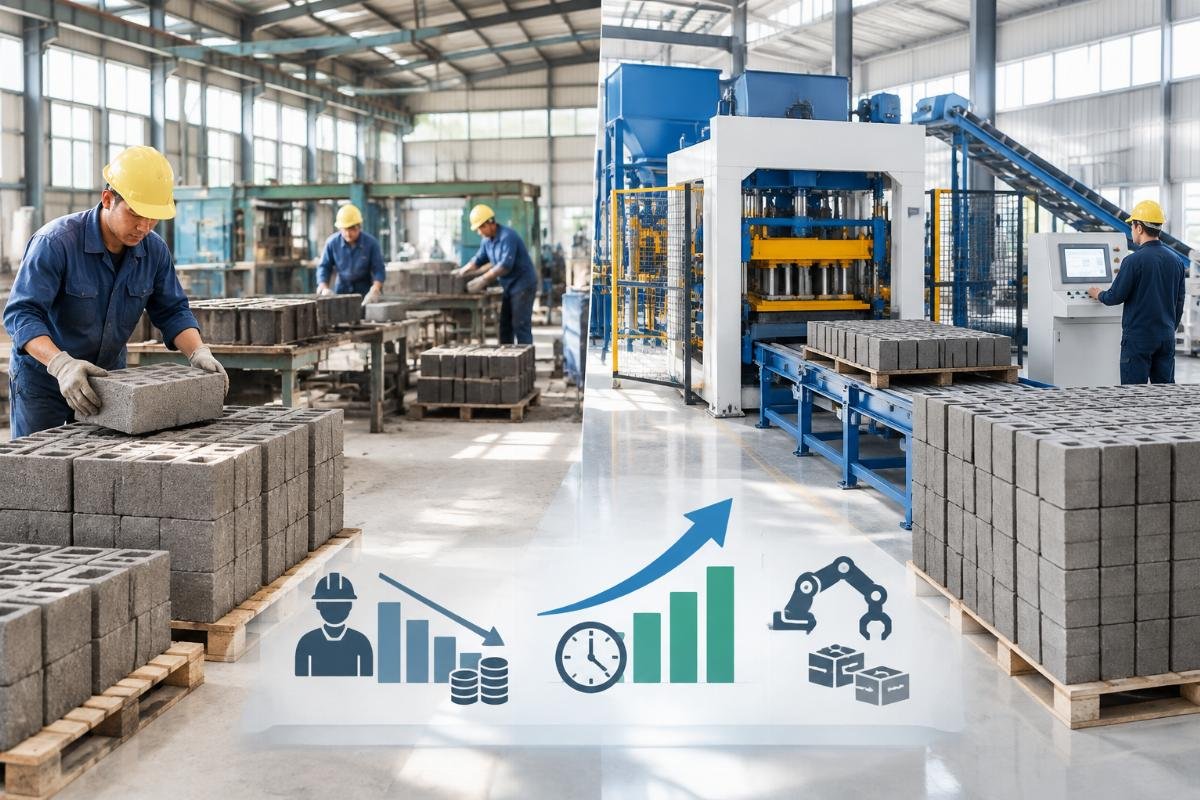
The hidden cost of manual operation also includes material waste. Inconsistent pressing leads to blocks that are either too weak or too dense, both of which result in rejection. Automated systems ensure consistent pressure, minimizing this waste. [NEED_CITE: material waste statistics in concrete product manufacturing]
Which Machine Fits Your Production Scale?
Matching the right QT model to your specific business scenario is more important than simply choosing the largest machine available.
Not every project needs a QT12-15. For small-scale startups or those producing specialized interlocking pavers, a QT4-15 or QT6-15 might offer the best balance of cost and output. For large government infrastructure projects requiring massive volumes of standard blocks, the QT10-15 or QT12-15 provides the necessary throughput. [NEED_CITE: capacity planning guidelines for precast concrete plants]
Shiyue offers turnkey solutions that include ROI analysis to help buyers make this decision. By understanding your target market, local labor costs, and raw material availability, we can recommend the optimal configuration. This service is part of our commitment to ensuring that your Concrete Block Machine Comparison ends with a choice that supports your business goals, not just your immediate budget.
For example, a client in Latin America was initially set on a large QT12-15. However, after analyzing his distribution network and storage capacity, we recommended a QT8-15. This allowed him to start with manageable inventory levels and scale up later, avoiding the trap of overproduction.
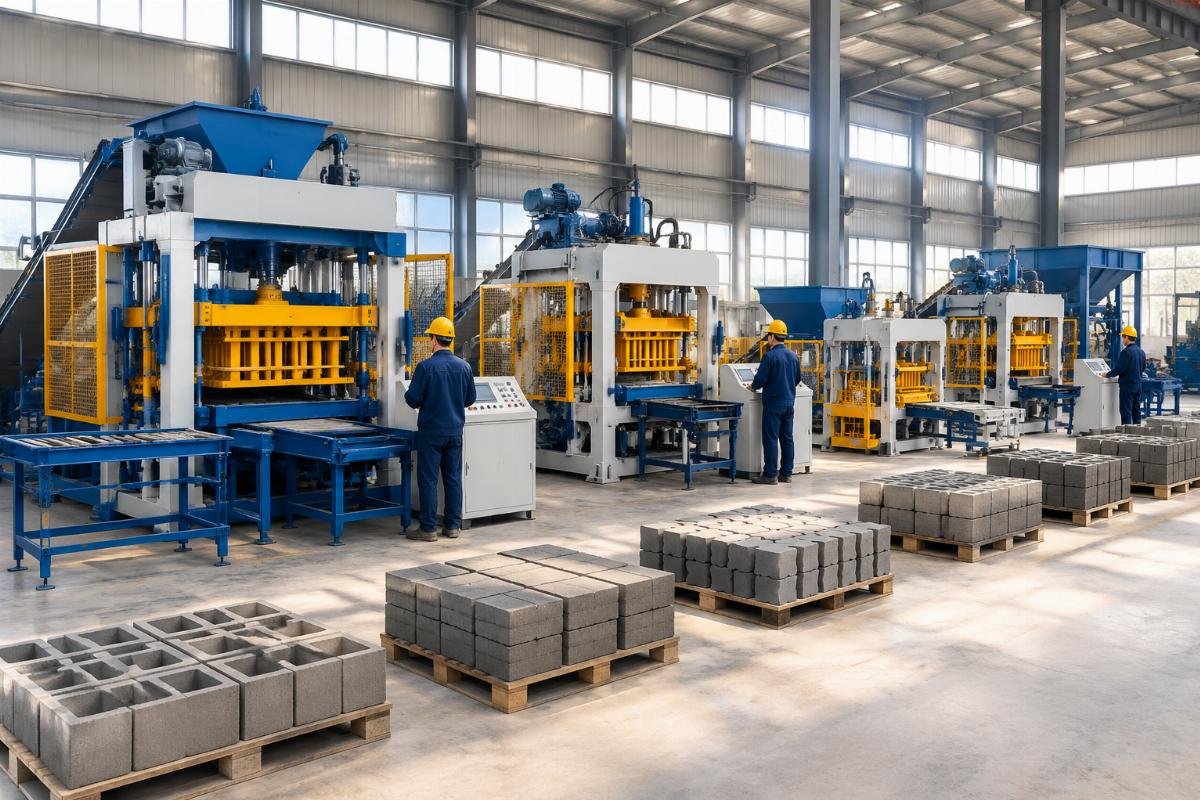
Choosing the wrong size can lead to underutilization or bottlenecks. A thorough assessment of your production scale ensures that the machine you buy is an asset, not a liability.
What Hidden Costs Do Older Machines Carry?
Maintenance frequency, spare parts availability, and energy inefficiency are the silent killers of profitability for legacy equipment.
Older machines often use non-standard components that are difficult to source. When a part fails, the wait time for a replacement can halt production for weeks. In contrast, modern QT series machines use standardized industrial components that are widely available. [NEED_CITE: supply chain resilience for industrial machinery parts] This availability reduces downtime and keeps production flowing.
Energy inefficiency is another hidden cost. Older hydraulic systems may leak or operate at lower efficiencies, requiring more power to achieve the same result. Over a year, this extra energy consumption adds up to a significant expense. A Concrete Block Machine Comparison should always factor in the total cost of ownership, not just the purchase price.
Additionally, older machines lack the safety features mandated by current international standards. Upgrading to a modern CE-certified machine reduces the risk of workplace accidents and associated liabilities. [NEED_CITE: construction machinery safety standards compliance]
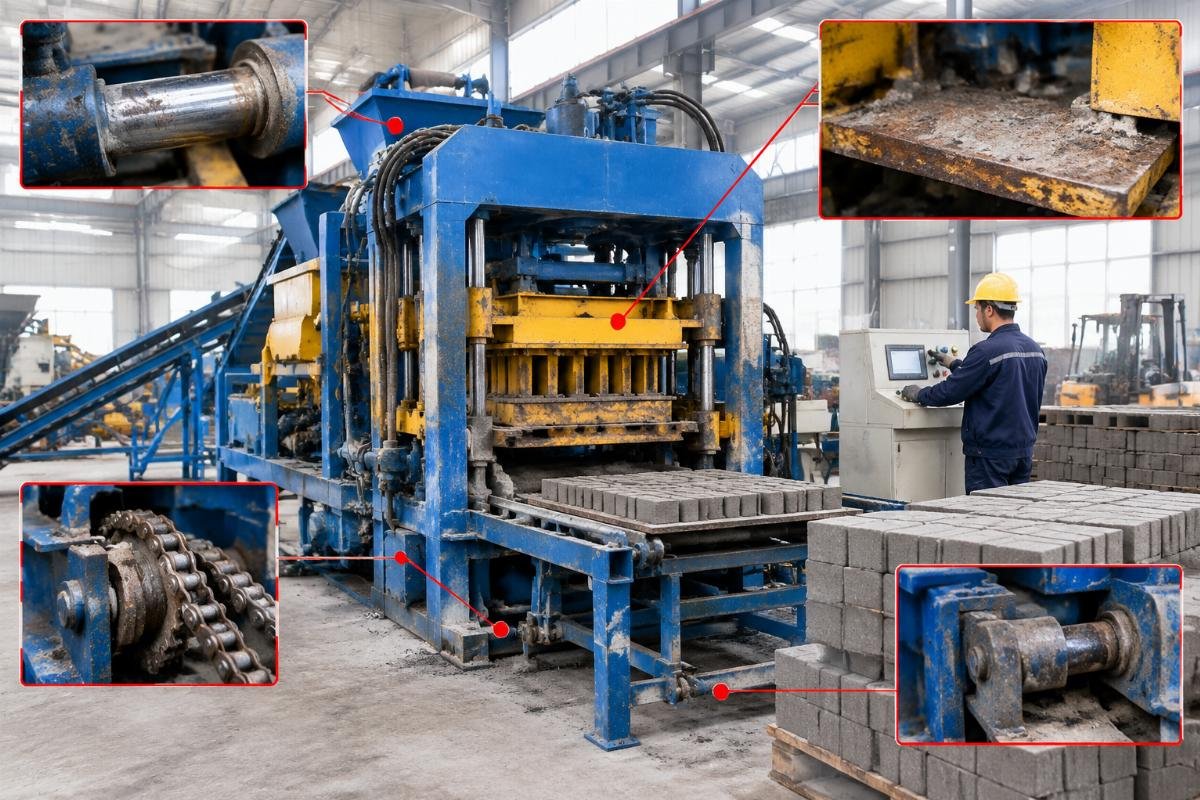
The cumulative effect of these hidden costs can make an older machine more expensive to run than a new automated line, even if the initial price was lower.
Conclusion
Consistency drives profit, not just speed.
A Concrete Block Machine Comparison shows that upgrading to modern QT series lines reduces hidden costs like labor, waste, and downtime. By focusing on total operational efficiency rather than just upfront price, investors can build a more sustainable and profitable production business.

Industry expert sharing insights about concrete machinery, block making technology and turnkey production solutions.
View all posts →
Leave a Reply