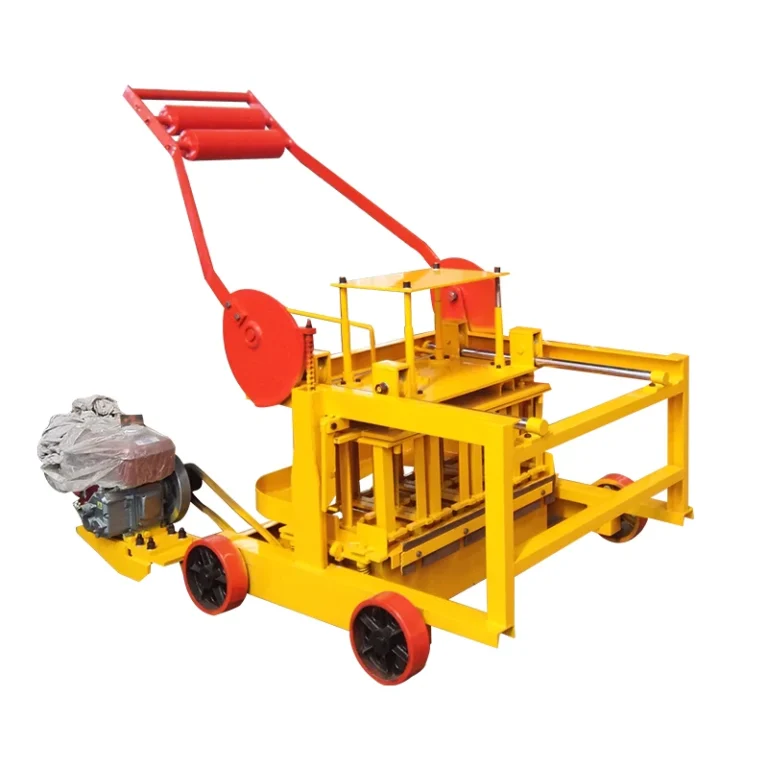
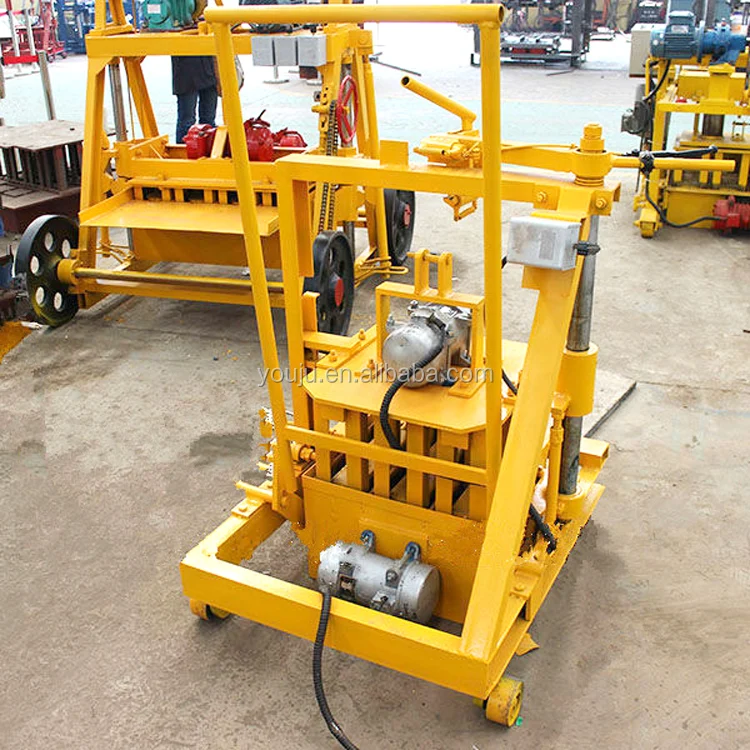
Configuration set against your actual mix design and site conditions — every QMJ2-45 unit leaves our Linyi workshop only after we confirm the block format you intend to produce and the aggregate you can source locally.
Technical Specifications
| Parameter |
Value |
| Model |
QMJ2-45 |
| Product Type |
Mobile Block Making Machine |
| Machine Type |
Manual mobile egg-laying block machine |
| Automation Level |
Manual, free-moving, no pallets required |
| Labour Requirement |
1 to 3 workers |
| Power Source |
Diesel engine, no electrical dependency |
| Cycle Time (400×200×200 mm hollow brick) |
25–30 seconds |
| Output Capacity (400×200×200 mm, 2 pcs/mould) |
160 pcs/h, 1,280 pcs per 8-hour shift |
| Output Capacity (400×150×200 mm, 3 pcs/mould) |
240 pcs/h (basis to be confirmed) |
| Output Capacity (400×100×200 mm, 4 pcs/mould) |
320 pcs/h, 2,560 pcs per 8-hour shift |
| Pallet Requirement |
None — blocks laid directly on ground |
| Mould Change |
Manual, supports multiple hollow brick formats |
| Control System |
Manual operation, no PLC |
| Certification |
ISO 9001:2000, CE |
Application Suitability
| Application |
Material or Output |
| Small-scale on-site hollow block production |
Crushed stone, sand, cement, water |
| Remote construction project block making |
Diesel-powered operation, no grid electricity needed |
| First block plant with minimal investment |
400×200×200 mm, 400×150×200 mm, 400×100×200 mm hollow bricks |
| Contractor self-supply at housing developments |
Hollow blocks produced and cured directly on project ground |
Why Stated Capacity Rarely Matches Day-One Output
The number on the nameplate means nothing unless it names the block format behind it.
I have watched buyers receive a mobile block making machine rated for hundreds of pieces per hour, only to discover the figure assumed a small solid brick they never intended to sell. The QMJ2-45 produces 160 pieces per hour when pressing 400×200×200 mm hollow blocks at two per mould, but switch to a 400×100×200 mm mould with four cavities and the same cycle yields 320 pieces in that hour. Both numbers are honest; neither tells the whole story without the format attached. When a supplier quotes only a peak figure, the buyer absorbs the gap [NEED_CITE: common discrepancies between quoted and actual block machine output].

Where the QMJ2-45 Sits in the Full Machine Range
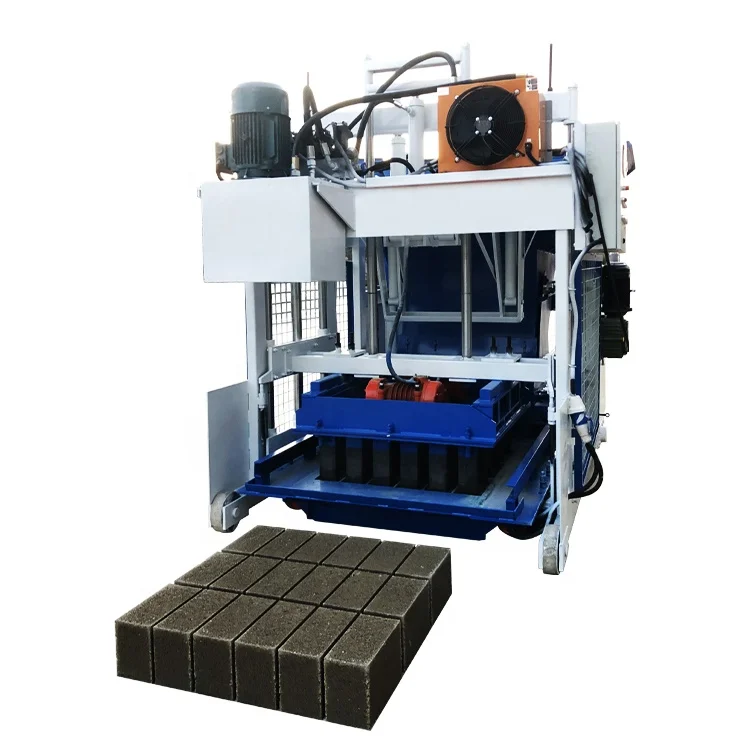
The Shiyue lineup spans from this pallet-free mobile unit through semi-automatic stationary presses to fully automatic lines with stacking and cubing. The QMJ2-45 occupies the entry tier, built for buyers whose priority is getting production running without committing to a fixed plant, pallet inventory, or curing-rack infrastructure. Understanding where it sits helps you decide whether this mobile block making machine meets your current demand or whether stepping up to the next tier is already justified.
What Separates the Mobile Tier from the Next Step Up
Semi-automatic stationary machines introduce pallets, a fixed press station, and higher vibration force — trade-offs that pay off once daily volume targets exceed what a single mobile unit can sustain. The QMJ2-45, by contrast, eliminates pallet cost entirely and moves with the work face, which matters when the construction site itself shifts over a project timeline. Buyers who outgrow this tier typically move to a stationary press while retaining the same mould format logic, so the transition is a capacity decision rather than a product-format restart [NEED_CITE: block machine tier upgrade paths from mobile to semi-automatic].
Reading the Specs That Actually Shape Daily Production
The diesel engine eliminates voltage and frequency questions that routinely delay commissioning on electric presses — there is no panel to wire and no phase sequence to check. Cycle time of 25 to 30 seconds on a 400×200×200 mm hollow brick sets the rhythm; every format change alters that rhythm because cavity count and block mass shift the vibration demand. Mould change is manual, meaning a skilled operator can swap formats within a shift, but this is not a quick-release system — plan format runs in batches rather than alternating hourly. The absence of a hydraulic system keeps maintenance mechanical: grease points, belt tension, and engine service intervals replace hydraulic hose and valve checks.
The Cost of Skipping the Format Conversation Before Ordering
I once shipped a 2-45 mobile unit to a site in West Africa where the contractor assumed the standard mould would cover his entire hollow block requirement. The local market had shifted to a 150 mm wall thickness after his last project, and the mould on the machine produced only 200 mm. Three weeks of production went into inventory he could not sell [NEED_CITE: block format demand shifts in regional construction markets]. Sending the correct mould afterward solved the hardware problem, but the lost time and cement were already spent.
Why Buyers Source This Tier from Shiyue
Block machinery is our single focus, so the QMJ2-45 is specified as part of a matched system — engine, mould, and ground-curing method considered together rather than assembled from unrelated suppliers. We set the configuration against the buyer’s actual mix design and locally available aggregate, not a catalogue default, which matters because sand with high clay content will not compact under the same vibration parameters as clean crushed dust. Mould design covers the formats the buyer’s market actually sells, with custom drawings available when standard sizes do not match. The automation level is selectable across the range, so a buyer starting on the QMJ2-45 can move to a semi-automatic press later without relearning the format logic. Installation support and operator training accompany delivery so the first shift produces saleable blocks, not scrap.
Documentation & Verification
- Line layout stating which block format each output figure assumes
- Machine specification sheet with included mould drawing and format list
- Diesel engine service manual matched to the installed unit
- Factory test record on your requested hollow brick format before dispatch
- Packing photographs identifying your specific QMJ2-45 before crating
- CE declaration and ISO 9001:2000 documentation where applicable
Installation, Commissioning & Support
- Level, compacted ground area required — no concrete foundation or anchor bolts needed for this mobile unit
- Diesel fuel specification and break-in service interval provided with the engine manual
- Machine arrives assembled; only the mould and engine require pre-start checks on site
- First-day commissioning includes mix ratio adjustment to your local sand and aggregate
- Operator training covers manual mould change, cycle pacing, and engine maintenance
- Wear parts list identifies mould liners and vibration springs by part number for reorder
Before You Send an Inquiry
Tell us the hollow brick dimensions your market demands, the daily volume you need to sustain, and whether your site has reliable grid electricity or requires diesel operation. Share a sample or description of the sand and aggregate available near your project. With that information we can confirm which mould formats to include, whether the QMJ2-45 mobile tier fits your volume target, or whether the semi-automatic range is the more practical starting point.
Frequently Asked Questions
Q: Where does the QMJ2-45 sit in the full machine range, and when should I move up?
A: It is the entry tier, designed for buyers who need block production without a fixed plant or pallet investment. Move to a semi-automatic stationary press when your daily volume target consistently exceeds what a single mobile unit can deliver, or when your product mix requires faster mould change cycles than manual operation allows.
Q: How is output capacity calculated per block format?
A: Output depends on how many cavities the mould holds and the cycle time for that format. A 400×200×200 mm mould carries two cavities producing 160 pieces per hour, while a 400×100×200 mm mould carries four cavities at 320 pieces per hour — same machine, different daily totals.
Q: What site conditions does the mobile model need compared to a stationary line?
A: The QMJ2-45 needs level, compacted ground where blocks can be laid and cured directly. A stationary line requires a concrete foundation, pallet inventory, curing racks, and a covered production area — a larger footprint and higher initial infrastructure cost.
Q: Can I start with the QMJ2-45 and upgrade later?
A: Yes. The mould format logic and block dimensions carry across the Shiyue range, so moving to a semi-automatic or automatic press later means gaining capacity and automation without changing the product formats your market already buys.
Q: What investment separates the mobile tier from higher tiers?
A: The mobile tier avoids pallet purchases, curing-rack construction, and electrical infrastructure — the three cost items that separate it from stationary lines. Exact investment differences depend on the automation level and output target you select for the next tier up.

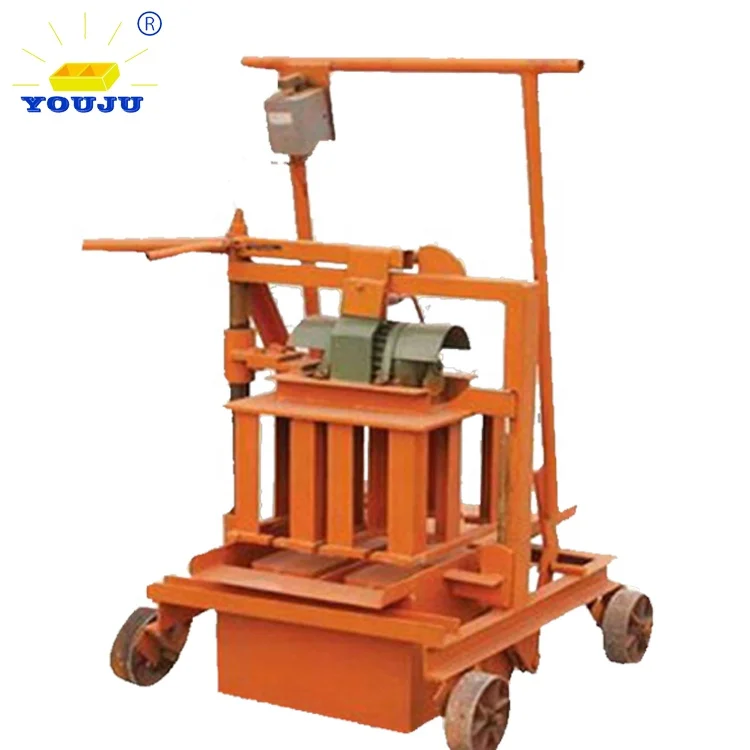
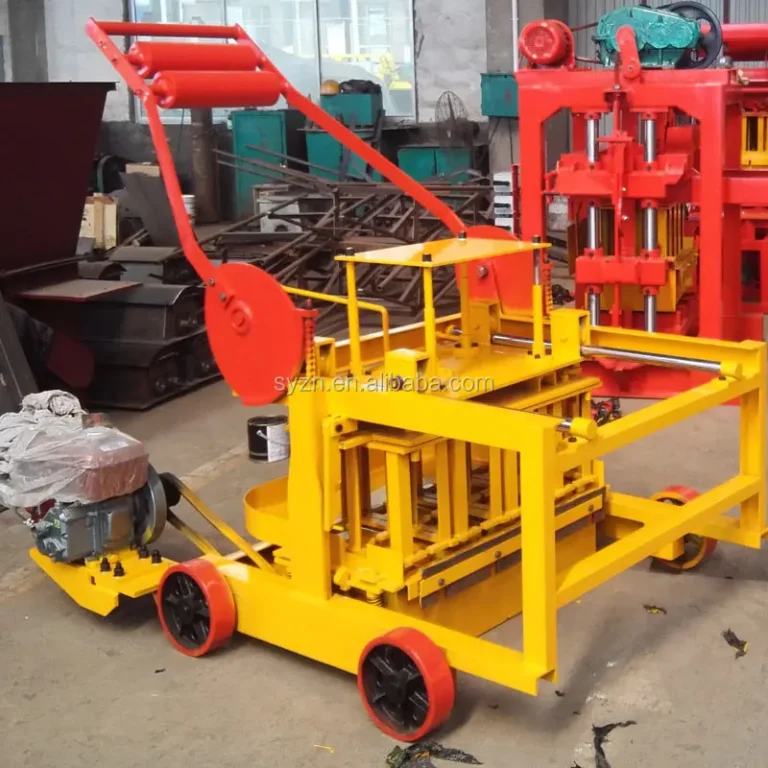 Mobile block machine