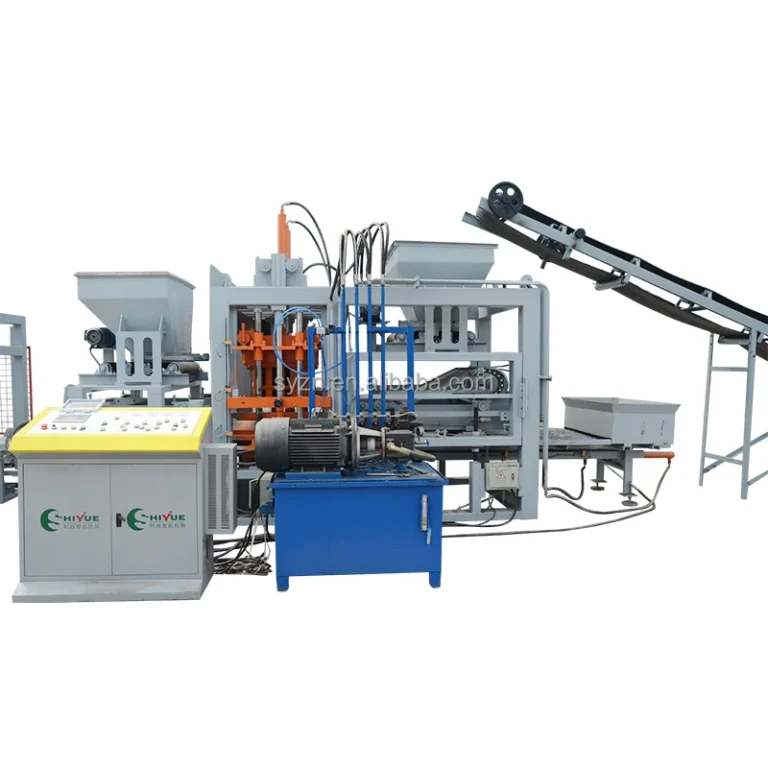
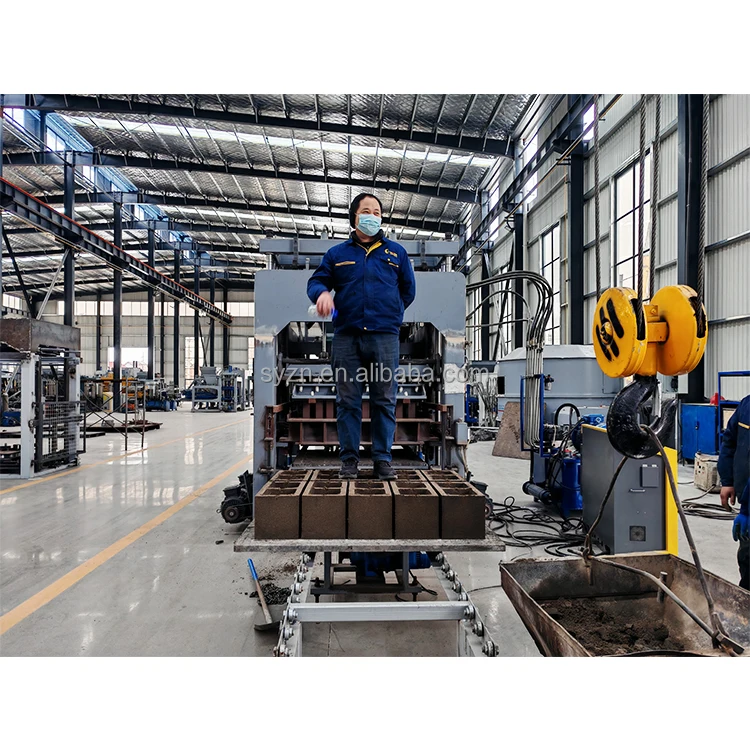
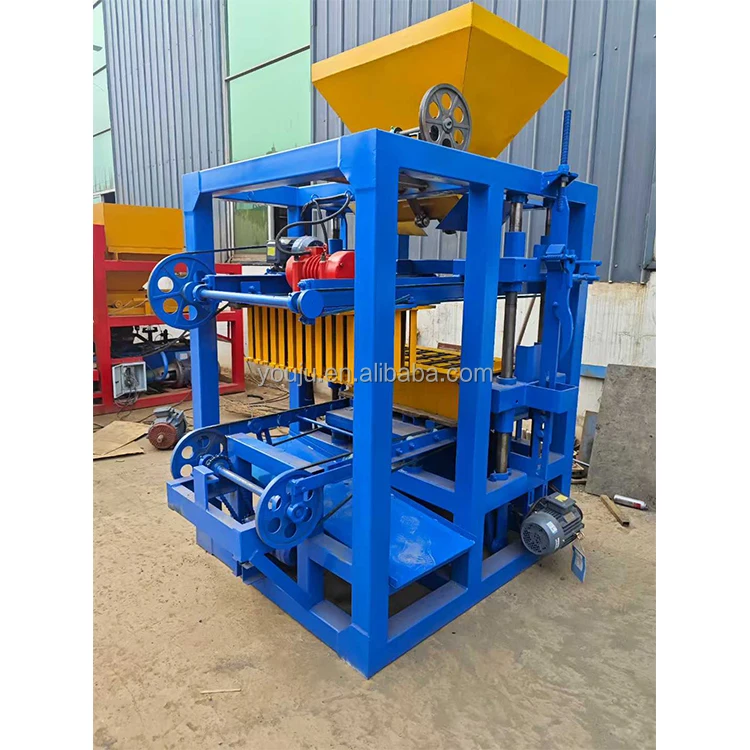
Mechanical vibration matched to your mix — Every QTJ4-24 leaves our Linyi workshop only after the vibration frequency and pressure have been calibrated against the buyer’s actual aggregate sample, not a catalogue default.
Technical Specifications
| Parameter |
Value |
| Model |
QTJ4-24 |
| Product Type |
Semi-Automatic Cement Block Making Machine |
| Moulding Method |
Mechanical vibration |
| Overall Dimensions (L×W×H) |
3600 × 1700 × 2560 mm |
| Pallet Size |
850 × 450 mm |
| Moulding Cycle |
24–26 s (basis not stated in source — confirm block format / material / thickness) |
| Rated Power |
11.95 kW |
| Vibration Force |
45 kN |
| Vibration Configuration |
2 × 3 kW lower vibrators + 2 × 1.5 kW upper vibrators |
| Material Distribution |
Full-automatic spiral |
| Reducer Type |
350-type for mould lifting |
| Control System |
PLC controlled |
| Net Weight |
2 T |
| Raw Materials |
Cement, sand, stone |
| Automation Level |
Semi-automatic |
| Voltage & Frequency |
Configurable (to be confirmed before order) |
Application Suitability
| Application |
Material or Output |
| Hollow block production |
Crushed stone, river sand and Portland cement |
| Solid block production |
Fine aggregate and cement mix |
| Interlocking brick production |
Graded sand and cement with pigment addition |
| Paving brick production |
Coarse aggregate base with fine sand face mix |
What "24 Seconds per Cycle" Actually Means for Your Output
Cycle time is meaningless without naming the block format it was measured on.
A 24-second cycle on a small interlocking paver produces a very different daily tally than the same cycle on a 200 mm hollow block. Many quotations list a single cycle figure and leave the buyer to discover the gap between quoted capacity and real output once the machine is running. The QTJ4-24 is a semi-automatic block making machine manufacturer proposal that states the assumed format, pallet count per cycle and shift length so the daily number is verifiable before contract signing. [NEED_CITE: block format assumptions in capacity quotations]
I have watched operators on site try to push the cycle faster on a hollow block format than the mould and vibration were set for, only to get weak corners and rejected batches. The PLC holds the timing consistent, but the timing itself must be right for the format.

Where the QTJ4-24 Sits in the Range
The SHIYUE stationary range runs from small workshop units up to high-capacity fully automatic lines. The QTJ4-24 occupies the semi-automatic tier: PLC-controlled cycling with manual pallet handling at the exit end. This keeps the initial investment contained while the mechanical press, vibration system and spiral feeder are identical in principle to the higher tiers, meaning block quality is not compromised at the lower automation level. A buyer starting here can add automatic pallet feeding and stacking later without replacing the press itself.
Matching the Machine to Your Block Format
The mould cavity, vibration amplitude and pressing head travel must all agree with the block dimensions your market actually buys. A hollow block demands a different vibration profile than a thin interlocking paver. The QTJ4-24 supports mould changes across these formats, and each proposal includes a format list with cycle times stated per mould so the buyer can compare real daily output across the blocks they intend to sell. [NEED_CITE: mould change procedure and format flexibility]
Vibration Force, Reducer and Feeder — What the Specs Mean on the Floor
The 45 kN total vibration force comes from four motors — two 3 kW units below the mould table and two 1.5 kW units above — working together to compact the mix from both directions. This dual-level arrangement is what gives hollow blocks their wall density without cracking the thinner sections. The 350-type reducer on the mould lifting mechanism is sized above the minimum the load would suggest, which matters when the press cycles hundreds of times per shift under abrasive dust. The full-automatic spiral feeder fills the mould cavity uniformly before each press, so density variation from one block to the next stays within tolerance rather than depending on how the operator shovels material.
When the Wrong Pallet Size Reaches Your Site
Pallet dimensions decide whether the freshly pressed blocks can move straight to your existing curing racks or sit on the floor waiting for someone to carry them. A pallet that does not match your forklift tines or curing rack spacing turns a semi-automatic line into a manual handling bottleneck. The QTJ4-24 runs on 850 × 450 mm pallets, and this size must be confirmed against the buyer’s curing area layout before the machine ships. [NEED_CITE: pallet and curing area coordination in block plants]
Why Buyers Choose This Configuration
Block machinery is our single focus, so the press, mould, pallet and feeder are specified as one matched system rather than assembled from separate suppliers. Each QTJ4-24 is configured against the buyer’s actual mix design and local aggregate, not a catalogue default. Moulds are available for the formats the buyer’s market sells, with custom drawings accepted. The automation level is selectable, so a first-plant buyer can start semi-automatic and add pallet handling automation as volume grows. Factory testing runs the buyer’s block format before dispatch, so the machine arrives producing from day one.
Documentation & Verification
- Line layout showing QTJ4-24 position, conveyor runs and pallet return path
- Capacity calculation naming block format, cycle time and shift hours assumed
- Mould drawing pack with dimensional list for each ordered format
- Pallet specification sheet matched to buyer’s curing rack spacing
- Factory test record on buyer’s block format before container loading
- Voltage, frequency and PLC display language confirmed in writing
Installation, Commissioning & Support
- 3600 × 1700 mm footprint requires a level concrete pad with anchor bolt provisions
- 11.95 kW total load needs a dedicated three-phase circuit at the confirmed voltage
- Machine ships partially assembled; vibration frame and feeder bolt into position on site
- PLC parameters calibrated to buyer’s block format during commissioning week
- Operator training covers mould change, spiral feeder adjustment and daily grease points
- Wear parts list identifies first-replacement intervals for vibrator mounts and mould liners
Before You Send an Inquiry
Tell us the block formats your market buys, the daily output you need, and the sand or aggregate you can source locally. Confirm the voltage and frequency at your site and the language your operators read on a screen. If you already have curing racks or a forklift, share the dimensions so the pallet size is right the first time.
Frequently Asked Questions
Q: What block format is the QTJ4-24 capacity based on?
A: Capacity changes with every mould. The proposal we issue names the exact block dimensions, the number of blocks per pallet, the cycle time for that format and the assumed shift length, so you can calculate daily output yourself before signing.
Q: Which mould formats can I run on this machine?
A: Hollow block, solid block, interlocking brick and paving brick moulds are all available for the QTJ4-24. Custom mould designs to buyer drawings are accepted. The proposal lists each ordered format with its specific cycle time and output figure.
Q: What voltage and PLC language options are available?
A: Voltage and frequency are configured to match your site supply and must be confirmed before production begins. The PLC display language is also confirmed at the same stage so operators can read the screen from the first day of commissioning.
Q: Can I add automation to the QTJ4-24 later?
A: Yes. The semi-automatic QTJ4-24 can be upgraded with automatic pallet feeding, stacking and cubing equipment as production volume grows. The press itself does not need to be replaced; the handling stations are added around it.
Q: What supporting equipment do I need besides the press?
A: A mixer, raw material feeder, pallet supply and curing rack system are all required. The line layout we provide maps each station and confirms that cycle times match so the press is not left waiting for material or pallets.

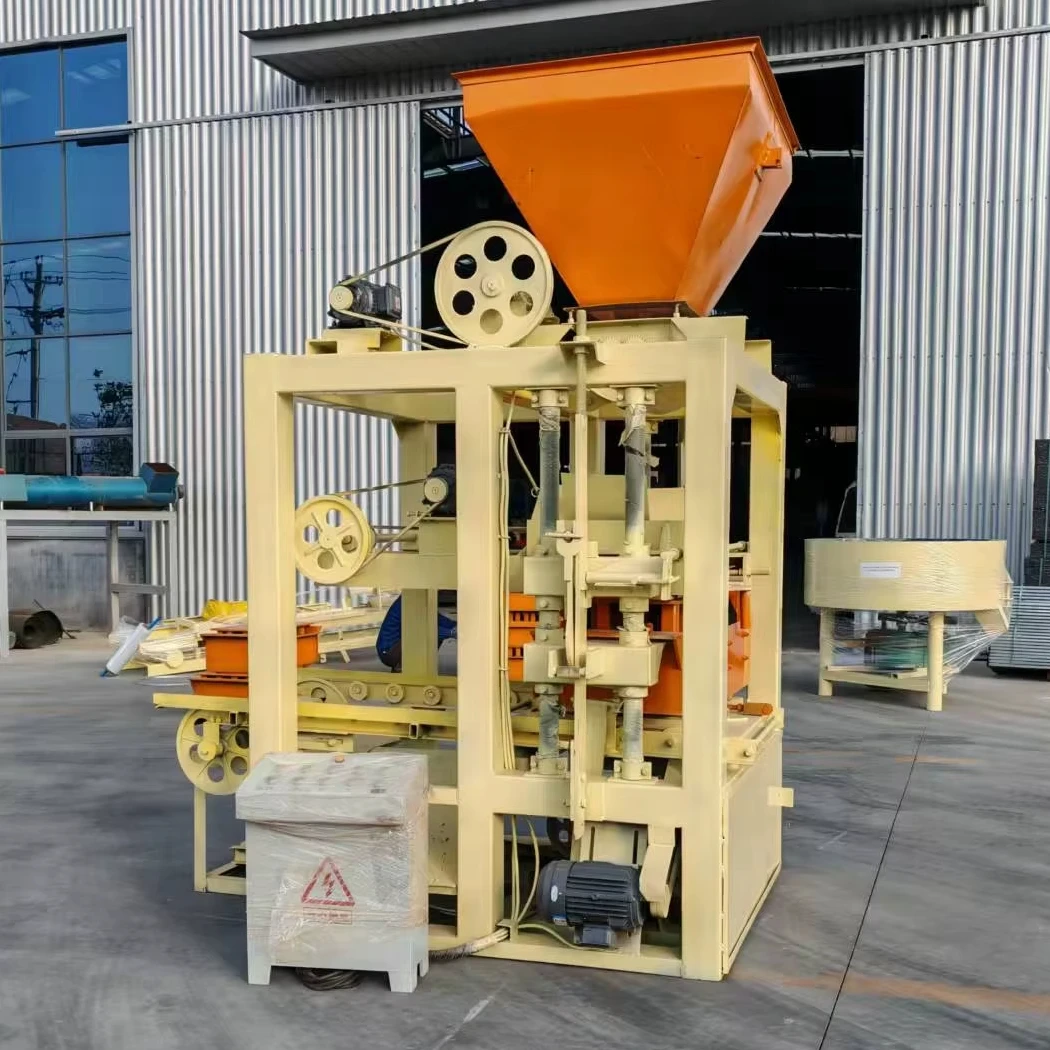
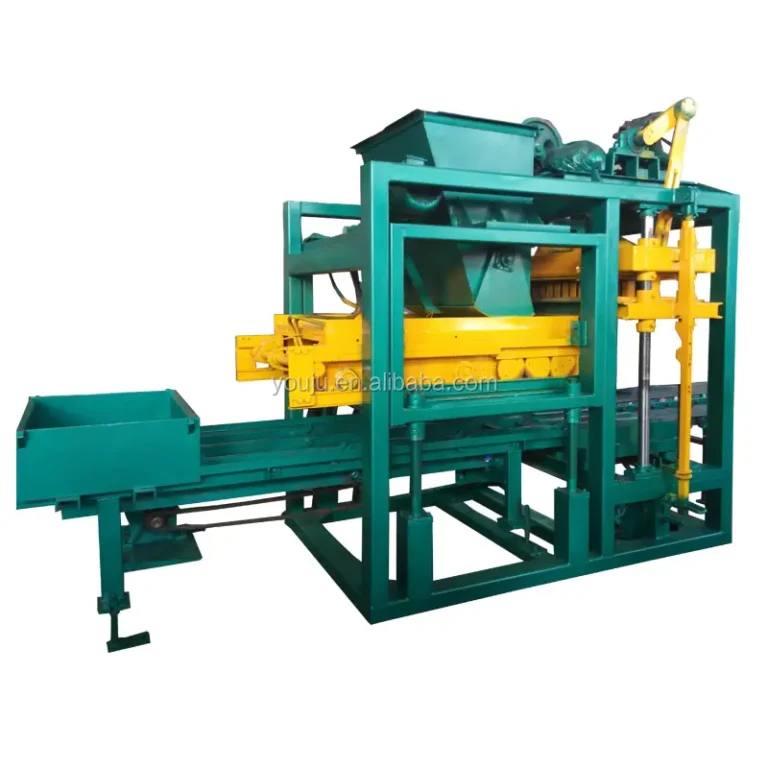 Stationary block machine