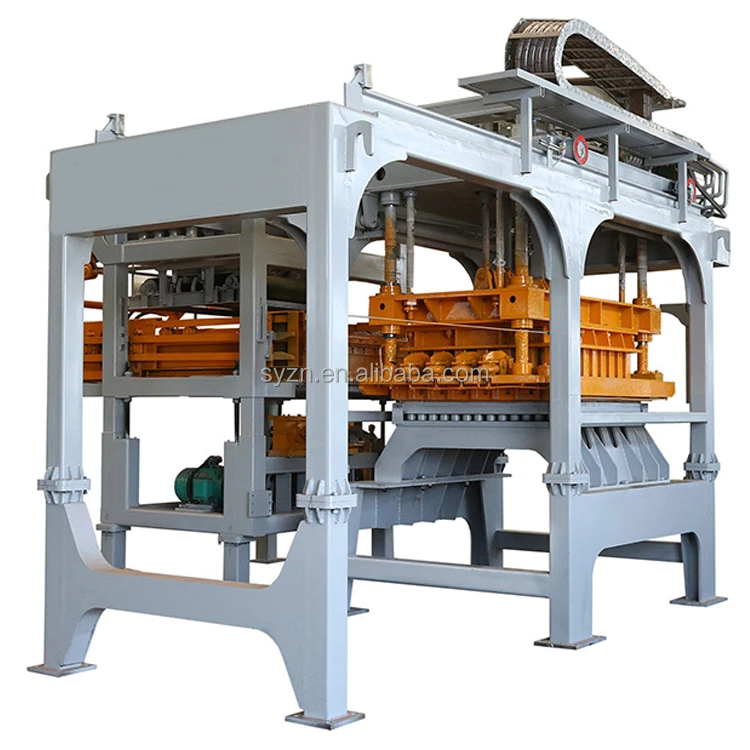
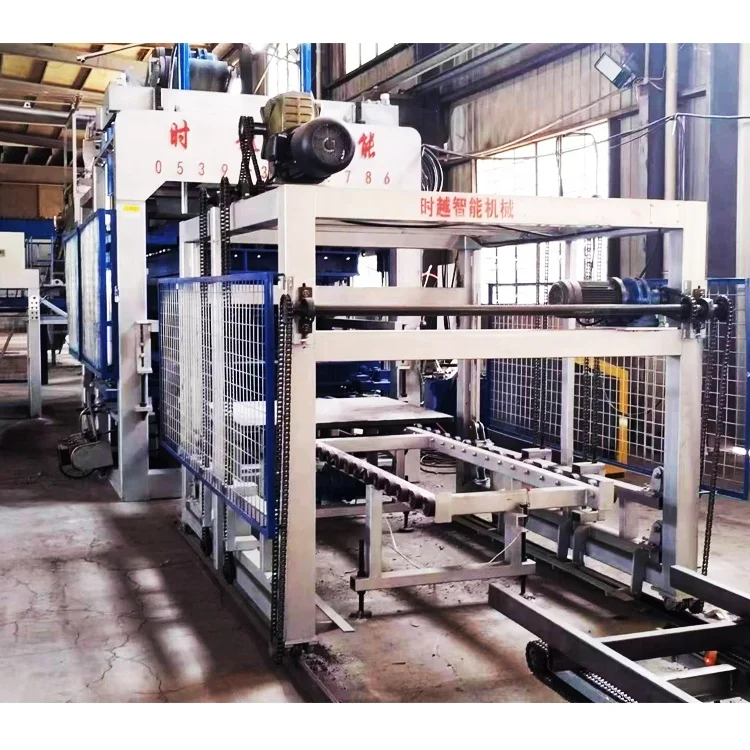
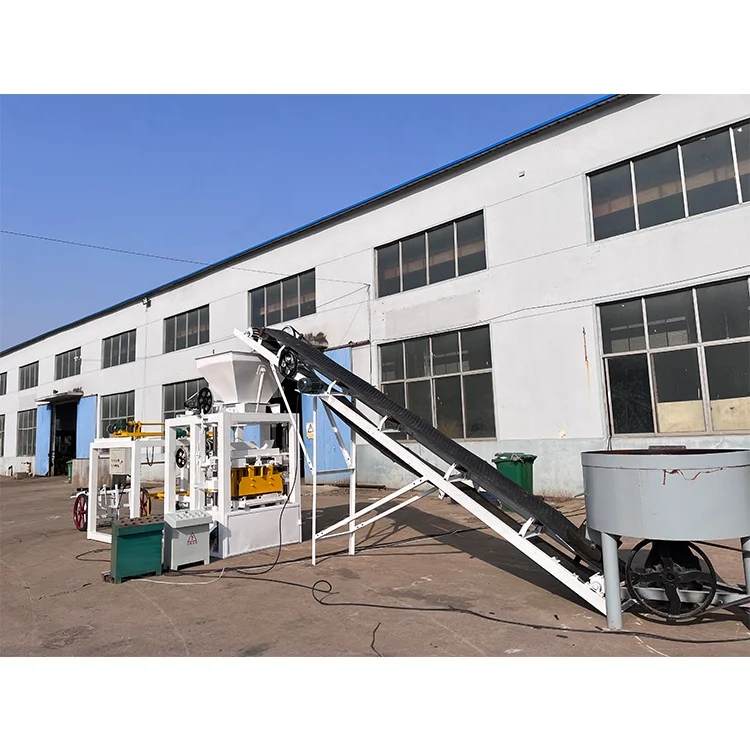
Single-Focus Block Machinery — the QTJ4-40 stationary block machine is specified as one matched system of press, mould, pallet and handling, not assembled from separate suppliers.
Technical Specifications
| Parameter |
Value |
| Model |
QTJ4-40 |
| Product Type |
Stationary Concrete Block Making Machine |
| Overall Dimensions (L×W×H) |
1350 x 1460 x 1800 mm |
| Pallet Size |
850 x 450 mm |
| Overall Power |
9.5 kW |
| Vibration Frequency |
2800 RPM |
| Vibration Force |
35 kN |
| Cycle Time |
40 seconds per mould |
| Output Capacity |
2880 pcs/day (basis not stated in source — confirm block format / material / thickness) |
| Control System |
Electrical control with mechanical interworking |
| Automation Level |
Manual / semi-manual operation |
| Assembly State |
Stationary type, small platform vibration |
| Voltage & Frequency |
Three-phase four-wire (exact voltage/frequency to be confirmed for target market) |
| Recommended Mixer |
Vertical type 350 mixer |
| Lubrication |
35# gear oil 10 kg for mixer; engine oil 2 kg for host machine |
Application Suitability
| Application |
Material or Output |
| Small-scale hollow block production |
Crushed stone, sand, cement and local aggregate |
| Paver block manufacturing |
Cement-bound granular mixes for driveways and walkways |
| On-site workshop block plants |
Limited-investment production using locally sourced raw materials |
| First-line entrepreneur block operations |
Entry-level volume for local construction supply markets |
What "2880 Pieces per Day" Leaves Out About This Stationary Block Machine Manufacturer
Capacity numbers without a block format are meaningless to your production plan.
When a first-time buyer sees a round daily figure on a quotation, the instinct is to treat it as a guarantee. In my years covering projects across East Africa and Southeast Asia, the most frequent on-site disappointment traces back to that single number. A stationary block machine manufacturer should state which block size, wall thickness and mix density sit behind every capacity claim, because a 400×200×200 mm hollow block and a 60 mm paver pull entirely different cycle realities from the same press [NEED_CITE: block format impact on cycle time and daily output]. The QTJ4-40 runs a 40-second mould cycle under table vibration feeding and fluctuation vibration molding, but real daily throughput depends on how fast your crew moves pallets, how your mixer keeps up, and whether the local aggregate allows clean demoulding at that cadence.
Where the QTJ4-40 Sits on the Full Machine Range
The QTJ4-40 is the entry tier of the stationary block machine range offered by this stationary block machine manufacturer. It occupies the position where a buyer needs a compact footprint, straightforward mechanical-electrical operation and limited capital outlay. The 1350 x 1460 x 1800 mm frame fits inside a standard workshop bay alongside a vertical 350 mixer and a small curing rack area. Buyers who already operate a semi-automatic or automatic line sometimes place a QTJ4-40 beside it to handle short paver runs or special-format orders that would otherwise interrupt the main press schedule.
Matching the Press to Your Local Aggregate and Mix
Block strength inconsistency is the second most common complaint I encounter after capacity shortfalls. Vibration force and hydraulic or mechanical pressure must be matched to the buyer’s specific mix design and local aggregate, not to a catalogue default [NEED_CITE: vibration force and aggregate matching for block density]. The 35 kN vibration force at 2800 RPM on the QTJ4-40 is calibrated for standard cement-sand-crushed stone blends. If your local aggregate is volcanic scoria, lightweight pumice or recycled demolition material, the vibration profile needs adjustment before commissioning. A stationary block machine manufacturer that skips this conversation will deliver a machine that produces crumbly blocks on your first production day.
How Vibration, Pallet Size and Power Interact on the Shop Floor
The 35 kN vibration force works through a small platform table that feeds vibration into the mould cavity during both the filling and compaction stages. This fluctuation vibration molding approach means the aggregate settles under vibration while the mechanical head applies downward pressure — the two actions together determine the green strength of the block when it leaves the mould. Pallet size at 850 x 450 mm sets the mould footprint and therefore the number of block cavities per cycle; it also determines whether your existing curing racks and forklift can handle the loaded pallets without modification. The 9.5 kW total power draw is low enough for workshop-level three-phase supply, but the electrical panel requires a 100A leakage protector on a dedicated circuit to avoid nuisance tripping during vibration startup.

The Hidden Cost of Skipping Voltage and Language Confirmation
Voltage, frequency and PLC display language unconfirmed before shipment is a delay I have watched repeat itself across multiple project sites. A machine wired for 380V/50Hz arriving in a country running 415V/60Hz will either burn out motors or run vibration motors at the wrong RPM, producing under-compacted blocks from day one [NEED_CITE: voltage and frequency standards by export market]. The QTJ4-40 uses a three-phase four-wire supply with an electrical control and mechanical interworking system, meaning there is no PLC screen to switch languages on — but the motor nameplate, wiring diagram and control contactor ratings must all match the destination country before the crate leaves the factory. Correcting this on-site means sourcing replacement contactors and rewinding motors, which stalls commissioning for days.
Why Source This Machine From a Single-Focus Manufacturer
Block machinery as a single focus means the QTJ4-40 press, its mould, the 850×450 mm pallet and the recommended vertical 350 mixer are specified as one matched system. Configuration is set against your actual mix design and target block format rather than pulled from a catalogue default page. Mould design and supply covers the hollow block and paver formats your local market sells, with custom drawings available when your buyers request non-standard dimensions. The automation level on the QTJ4-40 is manual to semi-manual, and the range includes upgrade paths so a buyer can start here and move to semi-automatic or fully automatic as volume grows. Installation and commissioning support includes operator training on vibration timing, pallet handling and mould change procedure, plus a wear parts and mould list specific to your configuration.
Documentation & Verification
- Line layout showing QTJ4-40 footprint with vertical 350 mixer placement and curing rack area
- Capacity calculation stating which hollow block or paver format the daily figure assumes
- Machine specification sheet confirming 35 kN vibration force and 850×450 mm pallet size
- Mould drawing and format list for every hollow block and paver type included in supply
- Voltage and control language confirmation sheet signed before dispatch
- Factory test record on your specified block format and mix before crating
Installation, Commissioning & Support
- Dedicated three-phase circuit with 100A leakage protector for the 9.5 kW total load
- Level concrete pad matching the 1350 x 1460 mm base footprint with anchor bolt provisions
- Electrical control panel wiring verified against destination voltage before dispatch
- First-run parameter setting for vibration timing matched to your local aggregate blend
- Operator training on manual pallet feeding, mould change and mechanical interworking safety
- Wear parts list covering vibration motor bearings and mould liner replacements
What to Share When You Start an Inquiry
A productive conversation begins with your target block format and dimensions, because that determines which mould cavity layout sits on the 850×450 mm pallet. Your local raw material — whether standard crushed stone, river sand, volcanic scoria or recycled aggregate — shapes the vibration and pressure configuration we set before dispatch. Share your workshop floor area and ceiling height so we can confirm the QTJ4-40 fits alongside the vertical 350 mixer and leaves room for pallet circulation and curing racks.
Frequently Asked Questions
Q: The 2880 pcs/day figure — based on which block format and dimensions?
A: That figure is quoted without a stated block format in the source documentation, which is why we always ask buyers to specify their target hollow block or paver dimensions before confirming capacity. A 400×200×200 mm hollow block and a 200×100×60 mm paver yield different pieces per cycle on the same 850×450 mm pallet, so the daily total shifts accordingly once your format is locked in.
Q: Will the QTJ4-40 electrical system match my country’s voltage and frequency?
A: The machine runs on a three-phase four-wire supply, but exact voltage and frequency must be confirmed for your destination country before production begins. We match motor winding, contactor ratings and the 100A leakage protector to your local grid standard so the vibration motors run at the correct 2800 RPM on arrival.
Q: Is the 850×450 mm pallet compatible with my existing curing racks and forklift?
A: Pallet size determines whether loaded pallets fit your current curing rack spacing and whether your forklift tine width can handle them safely. Share your rack dimensions and forklift model so we confirm compatibility or adjust the pallet specification before the QTJ4-40 ships.
Q: Is the vertical 350 mixer included in the supply scope?
A: The vertical type 350 mixer is recommended to keep pace with the 40-second mould cycle, but its inclusion depends on the quotation package you select. If you already have a mixer on site, share its capacity and discharge height so we confirm it can feed the QTJ4-40 hopper without bottlenecking the line.
Q: When should I step up from the QTJ4-40 to a semi-automatic or automatic machine?
A: The QTJ4-40 suits workshops with limited capital and manual pallet handling. When daily volume targets exceed what a manual crew can sustain, or when block format variety demands faster mould changes and automatic stacking, stepping to the next tier on the range removes those bottlenecks while keeping the same mould and pallet principles.

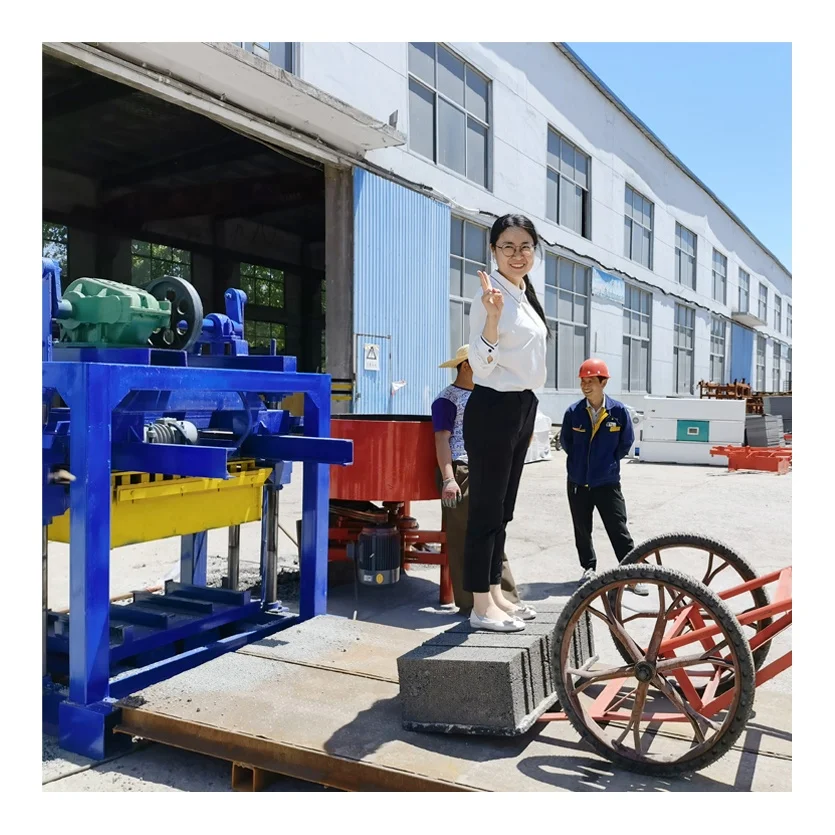
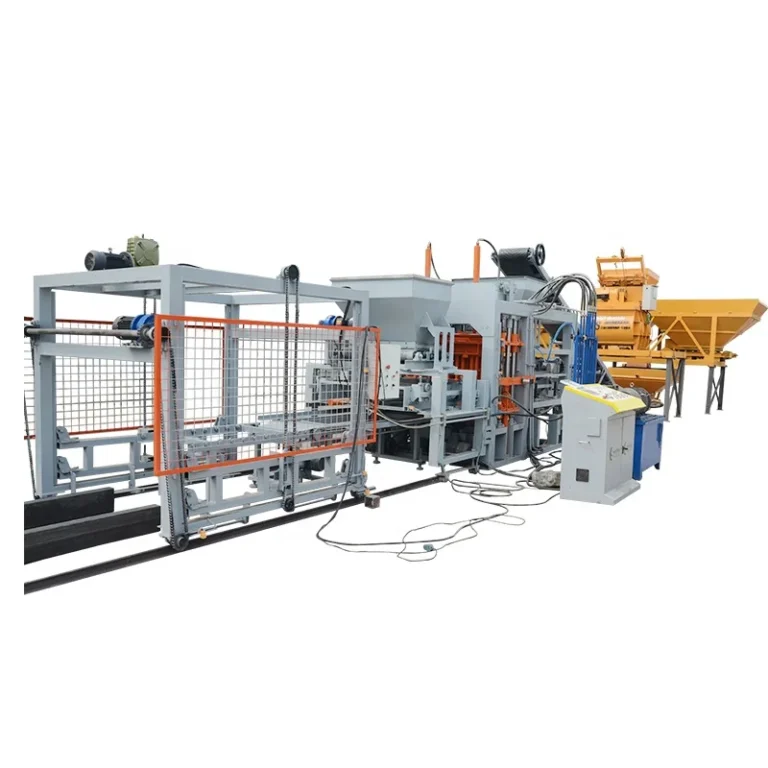 Stationary block machine