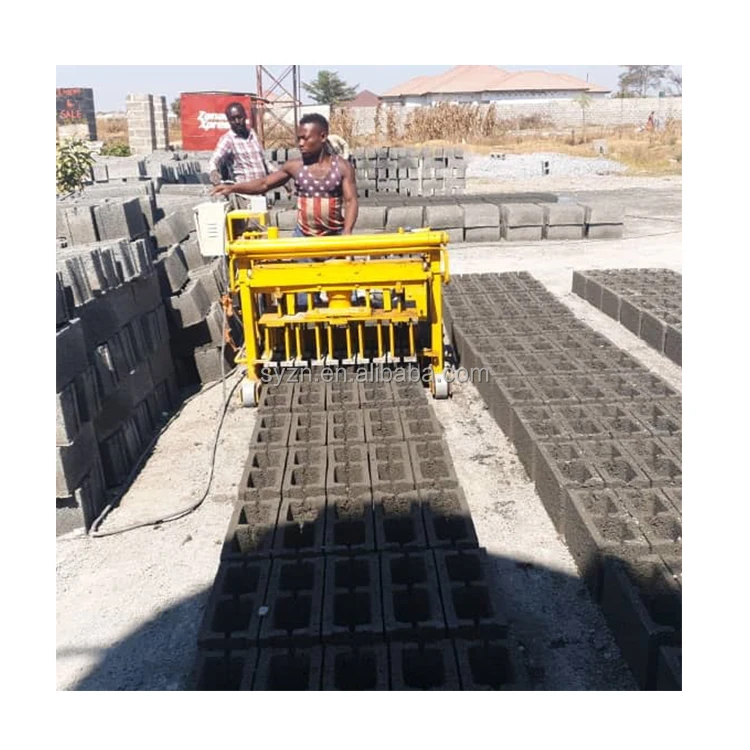
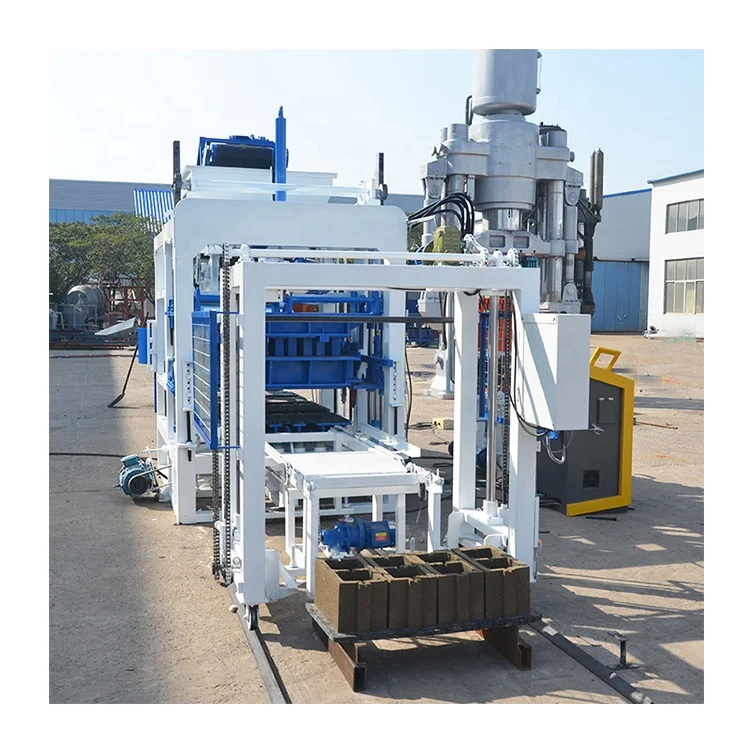
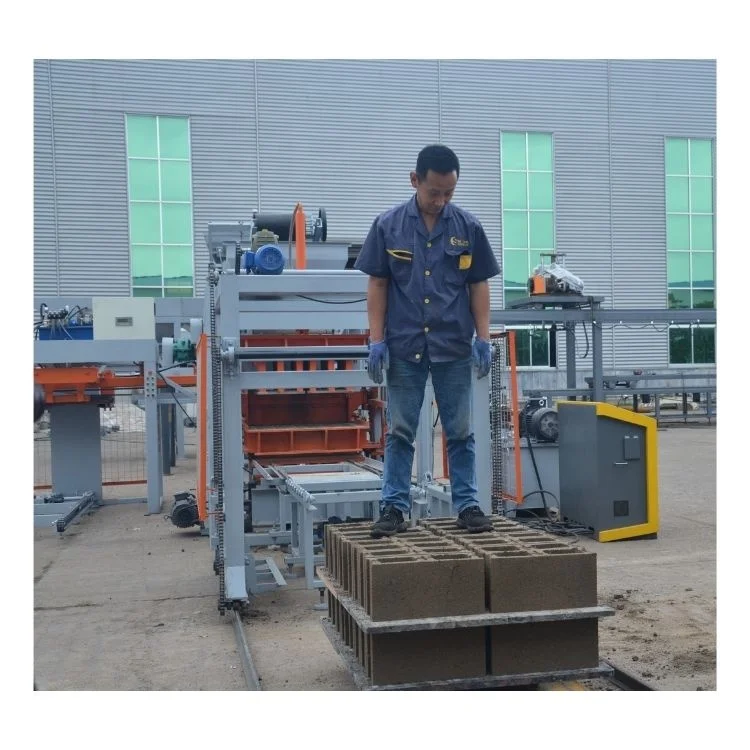
Matched System Sizing — the QTJ4-40 is specified against your actual block format, local aggregate and curing footprint rather than quoted from a catalogue default.
Technical Specifications
| Parameter |
Value |
| Model |
QTJ4-40 |
| Product Type |
Semi-Automatic Concrete Block Making Machine |
| Rated Power |
10.4 kW |
| Molding Cycle |
40 s |
| Theoretical Productivity (400×200×200 mm hollow block, 4 pcs/mould) |
360 pcs/h, 2800 pcs/day |
| Theoretical Productivity (400×150×200 mm hollow block, 5 pcs/mould) |
450 pcs/h, 3600 pcs/day |
| Theoretical Productivity (225×112.5×60 mm solid/paving block, 9 pcs/mould) |
800 pcs/h, 6400 pcs/day |
| Pallet Size |
850×450 mm |
| Overall Dimensions (L×W×H) |
1350×1460×1800 mm |
| Vibration System |
Bed mould vertical vibration + upper mould compression vibration |
| Automation Level |
Semi-automatic (top die push-pull, automatic scraper, manual pallet handling) |
| Voltage |
Configurable to buyer’s local voltage |
| Raw Materials |
Concrete, sand, cement, fly ash, lime, gypsum |
| Key Features |
Dual vibration, semi-automatic cycle, multiple mould formats |
Application Suitability
| Application |
Material or Output |
| Hollow block production for building envelopes |
Crushed stone, sand, cement, fly ash blends |
| Solid and paving block manufacturing |
Fine aggregate with cement binder for interlocking or kerb formats |
| On-site production for housing or development contractors |
Local sand and aggregate with cement, blocks used on the same project |
| Entry-level block plant for first-time entrepreneurs |
Standard concrete mixes with semi-automatic handling |
What "2800 Blocks per Day" Actually Requires on the QTJ4-40
The output figure only holds when the 400×200×200 mm hollow block format, a 40-second cycle, and uninterrupted pallet supply are all met at once.
Walk onto any site running a QTJ4-40 block machine manufacturer setup and you will hear the same story: the quoted daily output assumed a specific block size, but the buyer switched formats on day two without recalculating cycle time. A 40-second cycle on a four-cavity hollow mould is not the same as a 40-second cycle on a nine-cavity paving mould — the vibration energy and pressure distribution change entirely. Before you compare any semi-automatic block machine for sale, pin down which block format drives your revenue and ask the supplier to state capacity per format, not just per shift. [NEED_CITE: typical cycle time variation across block formats]

Where the QTJ4-40 Sits in the Range
The QTJ4-40 occupies the entry-to-mid tier of our semi-automatic block machine range. Buyers choosing this QTJ4-40 block machine manufacturer typically run one or two block formats at moderate volume and handle pallets manually between the press and the curing rack. If your daily target exceeds what a single semi-automatic press can sustain, the next tier adds automatic pallet feeding and stacking, cutting manual handling out of the loop entirely.
Deciding Between Semi-Automatic and the Next Tier Up
The boundary is not about ambition — it is about pallet logistics. With manual pallet handling, the operator must keep pace with every 40-second cycle. When output climbs past what one person can move without fatigue, blocks queue on the press bed and cycle time stretches. Stepping up introduces automatic pallet feeding and a stacker that cubes cured blocks, removing the operator from the heaviest part of the line. The QTJ4-40 semi-automatic block machine for sale leaves room to retrofit that automation later, provided the pallet size and curing rack spacing were chosen with the upgrade in mind from day one. [NEED_CITE: automation retrofit compatibility considerations]
Reading the Specs That Matter on Site
Dual vibration — bed mould vertical vibration combined with upper mould compression vibration — gives more uniform density across the block cross-section than single-source vibration alone. On a hollow block, that means the shell walls compact evenly, reducing the chance of one side being weaker after curing. The 850×450 mm pallet size must match your existing curing rack slots and forklift tine spacing; ordering a pallet size that does not fit your current racks means rebuilding the curing area before the first block is made. The 10.4 kW rated power tells your electrician the dedicated circuit rating needed, separate from the mixer and conveyor loads. Voltage is configurable to your local supply, but frequency and phase must be confirmed before the motor is wound — a 60 Hz motor running on 50 Hz supply will overheat within hours. [NEED_CITE: motor frequency mismatch consequences]
The Cost of Skipping the Pallet Conversation
Buyers who confirm pallet size after the machine is built often find their curing racks are spaced for a different dimension. Pallets then sit at an angle on the rack, wet blocks slide, and breakage at the curing stage wipes out whatever the press gained in cycle speed. The pallet specification must be locked before the quotation, not after. [NEED_CITE: block breakage rates from pallet mismatch]
Why Source the Line From One Supplier
Block machinery is our single focus, so the QTJ4-40 press, its moulds, pallets and handling equipment are specified as one matched system. Capacity calculations state the block format assumed, not a generic cycle count. Mould design covers the formats your local market actually buys, including custom drawings when standard moulds do not fit. Automation is selectable — start semi-automatic and plan the upgrade path with the same pallet and rack layout. Factory testing runs your actual mix design and target format before dispatch, so the output you see on site matches the document you received with the quotation.
Documentation & Verification
- Line layout and capacity calculation stating the QTJ4-40 block format assumed per output figure
- Pallet specification sheet matched to your curing rack spacing and forklift
- Mould drawing and format list included with quotation, including change procedure
- Voltage, frequency and control language confirmation before production begins
- Factory test record on your target block format before dispatch
Installation, Commissioning & Support
- Dedicated circuit for the 10.4 kW rated power, separate from mixer and conveyor loads
- Foundation pad leveled to support the 1350×1460×1800 mm machine footprint without vibration transfer
- Pallet size 850×450 mm verified against curing rack and forklift before installation
- First-run commissioning on buyer’s local mix design with operator present at the press
- Wear parts and mould spring list provided with recommended reorder intervals
What to Prepare Before Requesting a Quotation
Share your target block format and daily output, the local aggregate and sand available, your site voltage and frequency, and the dimensions of your existing curing area. If you already have a mixer or conveyor upstream, include those specs so the line capacity can be calculated end to end rather than at the press alone.
Frequently Asked Questions
Q: What block format is the quoted capacity based on, and how does output change with other formats?
A: The theoretical output figures state the block size and mould cavity count for each line — for example, 360 pcs/h assumes a 400×200×200 mm hollow block with four cavities per mould. Switching to a different format changes both the cavity count and the vibration energy required, so cycle time and daily output shift accordingly. Always ask for capacity stated per format.
Q: Where does the QTJ4-40 sit in the full machine range, and when should I step up?
A: The QTJ4-40 sits in the entry-to-mid semi-automatic tier, suited to buyers running one or two formats at moderate volume with manual pallet handling. When daily output targets exceed what one operator can keep pace with across every 40-second cycle, the next tier adds automatic pallet feeding and stacking to remove that bottleneck.
Q: What voltage and frequency options are available, and how is this confirmed?
A: Voltage is configurable to your local supply. Frequency and phase must be confirmed in writing before the motor is wound, because running a 60 Hz motor on 50 Hz supply causes overheating. The confirmation is part of the production approval, not an afterthought at shipment.
Q: What supporting equipment do I need alongside the QTJ4-40 press?
A: At minimum you need a mixer sized to feed the press without waiting, pallets that match the 850×450 mm specification, and a curing rack area that accepts those pallets. Depending on volume, a pallet feeder and stacker can be added to reduce manual handling at the press.
Q: Can I start with the QTJ4-40 semi-automatic and add automation later?
A: Yes, provided the pallet size, curing rack spacing and line layout were planned with the upgrade in mind from the start. Retrofitting automatic pallet feeding and stacking is straightforward when the physical footprint was reserved for it during initial installation.

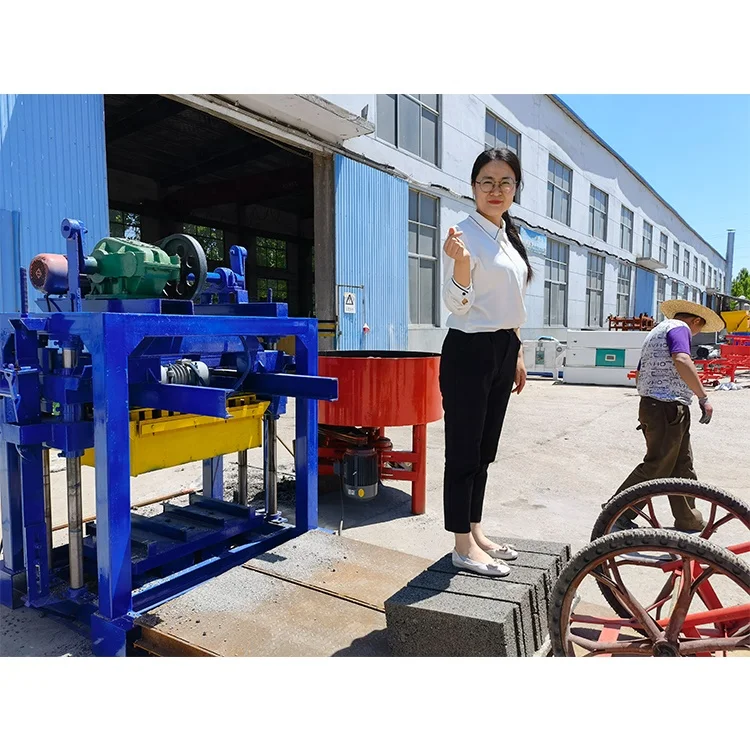
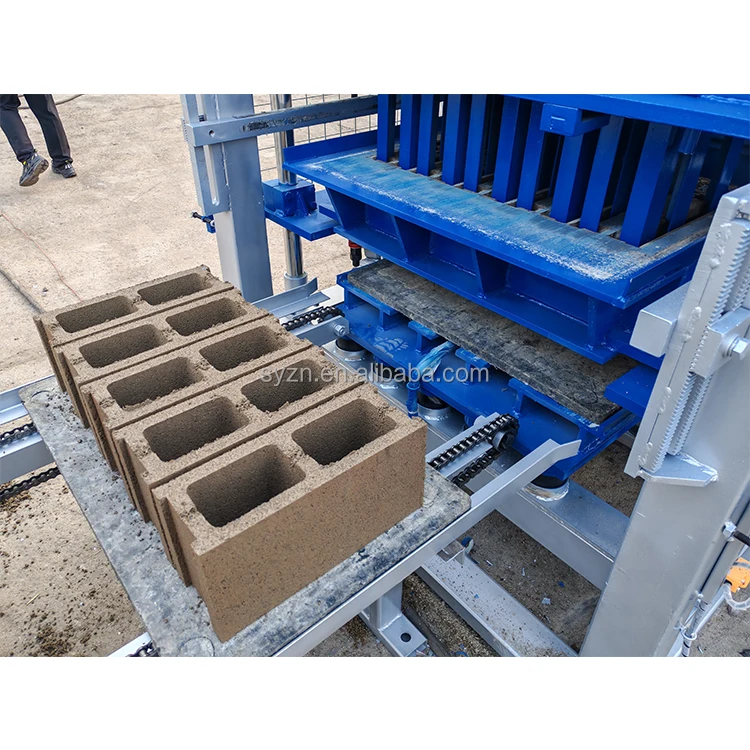 High quality block machine