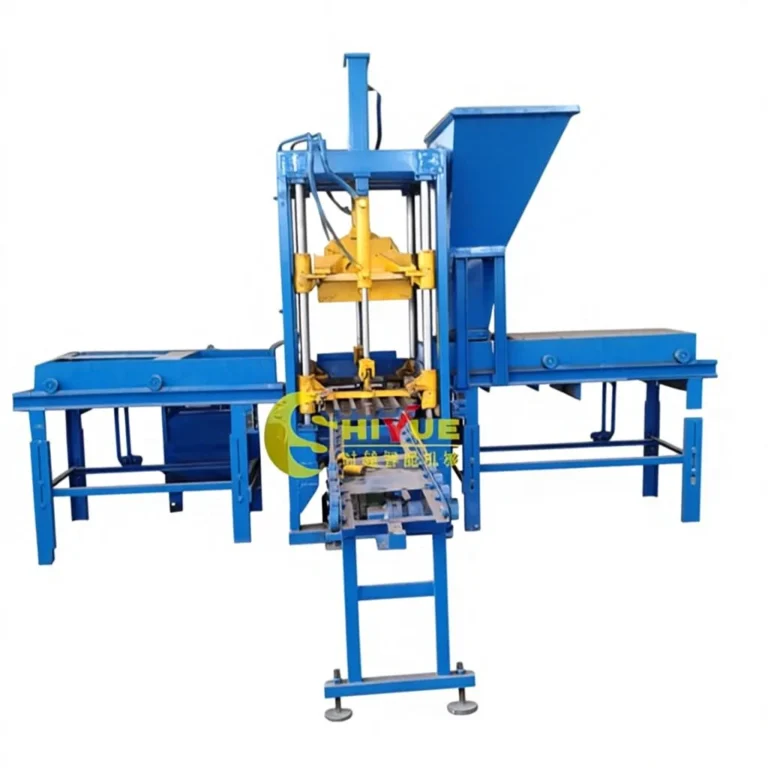
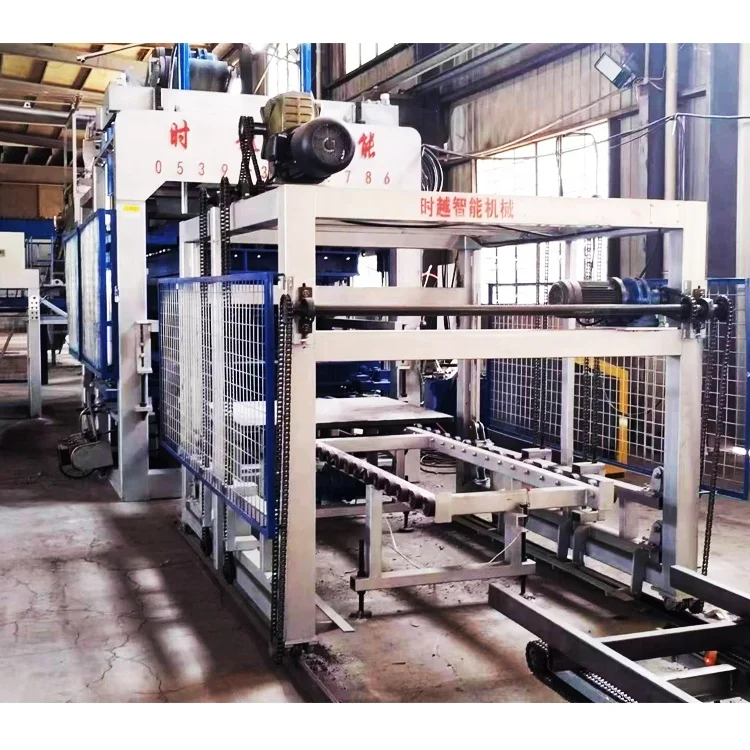
Matched System Approach — Every QTJ4-40 configuration pairs the press with pallet size, mould format, and handling equipment specified as one coordinated unit rather than separate purchases.
Technical Specifications
| Parameter |
Value |
| Product Type |
Hydraulic Semi-Automatic Block Making Machine |
| Model |
QTJ4-40 |
| Overall Dimensions (L×W×H) |
1350×1460×1800 mm |
| Rated Power |
10.4 kW |
| Molding Cycle |
40 seconds |
| Output Capacity |
360 pcs/hour based on 400×200×200 mm hollow block, 4 pcs/mould |
| Output Capacity |
450 pcs/hour based on 400×150×200 mm hollow block, 5 pcs/mould |
| Output Capacity |
800 pcs/hour based on 225×112.5×60 mm solid block, 9 pcs/mould |
| Pallet Size |
850×450×20 mm |
| Net Weight |
1.2 T |
| Vibration System |
Bed mould vertical vibration + upper mould compression vibration |
| Mould Compatibility |
Hollow, solid, paver blocks (8 / 6 / 5 / 4 inch; other sizes on request) |
| Raw Material Compatibility |
Concrete, sand, cement, fly ash, lime, gypsum |
| Assembly State |
Host machine + mixer + block mould + pallets (mixer and pallets optional) |
| Voltage & Frequency |
Configurable to buyer’s local supply (exact rating to be confirmed) |
| Automation Level |
Semi-automatic |
Application Suitability
| Application |
Material or Output |
| Small-scale hollow block production |
Crushed stone, sand, cement producing 8-inch and 6-inch hollow blocks |
| Solid brick manufacturing |
Fly ash, sand, cement mixes for load-bearing and partition bricks |
| On-site contractor block making |
Local aggregate and cement for housing project walling blocks |
| Paving block production |
High-density concrete mixes for interlocking and rectangular pavers |
| First-plant entrepreneur setup |
Semi-automatic starter line for entrepreneurs entering the block market |
What "Pieces per Hour" Means Without a Block Format Attached
Buyers comparing block machines almost always start with cycle time and hourly output, but those numbers shift dramatically depending on whether the press is running large hollow blocks or small solid pavers. A semi-automatic block making machine for sale rated at 800 pieces per hour on solid blocks may deliver fewer than half that on 8-inch hollows.
The mismatch between quoted capacity and real daily tonnage causes more buyer disappointment than almost any other specification gap. When the block format is left out of the capacity claim, the buyer plans labour, curing space, and pallet inventory against a number the machine was never going to hit on their actual product [NEED_CITE: capacity quotation practices in concrete block machinery tenders]. That gap widens further when local aggregate density differs from the factory test material.

Positioning the QTJ4-40 Across the Shiyue Stationary Range
The QTJ4-40 sits at the entry semi-automatic tier, filling the gap between mobile egg-laying machines that produce without pallets and the higher-capacity fully automatic lines with stacking and cubing. For a first-time plant or a contractor producing blocks on a job site, this tier keeps the footprint compact and the capital outlay contained while still delivering consistent vibration-formed output. Buyers surveying the full Shiyue stationary range can place themselves here before deciding whether daily volume justifies stepping up to automatic pallet feeding and stacking.
How Semi-Automatic Operation Shapes Daily Workflow
On this model, the operator handles pallet placement and removal manually while the press manages vibration, compression, and mould release automatically. This keeps the mechanical system simpler and reduces the electrical control complexity compared to full-line automation. The trade-off is that labour planning must account for pallet cycling at every 40-second interval. For plants producing under 5,000 blocks per day on solid formats, manual pallet handling remains practical without creating a bottleneck at the press [NEED_CITE: labour allocation norms for semi-automatic concrete block plants in developing markets].
Reading the Numbers That Matter for Production Planning
The 40-second moulding cycle applies across all formats, but the pieces-per-cycle figure determines real throughput — four hollow blocks per cycle versus nine solid bricks. Vibration comes from both the bed mould and the upper mould compression plate, which together compact the concrete mix before hydraulic release. The 850×450 mm pallet size must match the curing rack dimensions and the forklift tine spacing already on site; ordering pallets that do not fit existing infrastructure creates a secondary cost after the press arrives. Rated power of 10.4 kW keeps the electrical demand within reach of standard small-plant transformer capacity.
The Cost of Skipping the Aggregate Sample
Shipping a machine configured for river sand to a site that only has volcanic ash or crusher dust creates problems that surface on the first production day. The mix does not compact at the expected density, blocks crack during pallet transfer, and daily rejection rates climb until the operator slows the cycle or adds cement — both of which erase the margin the buyer modelled into the business plan. Matching vibration force to the actual local aggregate is a step that must happen before the press leaves the factory, not after it is bolted to the floor [NEED_CITE: aggregate variability impact on concrete block compressive strength consistency].
Why Buyers Source This Tier Through Shiyue
Block machinery remains the single product focus, so the QTJ4-40 press, moulds, pallets, and optional mixer are specified as a matched set rather than assembled from unrelated suppliers. Capacity calculations in every quotation state the exact block format assumed, preventing the gap between expectation and actual output. Mould design covers the formats the buyer’s local market actually buys — including custom drawings when standard sizes do not fit. Voltage and control language are confirmed before production starts, so commissioning is not delayed by a frequency mismatch at the destination port. The automation path allows a buyer to begin with this semi-automatic tier and add handling equipment later.
Documentation & Verification
- Line layout drawing showing the QTJ4-40 footprint with curing area and pallet flow path
- Capacity calculation sheet stating block format and pieces-per-mould for each output figure
- Mould drawing and format list confirming included block sizes and custom mould availability
- Pallet specification matching 850×450 mm dimensions to curing rack and forklift requirements
- Voltage and control language confirmation document signed before production begins
- Factory test record on the buyer’s specified block format prior to dispatch
Installation, Commissioning & Support
- Foundation pad must be level and rated for 1.2 T static load plus dynamic vibration forces
- Dedicated electrical circuit matching confirmed kW and local voltage before arrival
- Host machine ships assembled; mixer and pallet stacks loaded separately for container fit
- On-site commissioning includes first-run moulding cycle adjustment to local mix design
- Operator training covers pallet cycling rhythm at the 40-second interval
- Wear parts list with mould liner and vibration pad replacement intervals included
Before You Request a Quotation
To size the right configuration, we need the block format you sell most, your target daily output, and the local aggregate type available at your site. Share your existing pallet dimensions and curing rack layout if the press will join an operating plant. Voltage, frequency, and control panel language should be confirmed at inquiry stage so the electrical package matches your grid from the first day of production.
Frequently Asked Questions
Q: How does the QTJ4-40 compare to the automatic and mobile tiers in the Shiyue range?
A: The QTJ4-40 is the entry semi-automatic option, requiring manual pallet handling but offering consistent vibration-formed output in a compact footprint. Automatic tiers add pallet feeding, stacking, and cubing for higher daily volumes, while mobile egg-laying machines produce blocks on the ground without pallets. Buyers choose this tier when daily output needs stay moderate and capital investment must remain contained.
Q: What block formats does this machine support and how is capacity calculated?
A: Mould compatibility covers 8-inch, 6-inch, 5-inch, and 4-inch hollow blocks, solid bricks, and pavers, with custom sizes available on request. Capacity is stated per format — for example, 360 pieces per hour on 400×200×200 mm hollow blocks at four per mould, or 800 pieces per hour on standard solid bricks at nine per mould. Always match the quoted figure to your actual product.
Q: What plant footprint is needed and what supporting equipment is required?
A: The press itself occupies 1350×1460 mm, but total plant space must include mixer placement, pallet storage, and curing rack area. A pan mixer and pallets are available as optional additions to the base machine package. Buyers should confirm that the 850×450 mm pallet size aligns with their existing forklift and curing infrastructure before ordering.
Q: Can the QTJ4-40 be upgraded to higher automation later?
A: The Shiyue range is designed so that a buyer can start at the semi-automatic tier and add automatic pallet feeding or stacking equipment as production volume grows. The upgrade path should be discussed at the initial inquiry so the press foundation and electrical panel allow for future expansion without major rework.
Q: What voltage and control language options are available?
A: Voltage and frequency are configured to match the buyer’s local grid supply, which must be confirmed before production begins. The control panel language is also set to the operator’s preference. Confirming these details at the quotation stage prevents commissioning delays caused by electrical mismatch at the destination site.

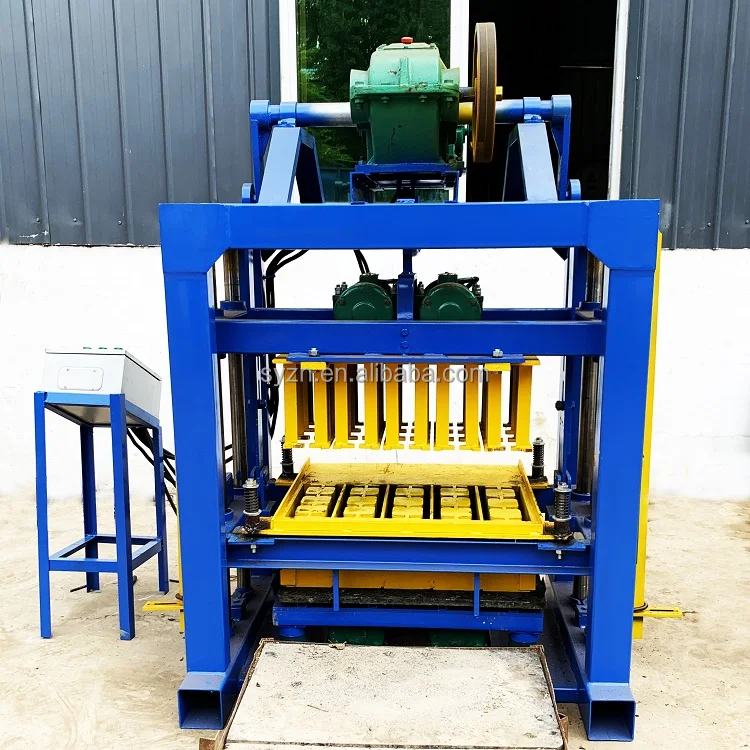
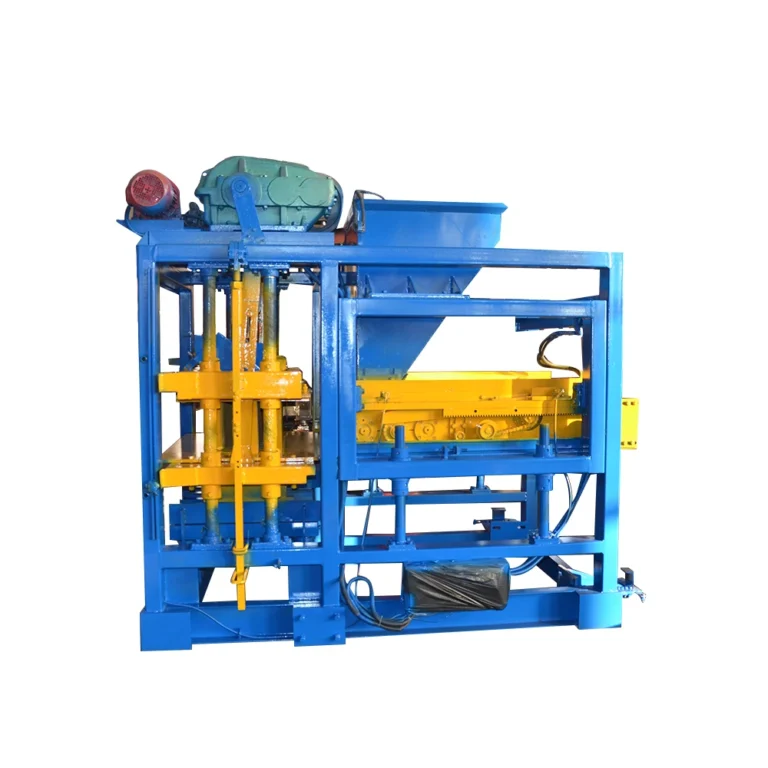 Stationary block machine