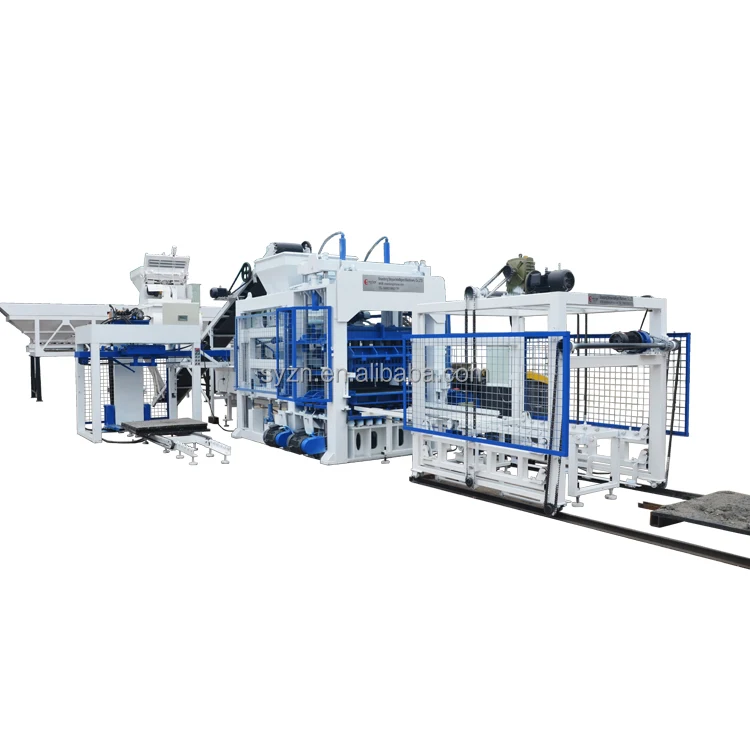
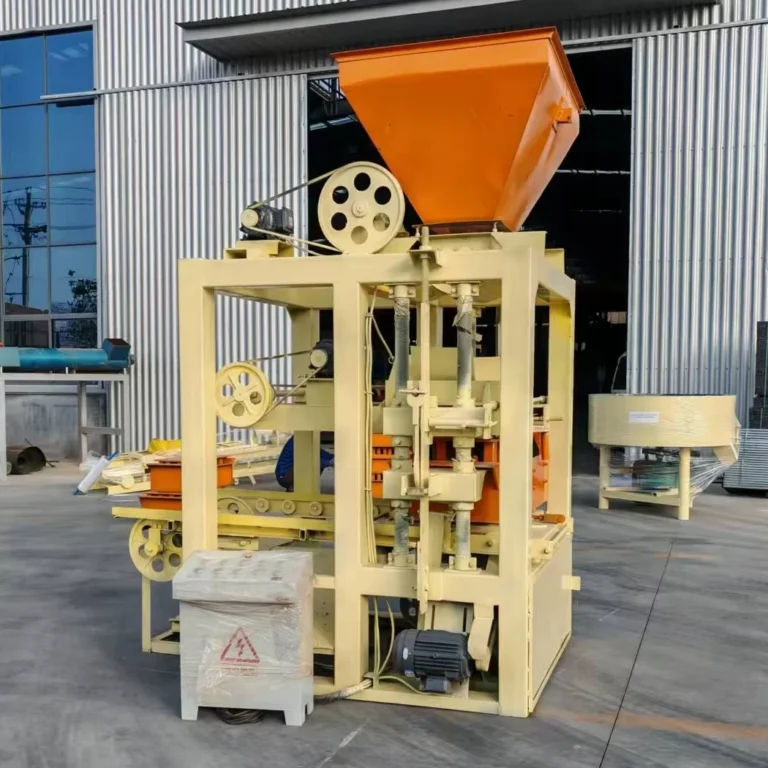
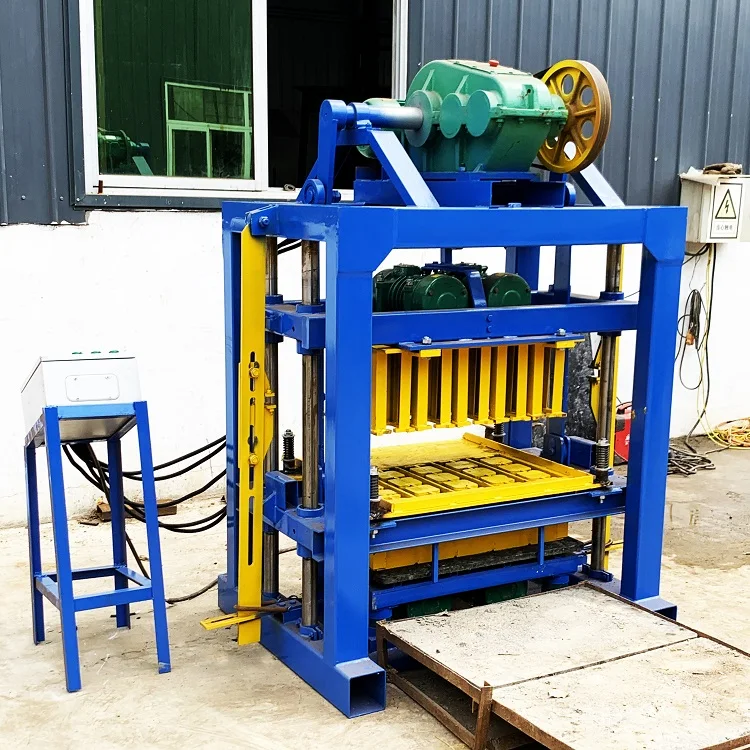
Configuration Matched to Local Aggregate — vibration force and hydraulic pressure on the QTJ4-40 are tuned against the buyer’s actual mix design rather than defaulted to a single standard recipe.
Technical Specifications
| Parameter |
Value |
| Model |
QTJ4-40 |
| Product Type |
Semi-Automatic Concrete Block Making Machine |
| Overall Dimensions (L×W×H) |
1350×1460×1800 mm |
| Net Weight |
1.2 T |
| Rated Power |
10.4 kW |
| Molding Cycle |
40 s |
| Vibration System |
Bed mould vertical vibration + upper mould compression vibration |
| Pallet Size |
850×450×20 mm |
| Pallet Material Option |
Fiber glass (wooden pallet usable if sourced locally) |
| Automation Level |
Semi-automatic |
| Voltage |
According to buyer local voltage (exact value to be confirmed) |
| Output Capacity (Hollow 400×200×200 mm) |
4 pcs/mould, 360 pcs/hour, 2880 pcs/day |
| Output Capacity (Hollow 400×150×200 mm) |
5 pcs/mould, 450 pcs/hour, 3600 pcs/day |
| Output Capacity (Solid 225×112.5×60 mm) |
9 pcs/mould, 800 pcs/hour, 6400 pcs/day |
| General Output Reference |
2000-2500 pcs/8hours (basis not stated in source — confirm block format / material / thickness) |
| Key Features |
CE documentation available where applicable, mould formats include hollow, solid, and paver blocks |
Application Suitability
| Application |
Material or Output |
| Small-scale hollow block production |
Concrete, sand, cement, and fly ash for 400×200×200 mm or 400×150×200 mm cavity blocks |
| Solid block manufacturing for housing |
Concrete and sand mixes pressed into 225×112.5×60 mm solid formats |
| Paver block production for driveways and walkways |
Pigmented concrete mixes in 8-inch, 6-inch, 5-inch, and 4-inch paver sizes |
| On-site construction block supply |
Local aggregate and cement blends for contractor-driven development projects |
| First-plant entrepreneur block supply |
Low-investment entry producing multiple formats from a single host machine |
What "2000 Pieces per Shift" Actually Means for a Semi-Automatic Block Machine Manufacturer
Output figures are meaningless without the block format and material assumptions written next to them.
A semi-automatic block machine manufacturer quoting a single capacity number is one of the most common sources of post-delivery disappointment. The same press produces four hollow blocks per cycle but nine solid bricks in the same forty-second window, which means daily throughput shifts dramatically depending on which mould sits on the table. Beyond the mould count, local aggregate density and moisture content alter how well the bed vibration compacts the mix — lightweight volcanic ash in parts of Southeast Asia, for instance, absorbs vibration energy differently from crushed granite. When these variables are ignored, the real daily count can fall well below expectations [NEED_CITE: mix design impact on block machine output consistency]. Buyers deserve a capacity table that states the format, not a headline number.

Where the QTJ4-40 Sits Within the Full Stationary Machine Range
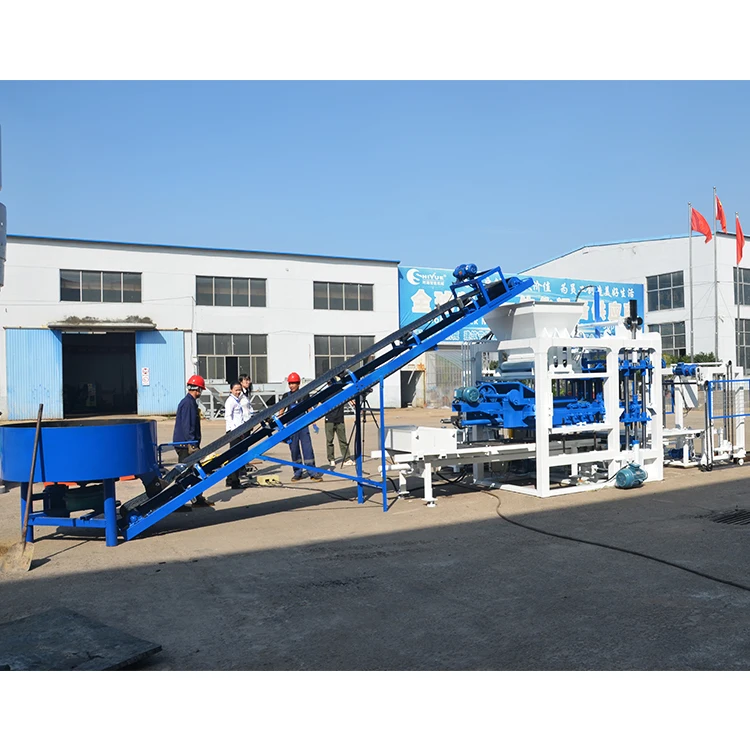
The QTJ4-40 occupies the entry-to-mid tier of our stationary block machine lineup, bridging the gap between manual egg-laying machines and fully automatic hydraulic lines. For a semi-automatic block machine manufacturer, placing this model correctly in the range matters because buyers stepping up from mobile production need more output without the capital outlay of a high-capacity press. Its semi-automatic design keeps the investment modest while leaving a clear upgrade path — when daily volume grows, the same pallet format and mould mounting interface allow transition to a more automated tier without discarding existing tooling.
Positioning Between Manual Production and Fully Automatic Lines
This tier suits buyers who have moved beyond hand-fed mobile machines but are not yet ready to staff a fully automatic batching and stacking system. The host machine handles the pressing cycle while operators manage pallet feeding and block removal manually, keeping labour requirements predictable for a small workshop. As production demand increases, auxiliary equipment like an automatic pallet feeder or stacking station can be introduced incrementally, which means the initial semi-automatic block machine manufacturer investment is not wasted when scaling up [NEED_CITE: block plant upgrade path from semi-automatic to automatic].
Vibration, Pressure, and Pallet Dimensions Explained
The dual vibration system combines bed mould vertical vibration with upper mould compression vibration, working together to compact the concrete mix from both directions. This arrangement improves block density and surface finish consistency across different mould formats. The 10.4 kW rated power drives this vibration assembly and must be matched with a stable supply at the buyer’s confirmed voltage and frequency — a mismatch here causes weak compaction and motor overheating. The pallet size of 850×450×20 mm determines how many blocks cure simultaneously and must align with the buyer’s existing curing rack spacing and forklift tine width. Fibre glass pallets offer longer service life under repeated vibration cycles, though wooden pallets remain viable where local sourcing is economical. The forty-second moulding cycle holds across formats, so throughput differences arise purely from the number of cavities per mould rather than any change in pressing time.
The Hidden Cost of Skipping Format and Voltage Confirmation
When a buyer places an order based on a single capacity quote without confirming which block format that figure assumes, the machine arrives and produces fewer units per shift than the project budget requires. Similarly, when voltage, frequency, and PLC display language are not locked in before production, the machine sits idle after arrival while transformers are sourced or control panels are reprogrammed. Pallet dimensions chosen without checking the curing area force the buyer to rebuild racks or buy new forklifts. These are not factory defects — they are configuration gaps that turn a smooth commissioning into weeks of on-site troubleshooting [NEED_CITE: common block machine commissioning delays due to specification gaps].
Why Source This Stationary Block Machine Here
Block machinery is our single focus, which means the QTJ4-40 host machine, mould, pallet, and handling accessories are specified as one matched system rather than assembled from separate suppliers. Every capacity figure we quote states the exact block format and mould cavity count behind it, so buyers compare realistic daily outputs. Mould design covers the hollow, solid, and paver formats the buyer’s market actually sells, with custom drawings accepted for non-standard sizes. Automation level is selectable at the point of order — a buyer can start semi-automatic and add pallet feeding or stacking later without replacing the press. Installation and commissioning support includes operator training on the specific mix design and local aggregate the buyer will use, not a generic demonstration on standard sand.
Documentation & Verification
- Line layout and capacity calculation stating the block format assumed for each output tier
- Machine specification sheet confirming voltage, frequency, and control display language for target market
- Mould drawing and format list covering hollow, solid, and paver block dimensions
- Pallet specification sheet matching 850×450×20 mm dimensions to curing area and forklift setup
- Factory test record demonstrating cycle time and block density on buyer’s confirmed mix
- CE declaration documentation provided where applicable to destination market requirements
Installation, Commissioning & Support
- Foundation pad must be level and rated for 1.2 T static load plus dynamic vibration from the 10.4 kW drive assembly
- Dedicated electrical circuit required at buyer’s confirmed voltage and frequency to avoid motor stress during startup
- Machine ships as a single host unit with pallets and moulds packed separately for container loading
- On-site commissioning includes vibration frequency tuning against the buyer’s local aggregate and cement mix
- Operator training covers mould change procedure, pallet handling rhythm, and daily maintenance checkpoints
- Wear parts list and mould maintenance schedule provided for first replacement planning
Preparing Your Inquiry
To move from a general enquiry to a matched configuration, buyers should share the block formats their market demands, the daily output target per format, and the local raw materials available — especially aggregate type and cement grade. Confirming workshop floor dimensions, local voltage and frequency, and preferred control display language upfront prevents rework after shipment. If existing curing racks or forklifts are in place, their dimensions help us confirm pallet compatibility before production begins.
Frequently Asked Questions
Q: How is the output capacity calculated and which block format does each figure assume?
A: Each output figure on the QTJ4-40 specification is tied to a specific block size. Hollow 400×200×200 mm blocks produce 2880 pieces per day at four per mould, hollow 400×150×200 mm yields 3600 at five per mould, and solid 225×112.5×60 mm reaches 6400 at nine per mould. The general 2000-2500 pieces per eight-hour shift reference requires confirmation of the actual block format, material mix, and thickness to be meaningful.
Q: What voltage and frequency configurations are available for different target markets?
A: The QTJ4-40 is built to the buyer’s confirmed local voltage and frequency, not a fixed standard. Before production begins, the exact supply specifications and control display language must be locked in. This prevents the machine from sitting idle after arrival waiting for transformers or reprogramming. Buyers should verify site supply details with their local electrician early in the enquiry process.
Q: Where does the QTJ4-40 sit in the full machine range — when should a buyer step up?
A: This model occupies the entry-to-mid tier of our stationary range, between manual egg-laying machines and high-capacity automatic hydraulic presses. When daily volume demands exceed what semi-automatic pallet handling supports, or when labour reduction becomes a priority, stepping up to a fully automatic tier makes sense. The pallet format and mould mounting interface are designed to allow transition without discarding existing tooling.
Q: What auxiliary equipment is required and what is optional for this machine?
A: The QTJ4-40 requires a mixer, the host machine, block moulds, and pallets as the minimum working set. Pallet material options include fibre glass or locally sourced wood. Additional automation such as automatic pallet feeding, stacking, or curing rack handling can be added as the buyer’s production volume grows, starting from the semi-automatic baseline configuration.

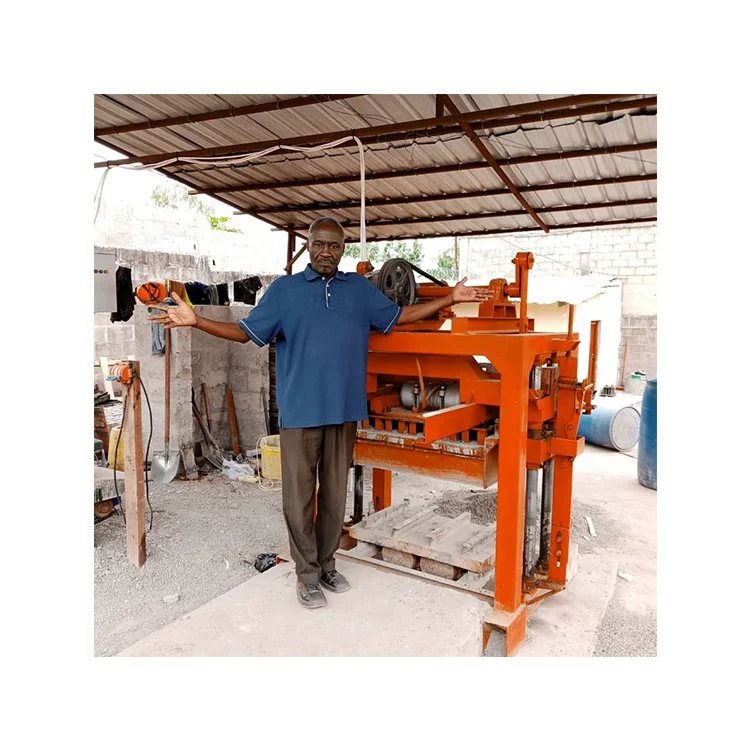
 Stationary block machine