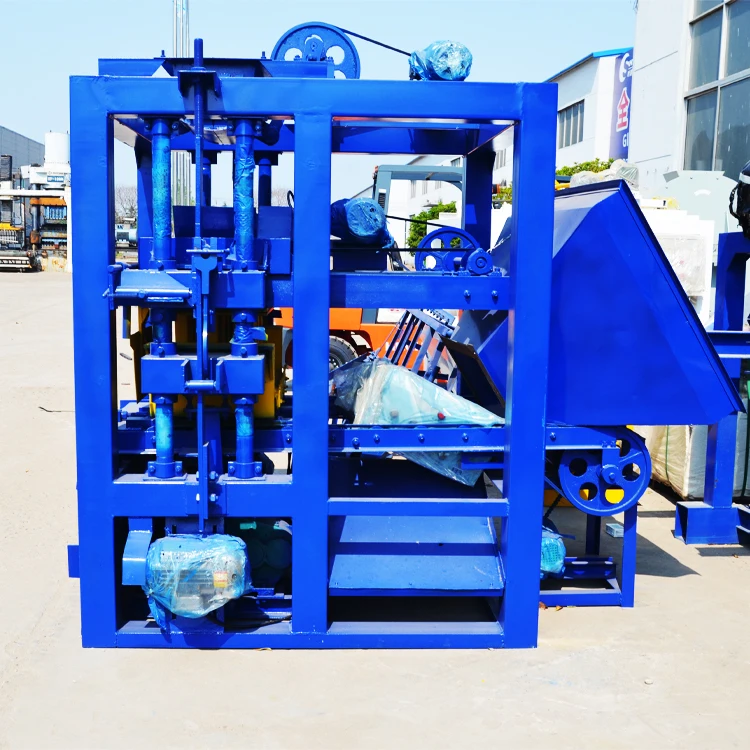
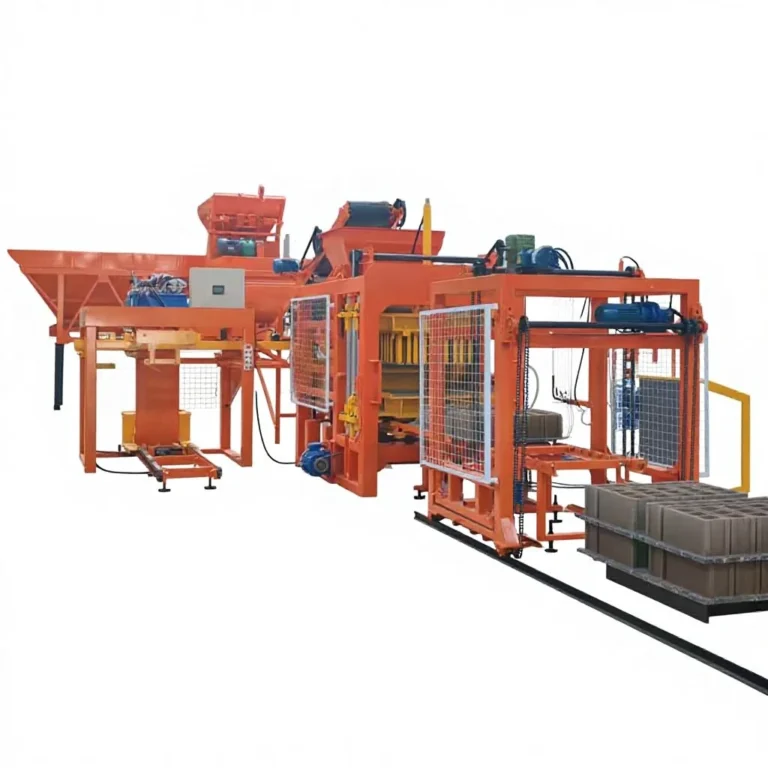
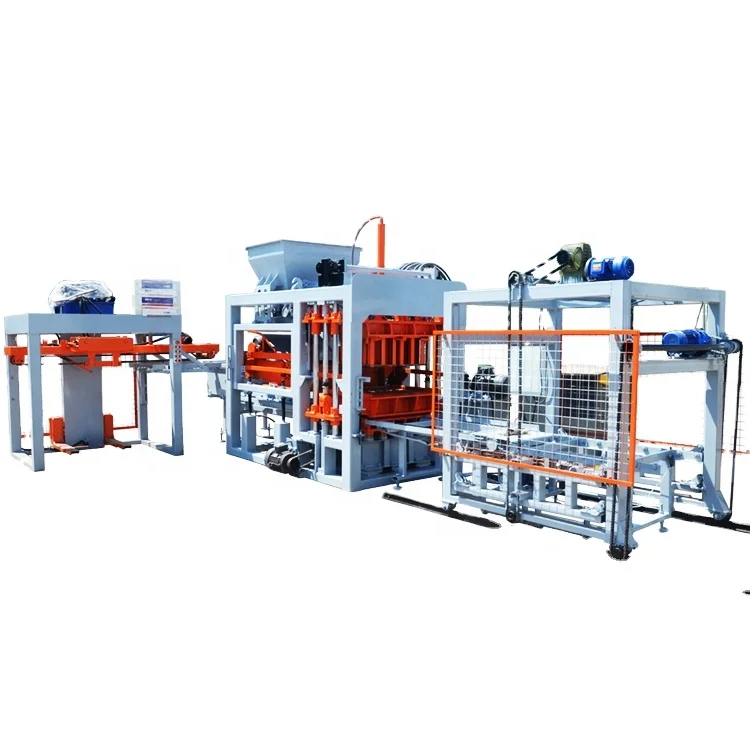
Matched System Design — machine, mould and pallet specified as one coherent block-making unit rather than a press with mismatched add-ons bolted on later.
Technical Specifications
| Parameter |
Value |
| Model |
QTJ4-40 |
| Product Type |
Semi-Automatic Concrete Block Making Machine |
| Rated Power |
9.5 kW |
| Molding Cycle |
40 s |
| Output Capacity |
2000–2500 pcs / 8 h (basis not stated in source) |
| Theoretical Productivity (400×200×200 mm hollow block, 4 pcs/mould) |
360 pcs/h, 2800 pcs/day |
| Theoretical Productivity (400×150×200 mm hollow block, 5 pcs/mould) |
450 pcs/h, 3600 pcs/day |
| Theoretical Productivity (225×112.5×60 mm solid brick, 9 pcs/mould) |
800 pcs/h, 6400 pcs/day |
| Raw Materials |
concrete, sand, cement, fly ash, lime, gypsum |
| Machine Weight |
1 T |
| Overall Dimensions (L×W×H) |
1350 × 1460 × 1800 mm |
| Pallet Size |
850 × 450 mm |
| Voltage |
configurable to buyer’s local standard |
| Automation Level |
semi-automatic (top die push-pull, automatic scraper, manual pallet handling) |
| Vibration System |
bed mould vertical vibration + upper mould compression vibration |
Application Suitability
| Application |
Material or Output |
| Small to medium block production plants |
hollow and solid blocks from concrete, sand and cement mixes |
| On-site block production for housing contractors |
interlocking and solid bricks using locally available aggregate |
| First-time block plant entrepreneurs |
pavers and kerbstones from fly ash, lime and gypsum blends |
| Building material distributors adding a block line |
multiple block formats on a single semi-automatic press |
What "2000 Pieces per Day" Actually Means for Your Plant
Every output figure on this page is tied to a named block format and mould cavity count, not an abstract cycles-per-hour claim.
I spent years assembling and commissioning semi-automatic block machines on sites where the quoted capacity never matched reality. The gap almost always came from a supplier stating cycles per hour without saying which block size that number assumed. A buyer would budget for 6000 hollow blocks a day, receive a machine timed for solid bricks, and watch daily output fall well short once the larger format was loaded. With the QTJ4-40, each productivity row in the table above names the exact block dimensions and pieces per mould so you can calculate against the format your market actually buys. [NEED_CITE: common causes of block machine output shortfall in small plants]

Where the QTJ4-40 Sits on the Full Machine Range
The QTJ4-40 occupies the semi-automatic entry point in a range that runs from small mobile egg-laying machines up through fully automatic lines with pallet feeders and cubing stations. It is designed for buyers who need a dependable press today but may add automatic stacking and curing rack handling later. Choosing this tier means accepting manual pallet movement in exchange for a lower initial investment and a smaller plant footprint.
Semi-Automatic Block Machine Manufacturer Positioning Within the Range
As a semi-automatic block machine manufacturer focused exclusively on block machinery, the specification of each tier is built around matched components. The QTJ4-40 shares pallet dimensions and mould mounting standards with higher tiers in the same range, meaning a future upgrade to automatic pallet feeding or stacking does not require scrapping the press itself. This continuity matters when a first-time buyer plans growth but cannot justify a full automatic line from day one. [NEED_CITE: typical upgrade paths from semi-automatic to automatic block production]
Reading the Specification Table Against Your Site Conditions
The 9.5 kW rated power reflects the dual vibration system — bed mould vertical vibration combined with upper mould compression vibration — which together compact the mix from both directions during the 40-second molding cycle. This dual action is what allows the same press to handle a dense concrete hollow block and a lighter fly ash solid brick without changing the core vibration hardware. The 850 × 450 mm pallet size is fixed for this model, so it must be checked against your existing curing racks and forklift fork width before the order is placed. A pallet that does not match your handling equipment turns every curing cycle into a manual repositioning problem. Voltage is configurable to the buyer’s local standard, which must be confirmed before production starts because rewinding motors after arrival delays commissioning by weeks.
The Cost of Skipping Pallet and Voltage Confirmation
When pallet size is chosen without checking the curing area, buyers end up stacking blocks by hand on the floor because standard racks will not accept the pallets. This adds labour and slows the curing cycle enough to cut real daily output. Similarly, arriving at site with the wrong voltage or frequency means the machine sits idle while replacement motors or transformers are sourced locally. I have seen a semi-automatic press stand unpowered for three weeks because the control panel was wired for 50 Hz and the site ran on 60 Hz. These delays are entirely avoidable with a confirmation step before production. [NEED_CITE: electrical compatibility issues in exported concrete machinery]
Why Source This Machine Through a Single-Focus Block Machinery Supplier
Block machinery is the only product category here, so the QTJ4-40 is specified alongside its moulds, pallets and handling equipment as one system rather than a collection of separate purchases. Configuration starts from your actual mix design and local aggregate, not a catalogue default, which prevents the situation where the machine arrives tuned for a sand grading you cannot source. Mould design covers the formats your market sells, with custom drawings available when standard formats do not match. Installation support includes operator training on the specific block formats you will produce first. Documentation arrives with the machine, not weeks later by email.
Documentation & Verification
- Factory test record showing cycle times on your specified block format before dispatch
- Line layout drawing with capacity stated per block size and mould cavity count
- Mould drawing and format list confirming which block dimensions the quoted output covers
- Pallet specification sheet matched to your curing rack and forklift dimensions
- Voltage, frequency and control language confirmation signed off before production
Installation, Commissioning & Support
- Foundation pad sized to the 1350 × 1460 mm footprint with level tolerance for stable vibration
- Dedicated electrical circuit rated for the 9.5 kW load at your confirmed voltage and frequency
- Machine arrives as a single skid-mounted unit requiring only pallet guide and hopper assembly
- First production run supervised to set vibration duration and feed depth for your mix
- Operator training covering mould change procedure and daily vibration bed inspection
- Wear parts list identifying mould liner and scraper blade replacement intervals
Preparing Your Inquiry for an Accurate Quotation
Send the block format you intend to sell first, including dimensions and whether it is hollow, solid or interlocking. State your local raw materials — specifically the sand type and maximum aggregate size — along with your site voltage and frequency. If you already have curing racks or a forklift, include the pallet dimensions they accept so the QTJ4-40 can be matched from the start.
Frequently Asked Questions
Q: How is the 2000–2500 pieces per day capacity calculated and for which block format?
A: That range appears in general descriptions without a named block format, so it should be treated as indicative only. The table on this page lists three confirmed productivity rows, each tied to a specific block dimension and mould cavity count. Match the row that corresponds to your target product to get a realistic daily figure for your plant planning.
Q: Where does the QTJ4-40 sit compared to the next automatic tier?
A: It is the semi-automatic entry point, meaning the press cycle is automated but pallets are moved by hand. The next tier adds automatic pallet feeding and stacking while using the same mould mounting standard, so upgrading later does not require replacing the press itself.
Q: Can I start semi-automatic and add automatic stacking later?
A: Yes. The pallet size and mould interface are shared across tiers in the range. When you are ready to add automatic stacking or curing rack handling, the QTJ4-40 press can be integrated into the upgraded line without modification to its core structure.
Q: What pallet size does this machine use and will it fit my existing forklift?
A: The QTJ4-40 uses an 850 × 450 mm pallet. Confirm this against your curing rack slot width and forklift fork spacing before ordering. If your current handling equipment does not match, pallet specification can be discussed during the quotation stage.
Q: Which voltage and frequency options are available before shipment?
A: Voltage is configurable to your local standard and must be confirmed before production begins. This includes frequency and control panel language, all of which are signed off in writing so the machine arrives ready to connect without electrical modification on site.

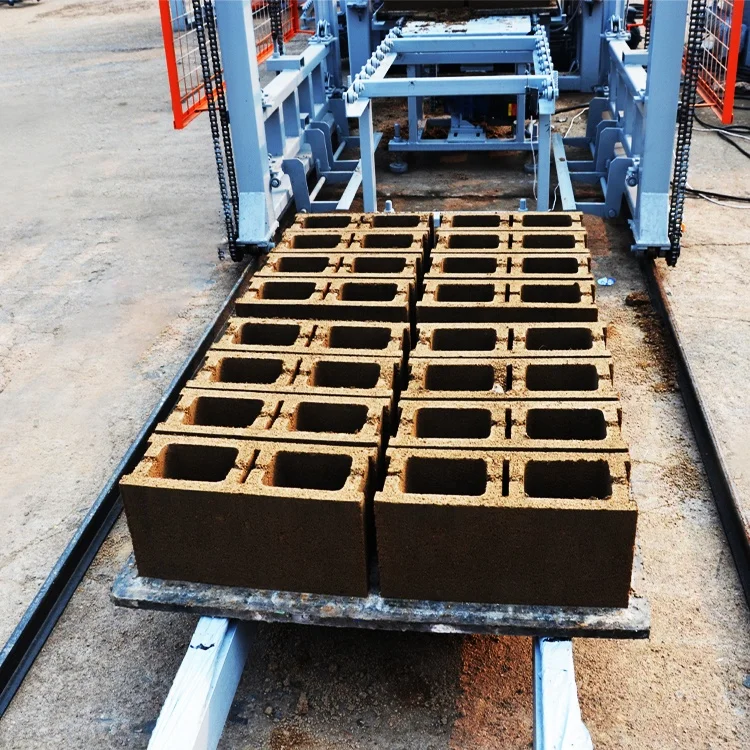 High quality block machine