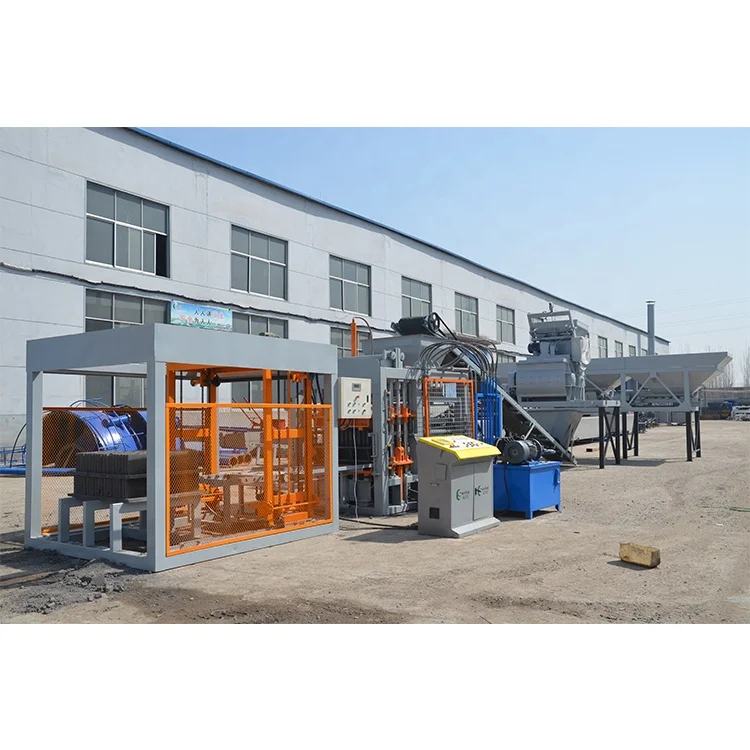
Entry-tier capacity clarity — Every output figure for the QTJ4-40 is quoted against a named block format and mould count, not a catalogue default, so buyers see the throughput their product mix actually demands.
Technical Specifications
| Parameter |
Value |
| Model |
QTJ4-40 |
| Product Type |
Manual Hydraulic Cement Block Making Machine |
| Vibration Form |
Platform Vibration |
| Vibration Frequency |
2800 r/min |
| Pallet Size |
850 × 450 mm |
| Overall Dimensions |
1350 × 1460 × 1800 mm |
| Machine Weight |
1 T |
| Recommended Factory Area |
200 m² |
| Worker Requirement |
1–3 people |
| Capacity (400×200×200mm hollow) |
4 moulds/cycle, 360 pcs/h, 2880 pcs/day (basis: 400×200×200mm hollow block) |
| Capacity (400×150×200mm hollow) |
5 moulds/cycle, 500 pcs/h, 4000 pcs/day (basis: 400×150×200mm hollow block) |
| Capacity (225×112.5×60mm interlocking) |
9 moulds/cycle, 900 pcs/h, 7200 pcs/day (basis: 225×112.5×60mm interlocking brick) |
| General Capacity Claim |
2800 pcs / 8 hours (basis not stated in source — confirm block format, material and thickness) |
| Raw Material Ratio Guideline |
Cement 8–10%, Sand 30–40%, Stone 50–60% |
| Key Features |
Top die push-and-pull mechanism, automatic scraper, semi-automatic pallet handling |
Application Suitability
| Application |
Material or Output |
| Small-scale hollow block production |
Crushed stone, sand, cement (8–10% cement ratio) |
| Interlocking brick for paving and landscaping |
Fine aggregate, cement, color pigment where required |
| On-site solid block for building contractors |
Local sand, gravel, slag, fly ash blended with cement |
| First-plant entrepreneur setups |
Low-capital entry to concrete product manufacturing |
Why the Block Format Must Come Before the Capacity Number
A capacity figure without a named block format is a guess, not a guarantee.
Buyers often see a single headline output number and assume it applies to every mould they intend to run. On a stationary block machine, cycle time and mould cavity count change drastically between a 400×200×200mm hollow block and a small interlocking paver. When the format is left unspecified, daily throughput on the product that actually sells can fall noticeably short of expectation. The QTJ4-40 block machine manufacturer approach ties each capacity claim to a specific mould and block dimension, removing that ambiguity before the order is placed [NEED_CITE: common buyer disputes over block machine capacity claims].

Where the QTJ4-40 Sits in the Stationary Range
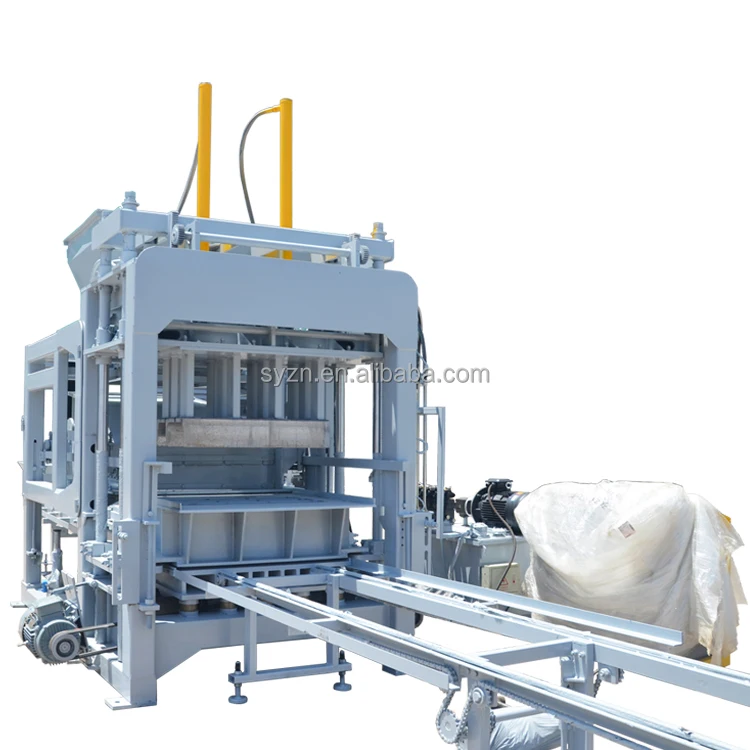
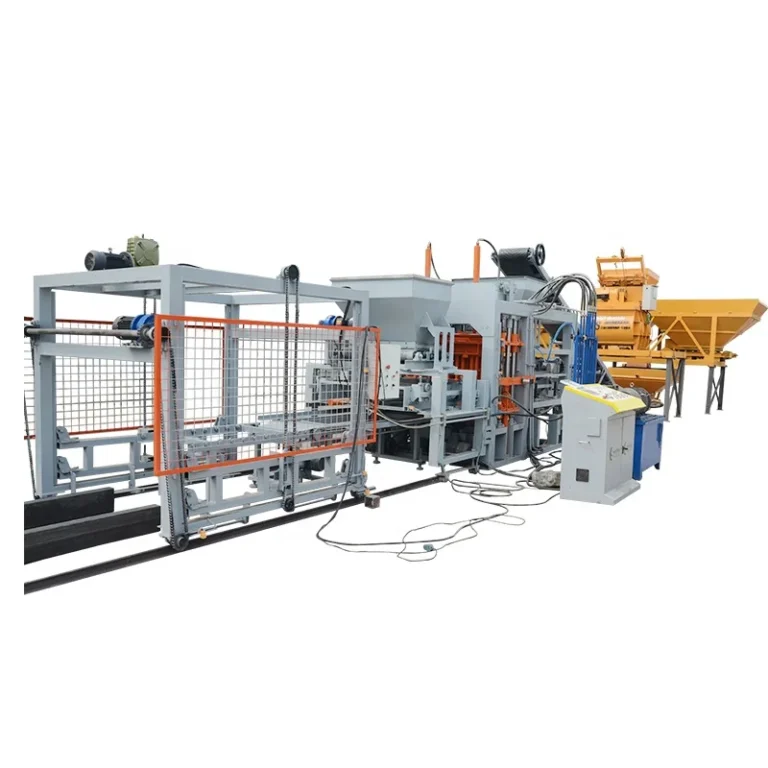
The QTJ4-40 occupies the entry tier of the stationary block machine range. It is designed for buyers who need a compact, manually operated press with vibration-assisted compaction, typically producing for a local market or a single construction project. The semi-automatic top die push-and-pull system reduces operator effort compared to a purely hand-fed press while keeping the initial investment within reach of a first-plant entrepreneur.
Stepping Up: When to Move Beyond This Tier
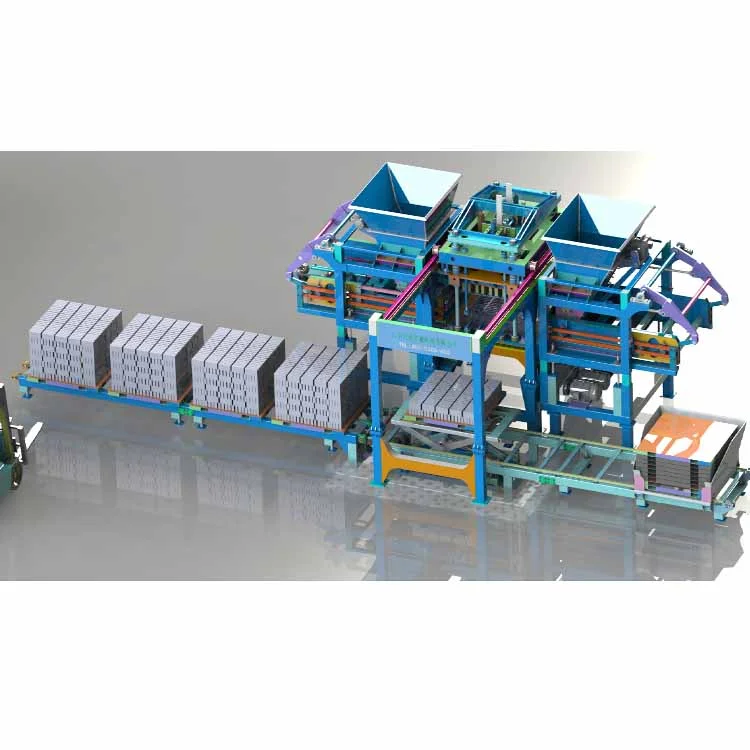
If daily demand grows to a point where pallet handling and stacking become the bottleneck rather than the press cycle itself, a buyer should look at the next tier with automatic pallet feeding and stacking. The QTJ4-40 leaves that upgrade path open — the mould interface and pallet size remain compatible with higher-automation lines, so a growing operation can transition without scrapping its existing tooling and curing racks [NEED_CITE: block plant automation upgrade paths].
Reading the Vibration and Mould Interaction
Platform vibration at 2800 r/min works in tandem with the top die push-and-pull mechanism to compact the mix from both directions. This dual action matters because vibration alone settles the aggregate, while the top die applies downward pressure to lock density into the block before the scraper clears the surface. The 850×450mm pallet size determines how many cavities each mould can carry, which directly explains why a 400×200×200mm hollow block yields four per cycle while a 225×112.5×60mm interlocking brick yields nine. Matching vibration force to the buyer’s actual aggregate gradation — whether river sand, crushed volcanic rock, or fly ash blend — is what determines whether blocks leave the press with consistent strength or crumble at the edges.
The Hidden Cost of Skipping Site Conditions
When voltage, frequency, and PLC display language are not confirmed before the machine leaves the factory, commissioning stalls the moment the crate is opened. A press configured for 380V/50Hz arriving at a 440V/60Hz site cannot run without a transformer or motor swap, and every day of idle curing space is lost output. Equally, if the pallet size specified does not match the curing racks and forklifts the buyer already has, the entire handling workflow must be rebuilt around an incompatible dimension [NEED_CITE: export machinery commissioning delays due to voltage mismatch].
Why Buyers Source This Tier Here
Block machinery is the single focus of the production line, meaning the press, mould, pallet, and handling equipment are specified as one matched system rather than assembled from separate suppliers. Configuration is set against the buyer’s actual mix design and local aggregate, not a catalogue default — the raw material ratio guideline of cement 8–10%, sand 30–40%, stone 50–60% is a starting point that gets adjusted after reviewing the buyer’s material test report. Mould design covers the formats the buyer’s market actually sells, and custom mould drawings are accepted. The automation level is selectable, so a buyer can begin with the QTJ4-40’s manual pallet handling and upgrade later. Installation support includes operator training so the crew understands how vibration frequency, mix moisture, and cycle timing interact on the shop floor.
Documentation & Verification
- Line layout and capacity calculation stating the block format assumed for each output tier
- Machine specification sheet confirming vibration frequency, pallet size, and overall dimensions
- Mould drawing and format list covering hollow, solid, interlocking, and paver options
- Raw material ratio guideline adjusted to the buyer’s aggregate test report
- Factory test record captured on the buyer’s target block format before dispatch
Installation, Commissioning & Support
- 200 m² factory area preparation with level concrete floor matching 1350×1460×1800mm footprint
- Voltage and frequency confirmed against site supply before motor and control panel wiring
- Pallet rack layout matched to 850×450mm pallet size and existing forklift capacity
- First-run parameter tuning on buyer’s local aggregate blend and cement ratio
- Operator training covering mould change procedure, scraper adjustment, and daily lubrication points
- Wear parts list supplied at delivery so replacements are on hand before first maintenance cycle
What to Send With Your Inquiry
Provide the target block formats you plan to sell, your local aggregate type and any available test reports, and your site’s voltage and frequency supply. Include your available floor space and ceiling height so the line layout accounts for curing rack placement around the 200 m² recommended area. If you already own pallets or handling equipment, share those dimensions to confirm compatibility with the 850×450mm pallet standard.
Frequently Asked Questions
Q: How is each QTJ4-40 capacity figure calculated and which block format does it assume?
A: Every output number is tied to a specific mould cavity count and block dimension. For example, 360 pieces per hour assumes a 400×200×200mm hollow block with four cavities per cycle, while 900 pieces per hour assumes a 225×112.5×60mm interlocking brick with nine cavities. The general 2800-piece daily claim requires format confirmation before it can be relied upon for planning.
Q: Where does the QTJ4-40 sit in the full range and when should a buyer move to a higher tier?
A: It sits at the entry tier of the stationary range with manual pallet handling and semi-automatic top die operation. Buyers whose daily volume outgrows manual pallet movement, or who need consistent output across multiple shifts, should step to a semi-automatic or automatic tier with powered pallet feeding and stacking.
Q: What voltage and frequency options are available and how is this confirmed before shipment?
A: Voltage and frequency are configured to the buyer’s site supply and must be confirmed during the quotation stage. The motor, control panel, and any PLC display are wired accordingly before the factory test. Confirming this early prevents commissioning delays on arrival [NEED_CITE: voltage and frequency standards by export market].
Q: Can custom moulds be designed for the QTJ4-40 beyond the standard hollow and interlocking formats?
A: Custom mould design is available to buyer drawings, provided the mould fits the 850×450mm pallet envelope and the press tonnage. Kerbstone, colored paver, and non-standard block profiles can be engineered once the target dimensions and demoulding draft angles are agreed upon.

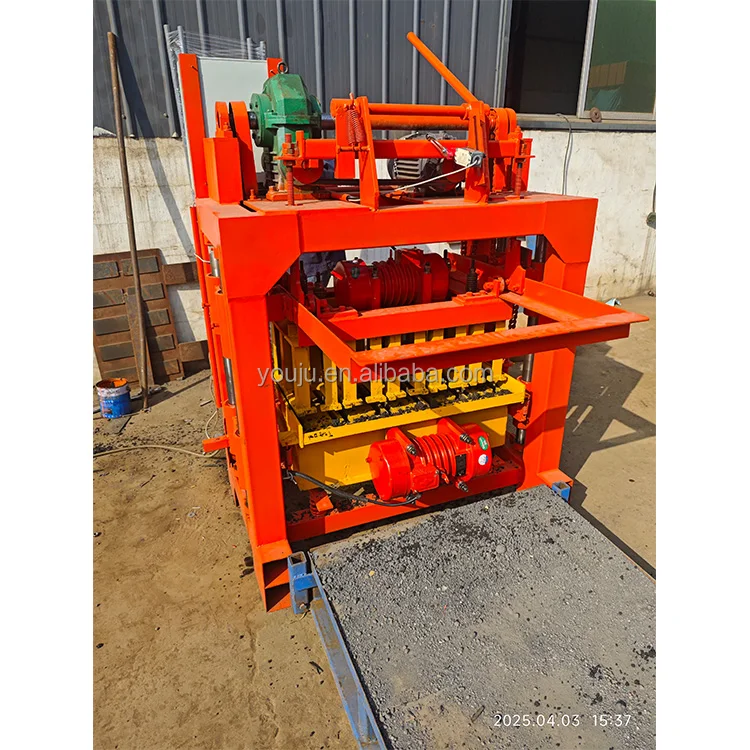
 Stationary block machine