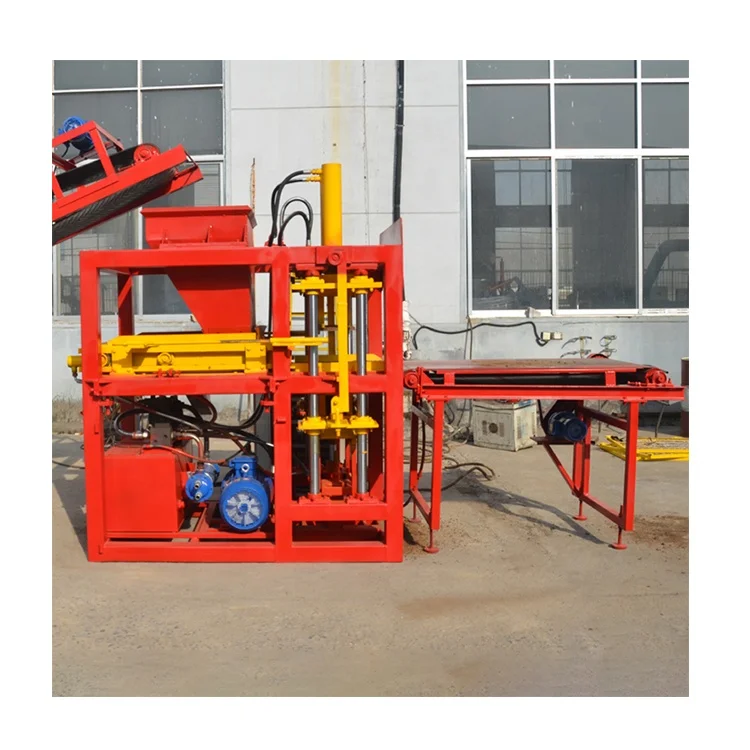
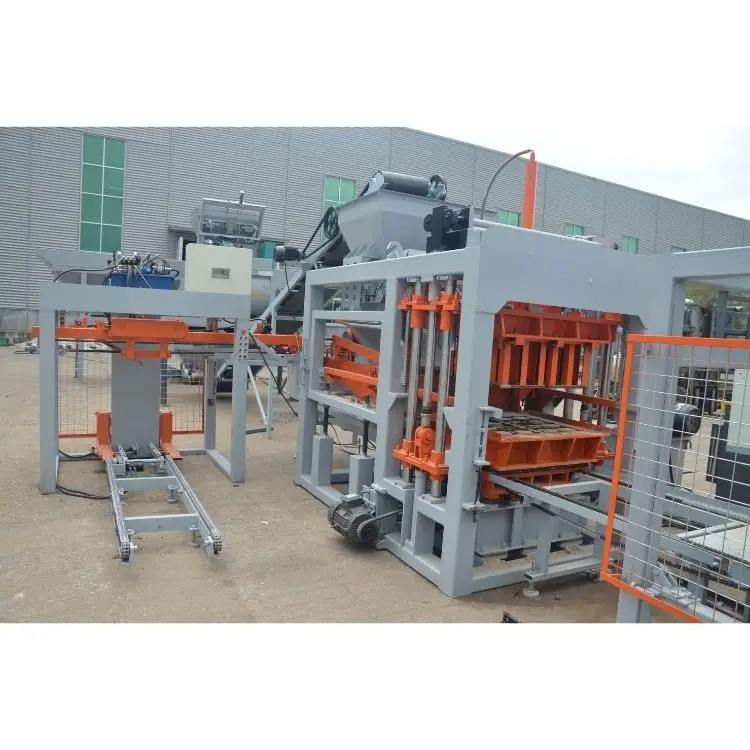
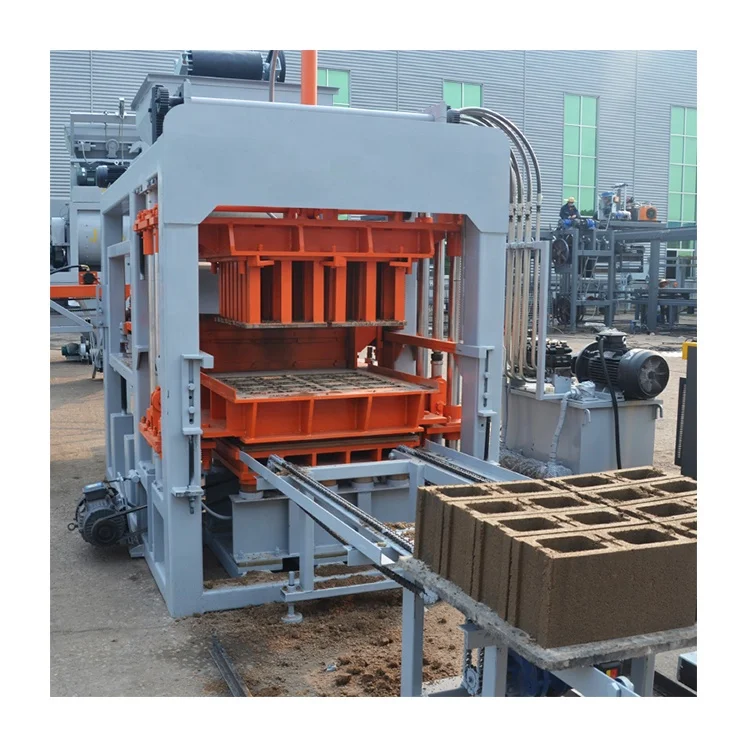
Block Machinery as a Single Focus — The QTJ4-35 is specified as a matched system of mixer, conveyor, and press rather than assembled from separate suppliers, so every component is rated to the same cycle and output tier.
Technical Specifications
| Parameter |
Value |
| Model |
QTJ4-35 |
| Product Type |
Semi-Automatic Concrete Block Making Machine |
| Mixer Model |
JQ350 |
| Line Configuration |
JQ350 mixer, belt conveyor, host machine |
| Automation Level |
Semi-automatic |
| Mould Format Options |
Hollow blocks, solid blocks, pavers |
| Capacity per 400×200×200 mm Block |
4 pcs/mould, 400 pcs/hour, 3200 pcs/8 hours |
| Capacity per 400×150×200 mm Block |
5 pcs/mould, 500 pcs/hour, 4000 pcs/8 hours |
| Capacity per 225×112.5×60 mm Block |
9 pcs/mould, 900 pcs/hour, 7200 pcs/8 hours |
| Output Capacity |
2500–3000 pcs/day (basis not stated in source — confirm block format, material, and thickness) |
| Mould Change System |
Manual mould change with interchangeable moulds |
| Standards |
CE (where applicable) |
Application Suitability
| Application |
Material or Output |
| Small-scale block production plant |
Hollow and solid blocks from crushed stone, sand, and cement |
| Construction contractor on-site production |
Standard hollow blocks for housing and boundary wall projects |
| Building material distributor expanding range |
Pavers and interlocking formats alongside existing block stock |
| Entrepreneur first block plant |
Entry-tier daily output with manual pallet handling |
What "3000 Blocks per Day" Actually Means for Your Shift Plan
Capacity figures only hold weight when the block format behind them is named.
Many quotations list a single daily output number without specifying whether that assumes a 400×200×200 mm hollow block, a smaller solid block, or a paver. The difference matters: a shift that produces 3200 large hollow blocks could produce over 7000 standard pavers on the same Semi-Automatic Block Machine manufacturer model. When buyers plan staffing, curing space, and delivery schedules around an unqualified number, the gap between expectation and reality shows up on the first production day [NEED_CITE: block format assumptions in capacity quoting across the industry]. The QTJ4-35 capacity table on this page breaks output down per format so you can match the figure to the product your market actually buys.

Where the QTJ4-35 Sits in the Full Machine Range
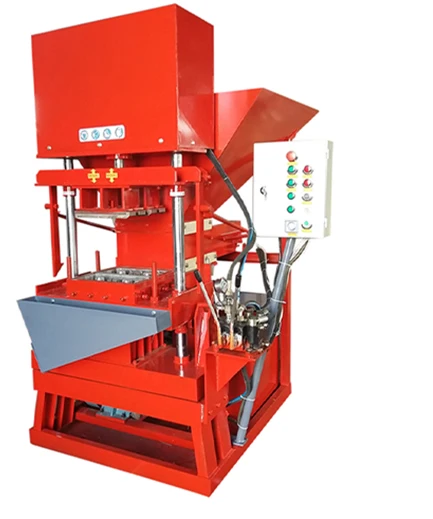
The Shiyue range spans mobile egg-laying machines at the lowest investment tier, semi-automatic lines like the QTJ4-35 in the middle, and fully automatic plants with stacking and cubing at the top. This model occupies the entry point of the semi-automatic tier, pairing a JQ350 pan mixer and belt conveyor with the host press so the buyer receives a coordinated line rather than a standalone machine. For a first-time block plant or a contractor producing on a project site, this tier balances capital outlay against the consistency that a matched mixer and press deliver over hand-fed setups.
Positioning for a Future Automation Step
Starting on a semi-automatic platform does not lock the buyer into manual pallet handling permanently. The Semi-Automatic Block Machine manufacturer designs the host machine so that automatic pallet feeders, stackers, and cubing systems can be added later as production volume grows. The press itself remains in service while the peripheral stations are upgraded, protecting the initial investment. This path suits buyers who need to prove market demand before committing to a fully automatic line [NEED_CITE: typical automation upgrade sequence in small block plants].
Reading the Specs That Shape Daily Output
The line configuration — JQ350 mixer, belt conveyor, and host machine — means raw material moves from batching to the press hopper without manual shoveling, which directly affects how consistently the press is fed between cycles. Mould interchangeability across hollow blocks, solid blocks, and pavers lets a single host machine serve multiple product lines, though the manual mould change system means format switches require operator time that must be factored into the shift schedule. The vibration force and hydraulic pressure ratings, which should be confirmed against your local aggregate and mix design, determine whether the finished block reaches the compressive strength your market requires. Pallet size must also align with the curing racks and forklift already on site; a mismatch here creates a bottleneck that has nothing to do with the press itself.
The Hidden Cost of Skipping the Material Conversation
I spent years running commissioning visits between Africa and South Asia, and one pattern repeats: the buyer ordered based on a sample output figure produced with clean quartz sand, then fed the machine with locally available river sand heavy in clay. Blocks stuck to the mould, half the shift disappeared into scraping, and real output dropped well below the quoted number. When the mix design and local aggregate are not confirmed before the machine is configured, the Semi-Automatic Block Machine manufacturer is essentially building to a guess. That guess shows up as inconsistent block density, premature mould wear, or a curing schedule that does not match the block’s actual moisture content [NEED_CITE: impact of aggregate variation on block density and demoulding time].
Why Source This Tier from Shiyue
Block machinery is the company’s single focus, so the QTJ4-35 arrives as a line where the mixer capacity, conveyor speed, and press cycle are balanced rather than independently specified. Configuration is set against the buyer’s actual mix design and target block format, not a catalogue default. Mould design covers the formats the buyer’s market sells, with custom drawings available for non-standard sizes. Voltage, frequency, and PLC display language are confirmed before production so that commissioning is not delayed by a mismatch at the destination site. The semi-automatic tier allows a buyer to begin with manageable capital and add automation stations later without replacing the press.
Documentation & Verification
- Line layout and capacity calculation stating the block format assumed for each output figure
- Mould drawing and format list confirming which block sizes the quoted moulds produce
- Voltage, frequency, and control language confirmation sheet before production begins
- Factory test record run on the buyer’s specified block format before dispatch
- Operation and maintenance manual with wear parts and mould replacement schedule
- Packing photographs and customs documentation support for the destination port
Installation, Commissioning & Support
- Foundation pad leveled to the host machine footprint with anchor bolt template provided
- Dedicated circuit matched to the confirmed voltage and frequency before the machine arrives
- Mixer, conveyor, and press assembled on site from shipped modules with alignment checks
- First-run parameter setting adjusted to the buyer’s local aggregate and mix design
- Operator training covering mould change procedure, daily lubrication points, and cycle timing
- Wear parts list with mould and hydraulic seal part numbers for local or direct reorder
Before You Send the Inquiry
To size the QTJ4-35 accurately, share the block formats your market sells most, the daily output you need per format, and the raw materials available locally including sand type and aggregate grading. Confirm your site voltage and frequency, the language your operators read on a control screen, and the pallet size that fits your existing curing area and forklift. If you are producing on a construction site rather than a fixed plant, describe the space and ground conditions so the line layout accounts for them.
Frequently Asked Questions
Q: How is output capacity verified, and which block format does each figure assume?
A: Every capacity figure on this page is tied to a specific block dimension — for example, 400×200×200 mm hollow blocks yield 3200 pieces per eight-hour shift, while 225×112.5×60 mm pavers yield 7200. Before quotation, the assumed format, mix design, and local aggregate are confirmed so the number reflects your actual product.
Q: Where does the QTJ4-35 sit compared to higher-tier semi-automatic and automatic models?
A: It occupies the entry semi-automatic tier, pairing a JQ350 mixer and belt conveyor with the host press. Higher tiers add automatic pallet feeding, stacking, and cubing. The host machine can later accept those stations, so upgrading does not require replacing the press.
Q: What voltage, frequency, and control language options are available?
A: Voltage and frequency are configured to match the destination market’s supply before production. The control display language is confirmed at the same stage so operators can read prompts and alarms on arrival, avoiding commissioning delays caused by mismatched electrical or language settings.
Q: What plant footprint and installation conditions does this tier require?
A: The line needs a leveled foundation pad for the host machine, space for the JQ350 mixer and belt conveyor upstream, and a curing area sized to the pallet dimensions chosen. Ground conditions and available space should be shared at inquiry so the layout is drawn to your site.
Q: Can I start semi-automatic and upgrade automation later?
A: Yes. The QTJ4-35 host machine is designed to accept automatic pallet feeders, stackers, and cubing systems as add-on stations. Buyers typically start with manual pallet handling to prove market demand, then add automation as volume justifies the investment.

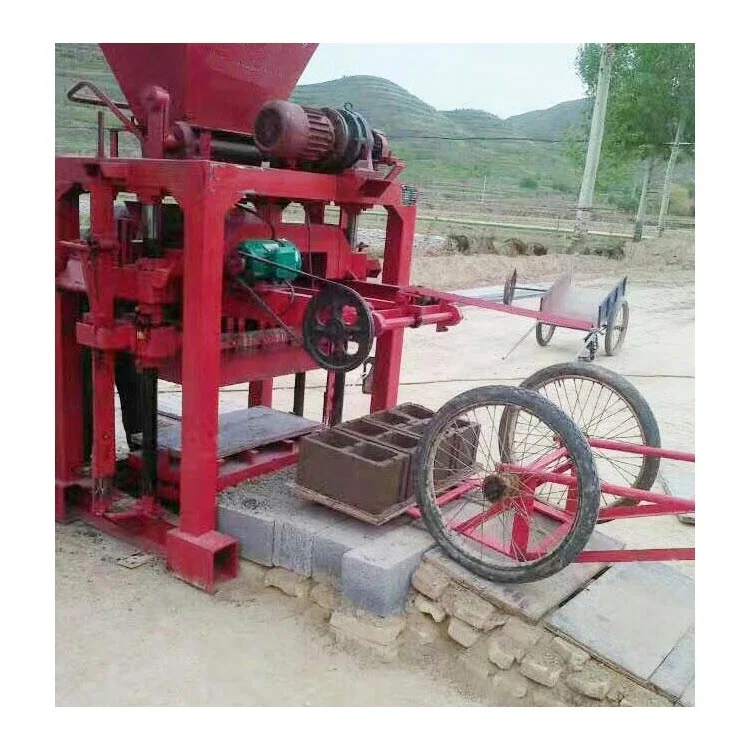
 Semi automatic block