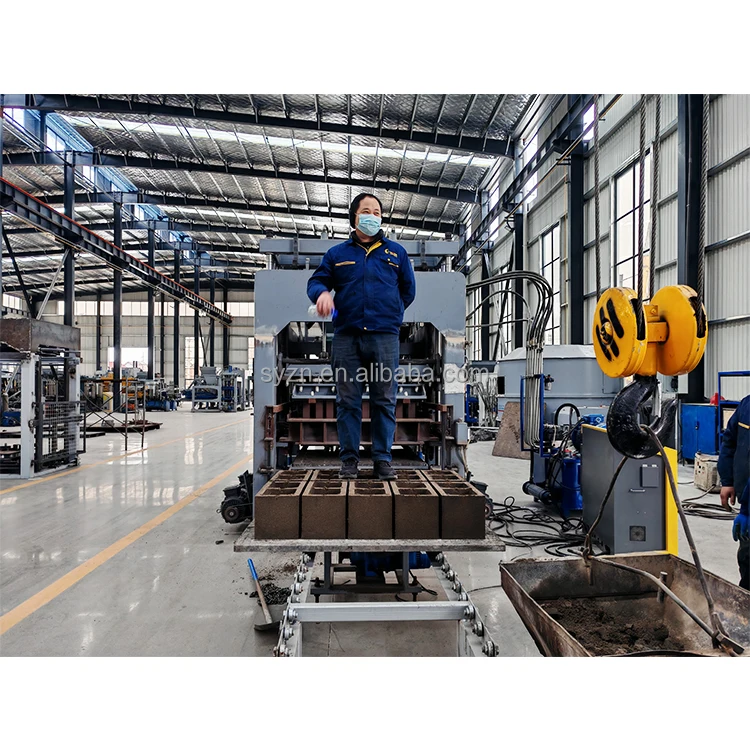
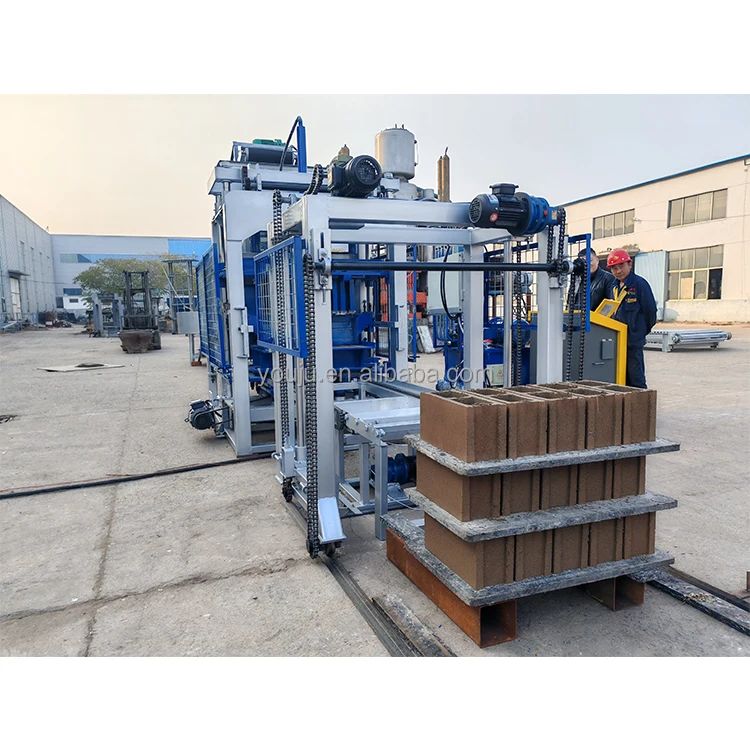
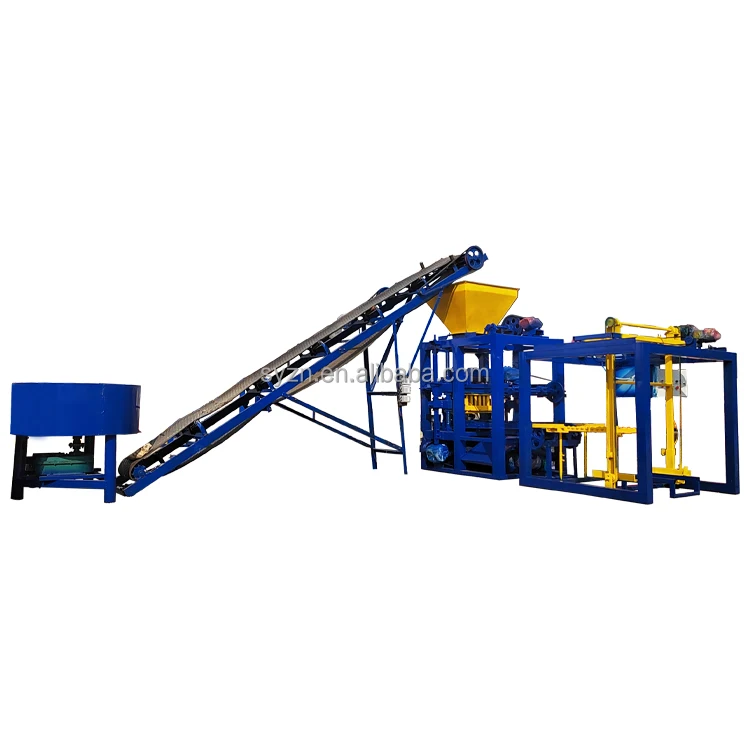
Single Focus System Match — machine, mould and pallet specified as one matched set against your local aggregate, not pulled from a catalogue default.
Technical Specifications
| Parameter |
Value |
| Model |
QTJ4-35 |
| Product Type |
Concrete Block Making Machine |
| Overall Dimensions (L×W×H) |
2050×1660×1900 mm |
| Rated Power |
9.7 kW |
| Vibration Force |
35 kN |
| Main Vibration Form |
Platform Vibration |
| Vibration Frequency |
2800 r/min |
| Pallet Size |
850×450 mm |
| Molding Cycle |
35 s (basis not stated in source — confirm block format / material / thickness) |
| Total Mass |
1500 kg |
| Demolding Method |
Vibration |
| Factory Area |
260 m² |
| Applied Products |
Concrete blocks, hollow/solid blocks, pavers, interlocking blocks, curbstone, colored pavers |
| Raw Material |
Crushed stone, sand, cement, dust, fly ash, gravel, slag |
| Voltage & Frequency |
Configurable to destination market (basis to be confirmed) |
| Control System |
Manual panel or PLC option (basis to be confirmed) |
| Automation Level |
Manual / semi-automatic |
| Warranty |
1 year |
Application Suitability
| Application |
Material or Output |
| Small-scale hollow block plant |
Crushed stone, sand, cement and fly ash mixes |
| On-site production by building contractors |
Solid blocks and interlocking bricks from local gravel and slag |
| First-time paver manufacturing setup |
Colored pavers and curbstone on 850×450 mm pallets |
| Entry-level building material distributor |
Mixed formats including porous and interlocking blocks |
Why the Voltage Question Should Come Before the Price on the QTJ4-35
Confirming voltage, frequency and control language before production prevents a dead machine on arrival.
I once helped a buyer who ordered a small stationary press without locking down the electrical spec. The machine arrived in a country with a frequency standard different from the motor rating. The vibration table ran, but the cycle was noticeably slower, and the daily output dropped well below what the buyer had planned for. The QTJ4-35 concrete block making machine manufacturer receives inquiries every week where voltage is the last question asked, not the first [NEED_CITE: voltage and frequency standards by export market].
Placing the QTJ4-35 in the Stationary Range
The QTJ4-35 sits at the entry tier of our stationary block machine line, positioned for workshops that cannot yet justify a full automatic plant. Its 2050×1660×1900 mm footprint fits inside the 260 m² factory area typical of a first-time setup, and the 9.7 kW power draw suits sites where electrical capacity is limited. For a buyer surveying options, this model answers the question of whether a small semi-automatic press can cover the initial block formats before a higher-tier line becomes necessary.
Matching the Machine to Your Pallet and Curing Flow
Every stationary press must talk to the curing area, and the pallet is the link between them. The QTJ4-35 runs on an 850×450 mm pallet, which aligns with standard racks and small forklifts already present at many entry-level plants. When the pallet size is chosen without checking the curing layout, blocks sit on the floor and strength development suffers. We confirm pallet material and dimensions against your existing racks so the press output moves straight into curing without a manual bottleneck [NEED_CITE: pallet handling workflow in small block plants].
What Platform Vibration and 35 kN Mean for Your Mix
Platform vibration at 2800 r/min delivers force through the pallet into the bottom of the mould. On the QTJ4-35, the rated vibration force is 35 kN, which is adequate for small-format hollow and solid blocks where the mould depth is shallow. If your local aggregate includes a high proportion of fine stone dust, the vibration parameters need adjustment to avoid surface cracking or low compaction. Hydraulic pressure is not a primary forming method here; the vibration force does the densification work, so matching that force to your specific mix design is essential for consistent block strength.

The Hidden Cost of Skipping the Mix Audit
When a buyer orders a small press based only on a headline cycle time, the local aggregate often turns out to be coarser or finer than the mix the machine was set up for. I have seen a machine of this class arrive on site, run for a full shift, and produce blocks that crumbled at the edges because the vibration frequency was not adjusted to the stone dust ratio the buyer actually sourced. The mould wore prematurely, and the buyer spent weeks sourcing replacement wear parts that should have been included in the first shipment [NEED_CITE: premature mould wear caused by unmatched aggregate grading].
Why Source This Machine Through Our Range
- Block machinery is our single focus, so the QTJ4-35, its mould, pallet and handling equipment are specified as one matched system rather than assembled from separate suppliers.
- Configuration is set against your actual mix design and target block format, not a catalogue default that ignores local aggregate.
- Mould design covers the formats your market sells, with custom drawings available when standard formats do not match local demand.
- Automation level is selectable, allowing a buyer to start semi-automatic and move up the range as production volume grows.
- Installation and commissioning support includes operator training so the first production run does not become a trial-and-error exercise.
Documentation & Verification
- Line layout and capacity calculation stating the block format assumed for the QTJ4-35
- Machine specification sheet confirming voltage, frequency and control language
- Mould drawing and format list showing every block type the included moulds can produce
- Pallet specification matched to your curing rack dimensions and forklift capacity
- Factory test record on your target block format before dispatch
Installation, Commissioning & Support
- Foundation must support the 1500 kg total mass with a level concrete pad inside the 260 m² workshop
- Dedicated circuit required for the 9.7 kW rated power, matching confirmed voltage and frequency
- Machine arrives assembled; vibration table and mould frame checked before pallet feeding starts
- Control panel language confirmed before production so operators read parameters without translation delay
- Wear parts and mould list supplied at handover to schedule first replacement before stock runs out
What We Need to Configure Your Line
To size the QTJ4-35 to your actual production plan, please share the block formats you sell today and the daily output you need per format. Include the local raw materials available, the aggregate particle size range, and the curing area layout you already have on site. Confirm your workshop voltage and frequency so the motor and control panel are built for your grid from the start.
Frequently Asked Questions
Q: How do I verify the QTJ4-35’s real daily output for my specific block format?
A: We calculate capacity per block format, not as a single cycles-per-hour headline. The 35-second molding cycle is a baseline; actual time depends on block thickness, mix design and demolding behaviour. Request a capacity table that lists each format you plan to produce, with the pallet area and mould cavities stated for every row.
Q: Where does the QTJ4-35 sit in the range, and when should I step up to a higher-tier machine?
A: This model is the entry tier for stationary plants, suited to first-time owners or contractors producing on site. When daily volume targets exceed what a single 850×450 mm pallet press can deliver, or when the block format range requires faster mould changes, a higher-tier automatic line with larger pallets becomes the appropriate step.
Q: What voltage and frequency options are available for my market?
A: Voltage and frequency are confirmed during the inquiry stage and locked before production. This avoids motor and control mismatches on arrival. Share your local grid specification early so the electrical schematic and PLC display language are built to your site conditions from the start.
Q: Which mould formats are included, and can I add custom moulds later?
A: The quotation includes a mould list and format drawing showing every block type the machine can produce out of the box. Custom mould design to your drawings is available for formats your local market requires. Mould change on this tier is manual, so format flexibility is planned before the machine ships.

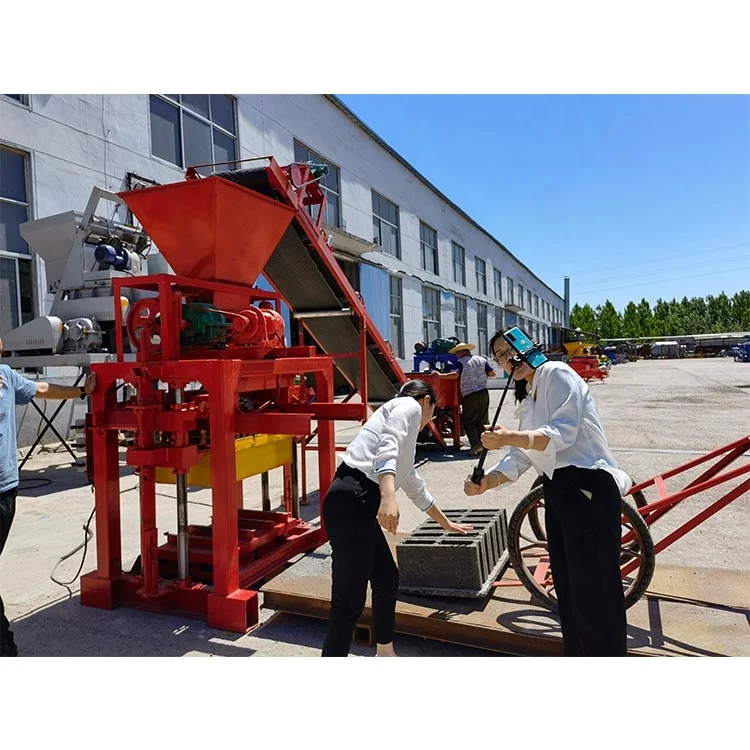
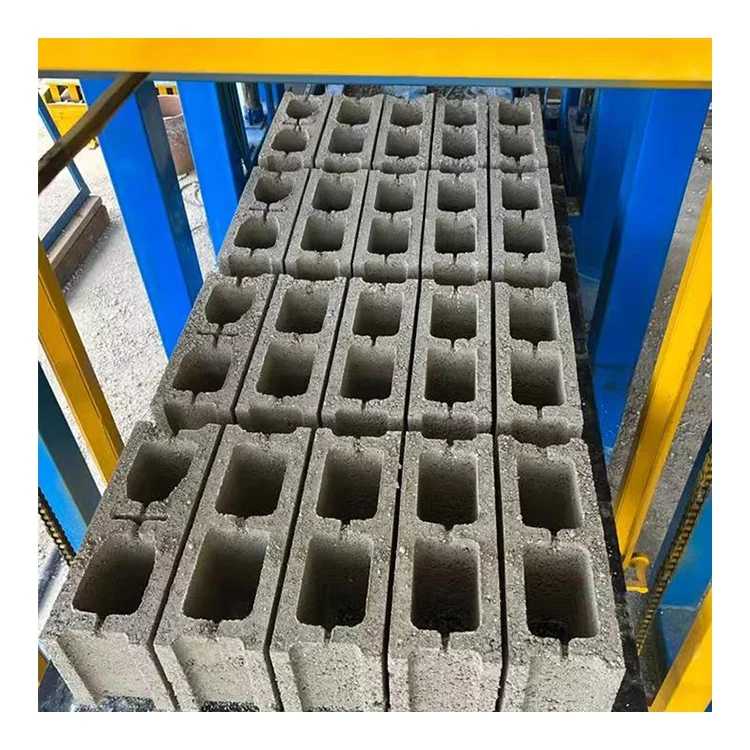 Stationary block machine